
December 22, 2025 in INFORMS in Action
Strengthening Ethical Standards in Scholarly Publishing at INFORMS
SHARE: PRINT ARTICLE: https://doi.org/10.1287/orms.2025.04.23

INFORMS has long been committed to advancing research of the highest quality. With over 11,000 annual submissions across 17 journals, the vitality of our publishing program reflects both the ambition and creativity of our community. However, such growth brings with it a renewed responsibility: to ensure that the trust placed in our scholarship is never undermined by unethical practices.
To meet this challenge, INFORMS has comprehensively rewritten its Publication Ethics policy (Publications Policies & Procedures Number 13.8). This revision, effective August 2025, reaffirms our commitment to integrity, transparency and fairness while introducing clear definitions, stronger safeguards and more robust procedures for addressing ethical violations.
Why the Policy Was Strengthened
Our earlier article, “Fostering Ethical Behavior in Academic Publishing: A Call for Self-Regulation” [1], emphasized the importance of self-regulation and the dangers of “publish or perish” pressures. These dynamics remain. However, as instances of plagiarism, redundant or parallel submissions, and data manipulation become increasingly sophisticated, our response must evolve accordingly.
Our updated policy ensures that INFORMS journals remain aligned with global standards – such as those of the Committee on Publication Ethics (COPE) [2] – while also addressing emerging challenges unique to today’s publishing environment, including the use of generative artificial intelligence (AI).
Clearer Definitions of Ethical Breaches
The revised policy expands on the types of misconduct that undermine trust in scholarly publishing:
- Concurrent or Multiple Publications: Submitting or publishing “substantially similar” work in more than one venue without full disclosure is strictly prohibited.
- Plagiarism and Self-Plagiarism: Drawing on prior work, including one’s own, requires full citation and disclosure. Unacknowledged text recycling undermines the transparency of scientific progress and is strictly prohibited.
- Manipulation of Citations: Artificially inflating references to particular authors or journals is unethical, as is relying on unverifiable references generated by AI tools.
- Data Fabrication or Falsification: Altering, inventing or misrepresenting results represents one of the gravest ethical violations.
- Misrepresentation of Authorship: Gift authorship, ghost authorship and failure to credit contributors are explicitly prohibited. These practices distort the scientific record by misallocating credit, undermining accountability and eroding trust in authorship as a marker of genuine scholarly contribution.
By clarifying these categories, the policy helps authors, reviewers and editors recognize and avoid pitfalls.
Addressing Emerging Challenges: Generative AI
A notable addition to the policy is guidance on the use of generative AI. While authors may use AI tools in preparing manuscripts, such tools cannot be listed as authors. All AI assistance – whether for text drafting, translation or data analysis – must be disclosed. This transparency ensures accountability and guards against hidden reliance on unverifiable sources.
Stronger Investigative and Adjudication Procedures
The new framework strengthens our structured process for investigating alleged violations:
- Preliminary Review: Editors-in-chief assess claims and provide accused authors the opportunity to respond.
- Formal Review: When warranted, a Publication Ethics Subcommittee, composed of impartial experts, conducts a thorough investigation.
- Sanctions: Depending on severity and recurrence, sanctions may range from paper rejection to lifetime bans on submissions to all INFORMS journals and, in extreme cases, notification of an author’s institution.
- Appeals and Author Rights: Accused authors are assured due process, including timely notice, opportunity to respond, confidentiality and the right to appeal decisions.
These safeguards balance accountability with fairness, reinforcing both rigor and trust.
A Collective Responsibility
Whereas the revised policy strengthens institutional oversight, it also emphasizes the essential role of the community. Ethical publishing cannot be enforced by editors and committees alone. Every scholar must remain vigilant – reporting concerns, mentoring students in best practices and modeling integrity in their own work. As before, the principle of “See it, Say it, Sort it” applies: Self-regulation remains the first line of defense.
Looking Ahead
By updating the Publication Ethics policy, INFORMS has taken a decisive step to safeguard the credibility and integrity of our journals and reinforce the trust of our readership. These measures reflect international best practices, proactively address emerging challenges and uphold the high standards our field demands.
We invite all members of the INFORMS community to read and internalize the revised policy, guide students and colleagues in its principles, and help us foster a publishing culture in which integrity is not merely expected but actively championed.
Acknowledgment
In accordance with INFORMS’ Publication Ethics policy, the authors acknowledge that ChatGPT was used to assist with initial drafting of this article. This work was conducted using a closed, subscription-based version of ChatGPT, which does not expose content to public training data. As with any AI-assisted work, disclosure ensures transparency; the authors remain fully responsible for the substance and accuracy of the article.
References
- Christopher S. Tang and Matthew Walls, 2025, “Fostering Ethical Behavior in Academic Publishing: A Call for Self-Regulation,” OR/MS Today, Vol. 50, No. 2, https://doi.org/10.1287/orms.2025.02.06.
- https://publicationethics.org/
Christopher Tang is a University Distinguished Professor and the holder of the Edward W. Carter Chair in Business Administration at the UCLA Anderson School of Management at University of California, Los Angeles. He received his B.Sc. (First class honours) in mathematics from King's College London in 1981, M.A. in statistics in 1983, M.Phil in administrative science in 1983, and Ph.D. in operations research in 1985 from Yale University. He is the INFORMS VP of Publications and former editor-in-chief of Manufacturing & Service Operations Management.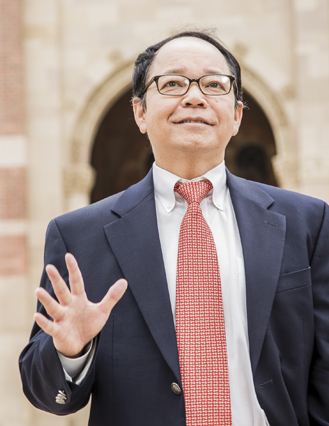
([email protected])