
March 2, 2026 in Industry-Academia Collaboration
Improving Response Through Advance Operational Planning and Academic Collaboration
SHARE: PRINT ARTICLE: https://doi.org/10.1287/orms.2026.01.10
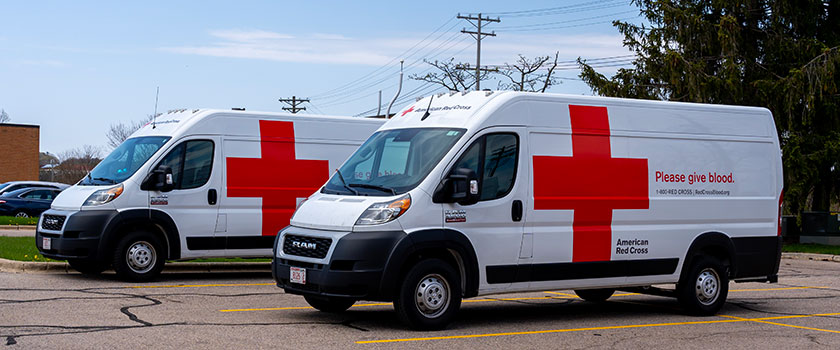
The mission of the American Red Cross is to prevent and alleviate human suffering during emergencies by mobilizing the power of volunteers and the generosity of donors. The Red Cross responds to major disasters such as hurricanes, floods and earthquakes. However, large-scale responses are complex, especially in the early days when information is incomplete or prone to error. Rapid action depends on estimating need, but early estimates of needs and resource requirements are challenging to produce with limited data. Red Cross planners work with academic researchers to research and develop models that are used as part of the planning process in disaster response. Currently, Red Cross planners have been working with Carnegie Mellon University through student projects and with researchers at Virginia Tech in long-term research work.
To improve disaster response speed and efficiency, the Red Cross is developing doctrine, procedures and tools for advance operational planning (AOP), which considers the expected area and intensity of disaster impact, as well as the demographics of the impacted area. This approach allows the Red Cross to anticipate demands and mobilize resources before complete information is available. This work has been ongoing since 2015.
One step of AOP is to make an estimate of the disaster-caused need, which is based on the geographic area of the disaster, intensity of the disaster and demographics of the impacted area. In the days prior to a notice disaster (such as a hurricane) or the day of a no-notice disaster (such as an earthquake), the Red Cross makes an estimate of the need; then the AOP process translates that into estimates of the human and material resources required to meet that need. Whereas many of these estimates rely on expert intuition informed by experience, the AOP process involves developing standard processes incorporating predictive models that capture the knowledge of subject matter experts to make these estimates more robust. The Red Cross can then modify the plan as needed as more information becomes available.
The Red Cross has developed and put into use predictive models for hurricanes, and with an AOP process that incorporates predictive models, it could incorporating models for other disasters, such as earthquakes, wildfires, tornados and tsunamis. Developing these models would require significant resources beyond what Red Cross staff and volunteers alone can provide, creating an opportunity for collaboration with academic partners.
Academic Partnerships: Collaboration Benefits and Structure
When the Red Cross works with academic partners, the goal is to develop an understanding and analytics capability that can be incorporated into the Red Cross Concept of Operations. Therefore, when starting a partnership with an academic researcher, the Red Cross introduces the researcher to its operational framework and processes. This helps the researcher understand the time and resource constraints and focuses on any research and development toward results that can be incorporated into Red Cross practices.
Red Cross staff and volunteers have some ability to research methods for early disaster impact estimation, but operational demands limit their bandwidth. Academic researchers and students help fill this gap by identifying additional resources and datasets for assessing disaster impacts, staying up to date with the latest research and modeling technologies and implementing models using accessible platforms.
In one student project, students used Google Colab for an earthquake impact prediction project. Google Colab is a web-based analytics platform that allows users to run analytical code on the cloud, allowing nontechnical staff and volunteers to utilize analytical applications. This introduced new technical capabilities that the Red Cross can use in other contexts.
Another line of research that Red Cross academic partners follow is looking at integrating other types of data into the predictive model. Red Cross academic partners have experience in working with data such as social vulnerability indicators in other contexts and can evaluate a range of different types of models that integrate these data sources with data already in use.
One important consideration when working with academic partners is to understand how work on the project impacts their career development in the context of their institution. For long-term results, the work must advance the career of the academic partner. This is complicated because the products developed for the Red Cross do not typically contribute to an institution’s faculty performance review, so there need to be additional outcomes that can contribute to their career/tenure. In addition, essential activities such as framing the problem in a way that contributes to both Red Cross and academic career goals can take time to fully resolve, which may cause problems with an academic’s career timeline.
How a project can help an academic partner’s institutional advancement varies by institution. For example, Mariana Escallon-Barrios is a teaching faculty member at Carnegie Mellon University’s Heinz College of Information Systems and Public Policy. Although published research papers are not specifically required in her position, research that involves engaging in real-world problems is encouraged and can be documented through project outcomes. Academics can work with industry partners through industrial sponsored capstone or course projects. For example, projects can involve Red Cross volunteers and staff engaging with the students and school staff, providing practical engagement with real-world situations in which students use their analytic skills gained through their master’s programs on projects that impact disaster response.
Christopher Zobel and Andy Arnette, faculty members at Virginia Tech’s Pamplin College of Business focusing on operations management, find that their engagement with the Red Cross, while not directly contributing to their institutional evaluations, has valuable side effects. The practical problems they address with the Red Cross ground their work in real-world applications. This is particularly true when working with data, because the Red Cross data reflects the operational issues the organization faces, anchoring the research in ways that benefit the Red Cross and attract interest from certain publication outlets. Additionally, the social impact of faculty collaborating with a nonprofit such as the Red Cross is personally meaningful and enriches their teaching, because the operational environment of the Red Cross in disaster response differs from the examples typically found in textbooks. Incorporating these real-world scenarios into class discussions allows for the exploration of different goals and details that lead to varied solutions, even though the fundamentals of operations remain the same.
Another major factor in making collaborations work is the communication of expectations for deliverables and timeline. As with the Red Cross planners developing and refining its AOP tools on an ongoing basis, the work done with its academic partners was not on a strict timeline. Similarly, because the academic faculty involved were not on strict timelines with their institution, they could take time to develop understandings that lead to
results. Although work that involves students needs to be more well defined to fit student academic schedules, the overall relationship has time to develop, so it can be beneficial for the academic partner careers as well as meet Red Cross goals.
Future Directions: Ongoing Model Improvement and Collaboration
Fruitful collaboration with academics and practitioners depends on several key characteristics. First, open communication is essential – aligning goals and incentives. Additionally, flexibility and adaptability are crucial to success, allowing both parties to achieve outcomes in practice and benefiting the practitioner, academic faculty and involved students. In this case, the collaboration benefits from being part of the Red Cross’ ongoing program of research supporting the development of the AOP process. It is this ongoing process that can incorporate the results of academic partnerships into its operations. This research and development improves the Red Cross’ ability to fulfill its mission to alleviate suffering in the face of disaster.
Acknowledgments
I would like to acknowledge Dr. Escallon-Barrios, Dr. Arnette, Dr. Zobel and Mr. Whitehead for taking the time to write and talk about their experiences in the Red Cross collaboration with academia as part of the development of the Red Cross Advance Operational Planning process.
Louis Luangkesorn is the lead data scientist at Highmark Health and a volunteer national planner for the American Red Cross.