
September 2, 2026 in Marketing Strategies
From Data to Marketing Strategies
Leveraging AI/ML for Optimizing Patient Segmentation in the Fertility Market
SHARE: PRINT ARTICLE: https://doi.org/10.1287/orms.2026.03.05

Picture a fertility clinic drowning in data: prescription records, insurance claims, diagnosis codes, patient histories – but all disconnected from any clear picture of which patient is likely to start treatment next. That’s roughly where the gonadotropin market stood before my team decided to let machine learning sort it out. The result is a segmentation engine that treats patients and prescribers not as one undifferentiated mass, but as distinct groups with distinct needs, and it’s already reshaping how healthcare marketers think about gonadotropin-based fertility drugs.
Gonadotropin is a hormone used in fertility treatments to help develop eggs in women and increase sperm counts in men. The gonadotropin market represents a critical area in the healthcare landscape, addressing complex fertility challenges through diverse therapeutic solutions. These treatments cater to a wide spectrum of patient needs, ranging from initial infertility diagnoses to advanced hormonal therapies.
However, this diversity introduces significant challenges for healthcare organizations striving to design tailored strategies that effectively address the nuanced requirements of both patients and healthcare providers (HCPs).
Machine learning has emerged as a reliable tool in overcoming these challenges. By enabling granular analysis of large data sets, machine learning facilitates precise segmentation of patients and HCPs, empowering healthcare organizations to implement targeted interventions. This article presents a robust data-driven framework that leverages machine learning models, such as random forest and extreme gradient boosting (XGBoost), to address the segmentation needs of the gonadotropin market. Using this approach, our team’s study aims to enhance market share, improve patient outcomes, and optimize HCP engagement strategies.
- The primary objectives of this study are to:
- Identify patient profiles with high potential for initiating gonadotropin therapies
- Enhance market share by targeting patients likely to adopt specific treatments
- Optimize HCP engagement by identifying high-potential prescribers and addressing barriers to adoption
- Develop strategies for converting low-engagement HCPs into advocates for gonadotropin therapies
By addressing these objectives, this research contributes to the broader field of healthcare analytics, showcasing how machine learning can drive innovation in patient care, resource allocation, and strategic decision-making. Building on existing advancements in healthcare analytics, this study introduces a novel dual-pronged segmentation framework that aligns patient and HCP dimensions, paving the way for personalized healthcare solutions and market optimization.
A Segmentation Nightmare
Gonadotropins sit at an awkward intersection of medicine and marketing. They serve everyone from a patient walking in for a first infertility workup to someone deep into a hormonal therapy regimen – and each of those patients responds to different messaging, different financial incentives, and different clinical triggers. Layer on top of that the prescribers themselves, who vary widely in how enthusiastically they adopt newer treatments, and you get a market where a one-size-fits-all campaign
is almost guaranteed to underperform.
That’s the challenge driving this research: build a framework precise enough to tell a “new-to-market” patient apart from a “share-potential” one, and a highly engaged prescriber apart from one sitting on the fence.
Identifying the Right Patients
The approach leans on two workhorse algorithms in the machine learning toolkit: random forest and XGBoost. Random forest is an ensemble learning method that constructs multiple decision trees during training and aggregates their results to make predictions. Its ability to handle high-dimensional data and reduce overfitting makes it ideal for complex healthcare data sets.
XGBoost is an advanced gradient-boosting technique designed for efficiency and performance. It optimizes a differentiable loss function by sequentially adding weak learners (decision trees) to minimize the residual error.
Before any of that modeling could happen, the data needed serious cleanup. Our team pulled from prescription records, diagnosis codes, and procedural claims. They then filtered that data for the appropriate age ranges and treatment histories, scrubbing duplicates and standardizing categorical fields, such as insurance type, so the models could learn from them.
Our team then selected features, narrowing the field down to the variables that mattered most: age, out-of-pocket costs, comorbidities such as ovarian issues, and prior medication history.
See Figure 1 for an illustration of how the whole pipeline fits together, from raw data to a strategy a sales team can act on.
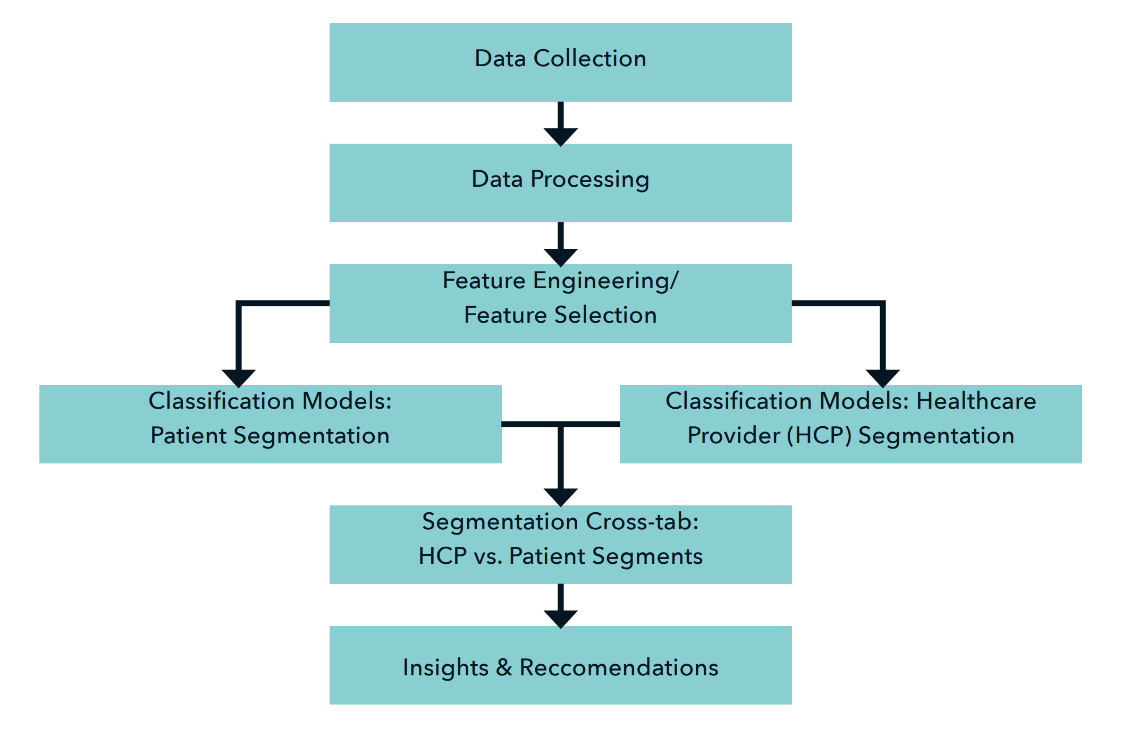
Figure 1. How the segmentation engine works
Two Patient Groups, Two Playbooks
The segmentation split patients into two camps. New-to-market patients are stepping into gonadotropin treatment for the first time, and the model flags them using claims history
and demographic patterns. This enables marketers to design onboarding and education campaigns tailored to first-timers. Share-potential patients, on the other hand, are already on some form of fertility treatment but show signs that they may shift toward a specific therapy, so the play here is less about introduction and more about persuasion.
The feature-driven insights underneath these segments are genuinely useful for anyone building a campaign:
- Demographics: Age, location, and other patient-specific attributes
- Drug-related factors: Historical claims for related medications
- Comorbidities: Diagnoses related to infertility, hormonal treatments, and ovarian issues
- Payment attributes: Out-of-pocket costs and insurance types
- Procedural factors: Engagement in fertility treatments or related medical interventions
By focusing on these variables, our team’s analysis was able to capture a comprehensive picture of the factors influencing patient and HCP behaviors. This feature selection process also ensured that the models were interpretable, allowing healthcare organizations to derive actionable insights.
Modeling Prescribers
The HCP side of the framework works on a parallel track. Instead of predicting whether a patient will start treatment, the models estimate what share of prescriptions for a given drug an individual provider is likely to write. That produces two useful buckets: high-potential HCPs who show a strong likelihood of prescribing a specific fertility drug based on their patient mix and low-engagement HCPs who have plenty of eligible patients but aren’t prescribing much yet. The second group is arguably the more interesting one commercially, since it represents untapped opportunity rather than an already-won account.
Modeling Prescribers
The HCP side of the framework works on a parallel track. Instead of predicting whether a patient will start treatment, the models estimate what share of prescriptions for a given drug an individual provider is likely to write. That produces two useful buckets: high-potential HCPs who show a strong likelihood of prescribing a specific fertility drug based on their patient mix and low-engagement HCPs who have plenty of eligible patients but aren’t prescribing much yet. The second group is arguably the more interesting one commercially, since it represents untapped opportunity rather than an already-won account.
Do the Models Work?
Any segmentation framework lives or dies on whether its predictions hold up. Our team evaluated each machine-learning model using industry-standard performance metrics – including confusion matrix, recall, precision, F1-score, and accuracy – to ensure robust and reliable predictions. These metrics gave us insights into the models’ ability to correctly identify relevant instances, minimize false positives, and maintain balanced performance across all classification categories.
The metrics we used perform various functions:
- Confusion matrix summarizes the performance of a classification model by comparing predicted class labels with actual class labels across all classes, enabling detailed evaluation of the model’s strengths and weaknesses in predicting each category.
- Recall measures the ability of the model to correctly identify all relevant instances for a specific class. High recall indicates fewer missed predictions.
- Precision evaluates the proportion of correctly predicted positive instances out of all predicted positive instances. High precision reflects fewer false alarms.
- F1-score balances precision and recall, offering a comprehensive performance measure.
- Accuracy represents the overall correctness of the model by measuring the ratio of correct predictions to total predictions.
Using random forest and XGBoost, our resulting numbers were solid. Random forest hit a 92% recall rate for spotting high-potential HCPs, meaning it rarely missed a genuine opportunity. XGBoost delivered 89% accuracy on patient segmentation, and overall model accuracy averaged around 85% (Figure 2).

Figure 2. Model accuracy and recall scores for patient and HCP segmentation
Insights Improve Strategic Decisions
Our team’s machine learning models delivered significant results, providing actionable insights to inform strategic decisions:
- High-precision segmentation: The patient and HCP segmentation models achieved robust performance validated against industry standards, with high recall and accuracy metrics. This ensured that we identified target groups with precision, enabling focused interventions and optimized resource allocation.
- Enhanced patient insights: The analysis uncovered key trends and patterns in patient behavior, such as age-related preferences, financial considerations, and the impact of prior medication usage. These insights facilitated our development of tailored strategies to address patient needs and improve treatment adherence.
- Optimized HCP engagement: The segmentation framework effectively highlighted high-potential and low-engagement HCPs, enabling targeted outreach and support. By addressing barriers to engagement and fostering partnerships, the framework helped drive market growth and improve patient outcomes.
- Strategic market insights: Our study revealed valuable insights into the competitive landscape, including brand preferences among different patient demographics and the impact of financial considerations on treatment choices. These findings have informed strategic decisions on marketing, resource allocation, and product positioning.
The ability to identify patient subgroups and predict treatment adoption rates empowers HCPs to deliver personalized care, improving patient satisfaction and outcomes.
From Segments to Strategy
Once the patient and HCP models were running, our team merged the outputs into what we call a segmentation crosstab – essentially, a matrix that aligns patient segments with prescriber segments so marketing teams can see where the two overlap. A high-potential HCP treating a cluster of new-to-market patients, for example, becomes a very different outreach priority than a low-engagement HCP with mostly share-potential patients (Figure 3).
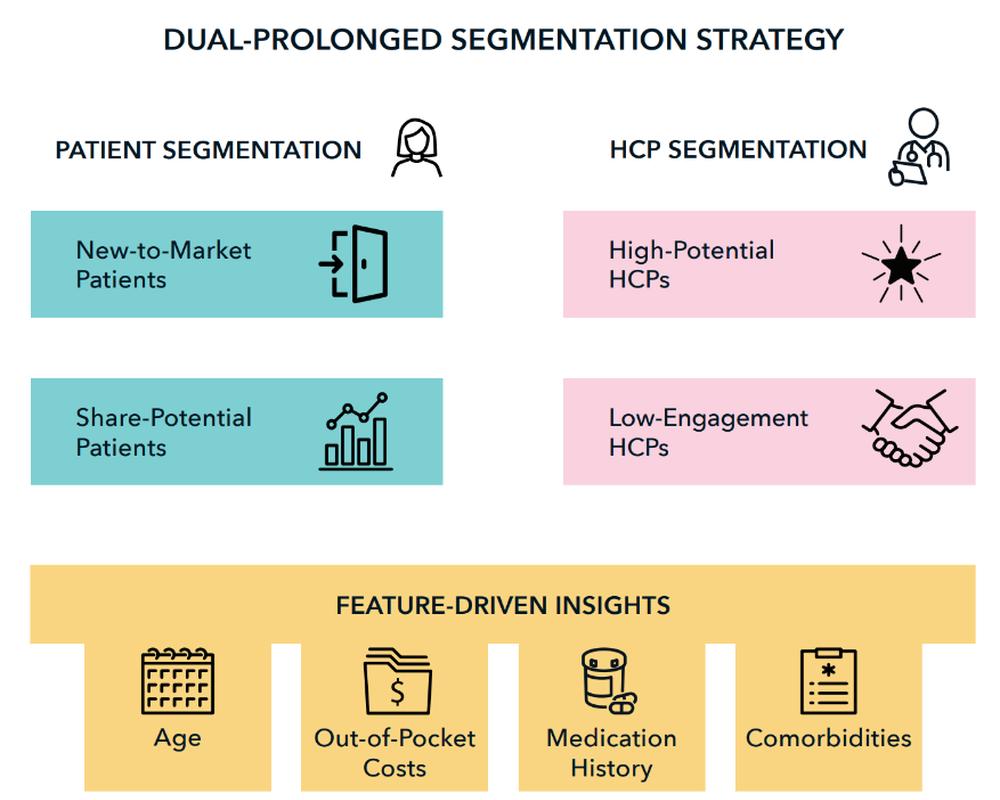
Figure 3. Patient and HCP segmentation.
Applicability to Other Drug Classes
This case study is careful to note that the payoff here isn’t just a marketing win. Better segmentation means that providers can personalize care pathways and that resources get allocated to where they’ll have the most impact. Stakeholder collaboration improves because everyone is working off the same evidence base. That said, there are some real caveats; deploying AI in a sensitive domain such as fertility care raises data privacy questions, and any model this influential needs clinician buy-in before it starts steering outreach decisions.
This case study highlights the practical application of advanced analytics, AI, and machine learning in addressing challenges within the gonadotropin market. By employing models such as random forest and XGBoost, we were able to provide a comprehensive framework for precise patient and HCP segmentation, enabling targeted interventions that improve patient outcomes and optimize resource use. The integration of key variables, such as demographics and comorbidities, allows healthcare organizations to design personalized care strategies and more effective engagement with providers.
The future work will focus on creating real-time updates to segmentation models, integrating external datasets, and exploring new dimensions, such as combination therapy trends and vial usage patterns. By continuously evolving the analytical framework, this approach aims to unlock further opportunities for personalized patient care and optimized resource allocation, setting a path for continuous innovation in the healthcare industry.
Subhradeep Nath is an experienced data science and analytics professional with eight years of experience delivering high-impact machine learning and data-driven solutions across global pharmaceutical, retail and fast-moving consumer goods customers. He has worked with companies like Axtria, Analytic Edge and IPSOS MMA. He has delivered impactful projects in marketing mix modeling, ROI optimization, segmentation & targeting and machine learning, driving multimillion-dollar value. Subhradeep focuses on deriving insights from multichannel datasets and modeling techniques to optimize business outcomes. Subhradeep holds a postgraduate degree (PGDM) in big data analytics.