
September 6, 2026 in Supply chain
Beyond Transactions
AI Driven ERP for Real Time, Resilient Supply Chains
SHARE: PRINT ARTICLE: https://doi.org/10.1287/orms.2026.03.08
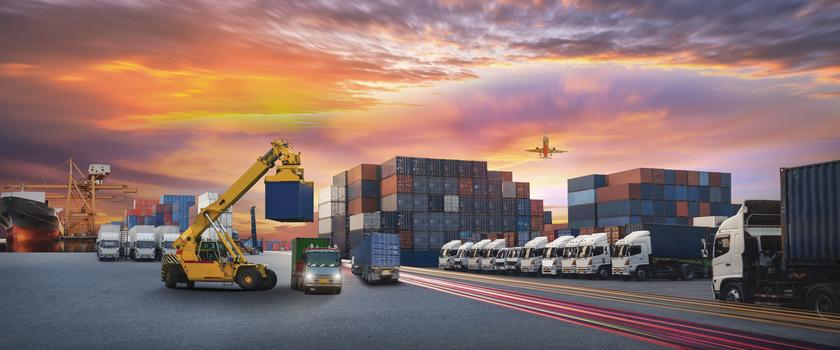
Most supply chain teams I talk to these days are not sitting in calm, glass-walled control rooms. They are juggling late containers, surprise demand spikes, and suppliers who sound confident on calls but still miss dates. At the same time, the enterprise resource planning (ERP) screens in front of them quietly insists that everything is “on track.” It is in moments like these that traditional ERP really shows its limits.
Instead of behaving like a flexible steering wheel, ERP often feels more like a rail embedded in concrete. It runs the transactions, posts the entries, closes the books. But when volatility hits hard, the system tends to react slowly, if at all.
Where Classic ERP Falls Short
Many of the ERP implementations I’ve seen over the years were designed for a world that was simply calmer. They assumed demand patterns would repeat, that lead times would be reasonably stable, and that process changes would come through long, carefully planned releases rather than week-to-week firefighting. In that world, you could set safety stocks and sourcing rules once and rely on them for quite some time.
In the current environment, that logic starts to crack. Demand moves between channels quickly, new products appear more often, and external shocks from port congestion to extreme weather hit specific lanes with almost no warning. Classic ERP is usually sitting in the middle of this with batch jobs, rigid configuration, and point-to-point interfaces that were never built for continuous change. Planners open the system in the morning and, quite often, they are already a few hours behind reality.
So they improvise. Data is exported into spreadsheets, cross-checked with 3PL portals, and validated through late-night calls with warehouses and suppliers. The “truth” is now scattered across ERP, email threads, and individual laptops. Technically, ERP is still the system of record. Practically, it has become just one of several inputs.
When AI Moves Into ERP
Artificial intelligence by itself is not the hero of the story. The real turning point is when AI models are woven into the ERP workflows that planners and buyers actually use every day, rather than sitting in an experimental dashboard on the side. When AI is in ERP workflows, it continuously learns from orders, shipments, master data, and external signals, then quietly offers better decisions right where transactions are created.
Industry reports are starting to release numbers backing this up. Once the models were stabilized and connected properly, organizations that integrated AI into their ERP environments have reported approximately a 20% improvement in forecast accuracy and approximately a 33% increase in inventory turnover.1 Other studies show AI-driven supply chains cutting operational expenditure by up to 24% through smarter forecasting, routing, and automation of repetitive decisions – while at the same time lifting service levels.2 The exact figures will differ by company, but the direction is consistent enough not to ignore.
For practitioners, I think it’s useful to picture AI less as a black box and more as an extra team member who never gets tired of looking at patterns. It flags when a parameter is out of line, when a lane is becoming unreliable, or when demand is drifting away from the plan. You still make the call. But you are supported by something that has looked at far more data points than any one person can comfortably process on a weekday morning.
Forecasting and Inventory
If you want a practical starting point, demand forecasting is often where AI-driven ERP first earns its keep. Traditional ERP forecasting modules tend to rely on relatively simple statistical models and mainly on internal history. That’s fine when demand is stable and promotion calendars are predictable, but it becomes fragile when volatility is high and external factors dominate.
AI-based demand sensing can create additional signals, such as point-of-sale data, promotion plans, online search trends, macro indicators, and even weather patterns – and then use those signals to update short-term and medium-term forecasts more frequently. When that forecast is wired back into ERP, the changes show up directly in planned orders, deployment, and capacity plans instead of sitting in a slide deck.
The numbers here are encouraging. Case studies talk about forecast error reductions in the range of 20-50%, with 20-30% reductions in inventory levels and fewer stockouts when AI forecasting is implemented correctly.3 Another analysis reports that companies using AI in supply chains improved logistics costs by about 15%, inventory levels by around 35%, and service levels by roughly 65%.4
That is not a small optimization; it is a genuine shift in how stable the plan feels when the environment is unstable.
Inventory policies ride the same wave. Instead of static safety stocks configured once and forgotten, AI-driven optimization can sit on top of ERP data and continuously recalculate buffers and reorder points by item and location. It learns real demand variability and lead time patterns rather than assuming everything behaves nicely. When planners review and accept these recommendations, the updated parameters flow back to ERP automatically, turning what used to be a one-time design into an ongoing control loop.
Seeing Risk Earlier
Another area where I see AI adding real value is supplier and lane risk. Traditional ERP vendor scorecards are mostly backward-looking; they summarize past quality and delivery performance reviewed at long intervals. By the time they tell you something is wrong, you often already know because production has been disrupted or customers are waiting.
AI-enabled ERP can extend this picture by pulling in shipment events, carrier delays, regional news, and specialized risk data, then correlating all of that with open orders and material criticality. This allows the system to maintain dynamic risk scores for suppliers and lanes, updated much more frequently than any quarterly review.
Some reported implementations indicate that organizations using such AI-based monitoring and scenario planning have been able to cut the time needed to identify and assess disruption impacts by roughly 50-70% and cut revenue losses from those disruptions by roughly 30%,5 simply because they saw problems earlier and had more options on the table. Again, disruptions do not disappear, but the timing of the response changes, and that alone can save a lot of money and credibility.
A Realistic Path Forward
All of this sounds attractive, but it comes with groundwork. Reviews of AI in ERP emphasize the same core message: data quality, process consistency, and governance matter as much as the
models themselves. If item masters are inconsistent, if the same process behaves differently across sites, or if integration is unreliable, any AI initiative will struggle, no matter how advanced the algorithm.
The people side is equally important. Planners and buyers bring years of experience and pattern recognition of their own. When the system starts recommending different safety stocks or sourcing choices, it’s natural to respond with “Why?” before saying “yes.” This is healthy. A good approach is to start with decision support where the system proposes and explains, and only automate fully in low-risk areas once trust is built.
Finally, there is the business case. Investments in cloud infrastructure, integration, and skills are not trivial, but multiple analyses show clear, measurable reductions from AI across operations, production, and supply chain, with savings ranging from mid-single digits up to around 30%, depending on maturity and use case focus.6
When you put that next to the volatility we are all dealing with, AI-driven ERP stops looking like a luxury experiment and starts to feel more like a necessary evolution of the tools we already rely on.
Bhubalan Mani leads supply chain technology and analytics at Garmin, where he drives enterprise planning modernization and decision intelligence across global supply networks. Over two decades in manufacturing, consulting, and enterprise technology, including senior roles at PwC, GE, and Oracle, Bhubalan has modernized ERP platforms and redesigned planning architectures for global organizations. He writes and speaks regularly on AI-enabled decision-making and digital supply chains, and he holds Fellowship status with the Institute of Supply Chain Management (IoSCM) and ASCM/APICS.