

April 7, 2008 in Forum
What's an IT Guy Doing at an O.R. Conference?
SHARE: PRINT ARTICLE: https://doi.org/10.1287/LYTX.2008.02.11
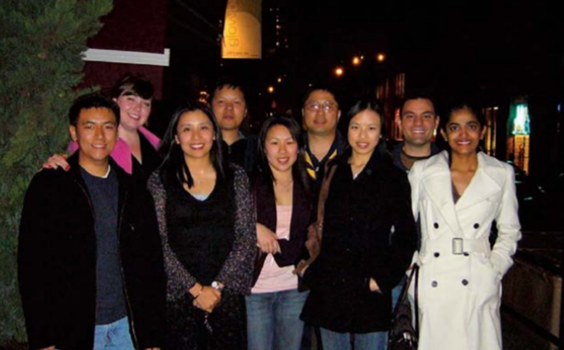
When I first learned that I was going to the operations research conference held in Vancouver, Canada, last spring, I had been supporting the Cisco Analytical Forecasting Team as an information technology analyst for about eight months. The team’s manager had decided to bring along the IT counterparts to the conference since we had been closely collaborating with team members for many months. I did not understand why I was going at first, and it was not until I was at the conference that I realized why I was there. At that time, I had no idea what INFORMS or O.R. was about and was more confused and nervous than curious. I thought, “Are there only going to be business people or statisticians at the conference? Am I going to be the only IT person?” In the end, however, I was very glad that I had gone. Before I jump to why that is, let me start from the beginning and explain how I went from confused to enlightened in a matter of three days.
Before the conference even started, I had a sense that O.R. was more than just analytical forecasting when I looked through the INFORMS Web site and saw the catalog of sessions. “Hmm,” I thought, “what are all these companies doing at an operations research conference? Why are there so many delivery companies here? They don’t have any inventory, so why would they need to forecast or do any research?”I eventually realized that my mistake was paying too much attention to the words “operations” and “research” individually rather than the combined term, operations research.
On my first day in Vancouver, I attended the morning breakfast before the plenary session. I figured I might as well get acquainted with people from other companies and see what they were doing. I talked to one individual who had been a professor at a prestigious university and who currently works for a big industry. He described what he had been doing and got into some details of how he was using O.R., which was a bit over my head, but I had my first taste of what operations research could be about.
When he asked me what I was doing with O.R., I explained that I was part of the IT support for the analytics team. There was an immediate awkward pause.
The man murmured,“IT?”
I gave him a nervous nod.
“Boy, do I have a few words to say about IT!” the man said angrily.
Thankfully, before he had a chance to start, it was already time for the plenary and I was saved by the bell. I wondered to myself, “Am I in the wrong place right now?” The experience did not deter me from wanting to learn about O.R., however; it ignited more curiosity of what O.R. was really about and made me wonder how IT fit in the whole picture.
The turning point of the conference was when the sessions started. I sat through all the sessions that I thought could pertain to learning what O.R. was all about, as well as sessions that sparked an interest in me. For example, I attended the “Sports and O.R.” session, where they used an O.R. tool to optimize the lineup of different sports teams. With O.R., you can not only optimize the lineup, but also find the flaws of a non-O.R. lineup and justify changing it. The presenter used a graphical user interface to do all these calculations, and I thought, “Hey this is probably where I would be useful. They would definitely need IT to set up and support the application!”
I also attended the sessions on how O.R. can be used by the military for combat situations, hospitals for ambulance dispatching and UPS for optimizing delivery routes (got my answer on how a service provider company would use O.R.!). These sessions convinced me that O.R. is extremely important, and that IT needs to be involved to help execute and support the applications in those situations. In addition, I was tremendously glad that my own company is heading toward that direction and agrees that the use of O.R. for analytics is critical to our success.
For me, the most useful and most enlightening part of the O.R. conference was participating in the Birds-of-a-Feather discussion group. The session I attended was “Optimizing the Relationship between IT and ORMS.”
Of course, I was very nervous given my experience at breakfast earlier in the day. But in this session, I was able to discuss issues that people are confronting: in particular, issues that O.R. professionals have encountered when they work with IT. I got a sense that O.R. professionals realize the need for IT since many applications need IT support in planning and execution, but many challenges must be addressed. The main challenge that was discussed in this session was the quest for an “end state,”or a freeze in the requirements. In practice, IT always needs an “end state” to the requirements of a project in order to start the development and testing process. However, in O.R. there is never a true “end state,” since O.R. is constantly changing to find the most optimal model. By nature, this is a cause of conflict and frustration between O.R. and IT.
Another interesting topic was whether it is better to use an “out-of-the-box”application as the solution to an O.R. problem or to use an “in-house”customized tool created by the IT staff. O.R. professionals, in general, are not fond of an out-of-the-box solution because the implementation is slower and because most vendors create a “one application fits all”product that hasn’t been optimized for O.R.’s specific needs. So O.R. professionals tend to be bigger fans of a customized solution. From an IT perspective, we like an out-of-the-box solution because we do not want to reinvent the wheel. If it is on the market already, then more than likely the product is a stable and popular tool that has been well tested and has support from the vendor to help its integration with our existing systems. I was able to discuss the IT’s point of view. I think a few of the O.R. professionals at the discussion got a good understanding of how IT staff felt about this, and I got a good understanding of the O.R. perspective.
In the end, we decided that there is no one answer to these differences between IT and O.R. We realized that a compromise has to be made to fulfill each other’s needs and that collaboration is the key to success. Overall, this discussion was definitely worthwhile, and I hope that some O.R. professionals will more actively involve their IT partners in their projects. I also hope that INFORMS continues to have discussions that involve O.R. and IT in future conferences.
By the end of the conference, I became more knowledgeable in the capabilities of O.R. and its potential impact on society through the way it affects how a company operates and the solutions it creates. I realize that having O.R. can not only have a significant impact on the company, but can also be applied in any every field of work where a decision needs to be made or where an area can benefit by optimization. I would strongly recommend that all companies consider bringing their IT partners to the INFORMS conference to help them learn the importance of O.R. and the significant impact O.R. has on the company. In the end, if IT team members know the importance of what O.R. is doing, they are more likely to work harder to see the success of any O.R. application and projects. That will reduce the headaches and sleepless nights worrying about whether IT will be on the same page with the O.R. team. I would love to go to the INFORMS Practice Conference again next year to see more of the results of some of the groups and many more applications of O.R. and how IT played a role in their success. It would be fascinating to see what kind of results came from the sessions that I attended this year and what progress companies have made using O.R.
EDITOR'S NOTE:
The 2008 INFORMS Practice Conference (www.informs. org/Conf/Practice08), which will focus on the competitive advantage of analytics, will be held April 13- 15 in Baltimore.
Jerry Yang is technical lead on the IT team supporting the Analytical Forecasting Team at Cisco.