

April 6, 2009 in Humanitarian Logistics
Humanitarian Logistics
Uncertainty, Damaged Infrastructure, Politics Highlight Top-10 Challenges Facing Analysts During a Disaster.
SHARE: PRINT ARTICLE: https://doi.org/10.1287/LYTX.2009.04.05
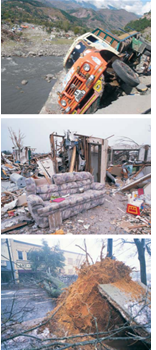
DISASTERS ARE WREAKING HAVOC on human lives and nations’ economies at an alarming – and rising – rate. According to the World Economic Forum, more than 180,000 deaths and more than $200 billion in economic losses occurred in 2005 alone. Whether it’s a tsunami in the Pacific or a national event such as Hurricane Katrina, governments, non-profit organizations and private industries need to be better prepared to respond and recover from disasters, offering timely and necessary aid to those in need through efficient humanitarian supply chains.
Supply chain management and operations research (SCM/OR) recognize this, modeling a systems approach with the use of analytical tools such as forecasting, simulation, optimization, game theory, etc. However, there is a need of extending the current, and developing new, SCM/OR models and methodologies to take into account the specific challenges of the humanitarian operations.
In order to achieve this, we must recognize and address the main challenges of humanitarian logistics:
1. High uncertainty in demand. Two earthquakes of similar magnitude may have entirely different outcomes if one hits a high population density area in a developing country, and the other hits a better-prepared city in a developed country. Relief demand is unknown both in size and type, and it is affected by dynamic and hard-to-measure factors such as disaster characteristics, local economy and infrastructure, social and political conditions, etc.
2. High uncertainty in timing. In general, it is difficult to predict exactly when a disaster is going to strike. This time frame could be relatively delimited as in a hurricane season or hardly predictable as in an earthquake. Therefore, one needs to be in a constant state of readiness and to plan during an uncertain time, which requires additional flexibility.
3. High uncertainty in location. We may know where the fault lines are, but we cannot predict either when or where an earthquake will happen. For other disasters such as hurricanes, we may have more information based on historical data and models that help us predict the path after it starts, but even a specific storm can change paths. Affected locations might also be dynamic as in the case of a pandemic influenza, so planning should account for this. Location uncertainty imposes additional challenges to preparedness activities such as relief supplies and equipment prepositioning, infrastructure investment, etc.
4. High uncertainty and challenges in supply. Donations may be variable or restricted in their use by donors, while inkind donations may also be inadequate and unmatched with the demand. Building up relationships with local vendors, usually in a very short period of time, may be a difficult task as well.
5. Challenges in collaboration among the multiple players and decision-makers in a humanitarian supply chain. Each of the responders (governments, military, local authorities, etc.) may compete for limited resources to achieve their own goals, such as when many organizations needed the limited resources of the airports during the 2004 tsunami. Organizations and governments may also have different incentives that impair the effectiveness of collaborations.
6. The impact of the political, cultural and socioeconomic conditions of the region. Responders must have an understanding of the region as they are usually in a highly politicized environment. Unawareness of specific local issues may cause even the best stand-alone plan to fail or become impractical. For example, genetically modified food is prohibited in some Southern African nations such as Zambia, restricting food aid programs. The human factor is crucial in humanitarian operations, which includes language, customs, political views, etc. Also, every organization involved is under the public eye which put more stress on the response operation
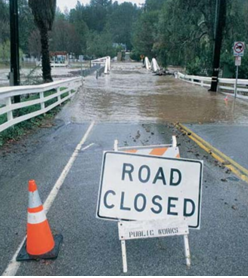
7. The strong dependency of last mile operations on the location and disaster severity. Transportation infrastructure might be disrupted and required equipment may not be locally available, affecting the supply chain responsiveness. This can be aggravated by a limited location access or poor construction. This was the case of the 2005 earthquake in Pakistan, where people lived in mountainous regions and had limited aid access because of obstructed roads.
8. Limited telecommunications and information infrastructure. The Internet is still not widely available in some developing countries. Land-based phones and cellular phone communication towers might be down as a result of a disaster, as was the case after Hurricane Katrina hit. Also, since there might be more than one organization collecting data, it is common to find inconsistencies in the aftermath reports.
9. Long-term impact of the many activities carried out during humanitarian operations. This happens as cities are rebuilt, people are relocated, new products and vendors introduced to the local market, etc. This is the case of the food aid monetization from the U.S. government, which starts with a donation of food to non-governmental organizations (NGOs) around the world, and then NGOs get funds for other aid programs by selling the in-kind donations in the local markets. There are tradeoffs between short-term effectiveness of the response and a long-term impact on the communities that guarantees their sustainability.
10. The success of humanitarian operations is hard to measure. Economic success is the standard performance measure in the pro-profit world. For non-profit organizations this evaluation is more complex, considering difficult-to-formulate elements such as unmet need fulfilled and more tractable ones like cash flow. Keeping complete track, control and accountability of the humanitarian programs and their outcomes is challenged by the high urgency and pace of this type of operations, and time for analyzing and recording is usually tight.
Özlem Ergun is a professor of mechanical and industrial engineering at Northeastern University. She is a member of the INFORMS 2018 Speakers Program Committee. Pinar Keskinocak is the William W. George Chair and Professor in the H. Milton Stewart School of Industrial and Systems Engineering and director of the Center for Health and Humanitarian Systems at Georgia Tech. Previously, she has served as the College of Engineering ADVANCE Professor. She is an INFORMS Fellow and past-president. Julie L. Swann is the department head and A. Doug Allison Distinguished Professor of the Fitts Department of Industrial and Systems Engineering at North Carolina State University. At both NC State and the University of North Carolina at Chapel Hill, Swann is an affiliate faculty member in the Joint Department of Biomedical Engineering. Swann is the 2024 INFORMS President. Monica Villarreal are grad students. Ergun, Keskinocak and Swann are co-directors of the school’s Center for Humanitarian Relief Logistics and co-organizers of the 2009 Humanitarian Logistics Conference in Atlanta.
([email protected])

([email protected])

([email protected])