

December 7, 2009 in Corporate Profile
McDonald's Corp.
From the biggest to the best: Innovation, analytics play key roles as world's largest restaurant chain shifts focus.
SHARE: PRINT ARTICLE: https://doi.org/10.1287/LYTX.2009.06.11
With 32,000 restaurants in 118 countries, McDonald’s is the largest franchise-owned restaurant chain within the quick service industry. After 50-plus years, McDonald’s continues to make tremendous strides within its brand. Whether it’s global re-imaging, new bold tastes added to the menu or increasing the efficiency of service, the change is dramatic and the customers are “lovin’ it”.
It is under these “large enterprise” operating conditions that McDonald’s continues to thrive. A large part of this can be attributed to McDonald’s Restaurant Innovation, a global function housed in a non-descript warehouse in the suburbs of Chicago.
INNOVATION AT MCDONALD'S
The role of innovation has greatly evolved in the past 10 years as the focus has shifted away from being bigger in favor of being better. Innovation is about staying relevant to local operating conditions and growth strategies. It’s also about finding solutions to critical operational problems and anticipating needs better and faster than anyone else.
In the suburban Chicago warehouse, a team of experts design innovative solutions and develop them for market testing. Laurie Gilbert, who heads up Innovation Operations, says, “We call this the Alpha Phase. In this phase, we rapidly prototype the design and development of solutions applying a mindset of ‘Fail Fast, Fail Forward’.”
The breadth of design and testing has expanded over the past five years to include:
- The impact of new menu offerings on operational performance
- Customer experience design inclusive of sight, sound, smell, taste and touch
- Employee job design for optimal performance with the least amount of cognitive load and stress
- Equipment design and layout
- Information systems design and user interfaces
- Service systems design and stress testing
“We have been able to not only grow our value through increased innovative services, but we have also reduced our overall cycle time so dramatically that last year we completed 50,000 experiments,” Gilbert adds.
None of this would be possible without operations research (O.R.) as a critical enabler of rapid experimentation, validation, consensus and decision analytics.
Once the solutions are thoroughly tested in the Innovation Center, they then are deployed to target markets for rapid field tests (aka “beta testing”).
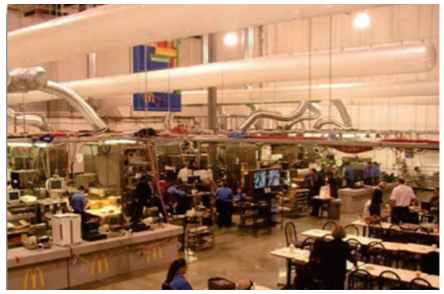
to improve operations and service at McDonald’s.
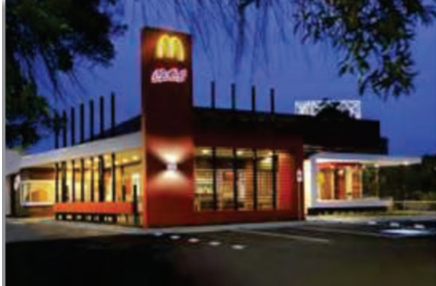
It used to take six months to a year to validate a test in a market, but now with the addition of operations research and the use of video analytics, it takes less than three months. This has allowed the overall innovative process to be accelerated, which in turn dramatically reduces the time to impact as well as the cost of innovation for the company.
EMERGING ROLE FOR O.R.
O.R. is a relatively new competency at McDonald’s, starting in 2004 under the vision of Ken Koziol (who is now the senior vice president of Restaurant Innovation). It started as a disciplined way of identifying what our operational issues were and framing the problems in an efficient way so that we could make tangible progress at a restaurant level.
Headed by the author, the O.R. group is now a source not only to Innovation, but also to many disciplines across the company in need of decision analytics to accelerate time to consensus and time to impact. Over the past few years we have built a team with talents in the area of video analytics, data mining/predictive analytics, predictive modeling and experimental design. These are the core competencies needed for our business right now.
A typical week includes engagement with a particular area of the world market to define and frame an opportunity. We lead the design of experiments to ensure that there is no wasted effort in the process of alpha testing. We help them decide which tools should be applied from our portfolio to give them the best overall results. We collaboratively run the experiments, offering up advanced sciences in rapid measurement and validation. Video analytics and auto-sensing technologies play a large part in this role. Once we have determined the most likely innovation solutions, we then apply our predictive analytics and modeling to rapidly evaluate the likely impact across the market under varying operating conditions.
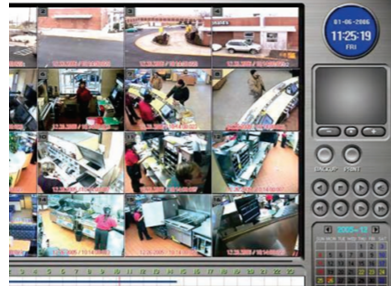
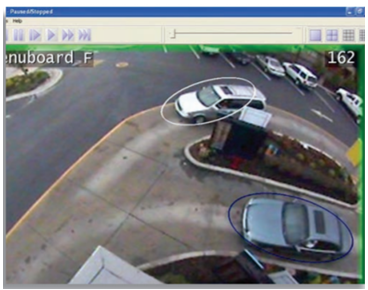
smoothly at McDonald’s.
With new markets coming in every week, over the course of time we have built a database of experiences that provide for deep operational insight and profound knowledge that help us accelerate the overall process.
WHAT'S NEXT
We continue to build our portfolio of tools and leverage across our technologies to advance our learning process. For example, we have been using the video analytics to better understand our restaurant employee’s behavior under various operational stresses in order to design out the stress while enabling them to reach their optimal performance.
We are leading the charge to equally blend innovation and science. I call it “Innovience,” the synergy of innovation and science where the enemy is waste. I see the opportunity to use this way of thinking to develop predictive consumer and employee behavior relative to a design. This will enable us to further accelerate the experimental process through new types of modeling which blend discrete, system dynamics and agent-based technologies.
Mike Cramer is the director of Operations Research at McDonald’s Worldwide Restaurant Innovation.
([email protected])