

February 1, 2010 in Humanitarian Logistics
How to Improve Humanitarian Logistics
Conference Addresses Major Challenges and Identifies 10 Ideas as Part of A Strategic Model For Successful Humanitarian Relief Operations.
SHARE: PRINT ARTICLE: https://doi.org/10.1287/LYTX.2010.01.05
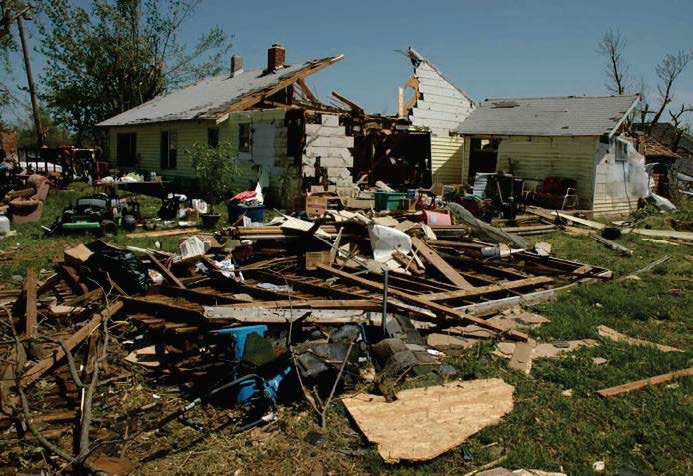
NATURAL AND MAN-MADE disasters swept through various the world and received attention over the past decade. Meanwhile, many parts of the world suffer from the lack of basic necessities, including shelter, water, food, education, access to basic health care and safety, which have been identified among “humanity’s top 10 problems over the next 50 years” [1]. Effective logistics operations are a critical component of addressing these needs.
With the objective of articulating challenges in the humanitarian logistics sector and identifying important research issues and opportunities, practitioners and researchers from around the world convened for the 2009 Humanitarian Logistics Conference (HumLog’09), held at the Georgia Institute of Technology in Atlanta. Conference participants – numbering more than 180 from non-governmental organizations (NGOs), government agencies, private companies and academic institutions – listened to presentations on key humanitarian logistics challenges and strategies to overcome them, focusing on disaster planning and response, long-term development, identifying important research issues and opportunities, and collaboration within and between organizations [2]. In addition to panel discussions highlighting these major themes, skill-building workshops and poster sessions allowed participants to interact with one another and share ideas to continue to improve their own organization’s efforts.
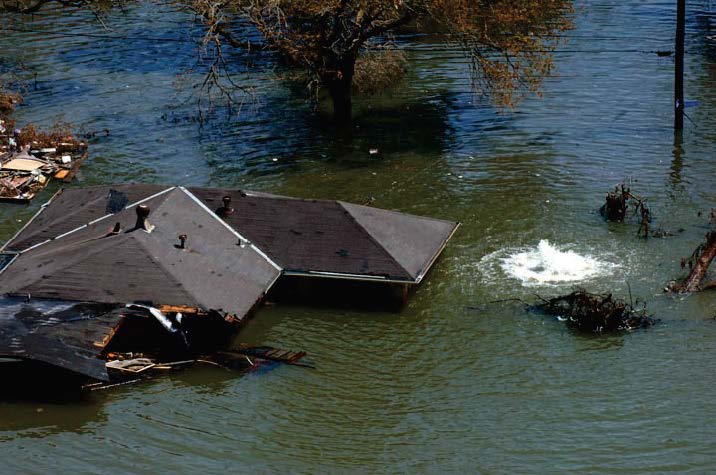
The challenges in humanitarian logistics are great and include, among others, limited availability of resources and infrastructure to address needs, high uncertainty and urgency characterizing response efforts, and the presence of multiple stakeholders who often act with different objectives [3]. Drawing on the outcome of the focused workshops, panel discussions and presentations, event organizers have identified the following 10 ideas that are consistently part of a strategic model for successful humanitarian relief operations.
TEN IDEAS FOR HUMANITARIAN LOGISTICS
- Demand analysis. Develop a basic framework to model the demand based on historical data, past experiences and most likely scenarios. Start with a disaster design: type, magnitude, location characteristics and other defining attributes.
- Inventory planning and control. Adequate inventory levels are critical given the high uncertainty of delivery lead times for relief supplies. Inventory pre-positioning is a suitable strategy to face uncertainty, especially when local supply might be very limited. Inventory management systems are useful to keep track of valuable information about quantity and quality of the inventory on hand.
- Regional coordination and synergies. Process standardization helps facilitate regional cooperation, but effort should also be placed on decentralized models of smaller coalitions among neighboring cities or countries with similar characteristics. Economies of scope in established emergency response systems support joint operations; and partnerships with multi-location and international corporations bring flexibility, robustness and agility to the supply chain.
- In-kind donations management. Consolidate donations so they can be classified and then redistributed, or reassign them to local organizations (e.g., churches, Salvation Army, etc.) who are equipped to deal with these donations. These organizations can either identify those items that can be used or sell some items to raise funds for relief efforts. Always enforce planning, communication and collaboration for in-kind donations processes. For example, a practice known as “donations in contract” can enable more robust supply chain processes. Rather than donors sending whatever items they have and requiring receiving organizations to sort and manage donations, “donations in contract” are only physically transferred when they are requested by the receiving organization according to the terms of the contract.
- Collaboration among organizations. Governments should play a leadership role in determining what critical resources the region needs and achieving coordination among the NGOs and all related organizations. Alliances should be sought between for-profit and non-profit organizations and between non-profit organizations, but these partnerships should be built before a disaster occurs. Other strategies to facilitate collaboration include information sharing and organization specialization (e.g., one organization focuses on clean water distribution), which may reduce competition among organizations.
- Understanding regional political, economic and socioeconomic conditions. Awareness of the local conditions is crucial for the success of the humanitarian operations. Arrange cultural awareness training programs to create opportunities for a given organization to meet with others that have previously worked in the region. Additionally, it is essential to involve the community in the preparedness processes and to understand their coping mechanisms before imposing other preparedness measures.
- Utilizing local capacity and capabilities. First, find out what capacity is already in place. Using local capacities and assets (e.g., local volunteers, mules, carts, etc.) offers the added benefit of giving community residents dignity and opportunities to participate in the response and recovery operations.
- Constant communication. Information from and communication with the people in the field, right where the disaster took place, is critical. Information and communication emergency systems should be built in advance. The use of mobile phones, when possible, has obvious advantages; moreover, telecommunications companies may see an agile disaster response as a marketing opportunity. Satellite phones might be purchased in advance in case terrestrial cellular service becomes unavailable. Various technologies such as GIS (Geographic Information System) and GPS (Global Positioning System) are available as part of robust current information systems.
- Socioeconomic impact assessment. Potential negative socioeconomic impact of humanitarian operations is undeniable, but it could be reduced. Past experiences and information sharing could be helpful. First, consider what is or is not likely to be needed in the affected region. Often, the economy functions such that it makes more sense for individuals to try to sell donated goods in the markets rather than using them. Second, offer aid that is sustainable by the local communities (e.g. provide the parts needed to fix a donated water pump). Finally, keep tradeoffs between the shortterm effectiveness of the response and the long-term impacts in good balance.
- Humanitarian operations evaluation. Humanitarian operations form a continuous improvement cycle that requires measurement. After a disaster, all learned lessons should be discussed and documented. Tracking the results of the humanitarian operations is particularly important; avoid strategies such as “truck and dump” that fail to document whether the supplies reach those in need. Humanitarian organizations should be measured not only in terms of efficiency and effectiveness but also outreach and public perception.
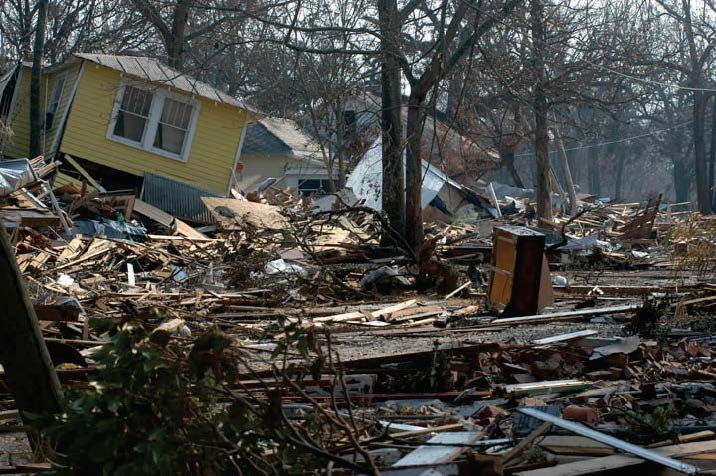
ENABLING SUCCESSFUL HUMANITARIAN PROGRAMS
IN ADDITION TO THE ELEMENTS described above, information technology (IT), education and research are important enablers of successful implementation of a disaster relief or developmental aid programs. IT allows collecting, storing, analyzing and disseminating all the data gathered before and after a disaster hits or as longterm aid operations progress. To make adequate use of IT, first identify the questions one wants to answer, the information that is needed, how the data will be collected and codified, and by whom and how the information will be administrated.
For humanitarian logistics to be recognized as a profession, adequate education is needed. Educational programs could span structured courses, seminars, conferences and training camps; and they should focus on problem-based methods that are practical. Training and informing the entire community is crucial, and all stakeholder organizations should take responsibility for raising public awareness.
Finally, universities have the ability to act as neutral parties and create a broad network that goes beyond borders among researchers and educators to develop new ways to improve humanitarian operations. Academicians should also be exposed to and understand the real aspects of humanitarian problems to make sure they are working to solve problems that are important in practice. Operations research and management science (OR/MS) methodologies and tools have already been developed extensively to benefit for-profit supply chains, and they should be adapted to the particular requirements of humanitarian supply chains. Researchers should focus efforts on innovative solutions to develop radical, instead of incremental, approaches to address these pressing challenges.

HumLog’09 provided a pivotal setting for dialogue about the challenges and opportunities in humanitarian logistics. By summarizing 10 components of successful humanitarian operations – as well as the role that information technology, education and research can play in enabling future progress – the conference organizers hope that this dialogue can continue in ways that lead to solutions to some of humanity’s most urgent problems. With these goals in mind, plans are underway for the 2010 Health and Humanitarian Logistics Conference, March 4-5, in Atlanta. Visit www.scl. gatech.edu/research/humanitarian/ to learn more about the conference.
REFERENCES
1. Smalley, R., 2003, “Top Ten Problems of Humanity for the Next 50 Years,” Energy and Nanotechnology: Strategy for the Future Conference, Rice University, May 2003; http://cnst.rice.edu/content.aspx?id=246.
2. Christopher, B., 2009, “Global Response to Humanitarian Logistics Conference 2009”; http://tli.isye.gatech.edu/news-events/release.php?id=2645.
3. Ergun, O., Keskinocak, P., Swann, J., Villarreal, M.,2009, “Humanitarian Logistics: uncertainty, damaged infrastructure, politics highlight top-10 challenges facing analysts during disasters,” Analytics, Spring 2009, p. 31-33; http://viewer.zmags.com/publication/7c795aa6#/7c795aa6/33.
4. www.scl.gatech.edu/research/humanitarian/
Pinar Keskinocak is the William W. George Chair and Professor in the H. Milton Stewart School of Industrial and Systems Engineering and director of the Center for Health and Humanitarian Systems at Georgia Tech. Previously, she has served as the College of Engineering ADVANCE Professor. She is an INFORMS Fellow and past-president.
([email protected])