

February 6, 2012 in Five-Minute Analyst
Doctors and waiting rooms
SHARE: PRINT ARTICLE: https://doi.org/10.1287/LYTX.2012.01.13
A friend recently asked, “Why do I always have to sit and wait at the doctor’s office? The doctors should do a better job of scheduling.” I thought I’d spend a few minutes – five to be precise – and wonder, “Is it true that waiting for the doctor is a symptom of poor scheduling?”
First, what does “good scheduling” mean? If you are the customer in just about any situation, you want the line (or queue) to be short; ideally, you would walk into the doctor’s office and it would be empty and you would be seen immediately. The provider (doctor in this case) has the opposite problem – they only make money when they are serving customers, and ideally they would have a room full of patients and go from one to the next without any waiting at all. An important insight is that not all idle doctor times are created equal. Waiting times in the middle of a workday are costlier than waiting times at the end of the day; if the last customer doesn’t arrive, you simply close up early and go home.
Now, the doctor knows how much it costs to have a patient miss an appointment – it’s expensive to keep the lights on, have the staff present and pay for the machine that goes “ping” [1]. Because the doctor gets to set the schedule, they get to decide what “good scheduling” means; for them, it means minimizing the probability that there is time with no customers during the day.
Many queueing models are based on the “Markovian” or the M/M/1 Queue [2]. The assumptions underlying this model are inappropriate for a doctor’s office with scheduled appointments [3] – scheduled patients are not random arrivals. The amount of time the doctor spends with each patient is not independent: If they get ahead with one patient, they may take more time with next one.
I’m going to propose a model in a purely deterministic setting: Patients arrive exactly on time, and we will assume that the appointments are spaced 15 minutes apart. There are two parts to the doctor’s appointment. Check-in and vital signs take 15 minutes; then the doctor takes exactly 15 minutes with each patient. If each patient shows up on time, the patients are seen by the doctor in the order they arrive and they depart exactly 30 minutes later.
Now consider a doctor’s office with missed appointments. Suppose there is one doctor, and he works a “morning shift” from 8 a.m. to noon. Assuming no breaks, he will see 16 patients. Let’s assume there’s a 5 percent chance that each patient independently misses a doctor’s appointment. How many patients does the doctor need to schedule to be reasonably sure that he will not have any idle waiting time in the middle of his morning? This is an application of the binomial distribution, which measures the number of successes (patients showing up for their appointment) in a given number of trials (scheduled patients) with a constant probability of success. A little computation [4] shows that if the doctor can service 16 patients in a morning, he should schedule 18 patients to be 95 percent certain that he won’t have any idle time during the middle of his morning, with the two extras at the beginning of the day [5]. From the patients’ point of view, this means that there will usually be two patients standing by. If all patients show up on time, the patients after the first one will have 30 minutes waiting time for a total visit of 45 minutes – 1.5 times the amount of time they would have spent with “perfect” scheduling.
So how should patients feel about this? If the doctor “takes risk” by not overbooking, the result will be more idle time – which translates to higher fees for the patients who do arrive. Although patients complain about waiting times, scheduling with shorter waiting times would increase the doctor’s risk – with an accompanying raise in fees. The increased fees required to have shorter waiting times are probably not economical for most people (i.e., the increase in cost per hour is likely greater than a person’s productivity per hour). So, surprisingly, having to wait for the doctor may be the optimum solution!
Notes & References
- See “Monty Python and the Meaning of Life.”
- Using Kendall Notation. Interested readers may “like” it on Facebook. Really. https://www.facebook.com/pages/Kendalls-notation/135308033169828?ref=ts&sk=info
- But they are very applicable for an emergency room.
- Specifically, find the minimum N such that
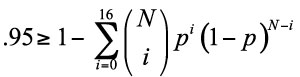 with
with 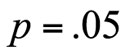
- Of course, to be 100 percent certain, the doctor would need to schedule an infinite number of patients!
Harrison Schramm, CAP, PStat, is a senior lecturer at Naval Postgraduate School, splitting his time between Defense Management and Operations Research where, in addition to teaching, he runs the Contested At-Sea Logistics Lab (CASLL). He served as the inaugural chair of the INFORMS Security Conference and is a past president of the INFORMS Analytics Society.
([email protected])