

June 3, 2013 in Five-Minute Analyst
Empty Inbox
SHARE: PRINT ARTICLE: https://doi.org/10.1287/LYTX.2013.03.11
I arrived recently at my office on a Tuesday morning to find that there were no messages in my box from the previous evening. Now, I had left the office at about the same time that most of my colleagues (who generate the lion’s share of my e-mail), and as I rarely get e-mails from other time zones, I didn’t think too much about this. As 7:30 a.m. became 8 a.m., I began to suspect that something was indeed wrong with my e-mail. Our question today is: How long should one go without receiving an e-mail before concluding that something strange has happened and call IT support. The bloom of spring always reminds me of the beauty of the Poisson process, and here’s the result:
The simplest model for arrivals (of any sort) is to just say that they arrive as a Poisson process, with a fixed rate parameter,  , and consequently, the distribution of inter-e-mail arrivals is exponential. We can find the critical time for a given confidence level
  by solving the equation
 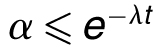 . While straightforward, there are a few devils lurking in the details. In a typical nine-hour day (including lunch), I receive around three e-mails per hour, so
 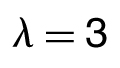 , and I will declare that my inbox is broken if I go longer than roughly one hour without e-mail. This is a simple model, and it is probably a bit too simple for most applications. Let’s explore some refinements:
1. The Markov property assumes lack of memory and independence. However, our experience lets us know that the e-mails that arrive in our inboxes can be highly correlated. For example, an e-mail from our boss tasking us and a co-worker for a project can lead directly to other e-mails from co-workers. Additionally, if I send e-mails to a large group of people, I may get several “out of office” replies, which themselves may be evidence that my e-mail is working properly. You may partially control for correlation not considering the actual e-mails, but rather the conversation; Gmail does this automatically, Outlook does not.
2. E-mail has strong time-of-day effects. The peak times for e-mail (as determined by an informal survey) are at the beginning of the day, immediately after lunch and immediately before quitting time. The lulls in the e-mail traffic are during lunch, the mid-afternoon circadian trough. There are also strong day-of-the week effects as well, with Monday mid-morning being a big e-mail time. Now, if we observe our e-mail box at the cutoffs between these events, we are OK. However, we run into difficulty if we take a long lunch, for example, and are away for parts of two periods We can revise our model by moving from the basic Poisson process to a non-homogeneous Poisson Process, where we replace the fixed rate parameter, ,with a rate function 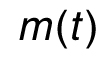 and the probability that the next inter-arrival time will be greater than T is
 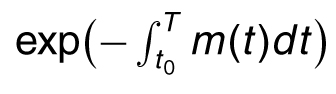 . For example, if I get two e-mails per hour between 8 a.m. and 10 a.m., and one e-mail per hour between 10 a.m. and noon, then
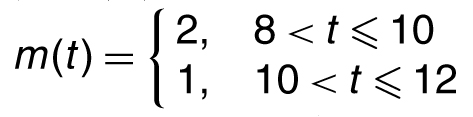
and if I want to know the probability that we receive zero e-mails between 9 a.m. and 10:30 a.m., we will find the answer is approximately 8 percent.
3. The aforementioned e-mail arrival distribution is also useful if you are trying to escape from your desk to visit the gym without feeling like you have “missed something important.”
4. There is strong dependence between e-mail accounts. For example, if your server has failed, then not only will you not have e-mail, but many of your colleagues will not either. Depending on your arrangement, this can be correlated by job title, last name, geographic location or some other factor. Additionally, you might consider your electronic communications in total; after working hours, the amount of your e-mail on your company account may dwindle, but it is made up for by increased traffic on your personal account.
Finally, a word on the selection of . Many statistics students (and professors!) “blindly” use a value of .05, which implicitly means that they will be wrong 1 in 20 times. However, in the case of calling the IT department, this really depends on your relationship with the IT folks, how many times you have called before, whether you want them to mine your account for the problem, and whether you think you caused the problem yourself.
Harrison Schramm, CAP, PStat, is a senior lecturer at Naval Postgraduate School, splitting his time between Defense Management and Operations Research where, in addition to teaching, he runs the Contested At-Sea Logistics Lab (CASLL). He served as the inaugural chair of the INFORMS Security Conference and is a past president of the INFORMS Analytics Society.
([email protected])