

August 5, 2013 in Analyze This!
Silicon Valley’s ‘serial entrepreneurs’
SHARE: PRINT ARTICLE: https://doi.org/10.1287/LYTX.2013.04.09
A dozen or so years after the bursting of the Internet bubble, Silicon Valley is once again in the spotlight as a symbol of its times. The press coverage of Napster founder and former Facebook President Sean Parker’s $10 million wedding has brought cheers from some, jeers from others, and a series of spirited rejoinders from its perpetrator [1]. George Packer’s recent article in the New Yorker [2] shines a somewhat harsh light on the region (the money quote: “… after decades in which the country has become less and less equal, Silicon Valley is one of the most unequal places in America”). And as Somini Sengupta recently reported in the New York Times [3], despite the best efforts of various governments around the world to lure technically talented young people to their shores with visas and funding opportunities, the Silicon Valley dream of quick wealth and enduring fame continues to exert an extremely powerful pull on their imaginations (one aspiring Indian entrepreneur describes the region as “the N.B.A. of the start-up world”).
Analytics are increasingly central to the lore, and the lure, of Silicon Valley. A great deal of leading-edge research on data analysis and modeling continues to happen on the Stanford campus, and many analytic innovations have roots that can be traced back to this research. More recently, as the launching pad for Internet search engines, online social networks and mobile application development, an increasing number of Silicon Valley companies have featured intelligent use of huge volumes of data as part of their “value proposition.” In turn, the development of Hadoop and the much-ballyhood “Big Data” revolution have largely happened in response to the explosion of data resulting from the needs of search, social and mobile platforms.
One recent Saturday night, I took a trip down to Silicon Valley from my home in Oakland. While the drive took less than an hour, the cultural distance is startling: the New York Times has referred to Oakland as “rust belt town” [4], and the city’s role in today’s technologically enabled global economy is primarily as a prominent physical node (because of its large container port).
I drop in to a sports bar to see an old friend, an analytics professional who has been working for more than a decade in the world of online advertising. He brings me up to speed on recent developments: the Hadoop-enabled platform that his group has been building and using for a couple of years lets them utilize more of the data that their network captures and enables them to control decisions on a much more granular level than their previous optimization platform.
He also expresses some frustrations: “Senior management depends on our algorithms to drive revenue, and there are a lot of people tasked to make sure the targets are actually met. But they don’t understand – and don’t really try to – what the models are actually doing, so every time we seem to be heading for a quarterly revenue shortfall there’s some kind of fire drill where a lot of silly ideas get thrown around by people who don’t know what they are talking about, because they are afraid of looking dumb in front of executives that are demanding answer from them.”
As I’m leaving, he points out that most of those people have MBAs, “so keep doing what you are doing with that consulting class.” [5]
At my next destination, over drinks at a pleasant birthday party, I meet a supply chain manager who admits to an obsession with relentlessly squeezing out costs. My attempts to engage him in a discussion of the broader impact of global supply chains, including the impact of the recent tragedy in Bangladesh [6], are moderately successful, and he quickly mentions regular supplier audits, best practices and various other programs that his company promotes on their website. He clearly knows the right things to say, but for some reason, I still leave this conversation feeling like he’s a lot more focused on his bonus plan than his supplier scorecards.
Finally, I end up at a somewhat upscale dinner with an interesting collection of technology professionals, most of whom I’m just meeting for the first time. I quickly notice that several of them are wearing attractive, elegantly designed gadgets to track blood sugar levels, heart rates, blood pressure and other health-related data. This observation triggers a friendly debate about which glucose meter is the best and most technologically advanced (several of us are from India, which makes us three times more likely than white Americans to be diagnosed as diabetics [7]). As for me, since being diagnosed with type 2 diabetes several years ago, I basically use the only one for which my insurance company is willing to provide test strips.
Our host listens to this discussion with a faintly amused look. From previous conversations, I know that he is working hard on a health-related start-up company. He and his colleagues, most with computer science and engineering backgrounds, have been scouring a number of publicly available databases searching for correlations and opportunities. They have also been furiously reading trade publications and research literature, one of them even taking a class on endocrinology, to develop the background needed to generate better hypotheses to investigate. The guys leading this thing up are what Silicon Valley folks call “serial entrepreneurs,” and they have successfully sold a couple of companies already. I’m not sure what they will end up doing with this venture – neither do they, frankly – but I’m pleased to see that they are focused on using data to improve the state of our public health, and I wouldn’t bet against them doing something significant.
A quarter century after arriving there as a young and naïve graduate student, my own feelings about Silicon Valley are decidedly mixed. It is certainly no accident that I no longer live or work in the tech industry echo chamber [8], and in talking to the supply chain executive and listening to the jousting about whose glucose monitor was the most techno-chic, I was reminded of some of the reasons. But it is also no accident that I still live nearby, thereby keeping my ringside seat at the circus, and that I look for reasons to visit there often. The vast majority of the young people who continue to flock in droves to Silicon Valley are not actually going to change the world much. And yet collectively its denizens have had an astonishing impact on our world – and on the world of applied analytics – and there is seemingly no end in sight.
Anyway, I’ll be heading back down again next month. Who knows what I might find down there next time?
REFERENCES
- See, for example, http://news.cnet.com/8301-1023_3-57589288-93/sean-parker-on-his-wedding-redwoods-and-death-threats/
- http://www.newyorker.com/reporting/2013/05/27/130527fa_fact_packer
- http://www.nytimes.com/2013/06/06/technology/wishing-you-and-your-start-up-were-here.html
- http://www.nytimes.com/2012/08/05/magazine/oakland-occupy-movement.html?pagewanted=all
- For more about my MBA course, see http://analytics-magazine.org/may-june-2013/798-analyze-this-course-puts-students-in-the-analytics-game
- See, for example, http://www.ft.com/cms/s/0/5bd48c1a-b7e2-11e2-9f1a-00144feabdc0.html#axzz2WUz50Bbi
- http://forecast.diabetes.org/news/indian-ethnicity-tied-higher-diabetes-risk
- See, for example, http://bits.blogs.nytimes.com/2013/06/02/disruptions-the-echo-chamber-of-silicon-valley/
Vijay Mehrotra is a professor in the Department of Business Analytics and Information Systems at the University of San Francisco’s School of Management and a longtime member of INFORMS.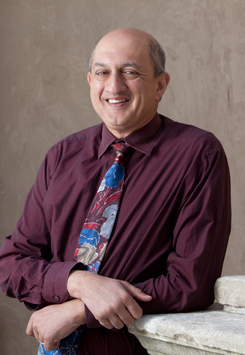
([email protected])