

November 2, 2015 in Analyze This
My ‘Philadelphia Story’
SHARE: PRINT ARTICLE: https://doi.org/10.1287/LYTX.2015.06.09
After a year’s reprieve (fortunately for me, the INFORMS Annual Meeting was here in San Francisco last year), I find myself once again scrambling to get ready to leave my family and students behind for a few days in the middle of the semester to take a trip across the country to meet with my professional peers. This time around, the conference is in Philadelphia.
An operations research conference. In Philadelphia. Brings back a lot of very poignant and vivid memories for me.
Twenty-five years ago this fall, the ORSA/TIMS conference was held at the Wyndham Hotel in Philadelphia. In those days, I was a struggling young graduate student, plodding away without much confidence or direction and searching for a topic worthy of a Ph.D. thesis.
After reading some of Ward Whitt’s papers on queueing networks, I came up with an idea that I thought might be a good dissertation topic. After that initial insight, however, I spent nearly a year looking at all sorts of things that led nowhere in particular.
I had a strong sense that I was on to something, and yet I lacked the gumption to simply pick up the phone and call the great Ward Whitt. I was in awe of this man – he had forgotten more about probability and queueing than I had ever known – and I was terrified of revealing my ignorance and my utter lack of genius. Heck, I didn’t think he would even take my call.
When I happened upon a program of the 1990 ORSA/TIMS Conference in Philadelphia, I saw that Whitt would be presenting a paper. Although I had no thesis topic, no dissertation advisor and no conference travel funds, I decided in a desperate moment to go to the conference. No paper to present, no old friends to meet up with, no job interviews; I had no “real” business being at that conference. My sole purpose in getting on that airplane was to present my research idea to the one person that was surely knowledgeable enough to tell me whether it was a topic worth pursuing.
Traveling on Sunday from San Francisco, my flight seemed to take forever. I arrived in Philly late that night, and slept on a couch in my friend’s mother’s small suburban apartment. The next morning, I got up and caught a train into the center of the city. Once inside the conference hotel, I felt completely like a fish out of water. I had never been to an academic conference of any type before, and all of the logistics had only heightened my anxiety level. I sat through one unintelligible presentation after another. I nervously roamed through the halls. All the while, I felt lonely and paralyzed, wondering how I might approach this wise man.
All day Monday, I couldn’t find him. Translation: Consciously or unconsciously, it seemed that I had gone out of my way to avoid sessions where I might run into him. At the Monday night reception, I finally spotted him – thank God for name tags – but the loud and crowded room seemed like a less than ideal setting to talk about two-moment approximations. Translation: I chickened out.
My flight back to California was scheduled for Tuesday night, so my real last chance to corner him was a Tuesday morning session where he was presenting. Arriving late, I slipped into a chair in the back of the room, my heart pounding. Afterwards, I struggled to my feet and approached the small crowd that had gathered around the presenters. Meekly awaiting my opportunity to speak, I finally heard a pause in the conversation and, somewhat hesitantly, waded in.
“Do you perhaps know,” I asked timidly, “if anyone has done anything with the Fixed Population Mean [1] method?” He looked at me with pure kindness in his eyes, and his words were like music to my ears: “You know, no one really has, and I really think it is worth looking into further!”
Encouraged, I stammered out a few more sentences, trying hard not to humiliate myself by displaying my very serious intellectual limitations. Ward on the other hand treated me like a respected colleague, offering several enthusiastic off-the-cuff suggestions, as well as his Bell Labs business card. I thanked him profusely and repeatedly. Hell, I could have kissed him.
Back on campus, with a newfound sense of purpose, I spent the next few days writing up a 12-page document that outlined the problem statement and my proposed solution methodology. When I finished, I printed out a copy and sent it off to Ward.
Less than one week later, I received a thick envelope with Ward’s initials and address on the return label. In it, I found detailed, line-by-line comments about the document that I had sent him (which ultimately became the introductory chapter of my thesis), along with several papers that were directly relevant to my research. This feedback did wonders to bolster my spirits, and the papers were an invaluable set of references for my work. I successfully finished my dissertation less than two years later.
No one conversation or experience determines the course of a lifetime. But finishing my Ph.D. – and perhaps even more importantly, managing not to quit before I did, despite coming to the edge several times – did wonders for me. By managing to finish what I had started, I emerged from graduate school with a credential and a sense of confidence that together have turned out to be a gateway to the two very interesting careers, first as an analytics consultant and entrepreneur and more recently as a business school analytics professor.
Thinking back on this long-ago conference in Philadelphia, it was clearly a turning point for me. To this day, I feel deeply indebted to Ward Whitt, and I still marvel at the generosity of this extraordinary scientist and scholar with seemingly nothing to gain by helping out a young, nervous stranger like me.
May we all someday have the chance to experience such compassion.
Note: Portions of this column were previously published in http://www.orms-today.org/orms-12-03/frsomething.html
REFERENCES
Vijay Mehrotra is a professor in the Department of Business Analytics and Information Systems at the University of San Francisco’s School of Management and a longtime member of INFORMS.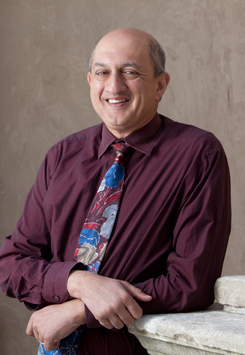
([email protected])