

December 4, 2017 in Healthcare Analytics
Social determinants of health
The next frontier for healthcare and analytics emerges while federal healthcare policy remains in chaos
SHARE: PRINT ARTICLE: https://doi.org/10.1287/LYTX.2017.06.09
The last two months were eventful for healthcare. The Affordable Care Act (ACA) endured another repeal-and-replace attack in congress. The latest bill, known as the Graham-Cassidy bill, was withdrawn by Senate Republican leaders when it became clear that the bill would not receive the 50 votes needed for passage. The Congressional Budget Office (CBO) didn’t have time to score the bill by the Sept. 30 deadline, but at one point it seemed the Senate would go forward with the vote anyway. That was surprising given the negative reaction the bill and its predecessors received from many healthcare stakeholders, as well as the public.
On Oct. 12, President Trump signed an executive order allowing health plans to sell insurance that wouldn’t require inclusion of the coverages that ACA required (e.g., pre-existing conditions). It will take time and legal battles before those executive orders will be implemented, and we might see similar repeal-and-replace attempts during the next year.
While occupied with Graham-Cassidy, Congress failed to extend funding for two critical elements of the U.S. healthcare system: community health centers and the Children’s Health Insurance Program (CHIP) for low-income families. Community health centers are the only place to go to for millions of low-income Americans countrywide for primary care, behavioral care, dental care and vision care. Since a big chunk of their funding comes from federal grants, many of the 9,000 community health centers around the country might have to close their doors, resulting in as many as 50,000 job losses and 9 million people losing access to healthcare. Hopefully by November, Congress will act to extend this critical funding.
Social Determinants of Healthcare
While the health policy world is in disarray, the concept of social determinants of health (SDOH) is emerging as the new mantra in healthcare as evidenced by the start of the fall healthcare conference season. One such conference, Health 2.0, focused on bringing new innovation in healthcare to the forefront and helping to connect buyers and sellers. More than 90 companies, mostly startups, exhibited their apps and solutions to address the “post-electronic-health-record” world of healthcare. I was invited for a panel discussion on population health management (PHM). PHM was the buzzword in healthcare technology conferences last year, while this year the conversation has moved toward artificial intelligence. PHM, meanwhile, still remains as broad and as elusive as ever.
A few of us practitioners got together to discuss a more focused piece of the broader PHM topic: value-based care and, in that context, value-based payment. Those are two different things, but the latter usually drives the adoption of the former – and data and analytics are the key drivers for both. In the value-based care world, “value to a patient” needs to be defined first. Both the payer and the provider will have to agree on that definition. Then the value needs to be realized for a payment to be made. Often, we struggle in the process of defining value and then demonstrating that value effectively over a time period that is more than a few months. Value-based contracts, therefore, are risky financially.
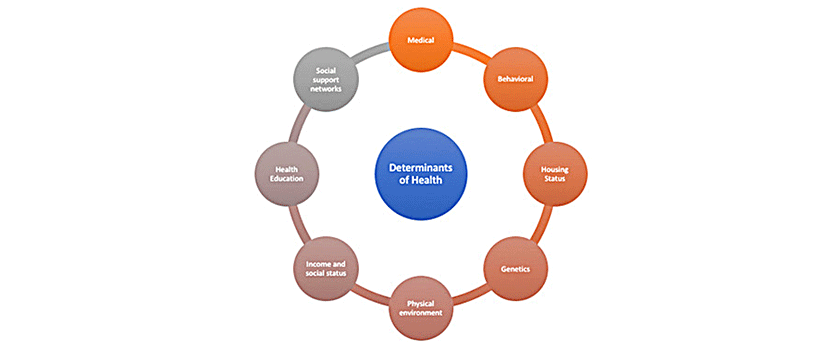
From the many programs implemented in the past we have learned that uncoordinated care is the biggest problem in the successful implementation of PHM. There are myriad reasons why care delivery remains uncoordinated. Many times, effectiveness of care breaks down due to social determinants – patient’s housing status, transportation needs, access to hearty meals, domestic abuse situations or behavioral health. Cities and counties across the country are finally waking up to this need and what it means in terms of data acquisition, integration and analytics. PHM can’t be effectively implemented without the inclusion of those details. These issues are also more prevalent among the more vulnerable patient population that resides at the bottom of the wealth pyramid. That is the space where community health centers provide the bulk of their services and hence have access to the most valuable data. Keeping community health centers open and running is, therefore, critical.
Many Platforms Yet Solutions are Rare
I found several startups and growth-focused companies showcasing their software to solve the above-mentioned problem, but I didn’t see the scale or the scope of what is needed. During the last couple of years, the technology community used data analytic systems and services as the means to achieve PHM. Electronic health record (EHR) companies flexed their PHM muscles too, but they didn’t have data beyond medical records. This has started to change somewhat. First, big data was brought into the healthcare space to augment medical records, which produced some big ideas such as precision medicine, gene therapy and flu prediction. Then the industry woke up to the new reality that only a small percentage of patient’s health is related to medical conditions, while the remaining are tied to various other influences ranging from genomics to social conditions. This gave rise to the growing offerings of data and alert “platforms” in the form of “platform-as-a-service” model. I am seeing glimpses of that movement at several conferences. No single platform is yet to emerge as “the solution” or even close. Acquiring, storing, connecting, analyzing and interpreting data from sources as diverse as medical records to criminal justice system records is a difficult problem. It is almost in the realm of research, but that is what cities and counties need to effectively manage the health of the “whole person” in various communities.
What About Analytics of SDOH Data?
The analytics needed on this multi-dimensional data set is not very clear, but many governmental agencies are now carefully looking into it. California has approved 18 pilot programs called “Whole Person Care,” programs where the concept of the “holistic” care of a patient’s health will be tested in the coming years. The road to success is laden with security and privacy minefields, along with political disagreements, that will present significant barriers. The goals are lofty and the pathways are not quite clear. Data stored in various stakeholder systems such as housing agencies, acute care hospitals and mental health clinics are siloed, unclean and in variable formats. Turning all of that into clean, analyzable status for decision support will be a multiyear process, and many startups might not have that long of a runway. However, tremendous opportunity exists that can be tapped into. Will the EHR companies come to the rescue?
Interestingly, the CEO of Epic, the leading EHR company in the country, during its recent annual user group meeting mentioned that EHR is not enough. She would like to focus on bringing in more data from outside of EHR to build “community health records” that can be shared with multitude stakeholders responsible for keeping a patient at home and in a managed state of health. Will others adopt this major shift as well? The answer is still unknown, but I am hopeful that this trend will continue into 2018 and beyond.
Rajib Ghosh is the founder and CEO of Health Roads, LLC, a consulting company for enabling digital transformation in healthcare organizations. He has 25 years of technology experience in various industry verticals where he had management roles in software engineering, data analytics, program management, product management, business operations and strategy development. Ghosh spent a decade and half in the U.S. healthcare industry as part of a global ecosystem of medical device manufacturers, medical software vendors, telemedicine and telehealth solution providers. He’s held senior positions at Hill-Rom, Solta Medical and Bosch Healthcare. His recent work includes leading data-driven digital transformation in the public health space, including county-level healthcare agencies and organizations focused on underserved populations.
([email protected])