

January 1, 2018 in INFORMS Initiatives
Essential skills, football, CAP & ‘tortured artists’
Workshops on essential practice skills for analytics projects
SHARE: PRINT ARTICLE: https://doi.org/10.1287/LYTX.2018.01.09

Patrick Noonan, a former management consultant, business owner and college professor, will teach a series of two-day workshops in 2018 at three cities around the country as part of INFORMS’ Professional Development and Continuing Education program. The workshops, entitled, “Essential Practice Skills for High-Impact Analytics Projects,” will be held Feb. 21-22 at Georgia Institute of Technology in Atlanta, June 20-21 at the University of Denver in Denver and Sept. 19-20 at the AMA Washington D.C. Area Executive Conference Center in Arlington, Va.

Noonan combines a hands-on teaching and learning approach honed from faculty positions at Harvard, Duke and most recently Emory University, with real-world experience from his business career starting at global management consulting giant McKinsey & Co. By the end of the course, participants will:
- Learn to link their subject-matter expertise to the challenges of messy, unstructured problems, organizational noise and non-technical decision-makers.
- Understand best-practice techniques, including: problem statement summaries, issue trees, interview guides, work plans, sensitivity analysis, stress-testing recommendations, the “Pyramid Principle” of story logic, story-boarding, slide-craft, delivering presentations and fielding Q&A.
Participants in the workshop will learn and hone the skills they need to turn analytical insights into organizational actions that drive innovation, growth and efficiency. Past participants have come from a wide variety of industries, including manufacturing, healthcare, finance, transportation and many more, and have ranged from CFOs and data scientists to research analysts, business intelligence professionals, academic program directors.
For more information or to register, click here.

New study: Social media can provide universities with valuable insight into the decision-making process of recruits.
Photo Courtesy of 123rf.com | © Mykhailo Orlov
Football recruiting: model predicts student-athletes’ pick of universities
With revenue from college football at an unprecedented $3.4 billion annually, universities across the country invest tens of millions of dollars each year in recruitment efforts to attract high school athletes to play for their football teams. But with talented players typically receiving scholarship offers from multiple universities, team rosters are in limbo until student athletes commit to a university. However, a new study in the INFORMS journal Decision Analysis shares how social media can provide universities with valuable insight into the decision-making process of their recruits.
The study, “Online and Off the Field: Predicting School Choice in College Football Recruiting from Social Media Data,” was conducted by Kristina Gavin Bigsby, Jeffrey W. Ohlmann and Kang Zhao from the University of Iowa. The authors scraped data on 2,644 high school football athletes in the 2016 recruiting class from 247Sports.com, an online recruiting database.
“For each individual athlete, we collected timelines of recruiting events, such as scholarship offers, visits, commitments and de-commitments,” Bigsby says. “We also obtained basic information about the recruiting schools, including location, academic ranking and football team ranking.”
From there, the authors narrowed their data set further to 573 student athletes with two or more scholarship offers and public Twitter accounts. By evaluating tweet content, hashtags, followers, accounts followed and other Twitter interactions such as mentions, replies and retweets, the authors developed a model to help predict which universities student athletes would ultimately commit to.
“When a student interacts with a university on Twitter, this is associated with an 85 percent increase in the odds of selecting that school,” Ohlmann says. “In addition, when anyone associated with a university (coach, other recruit or current athlete) begins following a student on Twitter in the month leading up their decision, the odds of that student attending that university increase 40 percent to 51 percent for each new follower.”
The authors also found that for every coach or fellow recruit of a university that a student began following on Twitter, the student became 47 percent to 62 percent more likely to attend that university. Alternately, the likelihood of a student attending a university decreased by 3 percent for every account the student began following from a different university.
For hashtag fans, the likelihood of a student attending a specific university increased by 305 percent when that student referenced the university in a hashtag, while mentioning an alternate school was associated with a 65 percent decrease in those odds.
The insight provided by the model can give university coaching and recruiting staff earlier insight into which students will commit to their teams, as well as to those of competing universities, helping all of them to better allocate resources toward the most viable candidates.
“The personnel needs of a college football program can change quickly in the final weeks of recruitment – especially in cases where a previously committed athlete de-commits – compelling coaches to revisit their options,” Zhao says. “Our model may also prove helpful to coaches attempting to identify and recruit athletes without a strong attachment to any school.”
The full study is available here.
Certification program adds new testing vendor, enhancements for 2018
As of January 2018, PSI, a globally recognized leader in certification testing, will be serving Certified Analytics Professional (CAP®) candidates. INFORMS is working closely with it new provider to finalize new procedure for registering those interested in taking the CAP exam.
The switch to the new testing service brings enhanced services. Candidates will receive an official score report with a diagnostic profile immediately after testing. If the candidate passes, he or she will quickly receive a digital certificate from Accredible. The CAP pin will be mailed separately as before.
Speaking of Accredible, have you linked your unique Accredible URL to your LinkedIn site? Have you placed it in your e-mail signature? Have you shared it with family and friends? CAP certificants are a small, select group – about 500 worldwide. It’s a very exclusive club, so leverage it to your advantage.
Keep in mind that the CAP designation has the coveted endorsement for its rigor and internal competence by ANSI, the American representative to the Organization of International Standards under ISO/IEC17024.
For more information, contact INFORMS certification manager at ([email protected]) or visit www.certifiedanalytics.org.
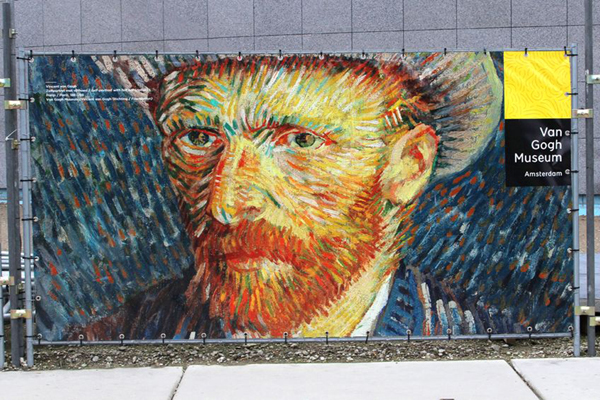
Vincent van Gogh certainly qualifies as a “tortured artist,” but misery tends to hurt, rather than help, the value of work by great painters.
Photo Courtesy of 123rf.com | © Inge Hogenbijl
Study paints a different picture of ‘tortured artists’ and value of their work
The term “tortured artists” has been used to describe some of history’s greatest painters, from Vincent van Gogh and Henri de Toulouse-Lautrec to Pablo Picasso and Jackson Pollock. They are credited with creating some of the world’s most recognized works of art despite lives that were often characterized by great emotional unrest and personal unhappiness. But does misery really beget valuable works of art? According to a new study in the INFORMS journal Management Science, personal unhappiness, particularly that experienced in times of mourning or bereavement, can actually cause a significant decrease in the value of an artist’s work.
The study, “Death, Bereavement and Creativity,” was conducted by Kathryn Graddy of Brandeis University and Carl Lieberman of Princeton University. The authors studied the prices of more than 10,000 paintings produced by 33 French impressionist artists and more than 2,000 paintings by 15 American artists born between 1900 and 1920, and their relation to the dates of death of the artists’ friends and family members.
By looking at the sale and auction price of these artists’ works from 1972 to 2014, the authors found that any paintings created in the year following the death of a friend or relative saw a decrease in value of about 35 percent compared to the rest of the artist’s catalog. The authors also found that there was no statistically significant difference in terms of whether the death involved a parent, a sibling or a friend, and this decrease in the value of their work typically did not extend beyond that one-year time frame.
In addition to studying the impact of bereavement on the cost of paintings, the authors also reviewed the likelihood of a painting being included in a museum collection. By gathering information on all paintings created by the artists included in the study that are in the collections of the New York Metropolitan Museum of Art, the Art Institute of Chicago, the National Gallery of Art, the J. Paul Getty Museum and the Musée d’Orsay, the authors found that artwork painted in the first year following the death of a spouse, child, sibling or friend were much less likely to be included in a museum collection.
“Our analysis reflects that artists, in the year following the death of a friend or relative, are on average less creative than at other times in their lives,” Graddy says. “Paintings that were created in the year following a death fetch significantly less at auction than those created at other times in an artist’s life, and are significantly less likely to be included in a major museum’s collection.”
The full study is available by clicking here.
SHARE: