

January 7, 2019 in ReCAP
ReCAP: Rajan Gupta
SHARE: PRINT ARTICLE: https://doi.org/10.1287/LYTX.2019.01.06
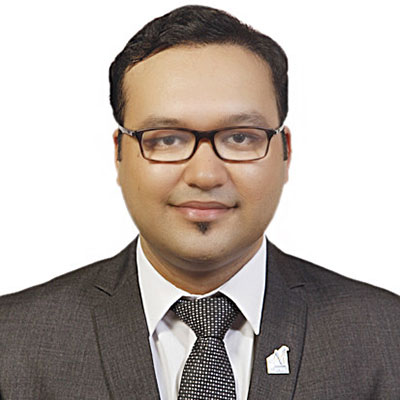

Name: Rajan Gupta
Employer: University of Delhi, India
Job Title: Assistant Professor
Also working as Independent “Research and Analytics Consultant”
Primary Job Functions
- Teaching Data Science Subjects like Data Mining and Statistics using R
- Conducting research projects in the field of Data Science and Computer Science
- Working on industrial projects related to Data Analytics
- Authoring books and research papers related to Data Science and Computer Science

Date CAP Certification Was Earned
November 3, 2014. Recertified on March 1, 2018.
I was amongst the first batch of candidates clearing the exam and achieving CAP status in India in 2014. I attended the CAP reception ceremony at San Francisco in November 2014. It was my privilege to meet members of INFORMS team like Melissa Moore, Scott Nestler, Polly Mitchell, Louise Wehrle, Thomas Chestnut and the likes.

What is your opinion on the value of professional certifications for both students and practitioners?
Professional certifications solve two purposes for practitioners. Firstly, it helps them in showcasing their certification related skills for career growth, job change and project allocation. Secondly, it helps them in gaining self-confidence for the career chosen by them. Certifications are small achievements which give motivation to the practitioners to work well in their respective fields.
For students, it is a testimony of their seriousness and dedication towards a specific field. Certifications also help them to stand-out of the crowd at bottom of the pyramid. Recruiters are attracted towards profiles with extra-skills/credentials and certifications certainly helps these students in strengthening their case for getting selected for a job.

Why did you choose CAP over any of the other analytics certifications available?
Apart from being the Number one certification as suggested by various global forums, there are few inherent advantages associated with CAP. Firstly, it is an independent certification. So, we don't have to enroll ourselves for any University Course curriculum and attend classes to gain this certification. Secondly, it is managed by INFORMS which is one of the largest and most reputed groups of research and analytics professionals in the world. Thirdly, it is not vendor specific or tool specific. It is a generic certification which will showcase me as an overall analytics expert. Fourthly, CAP has got a global appeal and recognition. It is well-known in US/European region and gaining popularity in Asia too.
Other than CAP, there were tool/technology/vendor specific certifications available, which were not solving my purpose for getting the certification.

How often do people ask you, "What does CAP mean?"
It is being asked very often at my workplace, during various professional meetings, during workshops/seminars/conferences, on social media platforms like LinkedIn, and during personal interactions too. People are curious to know about the preparation journey to achieve CAP status and how CAP has been beneficial professionally. I keep on guiding them with the help of information given in CAP’s handbook and through my personal experience of clearing the exam.

What was your most valuable resource while preparing for the exam?
There were two most valuable resources identified by me during my exam preparation. First was the candidate handbook and CAP examination study guide available on INFORMS site in 2014. These two documents were well presented and informative enough to prepare an exhaustive schedule for exam preparation. The domains, topics and books to be studied were given in detail. The weightage of questions from each domain was mentioned clearly and sample questions were indicative enough as in what to expect in the final exam. The information given in these documents really helped me a lot in understanding the details of CAP exam and keeping a track over my preparations.
The second important resource was my industry experience in the field of Analytics. No wonder this exam involves serious background in the field of data science, and this helped me a lot in solving applicative questions in exam. I worked on variety of analytics related projects during my professional tenure till 2014 and that experience helped me in gaining insights about client handling, problem framing and managing the analytics lifecycle, which really can’t be studied from a book or any course. My senior colleagues at my organization were also kind enough to help me with the exam preparation.
Apart from this, I studied standard books from my graduation and post-graduation days to revise the basic concepts in the field of Data Science.
Describe any barriers you see for those entering or in the workforce who are not professionally certified?
The human resource allocation on a certain project takes place through skills mapping and relevant experience. Sometimes, similar resources are available and extra-skills shown through certifications are given preference by the team management. Moreover, global clients looking to outsource projects are now willing to hire teams having globally certified individuals, so that their credentials can be trusted upon. Without any professional certification, it will be tough for individuals to excel, no matter how talented they are. They need to get their professional credentials validated through an appropriate certification.

In your opinion, what will be the next "game changer" in analytics?
Well, analytics is a broad term. There are many facets related to it and subsequently many game changers are there. I think, the foremost thing for the organizations would be to manage the big data getting generated at a very high speed. Specifically, unstructured data management will be a big challenge and organizations cracking this problem will be game changers for the next few years. The next important game changer in the field of analytics should be IOT. With rising number of devices, it would be tough to integrate everything and manage the whole system in terms of data generation, its management and insight predictions. And another thing that should impact the analytics world is Augmented and Virtual Reality (AR-VR). Experience management and its delivery to the customers with the help of data will certainly change the outlook of this world.
But for now, there seems to be a huge gap in developed and developing nations w.r.t. Analytics. Developing nations are still getting the infrastructure and processes in place, while developed nations are making rapid strides towards technological advancements.
Important Links
LinkedIn Profile: https://www.linkedin.com/in/rajan-gupta-cap%C2%AE-gstat-49376aa7/
List of Research Publications: https://scholar.google.co.in/citations?user=z1-XasMAAAAJ&hl=en
CAP Certificate: https://www.credential.net/1809hyud/sso?code=5248
SHARE: