

March 4, 2019 in Five Minute Analyst
Dragon Ecology
SHARE: PRINT ARTICLE: https://doi.org/10.1287/LYTX.2019.02.07

Note: This article is loosely based on the current COMAP Modeling Competition in Mathematics Problem “A,” which closed two weeks before the writing of this article.
It is a common saying that there is no law of nature that states that mathematicians have to be happy. While our experience certainly reinforces the notion, perhaps it can be counterbalanced by the notion that there is no limit to the problems against which we may turn our intellect. This article considers the calorie intake, habitat and fire-breathing properties of dragons. While some people use “Game of Thrones” as their example case, I prefer “How to Train your Dragon.”
How much do dragons have to eat? The world’s largest reptile (and dragons are clearly reptiles!) is the saltwater crocodile, weighing in at 3,200 pounds. They are strictly carnivores (like dragons!) and eat “50 full meals per year,” and full meals can be as much as mid-sized livestock. Dragons are probably more like the size of an elephant, weighing in at 15,000 pounds. A simple extrapolation of a dragon’s diet is shown in Figure 1.
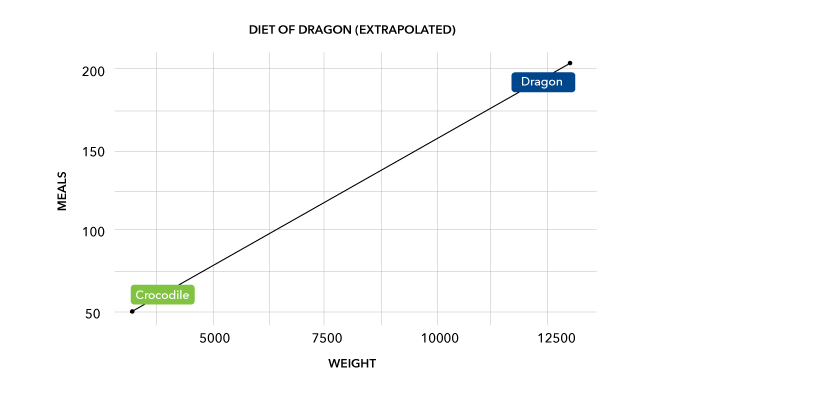
Figure 1: The care and feeding of dragons.
A successful dragon herder will need to have their own herd of about 200 live cattle per year to support the animal. Cattle herds have an annual reproduction rate of ~94 percent [1]; at stead-state, a dragon herder will need a herd size of approximately 700 head of cattle to produce a steady state feed for dragons.
Breathing Fire
One of the key features of a fire-breathing dragon is, as you know, breathing fire. At the time of this writing, we are not aware of any living creatures that breathe fire. The closest thing we have for comparison is an M132 Armored Flamethrower [2], which, incidentally, happens to weigh about as much as an elephant. This vehicle carried 200 gallons of gasoline, which provided 30 seconds of flamethrower use at a range of 200 meters. This seems excessive for our modern dragon, more like Smaug from “The Hobbit” (not considered in this episode).
Let’s say that the dragon has an equivalency of 10 seconds of fire breathing, which is about 65 gallons of gasoline. A gallon of gasoline contains about 31,000 calories; by way of comparison, a pound of powdered sugar has 1,750 calories. In order to make an equivalent blast without resulting to fuels, the dragon would need to eat approximately 1,200 pounds of sugar. Believe it or not, some breakfast cereals are near 50 percent sugar; our dragon would need to eat 1,850 boxes of breakfast cereals to get a sugar-based blast.
Alternately, our dragon could have a vodka-based flame. A gallon of vodka has 8,200 calories, so they would only need to intake 245 gallons of vodka to produce their flame.
In either case, dragons must have enormous livers.
References
Harrison Schramm, CAP, PStat, is a senior lecturer at Naval Postgraduate School, splitting his time between Defense Management and Operations Research where, in addition to teaching, he runs the Contested At-Sea Logistics Lab (CASLL). He served as the inaugural chair of the INFORMS Security Conference and is a past president of the INFORMS Analytics Society.
([email protected])