

April 26, 2019 in ReCAP
ReCAP: Victor Tiong
SHARE: PRINT ARTICLE: https://doi.org/10.1287/LYTX.2019.03.08
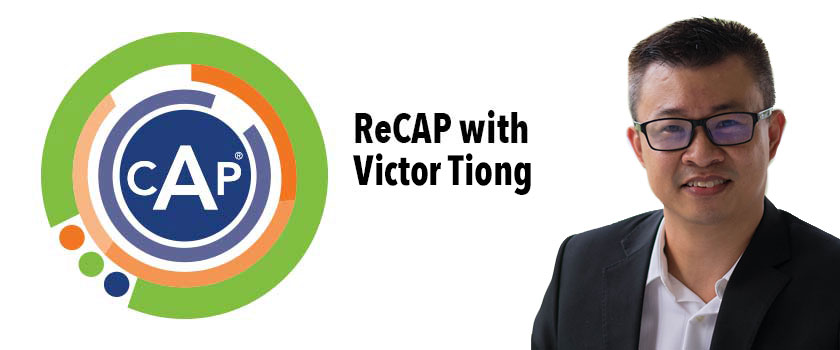

Name: TIONG Kung Ming
Employer: The University of Nottingham Malaysia
Job Title: Assistant Professor
Primary Job Functions
-
Teaching mathematics and statistics
- Research

Date CAP Certification Was Earned
September 1, 2017

What was your most valuable resource while preparing for the exam?
The CAP examination study guide provided direction and guided the depth and breadth of my preparation. In particular, the sample review questions gave me a feeling of what the real exam questions would be like. The list of further readings at the end of each chapter was very helpful too. I read a number of books and went through the online resources as well. I also watched plenty of YouTube videos on analytics and data science topics especially whenever I came across some terms or areas that I wasn’t familiar with. I would say these YouTube videos are the resource of choice to gain understanding of topics in a fast and concise way. Listening to videos also allowed me to multitask.

How familiar were you with the “Seven Domains of Analytics Process” prior to pursuing CAP?
I wasn’t entirely familiar with some of the domains. I would say I was only partially comfortable with domains II-V. Preparing for CAP helped me learn a lot and gain a better understanding of end-to-end analytics. It was a worthwhile and satisfying journey.

In your opinion, should CAP be held in the same regard as a master’s degree?
To me, CAP is a professional certification, like CFA, CPA, and PMP for example. It is a badge that recognizes the knowledge and skills of an analytics professional. Having the CAP designation versus having a master’s degree is essentially different, in terms of its purpose, philosophy, and prestige.
To me, being a Certified Analytics Professional means…
Being professionally recognized for my knowledge and skills in analytics and being part of a reputable community of analytics professionals who represent and disseminate the utility of analytics to others.
Describe any barriers you see for those entering or in the workforce who are not professionally certified?
A professional certification is a badge of recognition, honor, and prestige that reflects an individual’s analytics knowledge and skills set. Being certified definitely sets one apart from those who aren’t. As more talented people get certified, and prove their knowledge and skills in the workforce, professional certifications will gain more traction and grow in their importance.

What are current issues/trends/challenges in analytics that you see?
I see that data science and big data are the principal drivers of analytics. As more data gets produced, computing power increases, and more skilled professionals in data science and big data are created, analytics would continue to grow and mature rapidly. Naturally, analytics certifications would also become more competitive and specialized. I also see a phenomenal growth in analytics training and consultancy services now and in the near future. The main challenge I think is differentiating analytics professionals that are truly skillful and possess legit credentials. Building and growing a certification that is the industry standard will be an important direction for analytics.
SHARE: