

April 26, 2019 in Five-Minute Analyst
Superhero Violence
SHARE: PRINT ARTICLE: https://doi.org/10.1287/LYTX.2019.03.12
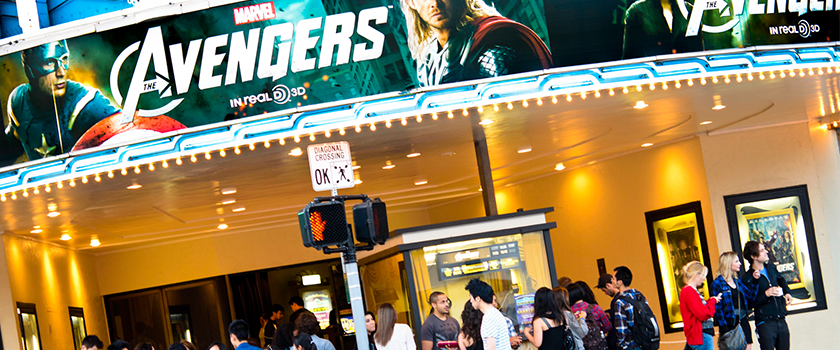
Superhero movies are popular – none more than “The Avengers” of the Marvel Cinematic Universe (MCU). Two events have caught our attention. First is the upcoming release of “Avengers: Endgame,” the fourth ensemble movie in which we expect they will continue their fight against Thanos. Second is a study on the amount of superhero violence in movies [1], recently cited in a number of popular outlets [2], which came to the conclusion that superheroes are more violent than villains as measured by on-screen individual actions. We were interested in this result; it’s attention-grabbing and sparks the imagination. Additionally, we have done a fair amount of writing about movies in the past, focusing on the “Star Wars” universe. Specifically, we have previously kept track of who shot first [3] and considered the relative strengths of different fictional characters [4].
If you haven’t seen “Avengers: Infinity War,” we summarize the plot in the words of Tony Stark (Iron Man): “They’re from outer space … they’re here to steal a necklace. From a wizard.”
In this article, we neither accept nor reject the idea that superheroes are more violent than villains but rather propose that this might not be the most important measure. We take an alternative approach, keeping track of who initiated conflict and the outcome. In our approach, violence is counterbalanced by acts of bravery, which we define as one character sacrificing themselves or taking on risk on behalf of another. Large battles, such as the Battle of Wakanda, are counted as a single fight for our purposes.
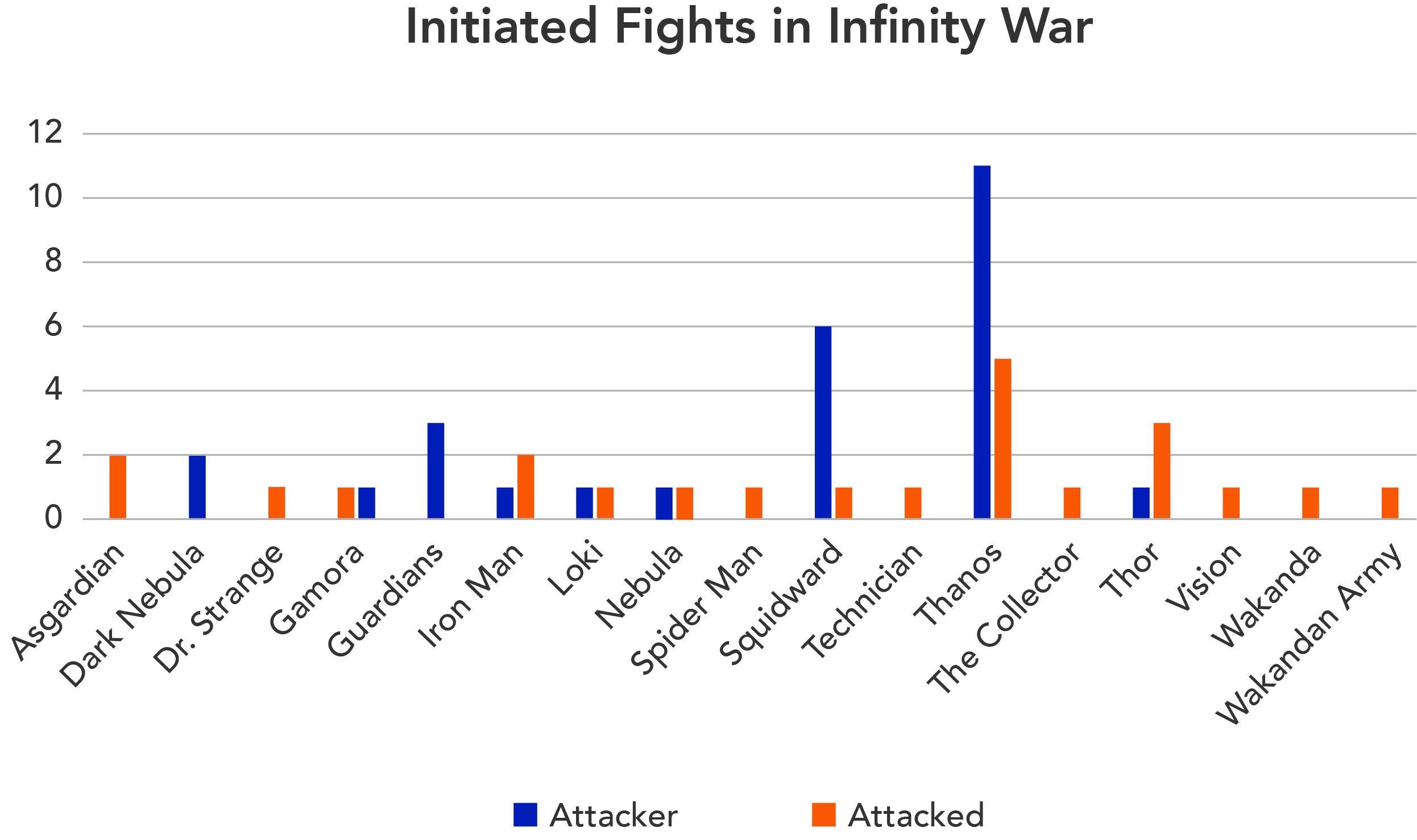
Figure 1: Plot of fights initiated by attacker (blue) and attacked (orange). Unsurprisingly, Thanos was the initiator and recipient of the most attacks.
The problem with counting individual acts is that not all are created equal. Specifically, Thanos destroyed a good chunk of New York, the survivors of Asgard, most of Wakanda and, on top of that, half of all life in the universe. It is difficult to put different acts of violence on the same scale, particularly when some are beyond human experience.
By the numbers, the most aggressive character in “Infinity War” is clearly Thanos, who initiates 11 fights – almost one-third of all fights in the film. The second most aggressive character is Thanos’ lieutenant Gamaw, who I have recorded with Iron Man’s nickname, “Squidward.” The most aggressive Avengers are the Guardians of the Galaxy, perhaps unsurprisingly. The most attacked character is Thanos, followed by Thor.
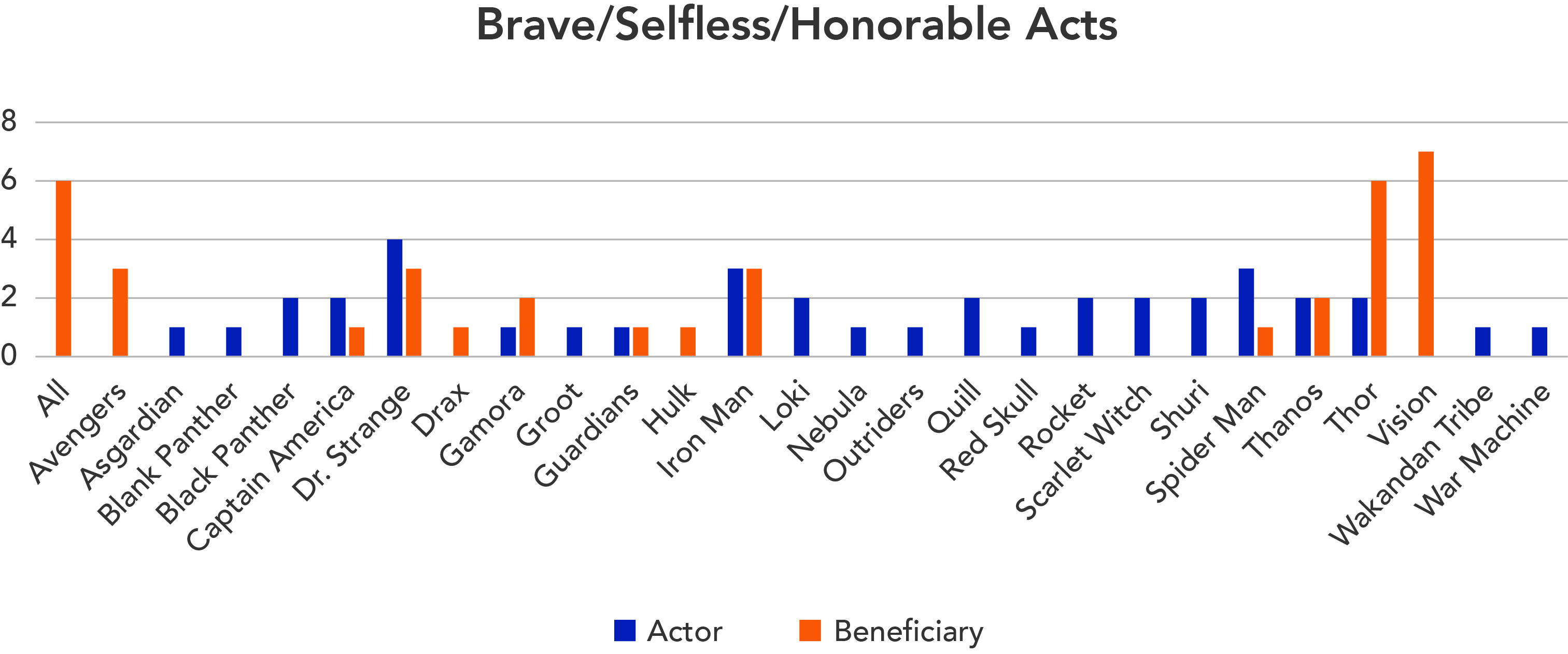
Figure 2: Brave/selfless acts. Here the biggest recipient of these acts is Vision, followed closely by Thor.
Here, the leader is Dr. Strange, followed closely by Iron Man and Spider Man. The biggest beneficiaries of these acts are Vision and Thor. Good acts are not strictly a “hero” function; Thanos is credited with two: saving Gamora and not killing Iron Man on Titan. Red Skull is credited with warning Thanos about the true price of the Soul Stone.
For completeness, we can also think about the interarrival times between acts of violence and bravery, as shown in the plots in Figure 3.
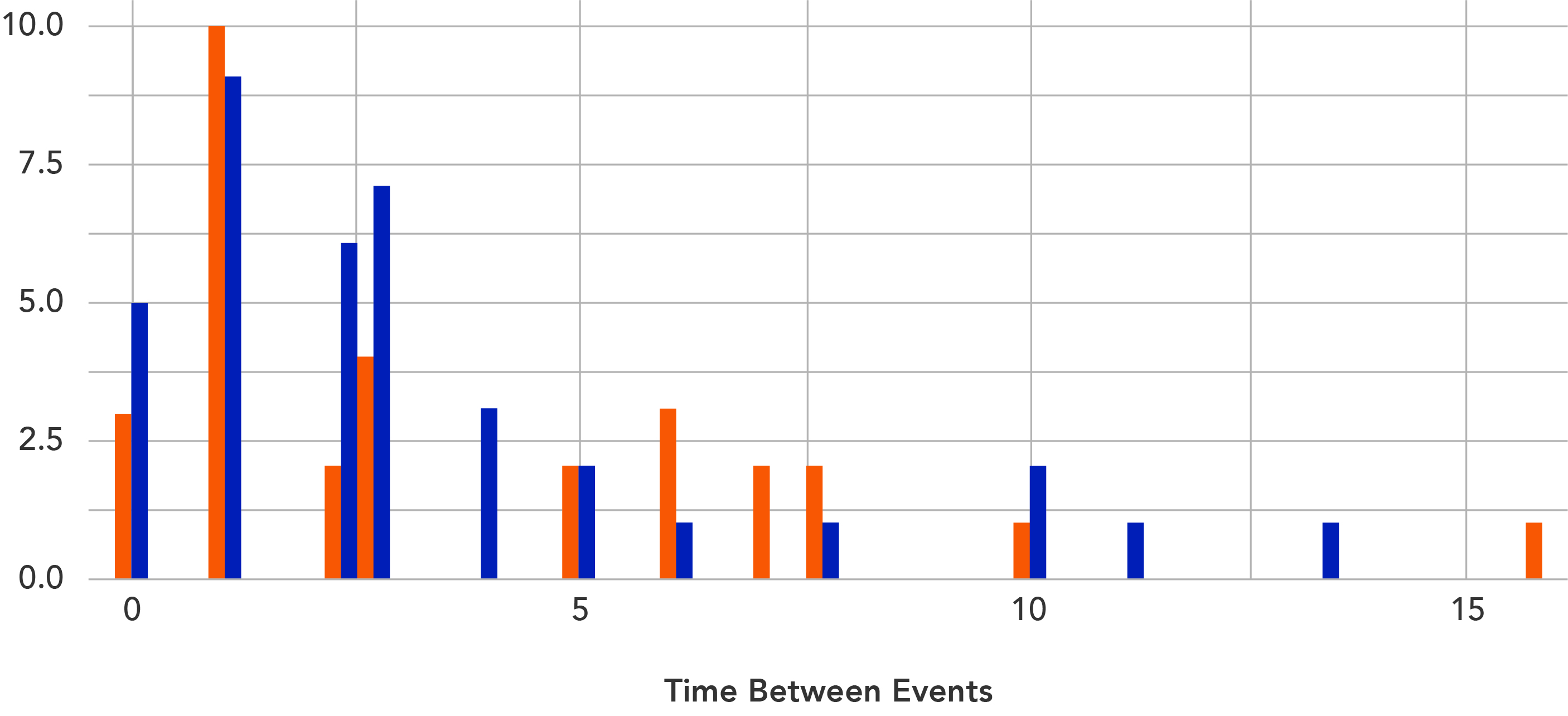
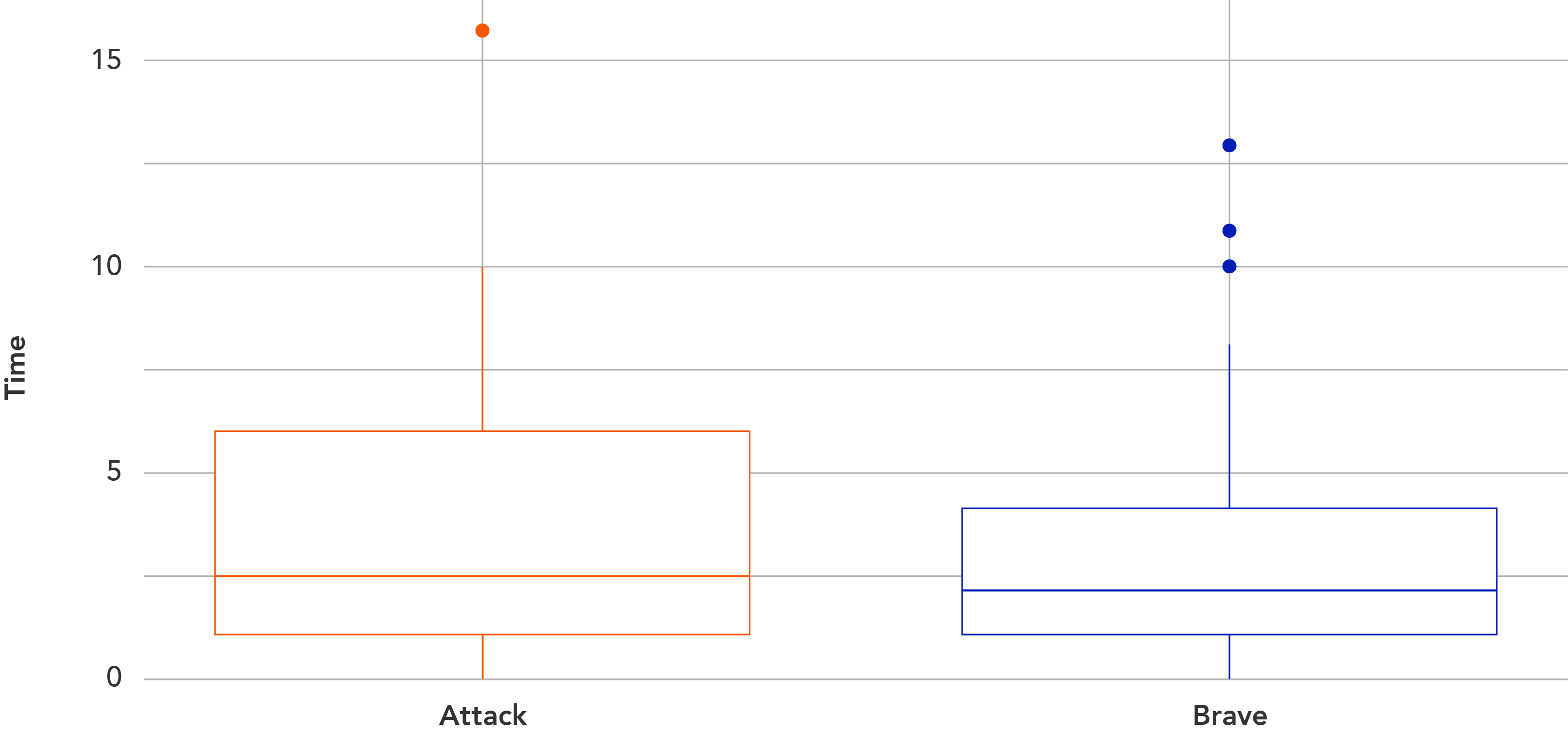
Figure 3: Interarrival time between attacks (orange) and brave/honorable acts (blue).
Combining these ideas, we argue that Doctor Strange is the best Avenger; he is credited with four selfless acts and does not initiate any battles. Plus, he has the coolest haircut and cape!
Bonus: I’ve heard an abundance of theories about “Avengers: Endgame.” My favorite is that Loki isn’t dead, but rather disguised as Bruce Banner, and this is the reason that Hulk did not come out. As this will be published after the premier of the film; it’s not a spoiler.
References
- https://www.eurekalert.org/pub_releases/2018-11/aaop-gi102218.php
- http://fortune.com/2018/11/02/good-guys-superhero-films-more-violent-villains-study/
- http://analytics-magazine.org/five-minute-analyst-who-shot-first-an-application-of-bayes-theorem/
- http://analytics-magazine.org/five-minute-analyst-dark-side-envelopment-analysis/
Harrison Schramm, CAP, PStat, is a senior lecturer at Naval Postgraduate School, splitting his time between Defense Management and Operations Research where, in addition to teaching, he runs the Contested At-Sea Logistics Lab (CASLL). He served as the inaugural chair of the INFORMS Security Conference and is a past president of the INFORMS Analytics Society.
([email protected])