

April 30, 2019 in O.R. in Action
INFORMS Fellow Jacobson weighs in on NSF Summit, future of O.R.
SHARE: PRINT ARTICLE: https://doi.org/10.1287/LYTX.2019.03.14
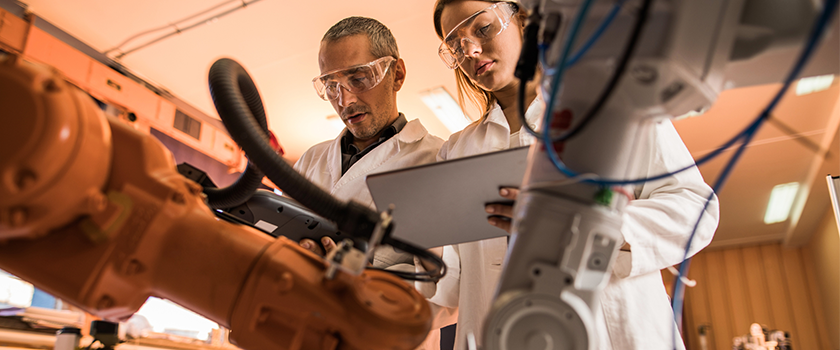
 The National Science Foundation (NSF) and the American Society for Engineering Education (ASEE) hosted an Engineering Research Framework Visioning Summit Planning Meeting on April 3 at the NSF headquarters in Alexandria, Va. The purpose of the planning meeting was to gather strategic input and help shape the agenda for the NSF’s Engineering Research Framework Visioning Summit to be held in July. The stated goal of the summit is to “engage the engineering community in identifying mechanisms through which national research priorities for fundamental engineering research may be identified.”
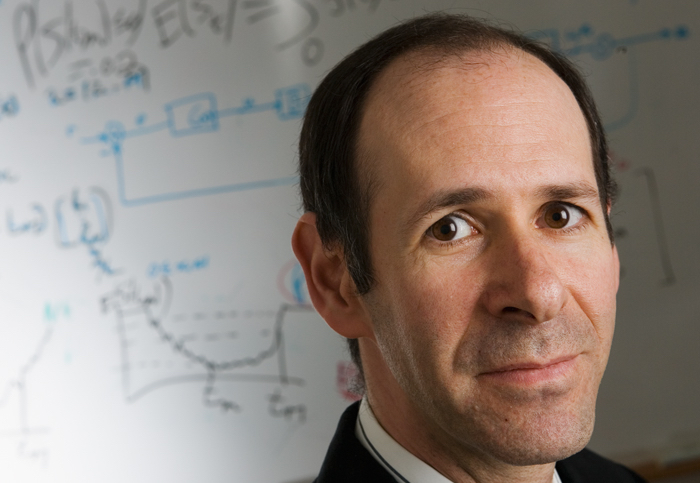 Sheldon Jacobson (pictured left), Founder Professor of Computer Science in the College of Engineering at the University of Illinois at Urbana-Champaign and an INFORMS Fellow, was among about 25 educators and researchers invited to attend the April 3 planning meeting.
An NSF-funded researcher and a former program director for Operations Research at the NSF (2012-2014), Jacobson offered his thoughts, via email, on the upcoming summit and the future of operations research (O.R.):
“The motivation for undertaking such a summit is that the United States’ position of leadership in research innovation is being threatened worldwide by countries/groups putting up large amounts of money to catch and move past the United States and gain worldwide preeminence. Money alone will not address this issue, though it is certainly moving other countries/groups ahead in their pursuits of leadership.
“As for operations research, we as a community tend to be inwardly focused. The areas that we have moved outside our comfort zones include transportation, manufacturing, supply chain, finance and healthcare. This is where we have had the largest impact.
“For us as a community to move higher in national visibility requires our presence on addressing bigger problems and societal issues. Even when we move outside our domain, we tend to take modest steps, remaining tethered to our core base.
“Given the excitement and interest surrounding artificial intelligence (AI), O.R. should be branded as a subfield of AI. Nothing changes in our substance, since O.R. is intelligent decision-making. AI is our future and the best chance to gain national visibility and traction.”
Jacobson also outlined his takeaways from the April 3 planning meeting, which are summarized as follows:
- Engineering is a very broad discipline, making the idea of grand research challenges somewhat difficult. What should be the outcome of the summit? In particular, should it be an entity whereby engineering research ideas can percolate, or a process by which engineering research ideas can germinate?
- Engineering research does not live in a vacuum, and hence, engineering research is often motivated outside of engineering. Indeed, engineering provides methods to solve problems and make decisions.
- The summit may launch other summits to move forward the outcomes of the first summit.
- Engineering research should not only solve today’s problems, but also create opportunities that will address tomorrow’s challenges, some of which are not even known today.
- A process for creating such opportunities involves: 1) identification, 2) engagement, 3) collaboration, and 4) results and outcome, which feeds back into more collaboration.
SHARE: