

August 12, 2019 in Analyze This!
Precision Driven Health
Unique New Zealand partnership overcomes inherent obstacles to optimize healthcare by combining and learning from all available data.
SHARE: PRINT ARTICLE: https://doi.org/10.1287/LYTX.2019.05.11

Ten years ago this month, I joined the faculty in the School of Management at the University of San Francisco. Immediately thereafter, I received an email from a colleague in the USF Nursing School: “I am very excited to talk to you about a research project.” A few days later, I found myself in Professor Judith Lambton’s office discussing patient flows and operational challenges in the pediatric acute care unit at a nearby hospital.
With her extensive experience as both a nurse and a researcher, Professor Lambton had a clear sense of the type of questions that we should try to answer: What were the patterns of patient arrivals across different sub-units and specialties? How often did patients get turned away when there would actually be beds available for them later in the day? After a couple of meetings with Judith, I also had a high-level approach to modeling and analyzing the problem that she had described: time series forecasting models to predict patient arrival patterns that would feed a discrete-event simulation model that could then be used to examine key operational metrics, such as bed utilization levels and patient acceptance rates.
Alas, after this promising start, my enthusiasm for this project soon began to wane. There were many reasons, including the usual suspects (surprisingly limited data that was incomplete, hard to extract and difficult to make sense of; and a long list of difficult-to-model operational quirks), but the most significant factor was simply my own impatience with a world that felt extremely different – and moved far more slowly – than the tech industry where I had spent most of my career prior to then. Within a few months, this project had slipped off my list, and I hung my head in shame every time I saw Judith on campus.
All About the Numbers
The thing is, I knew that I should have been far more excited about this opportunity to get involved with an application of O.R./analytics in the world of healthcare. For starters, the size of the healthcare industry is simply staggering. In the United States alone, healthcare spending was $3.5 trillion (!) in 2017, or approximately 17.9 percent of total GDP [1]. With the increasing prevalence of electronic health records, this industry is also capturing more and more data every single day. And, as Rajib Ghosh pointed out in his recent Healthcare Analytics column, more than $8 billion was invested in healthcare analytics startups in 2018 alone, with the market expected to grow at a rate of 14.56 percent through 2025 [2].
Kevin Ross knows all about these kinds of numbers. For the past three years, Kevin has been serving as the CEO of Precision Driven Health (PDH) of New Zealand, another fascinating stint in a rich and eclectic analytics career that has included turns as an engineering professor, management consultant and data scientist with Fonterra, New Zealand’s national dairy industry cooperative. I caught up with Kevin recently and had a chance to ask him a few questions:
What is the mission of PDH?
The Precision Driven Health partnership is creating the capability to optimize the health of each individual and their family by combining and learning from all available data. Our partnership unites health providers with universities and our health IT sector to create health and commercial opportunities for New Zealanders.
How did PDH begin? And how did you get involved?
PDH’s beginnings depend on who tells the story. Orion Health is a successful New Zealand software company with a range of products managing data for the health sector – but never doing much more than looking after that data. Academic data scientists in New Zealand had a pretty strong history in developing tools like R and Weka but hadn’t achieved much in health. And the New Zealand health provider industry recognized that its unique digital history and single payer model made it a goldmine of data in the hands of data scientists. These three communities came together to see what they could create, and the government supported the formation of this new partnership.
When I first returned home to New Zealand after living abroad, I started a community called the Analytics Forum. We linked public and private analytics professionals together to share stories and develop the country’s capability. Coordinating conversations and events, I was in the right place when the idea of PDH was forming and dived right in when I recognized the opportunity to do something truly unique.
Over the past few years, how many projects has PDH helped to facilitate?
At last count, we had completed 45 projects with another 27 underway. These range from summer internships to multimillion-dollar initiatives.
Can you describe one of these PDH projects?
One of my favorite projects is our work on patient summaries – giving clinical staff a quick summary of a patient they are about to see. Currently, when a nurse or doctor comes across a patient for the first time, they will often start by reading a letter from a referring physician. They might then transition to recent test results and medications, then explore myriad documents in the patient’s medical history (often literally opening one at a time and hitting control-F to find key terms). Time spent preparing could be reduced to allow more time with the patient or with other patients.
We teamed clinical staff from an intensive care unit with data scientists and designers to imagine how that first interaction could be improved. Their ideas were inspiring and daunting. The team soon recognized that building what they had described involved translating structured records, free text documents, images, time series and any other data type you can imagine into a concise, coherent story.
The team has built something that is both highly sophisticated (based on deep learning and transfer learning techniques) and elegantly simple, and it is on its way to becoming a breakthrough product development.
Entrenched Ideas Hinder Change
Kevin, who has known me for many years, was not surprised that I had grown frustrated with my brief foray into healthcare analytics. “Health is hard and slow for analytics professionals,” he confirmed. “There is an often-quoted study [3] from the Journal of the Royal Society of Medicine that points to 17 years as the average time for translational health research to change common practice. This is hard to break, with entrenched ideas of what it takes to change … and who gets to decide.”
Kevin also offered up a mature perspective on the data issues that had bedeviled me: “Missing data is standard in health – some data isn’t collected, some patients transfer, some don’t know their family history. Our medical community takes what they do know and acts from there, and so our models need to similarly be able to handle messy and missing data. That just comes with the territory.”
I am both humbled and inspired by the work that Kevin is doing at PDH and greatly appreciate his perspective. If another opportunity arises for me to get involved with a healthcare analytics project, I will surely have more reasonable expectations and presumably more persistence.
As for Professor Lambton’s project, I did make a contribution of sorts: By inviting Professor Theresa Roeder from San Francisco State to participate in the research (Robert Saltzman from SFSU later joined the team as well), I managed to provide Judith with superb analytics partners with deep simulation expertise. Their modeling and analysis work [4] led to a series of recommendations that changed the way patient flow is managed in the unit, ultimately improving utilization of scarce resources while providing care to more children.
Not surprisingly, this project took several years to complete.
References
- https://www.cms.gov/Research-Statistics-Data-and-Systems/Statistics-Trends-and-Reports/NationalHealthExpendData/downloads/highlights.pdf
- https://pubsonline.informs.org/do/10.1287/LYTX.2019.04.06/full/
- https://www.ncbi.nlm.nih.gov/pmc/articles/PMC3241518/
- https://pubsonline.informs.org/doi/pdf/10.1287/serv.2016.0167
Vijay Mehrotra is a professor in the Department of Business Analytics and Information Systems at the University of San Francisco’s School of Management and a longtime member of INFORMS.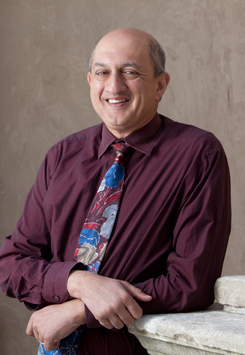
([email protected])