August 14, 2019 in Executive Edge
Reinventing leadership in the Digital Age
A reflection on the transition from hierarchical to purpose-driven organizations.
SHARE: PRINT ARTICLE: https://doi.org/10.1287/LYTX.2019.05.13

A recent McKinsey Global Institute Report estimates that roughly 14 percent of the global workforce (about 375 million people) will have to switch occupational categories by the year 2030. Addressing the skills gap to deal with the fast pace of automation and digitization is extremely important. But mastering technology alone will not drive the success of digital transformation. The real key to success is your team’s ability to take charge of your organization’s digital strategy and its execution.
Is the management hierarchy still applicable in this age? Can we unleash people’s potential with this traditional and bureaucratic mode of organization? I often asked myself these questions as the (former) CEO of AIMMS. In this article, I’ll share some learnings from our journey away from hierarchy and toward self-organization and reflect on how I am reskilling myself as a leader during this transition.
Transitioning Away from Hierarchy
A few years ago, I came across a book called “Reinventing Organizations” by Frederic Laloux. In this book, Laloux explains how every time humanity has shifted to a new stage of consciousness, it has also invented a radically more productive organizational model. He argues that we are currently living in such a shift in consciousness. In the resulting organizational model, which Laloux color-coded as Teal, organizations adopt a different set of management principles and practices. Laloux found that emerging Teal organizations had three things in common: they are purpose-driven, apply self-management and strive for wholeness.
At AIMMS, we have embraced “Holacracy” to bake in two of these three elements: to become purpose-driven and apply self-management. Holacracy aims to help organizations pursue their purpose and provides a self-management practice in which authority and decision-making are distributed to teams and roles rather than through a management hierarchy. Self-management had already sparked my interest as I have never been fond of hierarchies. When I think back to my high school years, teachers that put trust above force had a much better connection with their students. These teachers helped us thrive and unleash our potential.
When I became part of a management team at the end of the 1990s, I started to notice the negative side effects of our hierarchical organization. I went on to make the same mistakes my teachers had made. As a manager, I was not unleashing the potential of my co-workers. Instead, I was at times blocking it by stepping in, overruling and taking accountability away from my co-workers, putting power above trust myself.
I also realized that in our hierarchical organization, colleagues tended to keep knowledge to themselves, because knowledge seemed to bring them power over others. This resulted in a lack of transparency and stifled the team’s ability to make good decisions in time to progress toward our objectives. Our management hierarchy was regularly slowing good initiatives down, splitting the organization in silos, encouraging micromanagement and making decisions for co-workers, instead of providing them with the accountability to let them make these decisions themselves.
In today’s fast-paced world, it’s key to make good decisions at speed. Often, timely good decisions can be made best by co-workers “on the front line,” where issues arise, rather than by managers who are more distant to those issues.
Think of a sports team. You have the players and a coach. The coach discusses the strategy with the team, but on the pitch the team is largely on its own and each player has to constantly make rapid decisions based on what’s changing during the play. Teams in our organizations should be able to make decisions in a similar way, guided by a strategy and using the data and technology they need at hand, not sitting at some place in the hierarchy. The more they depend on hierarchy, the less powerful and effective they will be in their decision-making and at “winning the game.”
Unlearning to be a CEO
Undeniably there is a learning curve, or rather an unlearning curve, involved for me. Going from leading a management team in a hierarchical organization to performing various roles in a self-managed organization means I have to let go of control and let trust in. This is easier to do when things go smoothly, but unlearning to take back control when things get tough is difficult. It’s tempting to go back to using power to fix things when we’re in a rough spot with a customer or when there is an internal strain between teams. My tendency is to take control and step in, interfering in how we do things when difficulty sets in.
More subtle but just as important is letting go of taking control to protect colleagues and teams when they get into a rough spot. Letting go of “saving others” and playing hero is difficult, because it involves letting go of the corresponding ego-boost. Still, this behavior is detrimental to others’ ability to take ownership and responsibility for actions and relationships, which is key in a self-managing organization. I still find myself taking control with the best intentions. It is a hard habit to break.
Apart from the things I am unlearning, I am learning to listen more and talk less. And especially to listen more deeply, not only to what is said but also to what is not said; what is expressed in body language or by others staying silent. I am learning to contribute, not by leading with my own thinking and decision-power, but by serving the thinking and decision-power of my co-workers. I am learning to trust the abilities of my colleagues and our teams to make much better and faster decisions than when things have to go up and down the hierarchy.
In our purpose-driven and self-managed organization at AIMMS, I am learning to alternate between serving and leading depending on the situation, just like everyone else at AIMMS. We gradually get used to – and become better at – working with role-based, distributed power. By unlearning my hierarchical power traits and getting skilled in serving and leading without applying hierarchical force, the power and intellect of one makes space for the collective distributed power and intellect of many. Not to make space for a consensus-based collective power, but for power distributed to roles that are assigned to individuals who are best capable to exercise (decision) power in those roles. And as such, enhancing our organization’s ability to make timely decisions and work effectively toward our purpose.
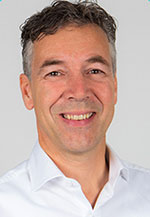
Gijs Dullaert is chairman at AIMMS. He is passionate about conscious leadership. In 2016, Gijs signed the Holacracy constitution and let go of his CEO role to embrace a number of roles at AIMMS.