

November 27, 2019 in ReCAP
ReCAP: Talha Naushad
SHARE: PRINT ARTICLE: https://doi.org/10.1287/LYTX.2019.06.25r
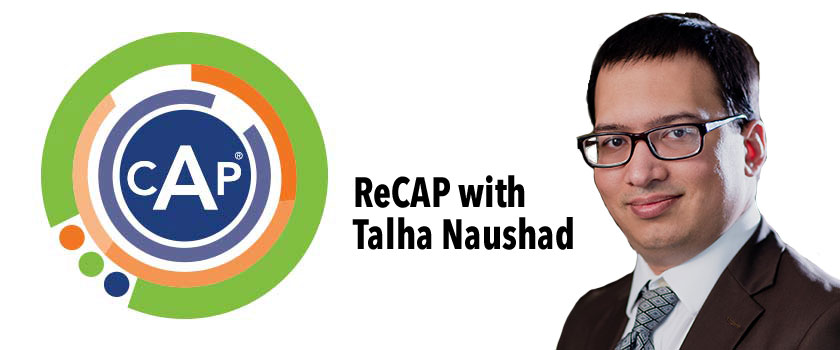

Name: Talha Naushad
Employer: Principal Global Investors
Job Title: Data and Operations Research Scientist
Primary Job Functions
-
Text Analytics System Integration

Date CAP Certification Was Earned
March 26, 2019

What is your opinion on the value of professional certifications?
Certifications are a way to set minimum expectations in approaching any problem and allow professionals to be on the same page in developing frameworks to solve complex project and day-to-day challenges. I think if more professionals are certified it will allow everyone associated with the field to quickly adapt common processes, standards and tools, and allow for greater collaboration and teamwork.

Do you think that earning aCAP is important for students?
I think it is a good step for students to accomplish because it provides the necessary context to the problems that students encounter. The aCAP can show students the larger picture of the specific techniques that they are learning in class and allow them to apply them in a systematic manner to develop scalable and sustainable analytical and data-driven solutions, which they would be required to do in a professional environment. Having accomplished the aCAP, I can foresee students having a better appreciation and understanding of their class problems as part of the analytics lifecycle.

How much time did you dedicate to studying for the exam?
I studied for the exam for a week, which I thought was enough time for me. I think my previous education in analytics and experiences working with data across different projects at the undergraduate and graduate levels gave me the necessary insights to apply my knowledge to the CAP exam questions. However, going over the CAP study guide, Job Task Analysis, and practice questions did help me understand the tenor of the exam and refine my knowledge in certain areas that I would not have recalled otherwise.

Describe any potential barriers in the industry you see for those who are not certified?
There are many different avenues for people to learn about data analytics, coding, modelling, integration, and deployment techniques. This results in variations of skills and how people apply them in their daily work. For those who are not certified, it will be time- and effort-consuming to get on board with the common standards and procedures that are used during analytics project lifecycles. Moreover, it increases the risk that an important step in the analytics pipeline may get overlooked, which can result in painful learning by making mistakes even though there are established best-practice processes to mitigate unwarranted circumstances.

What other INFORMS programs have you participated in?
I attended the 2018 INFORMS Annual Meeting in Phoenix, Arizona as a nonmember and attended the Finance Section meetup. I recently became an INFORMS member and look forward to participating in more INFORMS events and programs in the future.
What is the best advice you can give to someone studying for the exam right now?
I think that while you are studying, if you can relate the content that you come across with practical experiences that you have had during your professional and academic career, that will be very helpful in providing context to the exam questions and finding the answer. In my opinion, what also really helps is going over practice problems of different data cleaning and modelling techniques that you encounter in any standard analytics textbook. This helps you to understand the application of the techniques much better than learning about simple definitions and is helpful in clarifying your thought process when answering questions on the exam.
SHARE: