

December 11, 2019 in ReCAP
ReCAP: Justin Barclay
SHARE: PRINT ARTICLE: https://doi.org/10.1287/LYTX.2019.06.26r
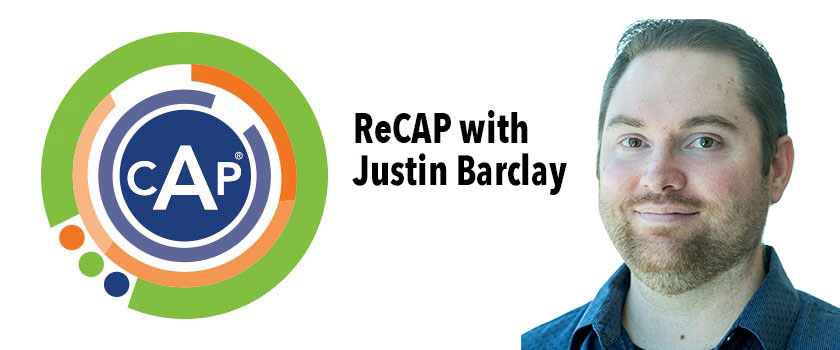

Name: Dr. Justin Barclay
Employer: Tivity Health
Job Title: Executive Director, Advanced Analytics & Innovation
Primary Job Functions
- Delivery leader responsible for production and deployment of end-to-end advanced analytics solutions for all the products & functions in the company and connecting with business and functional leaders
- Own the execution of an overall information strategy roadmap where it pertains to advanced analytics, partnering with leaders and groups throughout the enterprise to pursue data-driven decision-making
- Leverage advanced analytics to adjust directional strategy and operational processes tied to the organization’s overall goals and objectives
- Provide leadership, mentorship, and ongoing development to the Advanced Analytics teams, focusing on ongoing growth of individuals and maturing the overall advanced analytics discipline
Date CAP Certification Was Earned
October 13, 2016

What is your opinion on the value of professional certifications?
Professional certification in our field is invaluable. I cannot tell you the number of resumes I have reviewed that are littered with the right technologies, terminology and buzz speak, but the person cannot answer straightforward questions about the work as it’s performed. I am not saying we are an industry of falsities. I am simply saying it is easy to get wrapped up in thinking we have to say just the right thing on our resume to get that coveted interview, which is only beset with issues when analytics technologies and approaches continue to proliferate. A professional certification instead tells me two things: One, you spent the time to encapsulate your learning and give it some meaningful operational boundaries. Two, that you know enough about the industry to know where to go for that certification.

Do you think that earning aCAP is important for students looking to distinguish themselves?
I think there is as much relevance earning an aCAP (Associate Certified Analytics Professional) for our field as there is a CAPM (Certified Associate in Project Management). Both demonstrate a tremendous dedication to one’s learning and intentions, and the learning provided by an aCAP only helps you to cut through the clutter of what the popular press will tell you is relevant in our field today. And that list of clutter grows longer by the day.

How much time did you dedicate to studying for the exam?
I must have spent two to three months studying for the exam. I read the study guide end-to-end a few times in the beginning. Then I started to review individual domains again as I considered my own experience with relevant projects. To that end, because studying happened between meetings and projects during the day, and a bit more at home each night and on weekends, there was also constant applicability as I read, which helped solidify the learning for me.

Describe any potential barriers in the industry you see for those who are not certified?
This will largely depend on how much experience you have going into the role you seek. Certification is not a panacea, but it is a crucial supplement to a burgeoning career. There is a critical difference between the candidate I interview who has six completed MOOCs in analytics with no certification and someone who has certification and three-to-five years under their belt. Early-stage learners are just trying to get a foot in the door. Late-career professionals are looking to identify the distinctiveness in their contributions to the field. Yet early- to mid-career professionals who are ready to show they understand the ontology of analytics, the flow from business to analytics problem, and from analytics to business solution, they are who I believe are ready to break new ground and there is no better way to signal readiness than through certification. It does not replace what a graduate degree in the discipline can provide, nor what three-to-five years on the job can, it simply enhances that learning and experience in a way that also tells a potential employer (or current employer for that matter), “I am ready to help define where analytics leads the organization next.”

What other INFORMS programs have you participated in?
I remain a longstanding member of the association, and avid reader of its Analytics magazine.

What is the best advice you can give to someone studying for the exam right now?
Two suggestions: First, do not let the material lead you to think you don’t belong where you are. You have the formal education, experience, and a recommendation from someone in leadership, it is your time to shine. Second, know there is no such thing as one expert in anything. Just because there is already an expert in analytics out there to which you may aspire, doesn’t mean you cannot be an expert as well. Strive instead for that designation because you are already on the path to reaching it. This certification is just one step closer. And if you look at the study guide as merely a roadmap to our ever-growing but still finite field, you will remain comfortable among a field you find you already know quite well. And please (ok a third suggestion), if you send in your resume just tell me what you studied, what you’ve been doing, and whether you are certified. I’ll gladly stop reading there.
SHARE: