

February 26, 2020 in Healthcare Analytics
Smarter healthcare ushering in promise of longevity
SHARE: PRINT ARTICLE: https://doi.org/10.1287/LYTX.2020.02.07

The new year started with plenty of trepidation both in the United States and around the world. At home, the uncertainty with the Affordable Care Act (ACA) continues; the case to strike down ACA has now been punted to the Supreme Court, which has showed an unwillingness to take it on until the 2020 presidential election is over and the political direction is settled. Globally, the impact of coronavirus and the fear created by it has shaved off one percent from China’s GDP and could potentially put a brake on American GDP in the first quarter. In Europe, the virus has sapped the continent of whatever growth potential was expected in early 2020. This phenomenon shows what the world has to lose from a global pandemic, albeit coronavirus is by no means a pandemic yet.
The virus is mutating, and scientists in the United States, China and elsewhere are working hard to find a cure and a preventive vaccine. But unlike the Severe Acute Respiratory Syndrome (SARS) outbreak two decades ago, this time data scientists have a wealth of social media data to apply sophisticated artificial intelligence models to quickly track the virus and alert healthcare providers and researchers globally about a potential outbreak in their respective countries. Even if the cure or vaccine is yet to emerge, as of this writing, technology is helping to control a potent disease from becoming a full-blown pandemic that could drive the world into a synchronized economic recession.
Healthcare and Global Economy: An Interesting Connection
The connection of healthcare technology and global economics is an interesting topic. As the adoption of technology and awareness of health is increasing globally, our longevity is increasing as well. For the first time in the history of humankind, we are experiencing the impact of human longevity. This century will open many doors of opportunities that are related to this new phenomenon. Let me elaborate on that.
Human beings always wanted to live longer, but that dream didn’t come to fruition. Premature deaths among children and adults were common in previous centuries. The genesis of diseases was not always known, preventive measures weren’t discovered, diagnostics were not advanced or precise enough to detect diseases early, and potent drugs were not available to cure or keep people alive despite the disease condition.
Over the last half a century, that situation has significantly changed with the emergence of computers. Over the last two decades, computers have become increasingly intelligent, powered by data and sophisticated algorithms. That, in turn, yielded power in the hands of humans to faster, cheaper and easier improved disease diagnostics. If cancer or heart disease can be detected at an early stage, medications are available to reduce fatality and manage chronic conditions. If people can continuously track their own activities, daily nutrition and sleep, they could improve the functioning of their body and prevent the decay of their own health condition as they age. Today, more than 97,000 mHealth apps are available for download on personal mobile devices to help people do just that. For the people who are among the top 1% in terms of wealth, other means are also available to slow down their physical and mental aging process, sometimes significantly.
The Era of “Longevity”
After several years of effort, we are entering a stage when artificial intelligence (AI) is changing healthcare as we know it. The impact is felt everywhere from faster image analysis leading to early-stage disease detection to the growth of precision medicine. As a result, global life expectancy has steadily increased during the last quarter-century from 65 years in 1995 to about 72.23 years in 2017 (Figure 1).
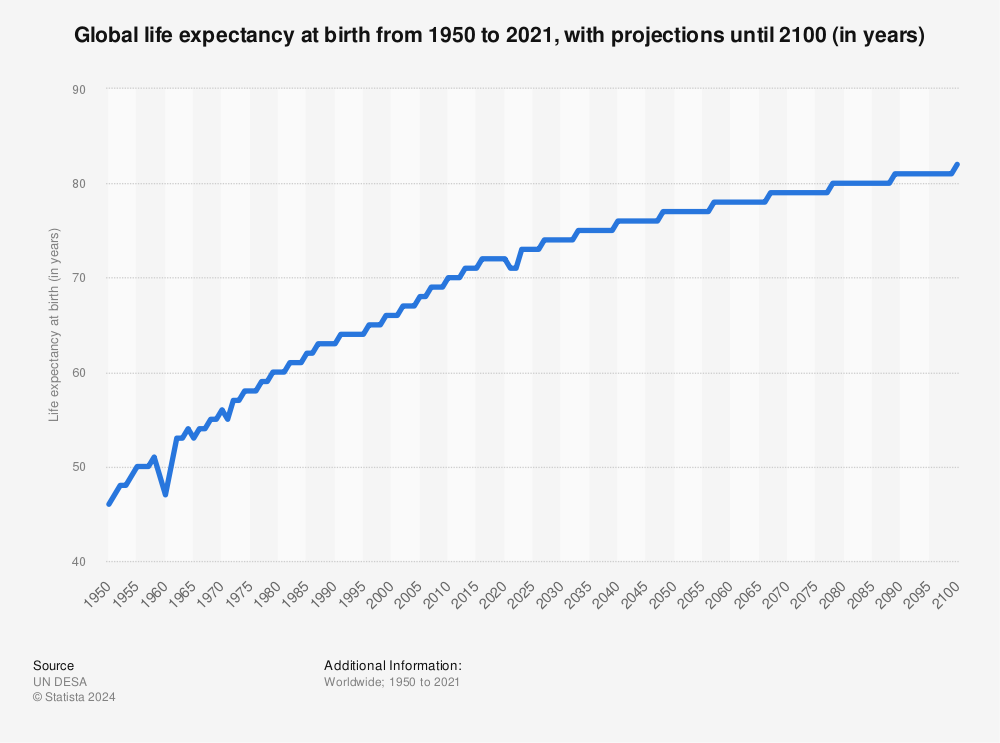
Figure 1: Growth of global life expectancy, 2007–2017. Source: https://www.statista.com/
Because it is a global average, the number of centenarians is also increasing globally (Figure 2). If human beings can tame the destructive impact of carbon footprint and climate change, the negative impact of environmental decline might also be reduced. That would also contribute to longer lifespan. Every time I drive from Oakland, Calif., to Silicon Valley along the I-880 freeway, I see a huge billboard of a large health system announcing that the first person to live 150 years is already born. It is not a fairy tale anymore; it is becoming real.

Figure 2: The worldwide number of centenarians continues to grow. Source: https://www.statista.com/
The Business of Longevity Supported by AI
The dramatic increase in longevity could be viewed as a ticking time bomb that could have a profound impact on economies around the world; for example, the growth and cost of chronic and social care for an aging population while the caregiver number is dwindling. On the contrary, futurists could also argue that this is an unprecedented opportunity fueled by the “longevity industry.” The Global Longevity Consortium, a U.K.-based organization, published a report in 2018 describing the emerging opportunity at the intersection of geroscience, healthcare technologies, technologies for aging consumers and the FinTech industry. According to the report, as people live longer owing to the advent of genomic, data-driven, personalized diagnosis and therapy combined with advancement of biotechnology that is focused on slowing down the aging process overall, new technology and financial services would be required to be developed that would be consumed by this group of people and their family members around the globe.
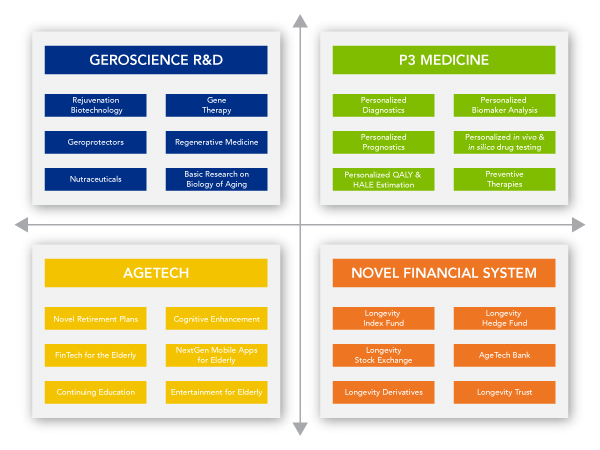
Figure 3: As people live longer, expanded technology and financial services are needed to meet the demand. Source: The Biogerontology Research Foundation
The size of the market is huge, and according to some estimates it could be about one billion people in retirement globally, which is called the “7th continent” by the Aging Analytics Agency. The true economic size of this industry is hard to predict owing to its inherent complexity and broadness (as evident by the 2x2 framework in Figure 3), but a Forbes article pegged it at about $27 trillion by 2026. That is a huge number by any yardstick.
Age-related technologies are still in the early stages of development. Gene editing and precision medicine is still in its nascent stage. But in this decade, explosive and path-breaking growth is expected in all forms of technologies – digital, analytical and biological. Quantum computers will soon make a foray to increase computing powers by leaps and bounds, thus changing the paradigm. Pundits now forecast that all these technologies will converge in this decade and will give rise to new activity hubs for the “longevity industry” where AI, health tech, FinTech and age tech will coexist in a manner never seen before. This is a fascinating future that is unfolding in front of us, and hopefully it will reach a stage of maturity before the decade ends.
Rajib Ghosh is the founder and CEO of Health Roads, LLC, a consulting company for enabling digital transformation in healthcare organizations. He has 25 years of technology experience in various industry verticals where he had management roles in software engineering, data analytics, program management, product management, business operations and strategy development. Ghosh spent a decade and half in the U.S. healthcare industry as part of a global ecosystem of medical device manufacturers, medical software vendors, telemedicine and telehealth solution providers. He’s held senior positions at Hill-Rom, Solta Medical and Bosch Healthcare. His recent work includes leading data-driven digital transformation in the public health space, including county-level healthcare agencies and organizations focused on underserved populations.
([email protected])