

April 15, 2020 in ReCAP
ReCAP: Dan Hudson
SHARE: PRINT ARTICLE: https://doi.org/10.1287/LYTX.2020.03.09r
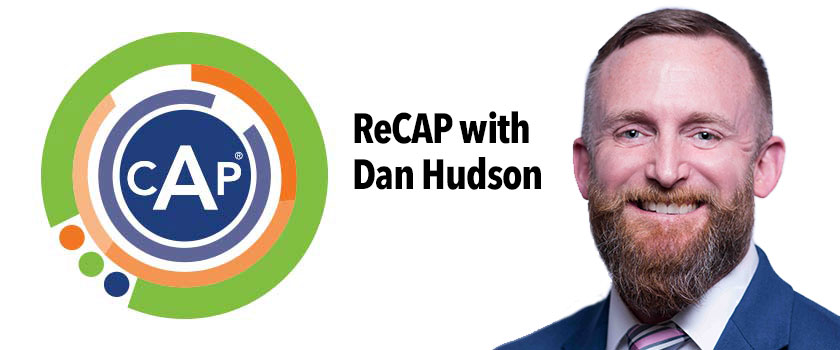

Name: Dan Hudson
Employer:
Job Title:
Chief Technology Officer and Chief Data Scientist
Primary Job Functions
As CTO and Chief Data Scientist, my primary job functions include:
- Collaborate with other members of the executive leadership team to develop our vision and strategy, including how we leverage data, analytics, and technologies as strategic assets in realizing our vision.
- Develop solutions at the intersection of people, processes, and technologies to help current and prospective clients solve a wide range of problems.
- Stay informed about current and emerging technologies and develop strategies for how we can best leverage these technologies to improve our business and to help solve hard problems for current and prospective clients.
- Direct and guide delivery of our technology solutions, including data science and advanced analytics projects.
- Source, develop, and nurture the talent of our technical staff comprised of analytics professionals, including analysts, data scientists, and O.R. professionals.

Date CAP Certification Was Earned
May 17, 2014

How did you first hear about CAP?
I joined INFORMS in 2011 when I lived in the Baltimore-Washington Metro Area and was a member of the local Maryland Chapter. I first learned about the CAP program through INFORMS newsletters and local chapter communications. After attending an introductory webcast about the program, I was convinced that this was the right certification for me and chose to become an early adopter.

Was the exam harder or easier than you thought it would be?
Much like the third option that Goldilocks encounters in the Goldilocks and the Three Bears fairy tale, I believe the difficulty of the exam was “just right.” I recall being challenged by many problems, but also feeling confident that my education and experience in operations research and analytics had prepared me well for the exam.
How does being a CAP help in your workplace?
I routinely see it helping me in two ways. For colleagues or clients who are already familiar with the credential, it immediately signals a high level of competence in and commitment to the practice of analytics; they know that earning the credential requires not only passing a rigorous exam that evaluates technical competence, but also requires verification of competence in the so-called “soft skills” that are essential to creating value from analytics projects. For those who are not familiar with the credential, it gives me an opportunity to educate them and increase awareness of the program. I believe in the power and promise of using analytics to discover meaningful insights from data that can result in better decisions. However, I also recognize there are many potential pitfalls to be avoided and limitations to consider, and that inappropriate use of analytics can result in misguided decisions that lead to undesired outcomes. I believe in the need for professional standards in the practice of analytics and data science and the CAP program is paving the way for this.

Do you think CAP should serve as a hiring mechanism? Should it apply equally to government jobs as industry jobs?
Yes and yes. For the reasons I already stated, I believe CAP helps distinguish applicants in the hiring process for analytics and data science roles. If I am a hiring manager and I see two applicants who are roughly equivalent in terms of education and experience, but one has the CAP credential, I am going to choose the vetted individual who has been closely examined by a professional certification board and determined to meet a set of rigorous professional standards. In my view, these professional standards and the principles that underpin them apply equally to analytics professionals in government and in industry. That said, as a government professional, I believe the soft skills may be even more important for analytics professionals in government roles. Decisions in that space often involve multiple and diverse stakeholder groups and multiple, competing objectives. Stakeholder analysis, problem framing, facilitation, and communication are essential skills for the successful use of advanced analytics to inform such decisions.

What are current issues/trends/challenges in analytics that you see?
I see a lot of hype surrounding the potential promise and peril of artificial intelligence (AI), including concerns about AI systems that achieve self-awareness and pursue the destruction of humanity akin to Skynet in Terminator. I firmly believe that these types of scenarios still appropriately belong in the realm of science fiction. What excites me about advances in AI as they pertain to the domains of analytics is the prospect of leveraging the strengths of AI to augment (not replace) human intelligence. I envision an analytics world in which we focus AI on tasks that machines are especially good at, thereby enabling the analytics professional to focus on the tasks that require subjective judgment, creativity, and emotional intelligence that people are especially good at. In this human-driven and AI-assisted analytics world, the 80% effort that now produces only 20% of meaningful results (according to the Pareto principle) would be automated so that the analytics professional is able to concentrate and leverage his or her strengths on the 20% of effort that produces 80% of the results. We’re already seeing some of this with automated feature engineering in the realm of machine learning. I am excited about the possibilities!

Finish this sentence: To me, being a Certified Analytics Professional means…
…being a lifelong learner who is committed to creating value by using advanced analytics in a professional, competent, and ethical manner to discover actionable insights that lead to better, high-quality decisions.
SHARE: