

June 22, 2020 in ReCAP
ReCAP: Len Zangwill
SHARE: PRINT ARTICLE: https://doi.org/10.1287/LYTX.2020.04.06
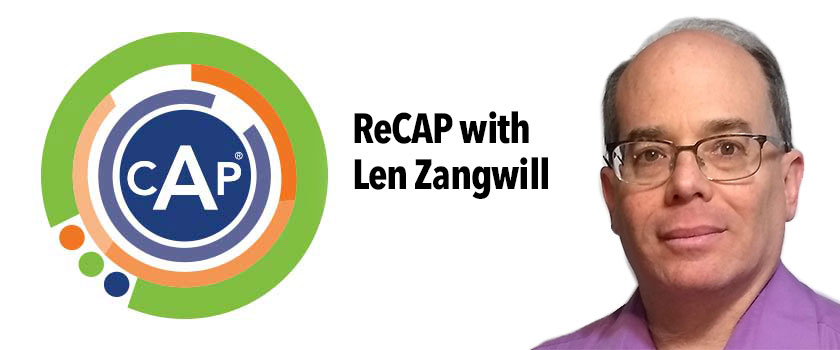

Name: Len Zangwill
Employer: Bristol Myers Squibb
Job Title: Sr. Manager, Clinical Data Standards
Primary Job Functions
- Provide review of proposed data collection instruments for compliance to existing standardized forms, reconciling differences.
- Create departmental level metrics measuring volume and type of form standards change requests addressed.
- Write documentation on departmental processes, accessible across the organization.
- Train and mentor colleagues.
Date CAP Certification Was Earned
June 25, 2016

How did you first hear about CAP?
At a Philadelphia INFORMS chapter meeting back in 2013/2014. Then in 2015 I went to the CAP reception at the INFORMS Annual Meeting in Philadelphia. At that point I decided to apply for the exam and certification process.

How much time did you dedicate to studying for the exam?
Probably about 3-4 weeks intensely, with a couple of weeks of review courses beforehand to brush up on the stats knowledge I had not used in a while.
How does being a CAP help in your workplace? Do you feel that professional certifications are gaining recognition from both co-workers and clients?
I think it contributed to my getting promoted in late 2016. I have heard some indications that some folks across companies (and some clients) are interested in it. I think in general, professional certifications impress clients, but that dynamic varies across industries.

Do you think CAP should serve as a hiring mechanism? How about for promotions?
As a CAP certificate holder, I think it would be great if it were an explicit criteria for hiring and promotions. Realistically, I do not think this will happen in great numbers until we have thousands of CAPs, vs. hundreds today.

Finish this sentence: To me, being a Certified Analytics Professional means…
… I have a proven combination of analytical and statistical technical skills and the soft skills to communicate with and guide clients toward enhancing their analytics literacy and usage.

In your opinion, what will be the next "game changer" in analytics?
Ethics—that is, a strong questioning of what is happening to this data, why are we doing what we are doing? This seems to be a “nice to have” in many cases now vs. part and parcel of the process. Tied to this is data privacy, in that consumers/laypeople will gain greater awareness of how others are profiting from their data. As a result, they will demand more control of their data, making it more difficult to acquire and prep the data needed for current modeling techniques.
SHARE: