

June 16, 2020 in Analyze This!
This Year is Not Normal, Not Even Close
SHARE: PRINT ARTICLE: https://doi.org/10.1287/LYTX.2020.04.11
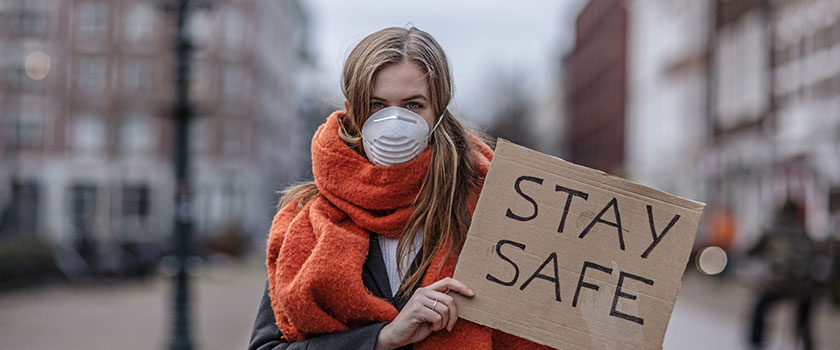
Normally, I eagerly look forward to the end of the school year. I applaud my students’ end-of-semester presentations, enjoy a feeling of accomplishment (and a sense of relief) when I finish grading their finals, and revel in their joy as they walk across the stage at graduation.
This year is not normal. Not at all.
Because of the COVID-19 crisis, my students’ projects, exams and even graduation ceremonies were conducted virtually, and thus felt more than a little anti-climactic. As summer began, we were still sheltering-in-place here in California, there are as yet no baseball games or travel plans, and there will be no Burning Man [1]. In theory, it is great to imagine a summer featuring more time for reading and research. In reality, the absence of students and classes immediately had a deflating effect on my morale. To break out (literally) of my home office-bound routine, I began searching for an opportunity to do some volunteer work.
In particular, I was intrigued by the prospect of serving as a contact tracer, reaching out to people who had been exposed to someone who has tested positive for COVID-19 to provide information and advice in hopes of stopping or at least slowing the chain of virus transmission. This type of direct, person-to-person engagement appeals to me as an extrovert, and I also thought that being embedded in a process like this might provide me with some unique ideas for research. Alas, several phone messages went unanswered, and a few promising email exchanges have thus far led to nothing.
Instead, just a few days after turning in my grades, I find myself at an industrial arts space in Oakland, Calif., part of a team of volunteers making personal protective equipment for healthcare providers. Starting with large rolls of plastic that have been donated by a corporate sponsor, our multistep production process features some digital laser cutting sandwiched between several manual steps (cutting sheets, cleaning and folding individual masks, boxing shields, providing assembly instructions and matching requests from healthcare providers with completed kits). The production process is continually evolving, and it is fascinating to see how its details are stored, updated and communicated in this (mostly) analog work environment. Over time, several co-workers have proven to be adept at making process improvements by rooting out problems with upstream steps, and once again I am reminded that our statistical models are often far less important than disciplined observation and dogged investigation.
Many Jobs Not Likely to Return
Given that we are still under shelter-in-place orders here in the Bay Area, I have come to look forward to my weekly trip to m0xy [2]. A few weeks ago, one of my fellow volunteers was a veteran flight attendant for a major air carrier who was grateful to still be working. During a short work break, we exchanged notes on our experience during the quarantine period, and she happened to mention that many of her recent flights had been quite full. “There are so many planes on the sidelines right now,” she surmised, “that the airlines will only add flights if/when they are confident that they will be profitable.”
Investigating this a bit further once I got home, I learned that this spring’s airline passenger traffic was down 90% from 2019. As of this writing, more than half of all commercial aircraft remain in storage [3]. Bill Swelbar, chief industry strategist at Delta Airport Consultants, pointed out in a recent email that “the industry was very stingy on adding capacity back into the domestic market immediately following the end of the Great Recession. The period between 2010-2014 was referred to as the ‘Capacity Discipline Era,’ where capacity was grown at a rate less than GDP.”
He also estimated that it would take more than four years to return to pre-pandemic flight levels. “Many of the jobs in place on March 1, 2020 are likely not to return. Disposable income will be spent more on necessities than on leisure travel … and the business travel side is as clear as mud. ‘Will there be sufficient business revenue to support all of the network carriers?’ is an important question. Moreover, as we grow more comfortable with Zoom and Microsoft Teams, business travel may simply not return to historical levels.”
Swelbar was also quick to point out that such forecasts are by necessity based only on the information available at present, and that making sense of airline industry data right now is very challenging. Indeed, the data science team at airline industry consulting firm Cirium recently published a blog post [4] explaining how they had decided to change their definition of what constitutes a “stored” aircraft as a result of the extraordinary circumstances caused by the pandemic.
Reading this blog post reminded me of the recently released U.S. jobs report. While many economists expected the unemployment rate to increase once again, the report showed a net gain of 2.5 million jobs from April to May and an unemployment rate of “only” 13.3%. Further investigation, however, revealed particularly vexing challenges associated with accurately determining who is and is not employed, when some businesses are temporarily shuttered and some employees are furloughed but not fired, and most agreed that the “real” rate was closer to 16%. As The New York Times’ Ben Casselman observed, “there is no question that the speed and severity of the economic collapse has made gathering and interpreting economic data unusually difficult” [5]. More broadly, it is clear that for years to come there will be challenges associated with evaluating analytical models and forecasts that are based on data gathered during this uniquely weird and unsettled time.
Future Social and Political Shifts
Back at m0xy, I arrived one Friday to learn that some of the shields we produced during the previous week had been distributed to people in Oakland who had gathered to protest the recent killing of George Floyd in Minneapolis [6]. Atticus Wolf, the organizer of our face shield production initiative, explained the rationale for this succinctly: The same black and brown populations that made up the majority of the crowd at the recent protests have also been disproportionately impacted by COVID-19, and so the face shield donations to protesters are intended to help reduce the migration of the virus from these large public gatherings back into those same communities. Given the project’s goal of reducing virus transmission rates, it was a clear and smart data-driven decision.
I spent the rest of that shift cleaning and assembling masks, thinking about the intersection of the George Floyd protests (I grew up in Minnesota, and the epicenter of the protests there is less than two miles from my last home in Minneapolis) and COVID-19 (which has dominated our lives for the past few months). In addition to future social and political shifts, will a sharp increase in virus infections be another legacy of these weeks of impassioned protests?
Beyond that, as we approach the summer solstice, much of the country is lurching into various levels of “reopening.” As we start to emerge from our quarantines, increased testing for the virus means that the number of cases will surely grow. But will relaxed social distancing also lead to an increase in hospitalizations and fatalities as well? No one seems sure, and many are understandably nervous, myself included.
Also, the beginning of the fall semester does not seem far off at all, and I cannot help but think about being back in a classroom full of students, where a sanitized environment – and rigorous social distancing – will be challenging to establish and maintain. Despite my deep desire to return to campus and in-person teaching, my enthusiasm is tempered by: (a) concerns about being an asymptomatic carrier and/or an inadvertent “super spreader” [7], and (b) a small but palpable feeling of fear for my own health. (As an over-50 diabetic, I am somewhat more vulnerable than most to the virus.)
Normally, I eagerly look forward to the beginning of the school year.
This year is not normal. Not at all.
References
- https://burningman.org/
- https://www.m0xy.com/face-shields
- https://www.cirium.com/thoughtcloud/covid-19-navigating-the-flight-plan-to-recovery-daily-update/
- https://www.cirium.com/thoughtcloud/understanding-ciriums-methodology-for-stored-aircraft-during-covid-19/
- https://www.nytimes.com/2020/06/08/business/economy/jobs-report-data.html
- https://www.youtube.com/watch?v=Grl-UBqsp4g
- https://www.sciencemag.org/news/2020/05/why-do-some-covid-19-patients-infect-many-others-whereas-most-don-t-spread-virus-all
Vijay Mehrotra is a professor in the Department of Business Analytics and Information Systems at the University of San Francisco’s School of Management and a longtime member of INFORMS.
([email protected])