

October 29, 2020 in Healthcare Analytics
The state of healthcare in 2020: a brief roundup
SHARE: PRINT ARTICLE: https://doi.org/10.1287/LYTX.2020.06.06
2020 will be remembered by many as a terrible year in terms of its negative impact on a global scale, a year that shaped the world in profound ways and will perhaps continue to shape it in the coming years or decades. The first pandemic of the new millennium ravaged both developed and developing countries alike; coronavirus does not discriminate by wealth, color of skin, religion or geographic location. As of this writing, about 40 million people have been infected worldwide in 189 countries or regions and claimed 1.1 million human lives, which pundits say is an undercount. The world saw how two current superpowers of the world handled the pandemic. China, which initially floundered with the disease and suppressed facts from being disclosed, rapidly made up for that mistake with strict enforcement of governmental intervention. The United States, on the other hand, botched its response with a lack of transparency, missteps and unnecessary politicization of simple public health mandates. As a result, at the time of this writing, China has a daily positive case rate of under 20 while the U.S. has experienced 70,000 new cases a day. Leading public health officials are now saying that the country will have heart-wrenching death numbers before the winter is over.
Inequitable Impact of the Pandemic
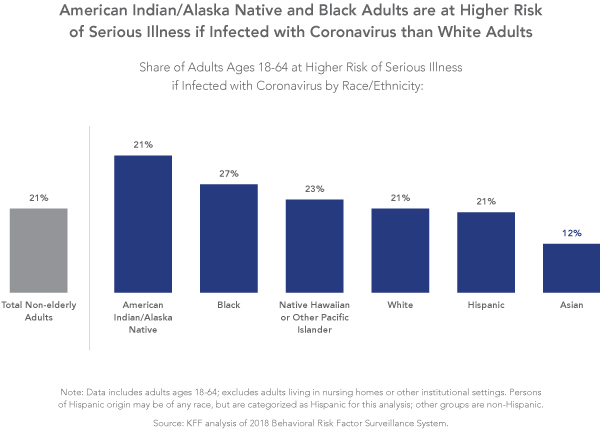
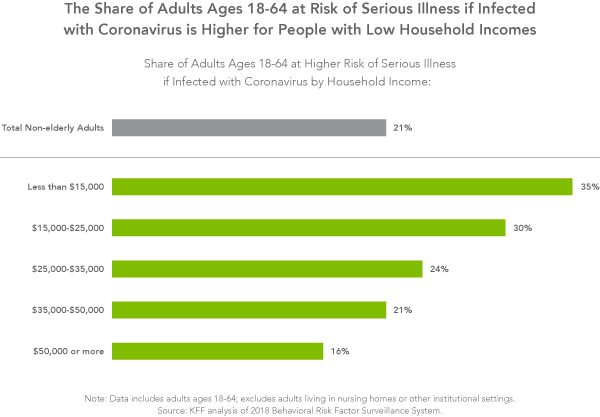
The pandemic also demonstrated the effect of the widening inequalities of the wealth distribution in the United States, as well as around the globe. People in the top tier of society coped with the pandemic relatively well and, in some cases, prospered. People in the lower tier of the societal strata fared poorly both in terms of loss of economic opportunities and their health. People whose jobs could be performed using digital technologies without in-person presence had minor hiccups in adjusting to the new way of working; they didn’t suffer much in terms of financial losses or health outcome due to the virus. People whose jobs couldn’t be done remotely, such as frontline workers in the food, travel, entertainment and healthcare industries, suffered the brunt of the pandemic including income loss, food insecurity, homelessness, greater exposure to the virus for them and their loved ones and deaths. In many cases such differences came down to the racial makeup of the population (Figures 1 and 2).
An estimate published by the World Bank shows that about 100 million people globally are falling back into extreme poverty this year. Regions that have seen years of economic growth, such as Sub-Saharan Africa, will shrink in 2020. The number of people facing acute food shortage this year will double to 265 million people according to an estimate from the World Food Program, the recipient of this year’s Nobel Peace Prize. Owing to a lack of access to healthcare, children around the world are facing a grim future as vaccination rates dramatically fall according to the Bill & Melinda Gates Foundation. Globally, the pandemic reduced access to non-COVID-19-related healthcare, as well as education for millions of children due to societal and economic inequities. A few years ago, developed and wealthy nations of the world, including the United States, would have banded together to provide relief to the underdeveloped nations, but now those countries are mired in their own pandemic-induced recession and internal crisis.
Silver Lining: Vaccine Collaboration and Telemedicine
Fortunately, not everything is shrouded in darkness and despair. For the first time in the history of mankind, scientists around the world came together to work tirelessly – and are now very close to finding – vaccines for COVID-19 at unprecedented speed. In my last column I described the various vaccine initiatives that are underway around the world. Companies and researchers from the United States, United Kingdom, Germany, Russia, France, Australia and China are working day and night to make such an incredible feat possible. The World Health Organization (WHO) reported in August that 172 countries are now engaged in their COVAX, a global initiative aimed at working with vaccine manufacturers to provide countries worldwide equitable access to safe and effective vaccines once they are licensed and approved. It will take many more months before vaccines that are 70%-80% effective will hit the market in large enough volume to cater to the global needs, but never before in the history of mankind has the collective will of humanity and power of science come together in such a profound way. Exponential growth of the computing power and access to data made this accomplishment possible. Traditional medicine has recognized its much ignored cousin telemedicine as a meaningful mechanism to tackle the loss of access to healthcare. Forrester Research projected that by the end of 2020, about a billion telemedicine visits will take place. While the number of telemedicine visits has fallen quite a bit in recent months from its peak in April, it is still high compared to the pre-pandemic numbers across the U.S. One specialty where the demand surge has not tapered off is behavioral health. Most if not all of the behavioral health visits are still happening virtually via telemedicine platforms. As the pandemic fluctuated throughout the country and regular life became disrupted, the behavioral health crisis surged along with the demand for telemedicine visits. This is why large telemedicine platform providers such as Teladoc or AmWell are still reporting significant growth in visit volume and revenue.
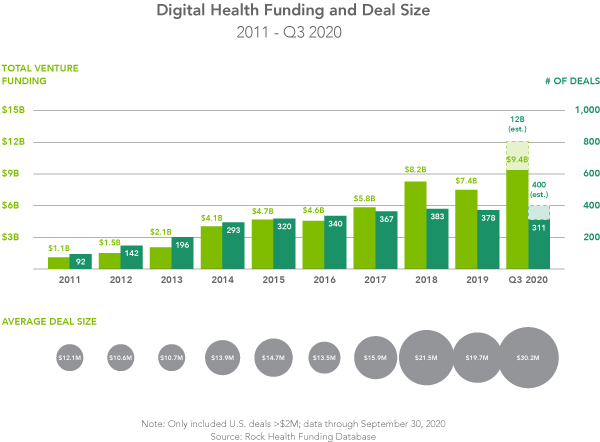
Meanwhile, venture capital flowing into digital health continued to soar in the third quarter of 2020. This year is now projected to be the largest funding year ever for digital health, spurred by 24 mega deals so far. By the end of September, a record $9.4 billion had been invested in digital health deals (see Figure 3). Recovery of the stock market and many pandemic-initiated policy changes enabled many commercialization initiatives. The bulk of the investments were in technologies needed in times of pandemic such as virtual care delivery, R&D enablement, wellness, fitness and other data- and analytics-based companies such as artificial intelligence-driven drug delivery platforms.
Overall, we will end the year grieving loss of lives and gaping economic anxieties in the U.S. and around the world, but as health technology professionals and data aficionados, we will also look forward to 2021 with cautious optimism. A pandemic of this magnitude is a seismic event in one’s lifetime. Its global aftermath is still to be determined. In terms of impact it has the magnitude of a world war, but with no weapons fired. Just like a world war, big changes will be globally ushered in, including changes in industries as well as geopolitical positions of countries. But with several upcoming COVID-19 vaccines, unparalleled global cooperation and the rapid rise of technology-enabled innovation in discovery of preventives, disease cures, research and development, I am very hopeful that the new year and the new decade will continue to make the world a better place.
Rajib Ghosh is the founder and CEO of Health Roads, LLC, a consulting company for enabling digital transformation in healthcare organizations. He has 25 years of technology experience in various industry verticals where he had management roles in software engineering, data analytics, program management, product management, business operations and strategy development. Ghosh spent a decade and half in the U.S. healthcare industry as part of a global ecosystem of medical device manufacturers, medical software vendors, telemedicine and telehealth solution providers. He’s held senior positions at Hill-Rom, Solta Medical and Bosch Healthcare. His recent work includes leading data-driven digital transformation in the public health space, including county-level healthcare agencies and organizations focused on underserved populations.
([email protected])