

November 24, 2020 in ReCAP
ReCAP: Isaac Nyamekye
SHARE: PRINT ARTICLE: https://doi.org/10.1287/LYTX.2020.06.12
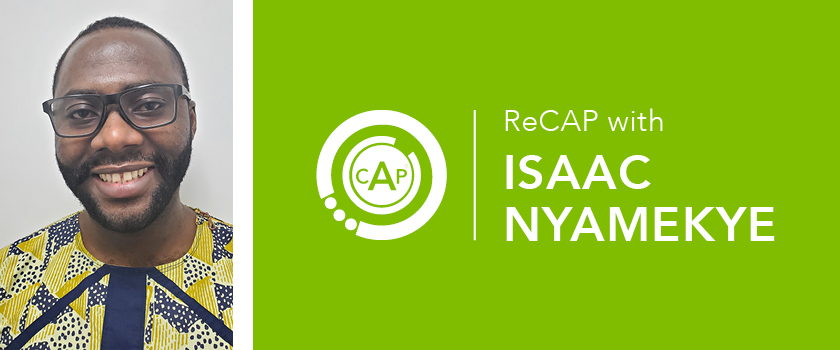

Name: Isaac Nyamekye
Employer: Athabasca University, Canada
Job Title: Manager, Institutional Data Analysis
Primary Job Functions
- Manage the collection, management, interpretation and use of institutional data in support of integrated planning, reporting and learning assessment.

Date CAP Certification Was Earned
February 2019

Why did you become a CAP?
In addition to the reputation of INFORMS, I chose to become a CAP to challenge myself and keep up with trends in analytics. The professional development requirement for recertification is a great motivator for me to keep learning and developing my skills as an analytics professional.

Was there anything about the exam that surprised you?
With the breadth of topics in the CAP exam, I didn’t know what to expect, so I made sure to prepare as much as possible. However, I was surprised to find that most of the questions were very practical and easier to answer when you have experience in analytics.

How does being a CAP help in your workplace?
The formalized seven domains of CAP has provided me with a consistent and standardized way of looking at every analytics project I undertake. This has made me more efficient and effective.

What other INFORMS programs have you participated in?
I have participated in several INFORMS webinars on analytics.

In your opinion, what will be the next "game changer" in analytics?
In my opinion, privacy protection, security and ethical handling of data are going to be the next “game changers” in analytics. Increasingly, consumers expect more personalized experiences with analytic products and at the same time are critical of the collection, management and use of their personal data. Finding a delicate balance between these factors is going to be crucial. In addition, the growing trend of self-service analytics is going to change how we look at analytics. Self-service tools will allow more businesses and people with limited budget and knowledge to benefit from big data and complex analytics.
SHARE: