

April 15, 2021 in Analytics Conference
Future of Artificial Intelligence in the Life Science Industry
Life Science Panel during the Virtual 2021 INFORMS Business Analytics Conference
SHARE: PRINT ARTICLE: https://doi.org/10.1287/LYTX.2021.02.31n
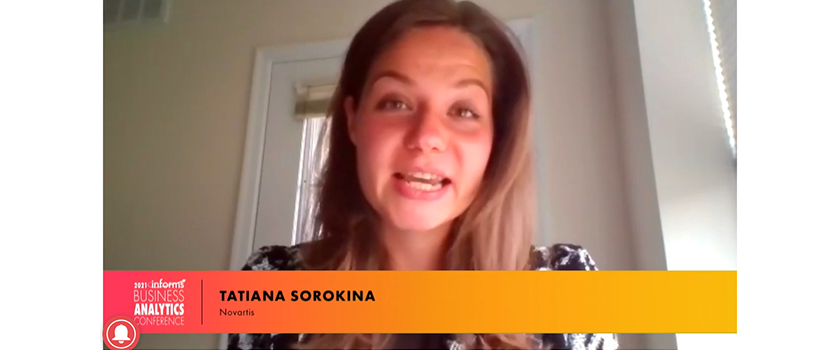
A panel of life science industry experts came together Wednesday to discuss the future of artificial intelligence (AI) within their field. Ranjit Kumble, Iya Khalil, Fernando Schwartz, Inder Singh and Faisal Khan were joined by moderator Tatiana Sorokina from Novartis, to provide each of their own take on what they believe is the future of AI in the medical industry.
Ranjit kicked off the session by first explaining what will make the biggest impact in AI: meaningful connections in multidimensional data. In life sciences, where clinical analytics come into play, AI can really provide a critical link between our understanding of diagnosis of critical illnesses and when to address them with patients.
Continuing that trend, Fernando explained the practical applications of AI today. While it is easier to implement artificial intelligence in the technology sector (with self-driving cars as one example) it is much more difficult to implement in the life sciences. The applications are often to help solve real-world problems, with typically live, human consequences. If you want to use AI to its fullest ability, you must be prepared to use it first for the most difficult of problems.
Iya added that the best way to get companies or users to begin adopting AI practices lies in determining which problems could be best assisted by using AI to solve. If you want people to adopt AI, then you need to prove that it is an indispensable resource. In terms of best practices, Inder cautioned against trying to rush implementation. There must be patience and those who choose to implement AI need to understand that any rollout takes time and effort to produce beneficial returns.
One industry that has already been using AI is pharmaceuticals. Faisal explained that not only is it being used within businesses, but the public is beginning to develop awareness of its uses. With this knowledge, you can change the development process in pharmaceuticals.
The next important step, after adopting AI for use in life sciences, is getting a talent pool that can support AI. To do that, you need to keep employees engaged in their positions, which begins by finding talent who want to solve the big problems and are willing to learn. Like in technology, the world is always changing, and having people who are prepared to adapt to those changes will offer the reward of new challenges or problems to solve. You must keep your employees engaged as well as happy.
Since COVID-19, the entire medical field and interest in life sciences has skyrocketed. With any hope, the public has finally realized the importance of life sciences, and from that renewed spotlight will come growth and innovation.
SHARE: