December 20, 2023 in Leading in Analytics
Succeeding in Analytics by Leading in Analytics
SHARE: PRINT ARTICLE: https://doi.org/10.1287/LYTX.2024.01.01

Now more than ever, firms are investing in artificial intelligence (AI) and analytics efforts. However, the reality is that despite a few very big headline-making wins, most AI and analytics projects fail. It’s not that they don’t produce a potentially useful algorithm or result – it’s that they fail where it really matters: producing significant financial benefit that the organization expected. When that’s the case, in the eyes of the sponsors and leaders, the project will be considered a failure. Shockingly, the present failure rate is in the 80%-90% range [1].
However, it does not need to be this way. Most of the major causes of project failure are known. In fact, they were written about by Karl Kempf in 2018 in Chapter 2 of the “INFORMS Analytics Body of Knowledge” (ABOK). Kempf introduces us to the concept of Five Manageable Tasks, which are illustrated in Figure 1 and described here:
- The Problem: Failure in the selection, definition and focus of the business problem.
- The Team: Failure in building and managing the team, broadly defined.
- The Data: Failure in data quality, relevance, quantity or availability.
- The Tools: Failure in the design, use, application, adoption or development of analytics tools.
- Execution: Failure to effectively execute in a way that creates value.
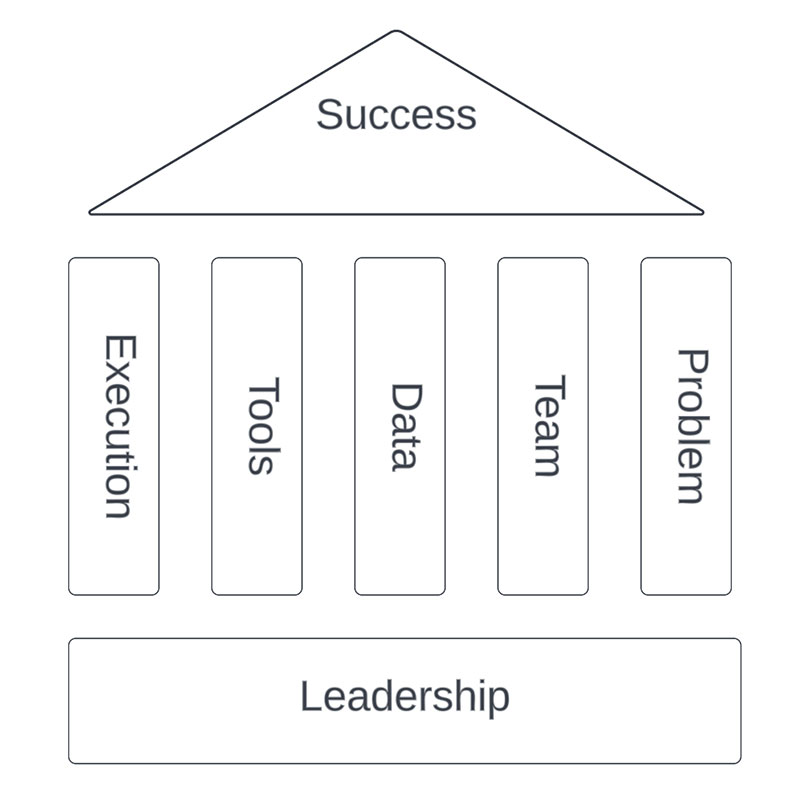
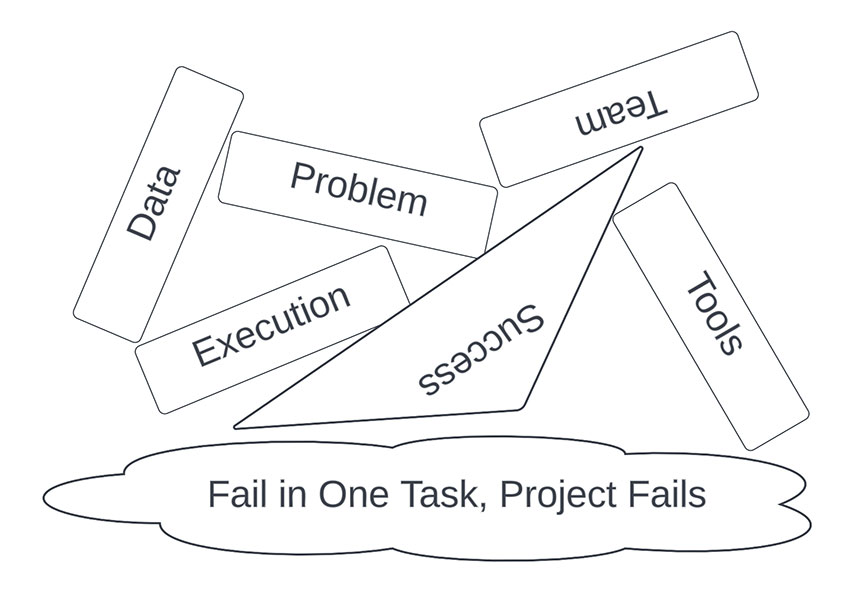
These tasks may not address every cause of failure, but they cover the most common causes. Their interrelated nature means these are exactly the tasks that leaders and managers must do to address the causes of most failures, and that failure to address even one of these tasks will almost always doom a project to failure, as illustrated in Figure 2.
The challenge for those of us in the AI/data science/analytics field is that we only have direct control over one of the five tasks, which is how we use our tools – and we don’t always control that sufficiently. The rest of the tasks, even data, are largely controlled by others in the organization.
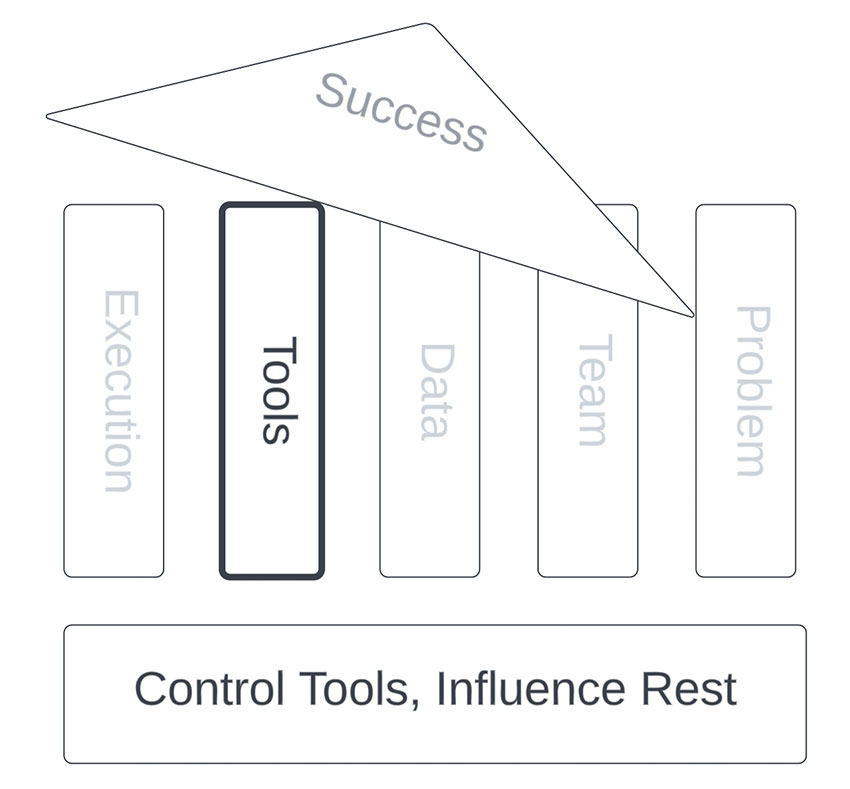
If we want our AI and analytics projects to succeed, we must become leaders. Loners fail. We have to learn to work together across the organization to coordinate all the elements needed to succeed. A large part of that effort is ensuring that other functional areas understand AI and analytics, including their role in supporting it. Without learning to lead in AI and analytics, we will continue to make only marginal improvements in analytics success.
It is good to know what can and should be managed for success, and even better is to know how to manage them. The keys to success include leadership skills that are focused on the critical manageable causes of failure. To better understand the required skills, we interviewed dozens of highly successful analytics leaders at all levels of a variety of organizations. These successful experts – including the originator of the manageable tasks, Karl Kempf – freely shared their wisdom and strategies (i.e., best practices) for success along the way.
In the course of our research, we identified two additional manageable tasks, more focused on the system level versus project level but essential for long-term success in AI and analytics:
- Analytics Maturity: Building a mature, repeatable and trustworthy analytics process to help ensure continued success beyond a few one-shot projects, creating a culture of data-based decision-making.
- Responsible Analytics: Being responsible and ethical in every phase of conducting analytics projects, including following the INFORMS Ethics Guidelines [3].
The output of this four-year journey to understand best practices in AI and analytics leadership includes the following:
- Ethics Course: We partnered with INFORMS to build a short ethics course, currently being used by the organization to help share our ethical responsibilities with Associate Certified Analytics Professional (aCAP) candidates. This course shares the wisdom of several well-respected INFORMS members on each aspect of the INFORMS Ethics Guidelines in a thoughtful and engaging way.
- Leading in Analytics Course: In partnership with the Professional Development Academy and INFORMS, we launched an eight-week professional education program in which analytics professionals and their business-minded colleagues can hear directly from industry experts on their best practices for success … and gain 32 PDUs in the process!
- Leading in Analytics Book: A new book, “Leading in Analytics: The Seven Critical Tasks for Executives to Master in the Age of Big Data” [4], distills and expands the essence of these best practices for analytics leadership and success.
These resources are designed to teach leadership skills and, more importantly, share best practices for success. The goal of these and other resources is for us all to have more successes in AI and analytics.
References
- Sam Ransbotham, Shervin Khodabandeh, David Kiron, François Candelon, Michael Chu and Burt LaFountain, 2020, “Expanding AI’s Impact with Organizational Learning,” MIT Sloan Management Review, October 20.
- Karl G. Kempf, 2018, “The Five Manageable Tasks,” INFORMS Analytics Body of Knowledge (ABOK), New York: Wiley, Chapter 2, pp., 32-48.
- https://www.informs.org/About-INFORMS/Governance/INFORMS-Ethics-Guidelines
- https://www.amazon.com/Leading-Analytics-Critical-Executives-Business/dp/1119800412
Joseph A. Cazier, CAP-X, is a Clinical Professor, Faculty Director of the DBA program in Technology Leadership and associate director of the Center for AI and Data Analytics at Arizona State University. He is also the author of “Leading in Analytics: The Seven Critical Tasks for Executives to Master in the Age of Big Data,” as well as the creator of the new INFORMS professional course based on that book. D. Terry Rawls, Ed.D., is a retired university president, administrator and entrepreneur who practiced data-driven cultural change everywhere he served. Today, Rawls focuses on bringing new ideas to institutions and organizations worldwide.