February 13, 2025 in Generative AI
Protecting Society from AI-Generated Misinformation: A Guide for Ethical AI Use
SHARE: PRINT ARTICLE: https://doi.org/10.1287/LYTX.2025.01.06
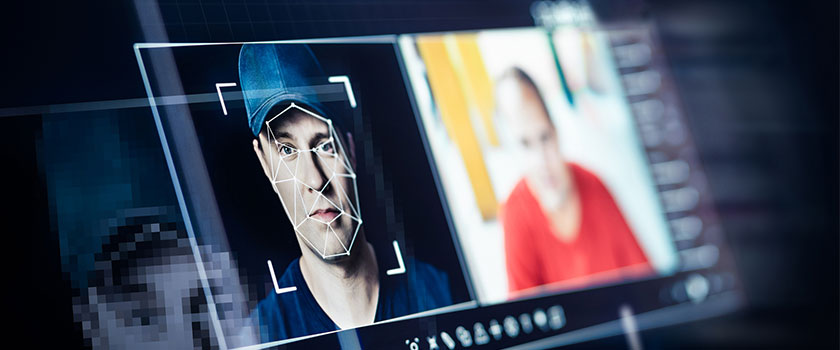
Artificial intelligence (AI)-generated misinformation is a growing societal concern. Text searches and inaccurate answers to queries are the primary focus, but “deepfake” AI-generated photos, videos and sound clips have the potential to alter and upset reputations, political systems and other integral elements of society. It is, therefore, essential to explore the ethical and technical challenges of detecting and mitigating fake content and propose solutions such as enhanced transparency, robust detection systems and trust-building practices. By addressing the intersection of technology, ethics and societal impact, companies can implement a comprehensive guide for responsible AI use.
How the Growth of AI Technology Contributes to Misinformation
The rapid growth of AI technology in recent years has created urgency across industries to develop and launch AI systems. Unfortunately, one side effect of this “race to be first” was the sacrifice of specific security measures or testing protocols. One report states that approximately 57% of online content is now AI-generated or processed through AI translation algorithms, impacting how information is managed and distributed. Additionally, much of this information is not fact-checked. It exists primarily as clickbait, leading to the popularization of the term “AI slop” to describe its relative lack of value to the community.
The potential for damage is widespread, with examples including Google’s Gemini tool, halted in early 2024 after accusations of perpetuating racial stereotypes and biases through historically inaccurate image creation. Previously, various tools received criticism for depicting primarily white males in positions of corporate leadership while underrepresenting women and people of color in such roles. Conversely, an even more troubling trend showed people of color in degrading roles, including depictions of criminals. One Bloomberg article’s title said it all: “Humans are biased. Generative AI is even worse.”
In these instances, much of the misinformation was removed, retracted or corrected to create a more inclusive AI technology. But the most troubling trend is the spread of intentional misinformation specifically designed to harm a person or group of people, including the especially troubling deepfakes.
How Does Misinformation Spread?
Research indicates that exposure to misinformation increases the odds that a specific person or group will spread that information. More confusing, however, is the discovery that people don’t necessarily believe the very information they spread and may be more likely to share or spread information they know to be false. Their motivations are numerous and include:
- Political. Suppose people hear a disparaging comment about a politician or candidate for office. They may share that information to signal their political affiliation or attempt to sway others to their thinking.
- Financial. A “well-placed” bit of misinformation that rapidly spreads can significantly affect company stock prices, which may tempt owners of a particular holding or their competitors to promote the misinformation as fact, leading to further impact.
- Social rewards. News and misinformation spread differently on social media than through the mainstream media, which tends to employ robust safeguards to avoid that occurrence. Friend-to-friend sharing of misinformation is a click away via numerous social platforms. When those platforms serve as echo chambers, the prospect of many people liking or sharing the original post makes sharing almost irresistible to some users.
Deepfakes: How Real is the Danger?
The proliferation of technology accessible to deep learning has taken misinformation to new lows with the popularization of deepfakes – a deceptive application of deep learning to create artificial audio or video clips of people. Deepfakes are created by taking an image or video and replacing the source or subject with another individual’s likeness.
Similar to other sources of misinformation, deepfakes emanate from different motivations ranging from political (a clip of then-U.K. prime minister Boris Johnson circulated in 2022, supposedly showing Johnson endorsing another candidate) to financial (an employee of a Hong Kong firm authorized a payment of $25 million after being deceived by a deepfake of his company’s CFO during a video conference call last year) to materials that disparage or attempt to embarrass or shame private and public individuals.
Worst of all, deepfakes are frighteningly simple to create once an AI model has proper training. Initially, generative adversarial networks (GANs) set up competing neural networks – one that generates realistic images of people or objects that do not exist and are based on randomized input and the other as a discriminative network that checks the work of the original generative network. In essence, the two models train one another, and the images or videos become more and more realistic. The technology has evolved to include extensive encoding, decoding and motion models. These features study a person’s movement patterns, facial expressions and other tendencies to create the most realistic clips of that individual, ultimately using the finished product to deceive the viewer into believing they’re seeing an authentic, original depiction of the subject.
Stable diffusion is quickly becoming the gold standard in this area. It has highly customizable features, numerous variants and the ability to run on consumer hardware. OpenAI recently introduced Sora, which can create realistic videos up to 20 seconds from simple text commands by incorporating components of models interacting with the physical world. Sora is another example of new technology taking steps against deepfake creation by age-gating access to users 18 and older, adding restrictions on uploads of specific types of videos or images, and working with external groups of red teamers around the world.
Technology continues to evolve, allowing evildoers to create more realistic deepfakes. The good news is that countermeasures and potential defenses are in constant development.
Preventing the Spread of Misinformation
The considerable threat of misinformation is countered by the myriad opportunities presented by AI and deep learning. Complete avoidance will become more difficult and potentially harmful to any group or individual. The onus is on everyone to seek education and avail themselves of numerous online sources to eliminate or decrease the threat of being fooled by deepfakes or other misinformation.
Regulation is limited at this time, evidenced by the fact that very few victims of misinformation have successfully pursued legal action. Most, if not all, AI systems feature disclaimers acknowledging the possibility of inaccuracies. Improving transparency by sharing the algorithm’s logic and reasoning behind producing certain information will allow users to assess that model’s potential for accuracy while also displaying any potential biases. Industry leaders, including OpenAI and Adobe, supported California’s AB-3211 bill requiring companies to properly identify AI-generated content within the state. Under AB-3211, watermarks added to the metadata of photos, videos or audio would identify content created or significantly impacted by AI.
Red-teaming methods for mitigation and prevention of unsafe behaviors continue to evolve with the rise of large language models (LLMs). They are now considered best practices for identifying potentially harmful effects and ensuring the responsible deployment of systems. Large tech corporations are at different points in the process of developing their approaches to red teaming, but a few strategies are becoming universal:
- Developing a diverse group. LLM and tech experts are essential, but so are experts in AI, social sciences and cybersecurity, and people with extensive industry knowledge. For example, business experts or financial officers would be indispensable team members if developing a chatbot for a bank or financial institution.
- Including team members with different levels of knowledge and experience. Those involved in the creation of the model can simulate attacks or test for security lapses, whereas professionals with little or no familiarity with the system can provide valuable feedback pertinent to what everyday users might experience.
- Collecting a list of harms from testing. This can be as simple as a shared document or other means by which users add their observations with detailed examples, allowing the team to test mitigation strategies later in the process.
Information spreads faster than ever in the digital world, and AI contributes considerably to this access. When improperly or irresponsibly used, misinformation can cause irreparable damage to a person’s or organization’s reputation and millions of dollars of financial hardships. The responsibility for stopping or slowing the spread of misinformation is two-pronged – organizations can become leaders in a growing field of protecting AI integrity, and governmental organizations can aid in creating regulations and legislative deterrence to would-be disruptive forces.
Param Popat is a machine learning engineer who specializes in developing advanced AI systems and addressing ethical challenges in emerging technologies. Param has additional expertise in 3D computer vision and is committed to fostering responsible AI practices. He holds a master’s degree in computer science from Columbia University. Connect with Param on LinkedIn.