March 17, 2025 in AI Data Centers
AI’s Energy Demands: Addressing Sustainability and Technological Advancements in Data Centers
SHARE: PRINT ARTICLE: https://doi.org/10.1287/LYTX.2025.01.13
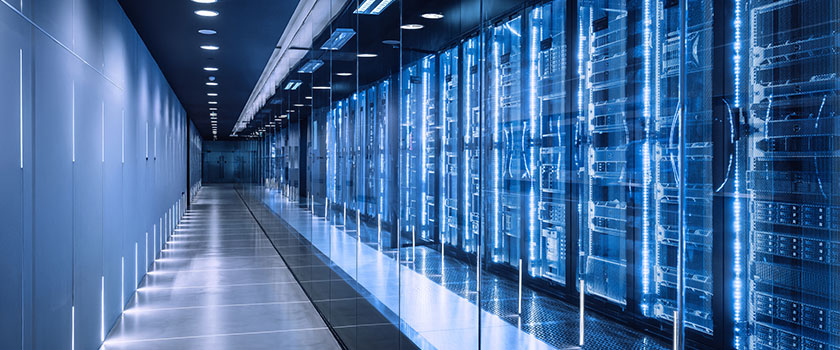
As artificial intelligence (AI) continues to reshape industries worldwide, deploying the compute, storage and networking infrastructure necessary for AI brings real challenges. The need for increasingly high-performing technologies, such as graphics processing units (GPUs) and solid-state drives (SSDs), has raised critical concerns about energy consumption. AI’s dependence on vast amounts of power and cooling to process and analyze enormous datasets is driving the need for data centers capable of supporting these systems.
Although AI data centers are essential to ensuring that businesses, research institutions and tech giants can continue to innovate, the energy footprint of these facilities is becoming a focal point. This growing demand for power also highlights a need to balance performance with sustainability. This concern is further explained by former President Joe Biden’s executive order, which addresses the significant energy demands of AI data centers and outlines plans to lease federal sites for gigawatt-scale facilities powered by clean energy.
As AI technologies like machine learning and deep learning become more advanced, their reliance on high-performance technologies like GPUs, along with efficient storage systems, will play an increasingly critical role.
The Energy Demands of AI and GPUs
AI’s progress has been fueled by advancements in hardware, most notably GPUs, which are engineered for parallel processing tasks that are essential to machine learning algorithms. GPUs excel at managing the massive parallel computing requirements of AI applications, enabling tasks like image recognition, language translation and predictive analytics. However, as AI systems become more complex and their data processing demands increase, the energy consumption of these GPUs also rises significantly. The U.S. Department of Energy warns that data center power usage could nearly triple by 2028 due to the increasing need for AI infrastructure, driven largely by GPUs and other high-performance computing technologies.
The high power demands of GPUs contribute to the overall energy footprint of AI data centers. According to research by McKinsey & Company, GPUs used in machine learning tasks consume significantly more power compared with traditional CPU-based systems. This increased energy usage is expected to continue as the AI sector grows, with some estimates predicting that the energy consumption of data centers supporting AI could rise by more than 60% over the next decade.
Sustainable AI Infrastructure Solutions
In line with growing concerns about the environmental impact of AI technologies, the Biden administration focused on AI policy that balanced economic growth with responsible energy use. As AI infrastructure expands, the need for regulatory frameworks to ensure sustainable practices has never been more urgent.
Data centers are crucial in housing the GPUs required for AI workloads. They must ensure that infrastructure is not only efficient in terms of data processing but also capable of managing the energy demands of these devices. The increase in energy consumption calls for more sustainable solutions that can optimize the performance of GPUs without exacerbating the environmental impact.
Energy Efficiency: The Role of SSDs
In the face of growing energy demands from GPUs, data center operators turn to innovations in other parts of the data infrastructure for power saving and efficiency gains. Storage technologies such as SSDs are emerging as key components in improving energy efficiency in AI data centers. SSDs provide several advantages over traditional hard disk drives (HDDs), especially in terms of power consumption and speed. Unlike HDDs, which rely on mechanical parts to store and retrieve data, SSDs use flash memory to store data, which allows for faster data access and significantly lower energy consumption.
The U.S. Department of Energy estimates that the power consumption of SSDs is up to 50% lower compared with HDDs, especially in tasks involving random data read/write operations, which are common in AI workloads. As a result, SSDs are increasingly being deployed in AI data centers to help mitigate the energy burden posed by the widespread use of GPUs.
As AI applications evolve and their data requirements grow, smart storage systems will become essential in maintaining both performance and sustainability in data centers.
The ability to predict data access patterns and dynamically adjust storage usage can help reduce the need for constantly powering high-performance storage systems, reducing overall energy consumption.
The Need for Technological Advancements in Storage
While SSDs contribute to improving AI’s energy efficiency, ongoing advancements in storage and memory technologies are crucial to meeting the growing data demands of AI. Innovations in Compute Express Link (CXL), storage-class memory (SCM) and emerging quantum storage solutions are essential for enhancing data processing capabilities while maintaining cost and energy efficiency.
1. CXL
CXL technology is revolutionizing data centers by enhancing memory capacity and bandwidth, improving GPU utilization and reducing energy consumption. By enabling efficient memory expansion beyond the local DRAM of processors, CXL addresses the memory access bottleneck that increasingly limits the rate at which devices can retrieve instructions and data from the system’s memory.
This advancement allows for higher utilization of GPUs, avoiding wasted power and contributing to overall energy efficiency in AI-driven workloads. CXL’s ability to augment system memory at a lower cost and its support by a broad consortium make it a cost-effective solution for data centers aiming to balance performance with sustainability.
By integrating CXL technology, data centers can achieve scalable memory solutions that enhance performance while lowering energy costs, positioning themselves as cost-effective alternatives to traditional memory expansion methods.
2. Intelligent Memory Systems
As AI technologies advance, data centers are increasingly integrating intelligent memory systems to enhance performance and energy efficiency. These systems utilize AI algorithms to dynamically manage data placement, bandwidth usage and power consumption, enabling real-time adjustments to meet the evolving demands of AI applications. By optimizing memory resource allocation, intelligent memory systems contribute to reduced energy consumption and improved performance, positioning them as essential components in the next generation of AI data centers.
3. Quantum Storage
Although still in early development, quantum storage holds the potential to revolutionize the way AI data centers manage vast amounts of data. Quantum storage uses principles of quantum mechanics to perform data storage and processing tasks at unprecedented speeds and energy efficiency levels. Quantum storage is not yet ready for widespread implementation, but it promises to provide AI systems with the ability to manage and process data at speeds far beyond what current technologies allow.
If quantum storage becomes viable in the coming years, it could dramatically reduce the energy consumption of AI data centers while supporting the exponential growth of data processing demand.
Managing Cost and Energy Efficiency
Although advanced storage and memory technologies offer promising solutions, the cost remains a significant concern for AI data centers. High-performance memory technologies are still relatively expensive compared to traditional storage solutions, potentially raising capital expenses. Furthermore, as data centers scale up to meet the increasing demands of AI applications, energy costs could rise dramatically, making it essential for data center operators to optimize both performance and energy efficiency.
To address these challenges, innovations in fabrication techniques are helping to drive down the costs of advanced storage technologies. As these solutions become more widely adopted and the market grows, the cost of high-performance memory and storage technologies is expected to decrease, making them more accessible to a broader range of businesses and research institutions.
Balancing AI Performance and Sustainability with Innovations in Storage and Memory Technologies for Energy-Efficient Data Centers
The rapid growth of AI presents significant challenges for energy and sustainability in data centers. Innovations in SSDs, CXL memory and intelligent memory systems are playing a pivotal role in addressing these challenges. As storage and memory technologies evolve, they will be crucial in scaling the AI infrastructure, enabling high performance while minimizing environmental impact, and managing costs. Continued investment in energy-efficient solutions ensures data centers can meet AI’s computational demands without compromising sustainability goals.
JB Baker, the Vice President of Products at ScaleFlux, is a successful technology business leader with a 20+ year track record of driving top- and bottom-line growth through new products for enterprise and data center storage. After gaining extensive experience in enterprise data storage and Flash technologies with Intel, LSI and Seagate, he joined ScaleFlux in 2018 to lead Product Planning & Marketing as the company innovates efficiencies for the data pipeline. He earned his BA from Harvard University and his MBA from Cornell’s Johnson School.