April 25, 2025 in Cybersecurity
Strengthening Cybersecurity Resilience: The Transformative Role of Generative AI in Incident Recovery
SHARE: PRINT ARTICLE: https://doi.org/10.1287/LYTX.2025.02.03
In today’s rapidly evolving digital landscape, cybersecurity threats have grown increasingly sophisticated, requiring organizations to develop equally advanced recovery and protection strategies. Traditional recovery methods, often reactive and resource-intensive, frequently result in extended downtime and significant financial impact. However, generative AI (GenAI) is emerging as a game-changing technology in cybersecurity, offering a proactive approach to cyber-incident recovery through its ability to analyze, predict and generate intelligent responses.
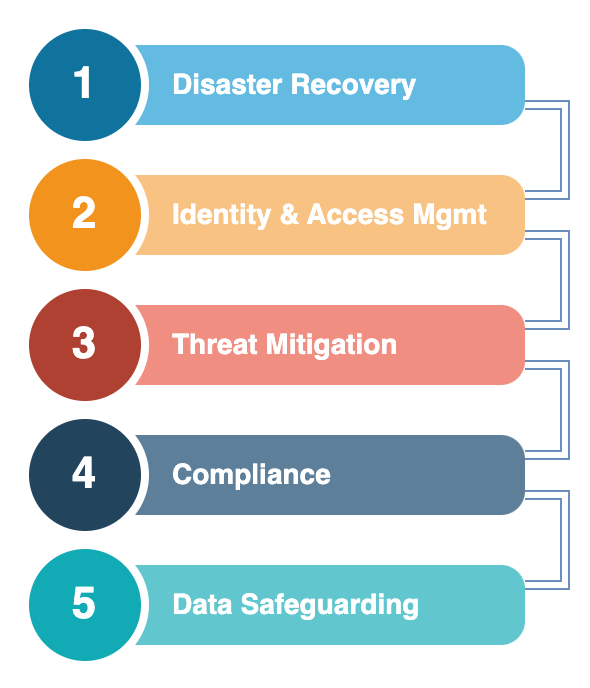
The comprehensive framework for GenAI-enhanced cybersecurity has five interconnected domains that work in concert to provide robust protection.
- At its core, disaster recovery (DR) serves as the foundation, enabling rapid system restoration and business continuity.
- This connects directly to identity and access management (IAM), which controls and monitors user access across the organization’s systems.
- Threat mitigation works in parallel with these components, actively identifying and neutralizing potential security risks.
- The compliance domain ensures all security measures adhere to regulatory requirements.
- Data safeguarding provides the final layer of protection through advanced encryption and anomaly detection.
These domains don’t operate in isolation – they share information and resources continuously, creating a dynamic and responsive security ecosystem.
The Current State of Disaster Recovery Planning
Recent research provides critical insights into the current state of disaster recovery planning adoption across organizations [1]. The data reveals a significant disparity in maturity levels of DR planning, with most organizations (61%) practicing formally but inconsistently. Only 21% of organizations have achieved consistent and formal DR practices, whereas 18% are either in early implementation stages or practicing informally. This data highlights both the progress made in DR planning adoption and the substantial room for improvement through AI-enhanced solutions.
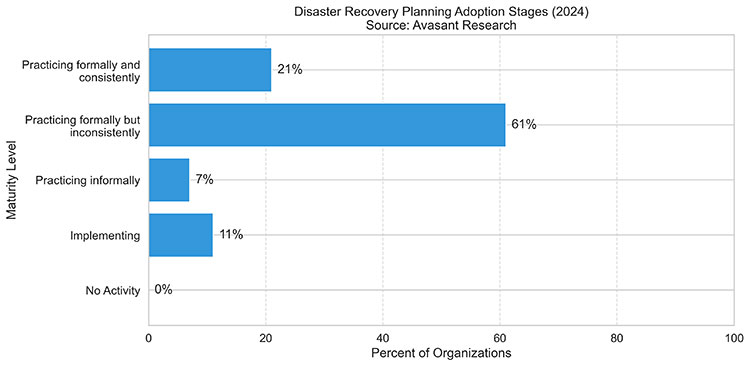
Figure 2 illustrates the current landscape of DR planning maturity, providing a foundation for understanding where organizations stand in their DR journey. This baseline understanding is crucial when considering how AI-driven solutions can help organizations advance their DR capabilities, particularly in moving from inconsistent to consistent practices. The high percentage of organizations in the “formally but inconsistently” category suggests a significant opportunity for AI-powered automation to help standardize and improve DR processes. This data-driven approach gives us a more accurate picture of the current state of DR planning and helps identify where AI can make the most impact in improving organizational resilience.
Revolutionizing Disaster Recovery with AI-Driven Solutions
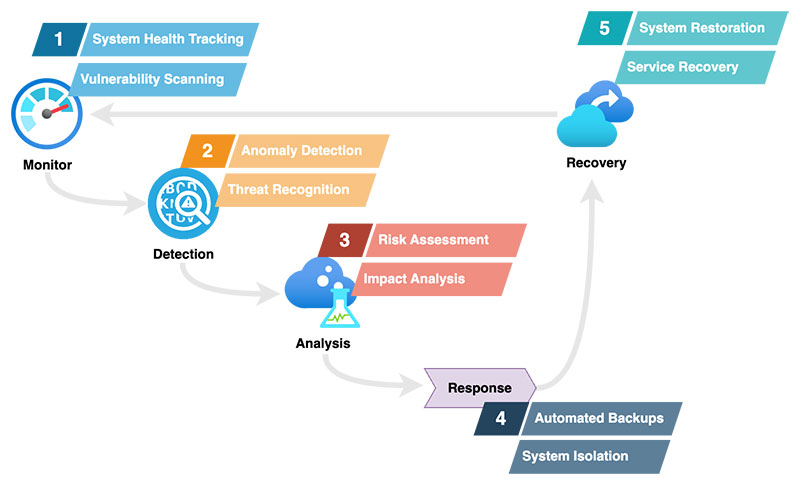
The integration of GenAI has fundamentally transformed DR processes by introducing automated response mechanisms and predictive failure analysis. Unlike traditional DR systems that rely heavily on predefined scripts and manual intervention, AI-driven disaster recovery solutions can dynamically adjust their strategies based on real-time threat analysis.
The implementation of GenAI in disaster recovery brings several crucial advantages to organizations:
- Automated backup and restoration: By predicting system vulnerabilities, AI systems can initiate automated backups before potential attacks occur, ensuring critical data protection. Generative AI systems can create intelligent backup agents that continuously monitor system behavior patterns and performance metrics. These AI agents can autonomously determine optimal backup schedules based on historical incident data, system usage patterns and real-time threat intelligence. When anomalies are detected, the system can automatically trigger targeted backups of critical systems, generate detailed restoration procedures and even simulate recovery scenarios to validate backup integrity. For example, if an AI agent detects unusual file system activity indicative of ransomware, it can immediately isolate affected systems, initiate point-in-time backups of critical data and begin executing predefined recovery playbooks – all before human operators need to intervene.
- Incident simulation: Organizations can use AI-driven models to simulate various cyberattack scenarios, helping them test their resilience and optimize response strategies. GenAI systems can create sophisticated attack simulations by analyzing real-world threat patterns and crafting realistic scenarios tailored to an organization’s specific infrastructure. These AI-powered simulations can dynamically adapt during run time, mimicking advanced persistent threats and evolving attack vectors. The system can simultaneously run multiple attack scenarios across different parts of the infrastructure, evaluating defense mechanisms and identifying potential vulnerabilities. For instance, an AI agent might simulate a multistage attack that begins with a phishing attempt, escalates to credential theft and culminates in data exfiltration – all while monitoring and scoring the effectiveness of each security control and response action. These simulation results then feed back into the AI system to continuously refine defense strategies and update response playbooks.
- Predictive failure analysis: Continuous system health monitoring enables early detection and administrator alerts about potential failures. GenAI systems can establish comprehensive baseline performance patterns across network systems, applications and infrastructure components. Through real-time analysis of system metrics, log data and performance indicators, AI agents can identify subtle deviations that might indicate impending failures. For example, an AI system might detect patterns of increasing memory leaks in a critical application, unusual input/output latency in storage systems or degrading network performance that could lead to system failures. The AI continuously generates predictive models that estimate failure probabilities and potential impact while automatically initiating preventive measures. When critical thresholds are approached, the system can generate detailed diagnostic reports, recommend specific remediation steps and even initiate automated failover procedures to maintain service continuity. This proactive approach allows organizations to address potential failures before they impact business operations.
Consider a real-world application in which a financial institution uses GenAI to analyze transaction anomalies. The system can initiate self-healing mechanisms that restore compromised systems within minutes of detecting a breach, significantly reducing potential damage and downtime.
Enhancing Security Through Advanced Identity Management and Threat Mitigation
Modern cybersecurity demands sophisticated approaches to identity and access management and threat mitigation. GenAI has revolutionized these areas by introducing adaptive authentication methods, behavioral analytics and automated policy enforcement mechanisms. In the realm of IAM, GenAI enhances security through:
- Dynamic access control: The system continuously adjusts access privileges based on user behavior patterns and contextual risk factors, ensuring appropriate access levels at all times. For instance, a multinational corporation might use AI-powered IAM to detect unusual login attempts and automatically enforce additional authentication measures when suspicious activities are identified. Researchers have even combined blockchain with deep learning mechanisms to propose automated and secure access control mechanisms [2].
- Behavioral authentication: By implementing continuous monitoring of user activities, organizations can prevent credential theft and unauthorized access more effectively. The system analyzes patterns in user behavior, identifying and flagging anomalies that might indicate compromised credentials [3].
When it comes to threat mitigation, GenAI provides organizations with powerful proactive defense capabilities:
- Automated threat hunting: Advanced AI systems continuously scan for malicious patterns and identify emerging threats before they can escalate into serious security incidents [4].
- Zero-day attack mitigation: Through sophisticated anomaly detection, AI can identify and neutralize previously unknown threats.
- Deception technologies: AI generates realistic decoys to mislead attackers while gathering valuable intelligence about their methods and objectives.
By integrating advanced identity management and threat mitigation capabilities, organizations can create a more robust and proactive security posture that adapts to emerging threats in real time. This AI-driven approach not only enhances security through continuous monitoring and automated response but also provides a scalable foundation for managing complex security challenges across evolving digital environments.
Building a Comprehensive Security Framework: Compliance and Data Protection
The final pieces of the cybersecurity puzzle involve ensuring regulatory compliance and protecting sensitive data. GenAI has transformed these crucial areas by automating compliance processes and enhancing data safeguarding measures [5].
In terms of compliance, GenAI provides automated audit capabilities that continuously monitor systems for adherence to various regulatory standards such as the European Union’s General Data Protection Regulation (GDPR), medical privacy laws (e.g., HIPAA) and the Payment Card Industry Data Security Standard (PCI-DSS). The technology can generate and enforce policies that dynamically adapt to changing regulatory requirements and organizational needs. For example, retail companies can use AI-powered compliance tools to ensure real-time adherence to data privacy laws, with the system automatically flagging potential violations and suggesting corrective actions. Data safeguarding, a critical component of any cybersecurity strategy, is enhanced through:
- Intelligent data encryption: AI systems dynamically apply encryption protocols based on data sensitivity levels, ensuring appropriate protection for different types of information. Government agencies, for instance, can implement AI-driven encryption that automatically adjusts security layers based on access privileges and data sensitivity.
- Advanced anomaly detection: The system continuously monitors for and mitigates unauthorized modifications to critical data, providing an additional layer of protection against both external and internal threats.
- Automated data masking: AI-powered systems can automatically obscure sensitive information, protecting against insider threats and potential data leaks while maintaining data utility for authorized users.
The integration of AI-driven compliance monitoring and data protection mechanisms represents a significant leap forward in building resilient security frameworks that can adapt to evolving regulatory requirements while safeguarding sensitive information. Through automated auditing, intelligent encryption, and proactive threat detection, organizations can maintain robust security postures that not only meet current compliance standards but are also prepared for future security challenges.
Conclusion
As cyber threats continue to evolve and become more sophisticated, organizations must adapt their security strategies accordingly [5]. Generative AI has emerged as a powerful tool in this ongoing battle, providing advanced capabilities for cyber-event recovery, identity management, threat mitigation, compliance and data protection. The integration of AI-driven automation and predictive analytics into cybersecurity frameworks enables organizations to enhance their resilience against evolving threats while minimizing downtime and ensuring regulatory compliance.
The future of cybersecurity lies in leveraging these intelligent, adaptive defense mechanisms that not only respond to threats but also predict and prevent them. Organizations that embrace GenAI in their cybersecurity strategies will be better positioned to protect their digital assets and maintain operational continuity in an increasingly hostile cyber landscape. As technology continues to advance, the role of GenAI in cybersecurity will only grow more crucial, making it an essential component of any modern security infrastructure.
References
- Avasant, “Disaster Recovery Planning Best Practices 2024,” https://avasant.com/report/disaster-recovery-planning-best-practices-2024/.
- Akbarfam, Asma Jodeiri, Sina Barazandeh, Deepti Gupta and Hoda Maleki, 2023, “Deep learning meets blockchain for automated and secure access control,” arXiv preprint arXiv:2311.06236.
- Qin, Dong, George Amariucai, Daji Qiao and Yong Guan, 2024, “Improving behavior based authentication against adversarial attack using XAI,” arXiv preprint arXiv:2402.16430.
- Ferrag, Mohamed Amine, Merouane Debbah and Muna Al-Hawawreh, 2023, “Generative AI for cyber threat-hunting in 6g-enabled IOT networks,” 2033 IEEE/ACM 23rd International Symposium on Cluster, Cloud and Internet Computing Workshops (CCGridW), pp. 16-25, IEEE.
- Yigit, Yagmur, William J. Buchanan, Madjid G. Tehrani and Leandros Maglaras, 2024, “Review of generative AI methods in cybersecurity,” arXiv preprint arXiv:2403.08701.
Kiran Randhi is a Principal Solutions Architect at Amazon Web Services (AWS) who leverages over 17 years of experience in cloud computing and machine learning to drive sustainable, AI-powered innovations. He is known for his expertise in migration and modernization, data, analytics, AI/ML, security and other cutting-edge technologies. In his current capacity, Kiran works closely with AWS’ Global Strategic SI (System Integrator) partners. He works diligently to create and implement successful cloud strategies that allow these partners to get the full benefits of cloud technology. Kiran holds an MBA in finance and a Bachelor of Technology in Electrical & Electronics. He also holds several AWS Certifications. Kiran is a member of INFORMS, a Senior IEEE member and a fellow at IETE (India). Connect with Kiran Randhi on LinkedIn.