June 25, 2025 in Generative BI
From Dashboards to Decisions: How GenAI is Redefining Business Intelligence
SHARE: PRINT ARTICLE: https://doi.org/10.1287/LYTX.2025.03.09

Picture this: You’ve built a sleek Power BI/Tableau dashboard packed with charts and data. It launches with applause, but a month later, it’s barely used.
Sound familiar?
With generative artificial intelligence (GenAI) on the rise, sticking to outdated business intelligence (BI) strategies is not recommended. Having led analytics at Microsoft, Goldman Sachs, Tiger Analytics and Infosys, I’ve seen the front lines of BI. Across 100+ reports for more than 1,000 stakeholders, I learned a very key lesson: BI fails when it ends at information. To succeed, it must evolve into systems that are automated, intelligent and action-oriented.
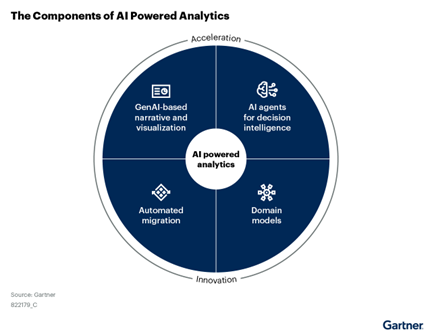
In this article, I will share three hard-earned lessons – on automation, AI and interdisciplinary thinking – that can turn static BI into decision-driving systems. Each lesson is rooted in real-world impact, and together, they align with industry trends. Gartner predicts that by 2028, 60% of existing dashboards will be replaced by AI-driven narratives and automations.
BI Automation: Turning Insights into Immediate Action
Many dashboards highlight problems; few help solve them. Traditionally, a dashboard might flag operational delays or inventory shortfalls – but the follow-up is manual and left to individual team members. Insights often die on the screen without clear next steps, contributing to the failure rate.
My approach: I directly embed workflows and decision triggers into dashboards. For example, when a shipment delay is flagged, the BI system immediately:
- Sends an alert – emailing the buyer with key details.
- Triggers an expedite request in the system – automatically initiating the remedial process.
Instead of relying on someone to notice and react, the BI tool itself kicks off the fix. This closes the loop between insight and action, cutting issue resolution times. A late shipment that previously lingered for days is now addressed within hours. This dashboard transformed from a passive monitor into an active operational tool.
Takeaway: Make BI actionable and automated. Don’t stop at showing data – design analytics outputs to prompt or initiate a response. This might mean integrating your dashboard with email/Microsoft Teams for instant alerts, using process automation to update systems or embedding simple if-then rules (e.g., if inventory < X, then create restock order). By building action into analytics, insights lead to impact without relying on memory or extra steps. Your dashboards become not just informative but indispensable for daily operations.
GenAI-Powered Analytics: From Static Reports to Conversational Insights
GenAI is revolutionizing how we interact with data. Yet many users still treat BI as static, prebuilt reports that users must sift through. GenAI changes that by making analytics conversational, proactive and personalized.
My approach: I introduce GenAI into the BI platform:
- Users ask questions in plain English (via a chat interface) and receive answers with charts and narrative explanations. For example, “Which region had the highest sales growth?” yields a chart plus a sentence like, “Region West grew 15%, leading all others, driven by Product X demand.” This on-demand querying eliminates the need to manually navigate a dashboard.
- AI provides embedded insights: It doesn’t just retrieve data – it highlights key trends, outliers and even suggests actions. In monthly reports, I added an AI-generated summary paragraph at the top (“Sales up 8% overall – West region strongest, watch for softening in Central”). This aligns with Gartner’s prediction that by 2028, 60% of existing dashboards will be replaced by AI-driven narratives and interactive insights.
Takeaway: Use GenAI to make BI more accessible and intelligent – but with guardrails.
- Empower users to chat with their data (via natural language queries).
- Let AI deliver narratives and insights embedded in context (not just raw data).
- Maintain oversight and transparency to ensure accuracy and trust. When done right, GenAI greatly reduces the effort to get answers. And because you’ve put the right controls in place, stakeholders stay confident and engaged. My experience shows this balanced approach can dramatically improve decision-making speed and quality, fully in line with Gartner’s vision of “augmented decision intelligence” by specialized AI agents.
Cross-Pollinate Analytics Ideas – Break Silos to Innovate
Analytics teams often work in silos, using the same methods their industry has used for years. But your next breakthrough might already be solved in another field. Throughout my career, applying techniques from one domain to another has been a game changer for BI initiatives.
My approach: I actively borrow and adapt ideas across industries:
- Quality Control → Fraud Detection: I applied an anomaly model to manufacturing quality data, which flagged subtle production defects that traditional thresholds missed. Anomaly detection is used in finance to spot fraudulent transactions (outliers in spending patterns). This crossover caught issues earlier and improved fraud detection rates – a solution inspired by manufacturing analytics.
- Leveraging my background: With a master’s in statistics and experience across supply chain, finance and tech, I have a diverse toolkit to draw from. But you don’t have to work in multiple industries to do this – simply engage with peers in other departments or attend cross-domain conferences. In one case, my team invited a marketing data scientist to share how they do A/B testing; we ended up adopting their testing framework to evaluate changes in our operations process. It saved us time designing experiments and gave us more statistically reliable results.
Takeaway: Don’t reinvent the wheel – reuse it from another industry. Encourage your analytics team to break out of their silo.
- Network and read widely: If you’re in supply chain, learn how healthcare predicts demand; if you’re in marketing, see how manufacturing uses optimization.
- Pilot borrowed techniques: Run small experiments adapting an outside idea to your data. You might be surprised by how well a “foreign” method works.
- Cross-train your team: I started a monthly internal meetup in which each analyst teaches a method from their experience – it has become a hotbed of new ideas. By cross-pollinating in this way, you not only innovate but also demonstrate thought leadership. In my case, it turned analytics into a source of strategic innovation, not just a support function. And in a world in which AI and analytics are rapidly evolving, that interdisciplinary agility is what keeps you ahead of the curve (and increases your chances of publication-worthy success stories!).
From Insight to Impact
From dashboards to decisions – a journey that is now a mandate for analytics leaders. To meet it, we must go beyond static reports and embrace:
- Automation in BI to ensure every insight triggers action.
- Generative AI in analytics to make insights conversational, contextual and ubiquitous.
- Interdisciplinary thinking to import the best solutions, no matter where they originate.
These approaches helped me break the BI failure cycle and achieve tangible ROI. They also align with where the industry is headed: Gartner predicts that by 2027, 50% of business decisions will be augmented by AI agents (we’re on our way), and by 2028, most passive dashboards will be transformed into proactive tools or get left behind. My experience validates those predictions – showing that with the right strategy, you can turn hype into help and data into decisions.
Monisha Athi Kesavan Premalatha is a distinguished data science and analytics leader at Microsoft, where she spearheads innovation at the intersection of AI, strategy and business transformation. Monisha’s unique ability to bridge technical depth with business acumen has earned her accolades such as the Microsoft - CMOF Outstanding Award and recognition as a Topmate Top 100 Data Coach. A passionate mentor and advocate for inclusive innovation, she actively shares thought leadership through her LinkedIn newsletter and global platforms like the 2025 Women in Data Science Conference. Connect with her on LinkedIn.