July 30, 2025 in Performance Analysis
Turning Data into Insight: Building Better Metrics for Autonomous Vehicles
SHARE: PRINT ARTICLE: https://doi.org/10.1287/LYTX.2025.03.12
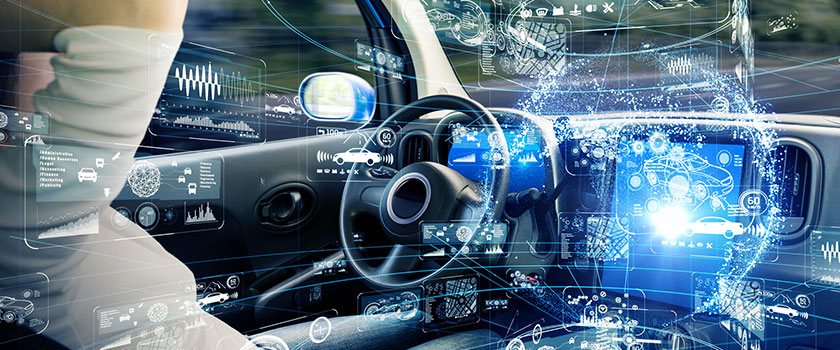
Autonomous vehicles generate vast amounts of data, but it becomes valuable only when transformed into clear, actionable insights. Such systems constantly collect input from cameras, radar, lidar, GPS and inertial measurement units (IMUs) as they navigate real-world environments. The result is a data stream that can overwhelm even experienced development teams. Automation helps by doing the heavy lifting. It processes data at scale, flags unusual behavior and speeds up how quickly engineers can respond to problems. This is not just a technical improvement; it also changes how teams approach safety, reliability and long-term system growth.
Automated performance analysis enables teams to test and refine vehicle behavior across a wide range of scenarios without waiting for failures to surface. It also strengthens collaboration among engineers, analysts and product teams by providing faster access to meaningful insights. In an industry in which precision and timing are critical, organizations that quickly measure, interpret and respond to system behavior are best positioned to succeed.
Automation Enables Scalable Performance Analysis
Autonomous vehicles rely on vast quantities of data to understand and respond to the world around them. Each second of operation generates synchronized inputs from control systems, IMUs, GPS, lidar and radar. When multiplied across test fleets and simulated environments, the volume of data becomes so overwhelming that manual inspection cannot keep pace. Teams require automated tools to extract relevant signals, identify performance trends and track outcomes over time. These systems make it possible to convert complex telemetry into useful metrics such as lane-keeping accuracy, braking smoothness or object detection reliability. Automation replaces fragmented review processes with consistent, scalable pipelines that align sensor streams and surface critical data.
Automation transforms how teams identify and resolve issues. Regression testing becomes faster and more reliable, and anomalies, like inconsistent steering or missed detections, are automatically flagged. Engineers receive structured summaries that support faster iteration instead of combing through raw logs to find problems. Real-time reporting lets teams monitor progress as tests unfold, facilitating quicker diagnosis and refinement. By expanding automation, organizations gain the insight needed to advance autonomous systems with confidence and speed.
Custom KPIs Reflect Real-World Driving Conditions
Generic metrics such as accuracy or latency provide a baseline understanding of autonomous vehicle performance but fall short when applied to real-world scenarios. Driving is contextual, so a vehicle’s ability to detect a pedestrian means little if that detection fails under poor lighting or in heavy rain. Development teams need key performance indicators (KPIs) that reflect operational conditions to build dependable systems. These KPIs should answer questions including: How close is the vehicle getting to pedestrians before adjusting speed? How well does it maintain lane position on curved roads or in construction zones? What is the rate of false emergency braking events? Metrics, such as time to collision, object recall (the system’s ability to detect and correctly identify relevant objects in its environment) and trajectory smoothness, offer more actionable insights when tied to specific driving situations.
Flexibility is equally important. As autonomous platforms expand across different vehicle types, geographies and mission profiles, it is crucial that the KPIs used to evaluate them adapt accordingly. For example, a city delivery robot requires performance parameters that are different from those of a long-haul truck or shared autonomous ride service. Leading organizations already apply this principle. For example, Aurora uses safety scorecards that integrate data from simulation and on-road testing. This dual-source approach improves traceability and strengthens confidence in deployment decisions.
Smart Visualizations Translate Data into Actionable Insights
Advanced performance metrics have limited value if they cannot be quickly and clearly understood. Autonomous vehicles generate high-dimensional data that can be difficult to interpret without the right tools. Visualizations bridge that gap by translating technical information into formats that support intuitive analysis. This integrated perspective helps isolate failure points, identify trends and communicate findings across departments. Collaboration is faster and more effective when engineers, product managers and safety teams can all access the same visual reference.
Interactive visualizations not only enhance understanding but also accelerate problem-solving. By overlaying detection confidence levels on video footage or comparing planned versus actual trajectories on a map, teams can identify discrepancies that may not be apparent through numerical summaries alone. Waymo uses billions of simulation miles to examine rare risk scenarios that would be nearly impossible to capture through physical testing only. Visual tools support this by highlighting specific moments when the system encounters uncertainty or makes borderline decisions. In practice, visual analytics turn massive datasets into actionable insights, which guide design improvements and reinforce trust in system behavior before deployment ever begins.
Standardization and Collaboration
As autonomous vehicle development expands across companies, platforms and regions, the lack of standardized performance metrics creates new challenges. Each organization defines its criteria for success, relying on unique sensor configurations, data formats and validation protocols. It becomes difficult to compare results or assess readiness across disparate systems without shared benchmarks. When metrics are not clearly defined, even small differences in road conditions, weather or operational settings can change how results are interpreted. Without a shared standard, it is challenging for regulators and outside reviewers to assess whether various safety claims are valid. What looks like a good performance in one situation might not hold up under different circumstances.
Closing these gaps demands collaboration. Standards groups, such as the Society of Automobile Engineers (SAE) and International Organization for Standardization (ISO), have laid the groundwork by defining key terms and building data frameworks. Other groups are working on broader goals, such as promoting transparency around how vehicle capabilities shift depending on the driving environment. One example is the Operational Design Domain for Autonomous Vehicles (ODPAV), which compares systems to reflect real-world use. Industry collaborations are also pushing to make test procedures and reporting more consistent. These steps help reduce wasted effort and allow innovations to move faster through development cycles. As analytics plays a bigger role in deployment decisions in the long run, a shared foundation will be essential for building trust with regulators and the public.
Future-Proofing Through Modular, Ethical and Adaptive Design
It’s imperative for autonomous vehicle performance analytics to keep pace with changing technology and shifting expectations. As autonomous technologies evolve, so do the demands on systems built to measure them. New architectures and deployment models bring complexity that older analytics tools were not designed to manage, and teams cannot rely on static performance frameworks to keep pace. Instead, they need modular platforms that grow and adapt along with the systems they support. Critical components of these platforms include flexible metric integration, adaptability to changing data formats or systems, scalability for expanding data volumes, and support for more detailed simulation models and real-time feedback from large, distributed test fleets. Designing for adaptability is not just smart engineering; it ensures performance evaluations stay meaningful as the technology and rules that govern it continue to shift.
Another essential consideration is how analytics systems handle ethical challenges. When scoring systems are opaque or training data is biased, even minor issues can become serious risks. At the same time, vehicle-to-everything communication (V2X) creates new data streams that vehicles must interpret in real time. V2X allows vehicles to share information with infrastructure, pedestrians and other vehicles on the road. Organizations that invest early in flexible, transparent evaluation frameworks are better equipped to manage this complexity and build systems that users can trust.
Steering Toward Smarter Systems
Performance in autonomous vehicles depends on more than the accuracy of sensors or the complexity of algorithms. How well teams understand and manage data defines success or failure in real time. Automated analytics tools help organizations process vast amounts of information and identify critical performance indicators with speed and precision. The true value is knowing what to measure, how to interpret results and when to involve human judgment to guide key decisions.
Aligning performance metrics with safety goals, business priorities and ethical standards is essential. Equally important are tailoring these metrics to specific environments and testing them under conditions that reflect real-world complexity. Visual tools, transparent reporting and modular systems support faster learning and more confident adaptation. As technology continues to evolve, it’s vital for performance analysis to grow with it. Innovation, combined with the discipline and vision behind measuring progress, will shape the future of autonomous systems. Although automation enables this progress, the responsibility remains with people.
Nishant Shrivastava is a principal software engineer at MathWorks, where he leads the development of advanced data visualization tools for autonomous systems. With over a decade of experience in model-based design, analytics and system architecture, he specializes in turning complex telemetry into actionable insights. Nishant’s work supports leading automotive and aerospace organizations in building safer, smarter and more reliable technologies. Connect with Nishant on LinkedIn.