March 18, 2026 in Executive Edge
Stop Hiring Data Scientists: Why 2026 Demands the “AI Economist”
SHARE: PRINT ARTICLE: https://doi.org/10.1287/LYTX.2026.01.10
For the last three years, the mandate for every CIO was simple: Hire more data scientists. We scoured the market for PhDs, machine learning engineers and Python experts, assuming that if we stockpiled enough IQ points, business value would just happen.
We were wrong.
I have seen a consistent trend in both financial leadership and analytics management, and the disconnect is glaring. I’ve watched engineering teams high five over a 99% accurate model, while the finance team stares at the P&L trying to find the ROI.
Here is the hard truth: Most enterprise AI projects don’t die because of bad code. They don’t die because of dirty data. They die because the unit economics never made sense.
The Trap of “PoC Purgatory”
We are currently stuck in “PoC Purgatory.” A team builds a brilliant generative AI tool that summarizes legal contracts. It works perfectly in the sandbox. But, when they push to production, the bill comes due.
Cloud inference costs explode, latency kills the user experience, or most often, we realize that the problem it solves wasn’t actually expensive enough to justify the fix. We have plenty of people answering “Can we build this?" We have almost no one answering “Should we build this?”
This gap is why the most critical hire for 2026 isn't another data scientist. It is a role that barely exists yet: the AI economist.
The Missing Link in the Boardroom
AI economists are the missing link. They aren't purely financial analysts; analysts often lack the technical chops to understand token limits or vector databases. But, they aren't data scientists either; scientists are trained to optimize for accuracy (F1 score), not return on investment.
AI economists are translators. They understand that a model with 95% accuracy might cost $10,000 a month to run, while a model with 92% accuracy might cost $500. A pure data scientist chases that last 3% accuracy. The AI economist knows that 3% isn't worth a $9,500 premium.
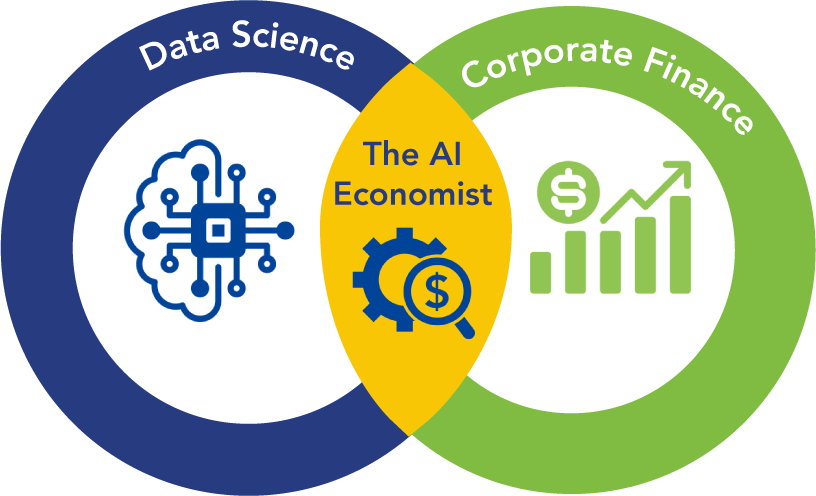
Figure 1. The “bilingual” intersection where data science meets financial responsibility.
In 2026, success depends entirely on “token economics.” Every query sent to a large language model burns cash. If you build an automated customer service agent, you need someone who can calculate the exact cost of a tokenized conversation versus a human agent in a call center.
If the AI agent costs $1.50 per resolution and the human costs $1.20, your “innovation” is a liability.
Implementing Financial “Circuit Breakers”
This role goes beyond just forecasting costs; it requires active governance. We need to stop treating AI governance as a security task and start treating it as a fiduciary one.
Consider the “runaway agent” scenario. An autonomous procurement agent is tasked with optimizing server costs. It sees a predicted demand spike and operating within its logic, prepurchases $50,000 of cloud instances. Two days later, the “demand spike” turns out to be a hallucination.
Under traditional IT governance, the system worked perfectly, uptime was preserved, and API calls were successful. But financially, the company just burned $50,000 of OPEX on a ghost signal.
This is where the AI economist steps in to implement financial circuit breakers. Just as stock exchanges have breakers to stop panic selling, enterprise AI needs automated stops based on the velocity of spend. If an agent attempts to increase ad spend by 400% in one hour, the system must freeze the agent’s access immediately.
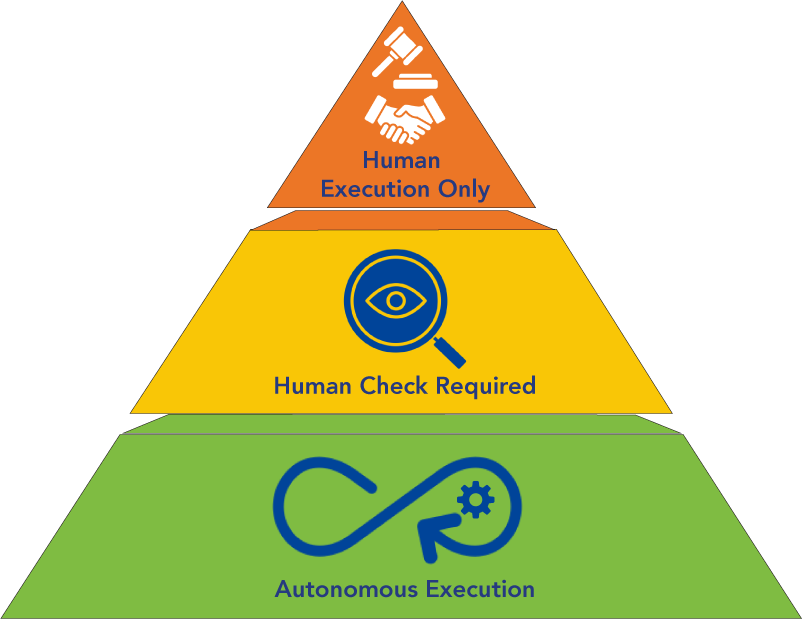
Figure 2. The agentic risk pyramid: Embedding financial circuit breakers.
The Bilingual Leader
Right now, finance and analytics speak past each other. Finance leaders talk about CAPEX, OPEX and depreciation. Analytics managers talk about hallucinations, latency and hyperparameters.
AI economists must be bilingual. They need to sit in architectural reviews and ask the uncomfortable questions before a single line of code is written. What is the marginal cost per inference? Does the lifetime value of this customer justify the compute cost of personalizing their experience?
It is time to stop the technical arms race. If you have 10 data scientists and 0 people dedicated to the economics of AI, you are building a Ferrari engine and putting it on a go-kart.
The winners in 2026 won't be the companies with the most sophisticated models. They will be the ones that treat AI as a unit of production with a distinct cost and a distinct yield. To get there, we need to stop looking for people who can just build the future and start hiring people who can afford it.
Rahul Kumar Thatikonda is a leader of analytics and digital transformation for a Fortune 100 company specializing in supply chain resilience and industrial AI. He architects “production-first” frameworks that integrate financial governance into autonomous systems, bridging the gap between theoretical AI and mission-critical infrastructure. The work of Rahul focuses on modernizing legacy operations to ensure that they remain defensible, compliant and economically viable. He earned a Master of Science in Business Analytics & Project Management from the University of Connecticut School of Business in 2018.