


May 29, 2019 in Edelman Award
Super Smart Sewer System
Solving overflow problems, saving $200 million, protecting waterways and keeping people safe earns Louisville MSD and Tetra Tech the 2019 Edelman Award.
SHARE: PRINT ARTICLE: https://doi.org/10.1287/orms.2019.03.03

Out of sight, out of mind. Take the typical municipal sewer system, for example. Citizens generally don’t pay much attention to what’s going on below their city streets . . . until something goes wrong. And then you-know-what hits the fan.
Turns out that things can and do go wrong with complex sewer systems. As the Louisville and Jefferson County Metropolitan Sewer District (MSD) in Kentucky noted in its 2019 Edelman Award presentation, given the increasingly intense and more frequent rainfall, urban wastewater collection and treatment systems are often inundated during large rainfall events. With nowhere else to go, the overflow of untreated sewage and storm water typically ends up in community waterways, creating an unsanitary, unhealthy environment for anyone living in the impacted area.
To address the problem, MSD partnered with engineering services firm Tetra Tech (a global, 18,000 employee, $3 billion consultancy) to implement Csoft®, a software solution that enables MSD to respond to rainfall and actual system conditions by maximizing all available storage, conveyance and treatment capacities. Excess wastewater is diverted and temporarily stored until it can be redirected toward the appropriate treatment plant. The system not only saved Louisville MSD more than $200 million in potential infrastructure costs, improved community waterways, and decreased the risk to water environments and public health from sewage contamination, it also won the 2019 Edelman Award for Achievement in Advanced Analytics, Operations Research and Management Science.
Considered the world’s most prestigious award for achievement in the practice of analytics and operations research, the Edelman winner was announced in dramatic fashion by INFORMS President Ramayya Krishnan at the INFORMS Edelman Gala, held in conjunction with the INFORMS Conference on Business Analytics and Operations Research in Austin, Texas.
“We’re honored and overwhelmed,” says Angela Akridge, chief engineer of Louisville MSD, who accepted the award along with Leslie Shoemaker, executive vice president at Tetra Tech. “We told a story that’s been 19 years in the making. Safe, clean waterways are something many take for granted. The work that people do in the sewer industry is obviously something that you really don’t think about. It’s underground. It’s an afterthought unless there’s a problem, but there are men and women who work hard every day to make sure that the waterways and the community are safe so that we can continue to grow and prosper.”
Complex Sewer System
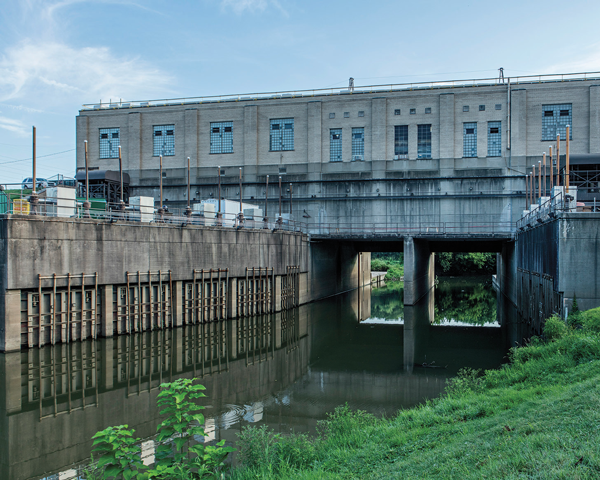 Louisville MSD operates and maintains complex sewer, storm and floodwall systems to manage flood and drainage issues across 376 square miles of the Louisville Metro area. The total system includes more than 3,200 miles of sewer lines, five regional wastewater treatment plants, over 280 pump stations and 27 long-term stream water quality monitoring stations.
“Real time control (RTC) with Csoft was the first application of its kind within the U.S. sewer management industry using model-predictive control for system-wide flow optimization,” Akridge says. “It is an important component of MSD’s long-term plan to mitigate untreated combined sewer overflows into Beargrass Creek and the Ohio River. It is an innovative, cost-effective and sustainable management strategy that uses operations research and data analytics for the ultimate purpose of providing safe, clean waterways for our community and our shareholders in the Louisville Metro area.”
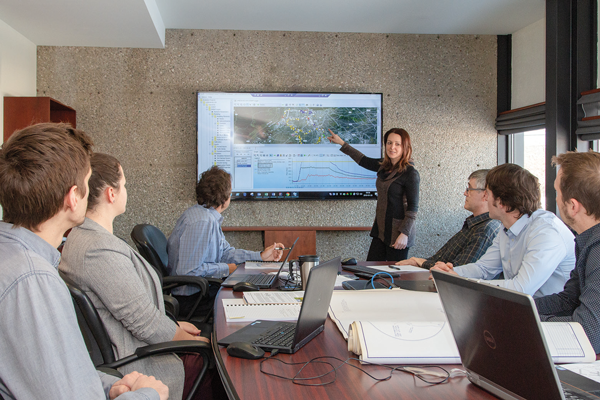 The problem (too much contaminated water discharged into streams) and solution (optimally diverting and temporarily storing wastewater until it can be redirected toward the appropriate treatment plant) may sound simple, but that doesn’t begin to capture the complexity of the situation. Nevertheless, Tetra Tech VP Shoemaker, when asked to simplify the science, says: “What makes this problem and its solution unique is we took the unused capacity that was already in the infrastructure underneath the city and optimized its use. That means you use that empty space and fill it up. You control gates, on a real-time basis, to hold wastewater in place, and solve the diversion/placement problem with optimization in real time.”
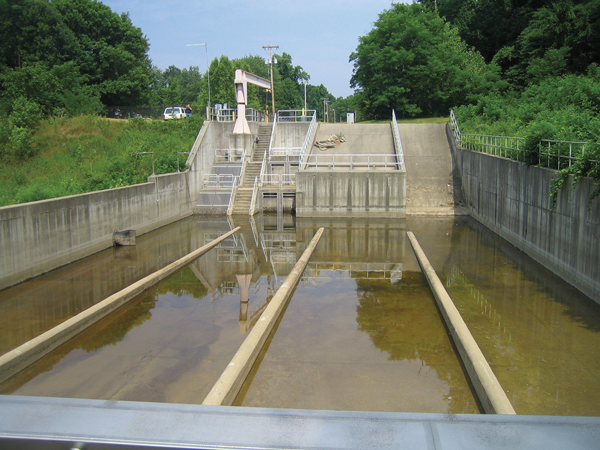 As described by Tetra Tech, Csoft uses a hydrologic and hydraulic model and mixed-integer linear programming, which allows the full use of the system’s capacity while reducing additional infrastructures required to achieve multiple operational and environmental objectives. The Louisville system’s use of Csoft has been implemented in phases. Current reductions show it stores or mitigates more than two billion gallons of combined sewer overflow per typical year. Once all planned storage projects are constructed, RTC will allow MSD to eliminate or capture and treat 98 percent of combined system flow, up from approximately 60 percent prior to RTC and the overflow abatement plan.
Impressed by Louisville MSD’s success, several other municipalities around the world have or are planning to implement a similar system. “We invite them all the time to come to Louisville and learn from us what worked and what didn’t,” Akridge says.
The Judges ‘Wade’ In
Portability is one of the criteria Edelman judges look for when evaluating submissions during a nearly year-long process that includes on-site visits, vetting and verification of monetary claims and impact. The process culminates with a series of judged presentations at the INFORMS Conference on Business Analytics & O.R., followed by a behind-closed-doors debate among the nine judges and finally a vote to determine the winner. This year’s debate/vote lasted several hours before committee chair Pooja Dewan walked on stage and delivered the sealed envelope with the winner’s name to President Krishnan for the announcement.
So why did it take so long to make a decision and what ultimately put Louisville MSD and Tetra Tech over the top?
“It was a very difficult decision, and we wanted to make absolutely sure that we were thinking through every facet of each application,” Dewan says. “Just like all the other past winners, [Louisville MSD] created an impact, but it’s more than that. They faced a difficult situation. There was a long, consistent history of work. It’s not just one city, but multiple cities where this has made an impact. It was an extremely hard problem to solve. It involved union employees and putting automation in that process. Billions of gallons of wastewater could have polluted rivers if not for this project.
“They clearly modeled a very hard, fluid dynamics problem, and on top of that they went to the next level and used O.R. to figure out and optimize the flows to best prevent the runoff of wastewater.”
Touching all the Edelman criteria bases is key to winning the award, and Louisville MSD and Tetra Tech certainly did that, according to the judges. When asked what most impressed her about the Louisville team, first-year Edelman judge Julie Swann backed up Dewan’s thoughts:
“They (the MSD and Tetra Tech team) were able to quantify a specific value in a very real way. It also had a concrete value on the city and a population. It is transportable; it has been implemented in other cities. All of those things were positive attributes.
“The problem was very complex with the hydraulics associated with the water, which made it difficult to solve. It also had some interesting innovations where the censors were bringing information into the modeling. The implementation was difficult because you were talking about implementing with people who didn’t necessarily want dynamic, real-time models to be controlling decisions. Working through that was an important part of the project.
“We went through the criteria and they definitely touched all the bases. It was a tough call this year. For future Edelman submissions, my advice would be do a great job of telling your story.”
Michael Gorman, another Edelman judge, summed up his thoughts on the winning team in one sentence: “It’s amazing how much benefit you can get from things that you can’t see when you use math to benefit the population.”
Final Thoughts
Louisville MSD’s Akridge, whose background is in engineering, considers O.R. and high-end analytics part of what her team does every day. “O.R. was absolutely critical on this project,” she says. “We would not have been able to do this without operations research. It’s that ‘brain’ in the sewer system that you wouldn’t really think about, that allows us to make critical decisions in seconds. We are really optimizing something you can’t see – something that changes very frequently with rainfall events – in a way that keeps the environment safe and keeps the people safe.”
Note: Coaches play an important role in shaping Edelman finalists’ presentations. Also in this issue, read Carrie Beam’s behind-the-scenes experience as a coach of this year’s Edelman-winning team.
Franz Edelman Award Finalists
In addition to Louisville MSD and Tetra Tech, five other organizations were finalists for this year’s Franz Edelman Award:
- Boston Public Schools for “Optimized School Bus Routing Helps School Districts Design Better Policies”
- IBM for “Analytics and O.R. for IBM’s IT Service Deals”
- Microsoft for “Prospective Dynamic Fraud Control for Optimal Profitability in E-commerce”
- Spanish Aviation Safety and Security Agency (AESA) for “RIMAS–Safer Skies in Spain”
- Vattenfall for “Operational Research Optimizes Offshore Wind Farm Design and Enables a Fossil-Free Future”
Peter Horner is the editor of Analytics magazine.
([email protected])