October 6, 2023 in In Memoriam
In Memoriam: Judith Liebman (1936-2023)
SHARE: PRINT ARTICLE: https://doi.org/10.1287/orms.2023.03.25n
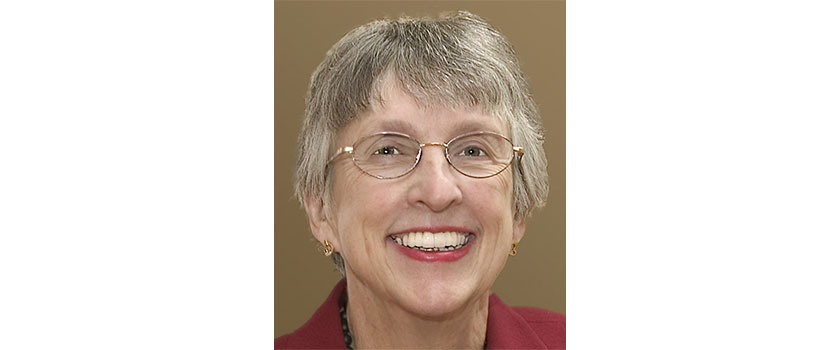
Judith Liebman was:
- A pioneering advocate for women’s rights
- The first tenure-track female engineer in the College of Engineering at the University of Illinois Urbana-Champaign (UIUC), 1972
- The first female councilmember of the Operations Research Society of America (ORSA), which predated INFORMS
- The first female president of ORSA, 1987
- The first female member of the Urbana Rotary Club
- A dedicated and innovative teacher
- A talented researcher
- Vice Chancellor for Research and Dean of the Graduate College at UIUC
- Member of the Committee for Engineering Education of the National Academy of Engineering
- Chair of the advisory committee for the National Science Foundation Engineering Directorate
- Mother of three
- Honored by INFORMS, which established the Judith Liebman Award for student leaders in operations research (O.R.) programs
- Recipient of the George E. Kimball Medal, for distinguished service to the Institute and to the profession of O.R., 1996
- An INFORMS Fellow, 2002
- A well-known collector of contemporary glass sculpture. (She and her husband Jon donated their glass collection to the Krannert Art Museum at UIUC. An earlier video of their collection, filmed in their fabulous home, can be downloaded at https://we.tl/t-r5AmfW7mHk.)
- A gourmet cook, accomplished pianist, Master Gardener and an avid and competent bridge player
That’s a lot for one life, maybe two. She inspired many in the fields of OR/MS and engineering, including her own children. Her son Michael received his Ph.D. in chemical engineering at the University of Texas at Austin (UT), focusing on applications of modeling and optimization. Her daughter Rebecca completed a joint program in engineering and business at UT in 1984. Her granddaughter Wendy finished her M.S. in O.R. at UT in 2019, in the IE/OR program within the Mechanical Engineering department.
Judith received her B.A. in physics at the University of Colorado in 1958 and her Ph.D. in operations research and industrial engineering at Johns Hopkins University (JHU) in 1971. Before pursuing graduate studies, she worked as an engineer for Convair Astronautics; a programmer in the General Electric Research Laboratory in Ithaca, New York; and a programmer in the Cornell University Department of Chemistry.
While she was working toward her Ph.D. at JHU, Judith met her husband Jon who was a professor in civil engineering at the time. He shared her interest in O.R., and often applied O.R. methods in his work. He minored in O.R. while working on his Ph.D. in environmental engineering at Cornell and recommended that Judith take some O.R. courses. While at Hopkins, Judith worked in the Department of Health Systems Administration and her dissertation applied queueing theory and optimization to help improve staffing of extended care nursing units. She subsequently authored several publications in the health systems area.
After Judith received her Ph.D., she and Jon decided to seek academic positions at the same university. Many readers of this article will be familiar with this “two-body” problem, which was much more daunting in the early 1970s than it might be now, especially when one of the two was a woman. The UIUC department of Civil Engineering offered Jon a position, and Judith joined the Departments of Civil Engineering (60%) and Mechanical and Industrial Engineering (40%), thus becoming the first woman on a tenure-track faculty in any engineering department at UIUC. She describes this job search and her early teaching experiences in a UIUC interview, which I encourage you to watch to appreciate how enthusiastic, strong and positive Judith was. Her promotion to associate professor in 1977 made her the first woman to earn tenure in her department – and only the second female to earn tenure in the College of Engineering. As a measure of her leadership abilities, she was appointed Vice Chancellor for Research and Dean of the Graduate College at UIUC in 1987, when she was also president of ORSA, one of the two predecessors of INFORMS.
In the spring semester of 1984, Judith and Jon spent a sabbatical at the University of Texas at Austin (UT), where I was a professor in the business school. (Their daughter Rebecca graduated from UT that semester.) They rented a house near campus and were active participants in activities in the OR/IE and Civil Engineering departments. They took courses in Texas country dancing, and we had fun going out together to popular Austin music venues. I also visited their house in Austin, where I enjoyed Judith’s renowned cooking.
I saw Judith often at ORSA/TIMS and INFORMS meetings. We had common interests in nonlinear programming and its applications in engineering. We were also interested in improved ways to teach O.R. to both undergraduate and graduate students. In August 1998, we co-authored an Interfaces article, “Teaching Nonlinear Programming Using Cooperative Active Learning.” A few years earlier, we both attended an ORSA summer short course on teaching O.R. using active learning and discovered that we had both employed these methods in our courses for several years. Judith subsequently wrote two more journal articles on teaching O.R. Among her many awards, Judith was proudest of her selection by engineering students to be an Honorary Knight of St. Patrick and a two-time winner of the UIUC College of Engineering Everitt Award for Teaching Excellence.
In her O.R. research, Judith was primarily a modeler. In addition to her work in health systems, she had several publications describing O.R. applications in transportation, building design, pavement design and bridge replacement. In addition to her individual research achievements, Judith influenced research policy at UIUC, as Vice Chancellor for Research, and nationally by chairing the advisory committee for the National Science Foundation Engineering Directorate as well as serving on the Army Science Board. She also chaired the Advisory Committee to the College of Engineering and Applied Science at the University of Colorado Boulder.
I feel it’s best to close with this passage from her obituary: “overshadowing all of the above accomplishments, Judith will be remembered for her ever-sunny smile, her always-cheerful demeanor, her iron will and her unflappable approach to every difficulty. Her absence dims the world, but her memory brightens it.”
For even more about Judith and her life at INFORMS, visit https://www.informs.org/Explore/History-of-O.R.-Excellence/Biographical-Profiles/Liebman-Judith and https://pubsonline.informs.org/do/10.1287/orms.2019.01.14/full/#judith.
Leon Lasdon has been an INFORMS (or precursors) member since 1965. He was a professor in the Information, Risk, and Operations Management department in the McCombs Business School at the University of Texas at Austin from 1977 to 2015, when he retired. He is an INFORMS Fellow, recipient of many awards, and co-author of the Microsoft Excel Solver.