

July 4, 2016 in INFORMS Initiatives
Team competition, CAP and good deals
SHARE: PRINT ARTICLE: https://doi.org/10.1287/LYTX.2016.04.11in
Competition for tomorrow’s leaders in O.R. & analytics
INFORMS recently announced a new International O.R. & Analytics Team Competition, a unique student competition that provides a real-world workplace experience. Sponsored by Syngenta, the competition will feature teams of university students using identical data sets and software systems to solve a challenging business problem via an O.R./analytics approach. A panel of industry experts will judge the submissions.
The goal of the competition is to provide participants with practical experience in the complete O.R./analytics decision process, including communication, leadership and teamwork skills. Teams can be comprised of undergraduate and master’s degree students associated with a university operations research or analytics degree program. The teams will be given two weeks to review the problem and, if needed, to correspond with company representatives with clarifying questions. All teams will approach the business problem as if they are employed by the organization. Finally, each team must convince the panel of judges, acting as “management,” in a 15-minute formal presentation of the merits of their solution.
Teams will be judged on a written report, team organization and planning, and the presentation. The competition will begin in September and end with team presentations at the INFORMS Conference on Analytics & Operations Research in April 2017.
For more information, click here.
INFORMS offers free, three-year certification renewal
Certified Analytics Professionals (CAP®) can renew their certification for another three years for free, and it only takes a few minutes. Simply update and/or input your professional development units by logging into your account at https://acgi.informs.org/sso_login.php.
If you ever find that your employer is asking for CAP certification (and more and more are doing it), you’ll already have it. If you want to change employers, it might help you get an interview. If you plan to retire and become a part-time consultant, it can impart a measure of trust to prospective clients.
Having already spent time, effort and money acquiring the CAP, doesn’t it make sense to keep it? It won’t cost you a penny today, but it might cost you hundreds if you need it in the future.
For more information, contact [email protected].

2017 Syngenta Crop Challenge in Analytics offers $5,000 prize
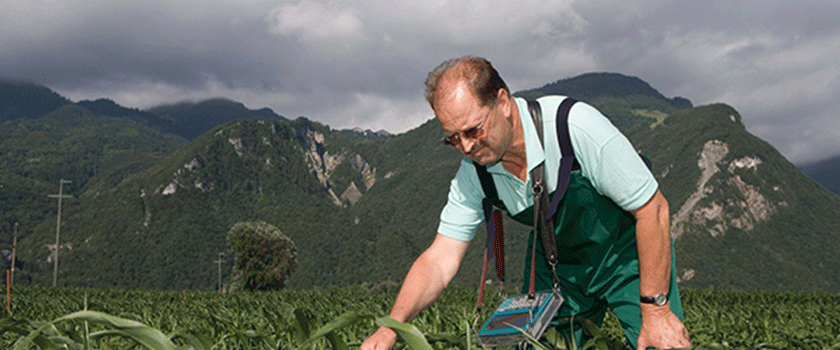
Put your analytics skills to the test and win $5,000 in the 2017 “Syngenta Crop Challenge in Analytics” administered by INFORMS and sponsored by the Analytics Society of INFORMS.
As the world population increases and arable land decreases, it becomes vital to improve the productivity of the agricultural land available. Companies such as Syngenta strive to provide varieties of their crops to meet this need.
Every year farmers have to make decisions about which soybean seeds to plant given information about different soybean varieties and knowledge about the soil and climate at their respective farms. These annual decisions are critical; after a variety is planted, the decision is irreversible. Unusual weather patterns can have disastrous impacts on crops.
A highly desirable variety may be in short supply and unavailable for farmers. To ensure there is enough seed of the desired varieties for farmers, it is critical to evaluate which variety or varieties are more likely to be chosen by farmers from a growing region.
Using the provided variety, growing region and exogenous datasets, Crop Challenge participants are challenged to predict which soybean seed variety or mix of up to five varieties in appropriate proportions is more likely to be chosen by farmers from a growing region.
Timeline: Data for the challenge will be available no later than Sept. 1, 2016. The deadline for submissions is Jan. 16, 2017. Finalists will be announced Feb. 24, 2017. Finalist presentations will be held at the INFORMS Conference on Business Analytics & Operations Research, April 2-4, 2017, in Las Vegas.
For more information, click here.
How to get better deals than ‘minimum advertised price’
Certain products like Bose headphones and Sonos speakers never seem to be advertised below a certain price. That is because many manufacturers insist on a minimum advertised price (MAP) for their products. Ever wondered if it is worth searching for a lower price for such products? Using data from manufacturers across a range of industries, a forthcoming article in the INFORMS journal Marketing Science finds that it may actually pay to search as prices below the MAP are fairly common, not just across unauthorized retailers, but even across authorized retailers.
The research, conducted by Ayelet Israeli of Harvard University and Eric Anderson and Anne Coughlan of Northwestern University, uses data from more than 1.25 million observations of daily online prices over a one-year period from around a thousand online retailers for over 200 product SKUs from a manufacturer with products in the electronics and music category. They find that unauthorized retailers price below MAP as much as half the time. Surprisingly, even authorized retailers price below the MAP about 20 percent of the time. And the median discount from the MAP for authorized and unauthorized retailers is around 5 percent and 13 percent, respectively.
Manufacturers often use MAP to control their brand image – as aggressive price cutting by retailers can negatively impact consumer perceptions of the brand. To that end, the authors surveyed manufacturer beliefs about how retailers respond to MAP and compare this with actual retailer pricing in the market.

Manufacturers rightly believe that unauthorized retailers are far more likely to price below MAP than authorized retailers. “What surprised us is that unauthorized retailers do comply with MAP about 50 percent of the time, across a variety of manufacturers, despite the fact that they are not bound by the manufacturers’ policies,” Anderson says.
Other manufacturer beliefs about MAP compliance by retailers were inaccurate. For example, manufacturers believed that retailers sell below MAP at sites such as Amazon or Ebay, but not at their own websites. This turned out to be untrue. Manufacturers also believed that MAP violations by unauthorized retailers created pricing pressure on authorized retailers to violate MAP. Hence, ensuring compliance by unauthorized retailers would induce authorized retailers to fall in line. “But we find that authorized and unauthorized retailers are largely separate, and that violations in the authorized channel have only a weak association with violations in the unauthorized channel,” Israeli says. “MAP enforcement efforts therefore need to be separately targeted toward both the authorized and the unauthorized channel.”
The authors caution that finding a price below MAP may not be as good for the consumer as it might appear at first glance. “Violating MAP means lowering prices and hence margins. But having attracted consumers by offering them lower prices on the core product, these retailers then gain back the lost margin through overcharging the consumer on shipping,” Coughlan explains.
This means that the seemingly cheapest option can end up costing more.
SHARE: