

November 11, 2024 in Healthcare Analytics
Health Data Utility and Innovation: Dependability of Data vs. Excitement of AI – A Tightrope Walk
SHARE: PRINT ARTICLE: https://doi.org/10.1287/LYTX.2024.04.15

I recently returned from a conference in Detroit, Michigan, that was created around healthcare data and getting to action. The organizers’ mission was to bring together the diverse collaborators of healthcare and social care data contributors, data exchange infrastructure operators, government officials, technology products and consulting companies to share collective stories of successes, challenges, optimism and future road maps. It was a great experience because the discussion did not circle the traditional healthcare data exchange alone. It went beyond to understand consumer consent, legal and governance framework, innovation guardrails and, most importantly, highlight the individual’s “whole-person view” when considering health. (I wrote about this movement in my last column.) Let me build on that here, as this is the next chapter of that discussion. But before I go into it, I need to explain a few concepts to some of my readers unfamiliar with the healthcare data exchange terminology.
Healthcare Data Exchange Definitions
- Electronic Health Record (EHR). I hope readers are familiar with the EHR system used by healthcare facilities like clinics or hospitals. These software systems record patient clinical records and visit-specific data for insurance (or out-of-pocket) billing purposes. Critics of such systems complain that billing systems are not designed to deliver “healthcare” to patients. I do not plan to get into that debate in this column.
- Case Management System (CMS). As the name suggests, this system manages “cases” in healthcare. Typically, that means multiple “encounters” happened between the care deliverer and recipient over some time. This could be in a traditional medical setting, such as a clinic, or in a public health setting, e.g., a public health worker visiting an individual’s home or an individual visiting a public health clinic. It could also mean social care services including housing navigation, nutritional food boxes or transportation services to individuals enrolled in a time-bound but multiencounter “program.” Details of each “touchpoint” encounter with the individual will be recorded in the CMS for funder report or other reimbursement.
- Health Information Exchange (HIE). An HIE is a software platform for aggregating data from multiple clinical data sources like clinics and hospitals. The idea of an HIE evolved from the concept that an individual sees various care providers to receive healthcare (e.g., primary care doctor, specialist, attending physician in a hospital during an in-patient stay). It is beneficial for each healthcare provider to know what happened to their patient in other settings before treating them. Theoretically, an HIE can meet that need if all the EHR systems used by the medical facilities of those providers can receive data feeds from the HIE. The corollary should also be true – i.e., all EHRs should be able to share data with the HIE as well. The HIE should be capable of matching records from all EHR systems and create a single “linked record” so that it can notify each of those data-contributing EHRs about the presence of data for the patient from other data-contributing EHRs.
- Health Data Utility (HDU). HDU is a new concept in the healthcare domain, championed by Civitas Networks for Health. This multistakeholder national collaborative was formed to share data from various sectors to improve health nationally. An HDU model combines, improves and shares electronic health data for different purposes. HDUs are intended to be public utilities, meaning anyone can use them, benefit from them or pay for them.
HDUs are designed to improve care delivery, strengthen population health, expand public health reporting and improve response to pandemics and natural disasters. They are regional or statewide entities that use advanced technical capabilities, cooperative leadership and designated authority and are intended to build on existing technical, organizational and trust infrastructure.
HDUs must be able to rapidly, securely and compliantly retrieve and share large amounts of data from multiple external end points, including clinical and nonclinical sectors, such as the social care sector. They must also be able to scale to meet the growing amount of data being generated.
Recognizing the above terminology is essential to understanding and delving deeper into the following discussion: Is the tag utility a boon or bane for fostering innovation in bringing cutting-edge technology to this healthcare data and technology sector?
Utility: Is That an Antithesis of Innovation?
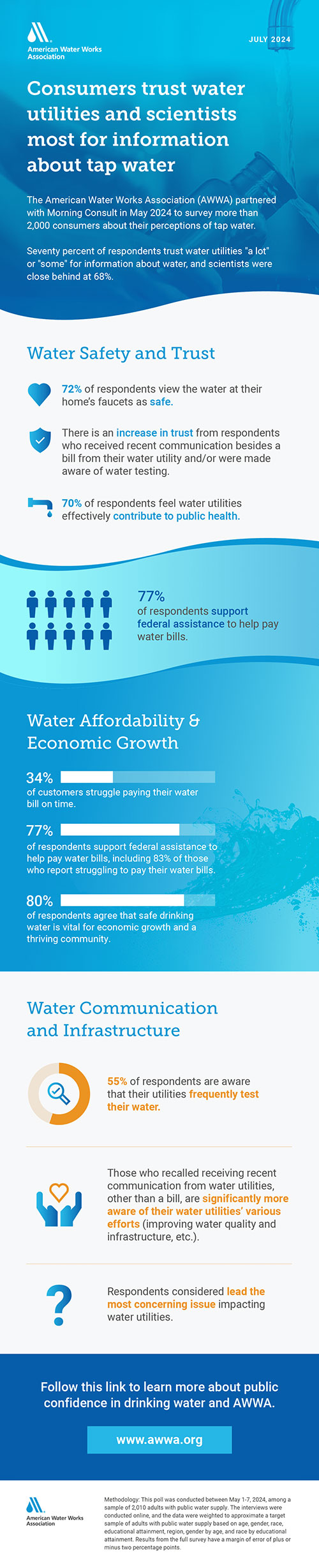
We see a bland picture when discussing “public utilities” in the United States. Water, gas and electricity run into our homes, mainly in a monopolistic manner. As consumers, we hardly have a choice, even when we are upset with the company’s performance and how it delivers that utility. However, consumers depend on public utilities in their daily lives. They also demonstrate trust, depending on the organization. A 2023 national consumer survey from the American Water Works Association of more than 2,000 people revealed 70% of respondents saying they trust their water utilities “a lot” or “some” for information about their water, with scientists close behind at 68%.
Similarly, in the electric utility sector, J.D. Edwards’ customer satisfaction survey found that “Energy efficiency awareness, reliability improvements, community outreach and participation in local events are the feel-good stories utility providers should lead with to help increase overall satisfaction.” In other words, when it comes to utility, consumers prefer three things: (1) dependability of service, (2) price they pay for the service and (3) communication and outreach to the community. As a result, according to PricewaterhouseCoopers (PwC), organizations that provide utility services focus more on operational excellence than disruptive innovation. However, to stay competitive and perhaps relevant in the long term, staying on the path of innovation is also necessary.
Balancing the priorities of both sides is indeed a challenge. The technology world is moving fast and furious with the advancement of technologies such as generative artificial intelligence (GenAI) powered by large language models, natural language processing and machine learning. New use cases are being discovered daily as application areas for AI. By definition, this is a disruptive innovation often looked upon with some distrust within the health and human services sector. The algorithm could be unknowingly skewed with systemic biases, or ambient noises could make the outputs of GenAI irrelevant or hallucinatory.
 Overcoming those barriers may seem to many like spending more productive time than saving. But the potential cannot be overlooked. The technology is improving; models are becoming trained on more accurate data than ever by large technology companies at the expense of hundreds of millions of dollars. (Google spends $191 million for its cloud-based Gemini Ultra Generative AI system!) Moreover, AI technology could potentially unleash the much-required business models for the HIEs and HDUs, benefiting broader communities. We are, however, not there yet.
Where Can Innovation Help HDUs Flourish?
HDUs can shift their internal culture toward a culture of innovation that drives their strategic priorities. Being “customer-centric” could be a tremendous strategic priority for any utility and HDU. As previously mentioned, bringing social data into the HDU will be a significant objective in the coming years. But, so far, despite progress made in the codification of social determinants of health (SDoH) data using standard code sets like ICD-10 or LOINC by Project Gravity, an initiative championed by the Office of the National Coordinator for Health Information Technology did not make a big dent in the incoming data from the CMS used by social care organizations. The gap still exists, albeit the medical facilities are getting better at screening their patients for SDoH-related issues and capturing that information in a codified manner in their EHR systems. In the coming years, HDUs will have to work with social care providers such as housing service providers, food pantries, and transportation and reentry service providers to get their data codified either in their systems or via other innovative mechanisms in standard formats before getting that into HDUs. There are innovative companies, including my company, Health Roads, that are working to make such realities possible.
Another challenge facing HDUs is receiving and subsequently sharing such multisectoral data with consumer consent and trust. This, by any means, is not easy. Innovation is needed in technology and process, governance, and complex multisectoral stakeholder management. Traditionally, the healthcare industry has overcome the barrier of data exchange between medical care providers by adopting the constructs of the Health Insurance Portability and Accountability Act (HIPAA), which allows patient data sharing for treatment, payment and operation. This provision, however, does not apply when the contributing data or recipient organizations are not covered by HIPAA. HIPAA does not cover social care organizations unless they also have a medical care service line of operation. Therefore, such organizations can only share data if their clients voluntarily release that information to HDUs and subsequently to other organizations that are connected to the HDUs. The larger the geographic coverage area of the HDU, the greater the challenge of the HDU in meeting this need because consumers will control this data sharing as they do for other data sharing under consumer privacy laws overseen by the Federal Trade Commission (FTC). Some attractive legal models are unfolding in different parts of the country. In California, for example, the Department of Health Care Services considered building a pilot for a statewide “consent repository” allowing data sharing under California’s new Data Exchange Framework (DxF). Companies like Health Roads are also working with HIEs and HDUs to work out details of such consent models and think outside the box – a typical definition of process innovation.
Innovation in Business Models for HDUs
Lastly, my recent conference experience also showed examples of new business models emerging as HIEs and HDUs seek a path to sustainability. For a long time, I have heard that HIEs are not sustainable in this country because they do not have any “business models” outside of grants from local or state governments. When those grants disappear, HIEs will have to fold. Luckily, HIEs did not fold; over the past decade, they became increasingly part of the nation’s healthcare delivery. Hospitals grew to rely on them, and medical practices got their secure “direct” emails from their Health Information Service Provider (HISP) to send (or receive) emails. Medicaid is now expanding in most U.S. states to cover a more comprehensive array of medical and nonmedical services. With that, HDUs are looking for new value-generating service models. A new startup, Selfii, has developed new patient health information (PHI) and privacy protection software that could allow drug manufacturers to utilize data in HDUs to facilitate clinical trials. HDUs are increasingly working with local or state-level initiatives to manage chronic diseases such as diabetes or hypertension; local public health departments can now use HDUs for mandatory electronic case reporting and electronic lab reporting requirements as part of their syndromic surveillance.
Final Thoughts
This conference showed me how federal, state and local government initiatives can expand interoperability and healthcare data exchange among varied stakeholders in the United States. Innovation like AI, while desired, is still looked upon with skepticism, and the industry needs to build trust and use cases to bridge the chasm. The dependability of data and availability of whole-person data from health and social care sectors are still the primary facets of the conversations and will continue to dominate for the near future. Meanwhile, innovative companies and HDUs are working together to create new business models to build financial sustainability for data aggregation and exchange infrastructure. This is exciting overall, and we will keep monitoring this space.
Rajib Ghosh is the founder and CEO of Health Roads, LLC, a consulting company for enabling digital transformation in healthcare organizations. He has 25 years of technology experience in various industry verticals where he had management roles in software engineering, data analytics, program management, product management, business operations and strategy development. Ghosh spent a decade and half in the U.S. healthcare industry as part of a global ecosystem of medical device manufacturers, medical software vendors, telemedicine and telehealth solution providers. He’s held senior positions at Hill-Rom, Solta Medical and Bosch Healthcare. His recent work includes leading data-driven digital transformation in the public health space, including county-level healthcare agencies and organizations focused on underserved populations.
([email protected])