


Public Concern About Immigration and Customer Complaints Against Minority Financial Advisors
Abstract
We examine the relation between public concern about immigration and customer complaints against minority financial advisors in the United States. We find that minority advisors are more likely to receive complaints in periods of high public concern about immigration than in other periods, relative to their white colleagues from the same firm, at the same office location, and at the same point in time. This result holds for both complaints with merit and dismissed complaints and is more pronounced in counties where residents likely hold stronger anti-immigration views. We also find that minority advisors are more likely to face regulatory actions or leave their firms after customer allegations in periods of high public concern about immigration than in other periods. Overall, our study provides descriptive evidence of a positive relation between public concern about immigration and customer dissatisfaction with minority advisors.
This paper was accepted by Suraj Srinivasan, accounting.
Funding: K. K. F. Law acknowledges financial support from a Nanyang Technological University’s Start-Up Grant. L. Zuo acknowledges financial support from the Cornell SC Johnson College of Business and fromUniversity of Toronto RogerMartin Award for Emerging Leaders.
Supplemental Material: Code is available at https://doi.org/10.1287/mnsc.2021.4283.
1. Introduction
The United States has the largest number of immigrants (i.e., foreign-born population) in the world. Today, immigrants account for 13.5% of the U.S. population, almost triple the share (4.7%) in 1970 (Budiman 2020). In recent years, immigrant populations in many other developed countries (e.g., Canada, Germany, and the United Kingdom) have also risen rapidly. Given this global trend, a growing body of research has been developed to understand the formation and implications of public concern about immigration (Facchini and Mayda 2009; Hainmueller and Hopkins 2014; Baker et al. 2015, 2016). In this paper, we integrate this stream of political science literature with the recent literature on financial advisors (e.g., Law and Mills 2019, Cook et al. 2020, Law and Zuo 2020, Kowaleski et al. 2021).
Specifically, we examine the relation between public concern about immigration and customer complaints against minority advisors in the financial advisory industry. To examine this relation, we first construct a panel of all financial advisors (around 1.3 million) who were registered with the U.S. Financial Industry Regulatory Authority (FINRA) at any time between January 2007 and July 2017. We use the classifier NamePrism, provided by Ye et al. (2017), to classify an advisor’s race/ethnicity into white, Black, Asian, or Hispanic based on both the first and last names.1 We construct an advisor-year level data set following Egan et al. (2019, 2022) and then match this data set with a news-based Migration Fear Index designed to capture anti-immigration sentiment in the United States (Baker et al. 2015, 2016). Following Baker et al. (2015), we define immigration concern as public concern about the political, social, and economic consequences of immigration.2
Our empirical analysis focuses on whether there is a change in investor attitudes toward the same minority advisor in periods of high versus low immigration concern, where immigration concern is measured at the annual level. We use a minority advisor’s white colleagues from the same firm, at the same office location, and at the same point in time as the benchmark group. Specifically, we include two sets of high-dimensional fixed effects in the regression specification. First, we include firm by county by year fixed effects to identify the benchmark group. Second, we include advisor fixed effects to focus on the time-series variation (i.e., periods of high vs. low immigration concern) in customer complaints against the same advisor.
Our main results are as follows. Compared with their white colleagues in the same office, minority advisors are more likely to receive complaints in periods of high immigration concern than in other periods. Moving the proxy for immigration concern from the lowest to the highest decile increases the rate of complaints against the same minority advisor by about 24% in a given year (relative to the base rate of 0.712%). This result becomes even stronger when we focus on customer complaints requesting large damages (i.e., requested damages of more than $100,000).
Not all complaints are meritorious or result from advisor misconduct. Thus, we divide customer complaints into two types: complaints with merit (i.e., those resulting in an arbitration award or settlement) and dismissed complaints (i.e., those dismissed, denied, withdrawn, or closed with no action). The possibility that FINRA is more likely to be biased against minority advisors in periods of high immigration concern works in favor of finding a significant effect for complaints with merit but works against finding a significant effect for dismissed complaints. We find that minority advisors are more likely to receive both types of complaints in periods of high immigration concern than in other periods. The significant result on dismissed complaints provides relatively strong evidence of customer-based discrimination that is driven by immigration concern.
We perform several additional analyses based on the advisor-year level data set. First, we explore cross-regional differences in investor attitudes and show that the relation between immigration concern and customer complaints against minority advisors is more pronounced in counties where residents likely hold stronger anti-immigration views.
Second, we find that minority advisors are more likely to face regulatory actions or leave their firms after customer allegations in periods of high immigration concern than in other periods. These results suggest that minority advisors experience increased scrutiny from financial regulators and advisory firms in the presence of high immigration concern. There is no evidence, however, that the increase in customer complaints and the turnover of minority advisors during periods of high immigration concern are driven by the discovery of advisors’ criminal or civil offenses.
Third, we sort minority advisors into three individual groups (i.e., Hispanic, Black, and Asian advisors), and we find that the effect of immigration concern on customer complaints is present among Hispanic and Asian advisors, but not among Black advisors. The insignificant results on Black advisors are consistent with the following stylized observation. First, only a small proportion of Black Americans are immigrants (Anderson 2015). Thus, public concern about immigration in the United States is more strongly linked to investor attitudes toward Hispanic and Asian advisors than to the attitudes toward Black advisors. Second, Black advisors make up only 0.4% of the sample, so the absence of significant results could be driven by lack of power and measurement error.
Fourth, we explore whether changes in investor attitudes in periods of high immigration concern are related to advisors’ individual characteristics. We control for both the main effects of advisor characteristics on customer complaints (through Advisor Fixed Effects) and their incremental effects in periods of high immigration concern (through interaction terms). Our estimates remain statistically significant but become smaller. These results suggest that the relation between immigration concern and customer complaints against minority advisors is likely to be partly driven by endogenous differences in background between white and minority advisors.3
Lastly, we exploit the change in public concern about immigration after President Trump assumed office in 2017. To alleviate concerns about omitted variable bias (e.g., changing economic conditions), we exploit the heterogeneity in the enforcement action of the U.S. Immigration and Customs Enforcement (ICE) across U.S. counties before the presidential election, and we use a difference-in-differences (diff-in-diff) design. We find that Trump’s presidency triggers a 98% greater increase in the likelihood of customer complaints against Hispanic advisors in counties with historically strong ICE enforcement than in other counties. However, no such effect exists for non-Hispanic minority advisors. In addition, we do not find any evidence that the fraction of Hispanic advisors changes after Trump’s presidency, regardless of the branch locations. This result suggests that investor complaints against Hispanic advisors are more likely due to their change in behavioral responses than to change in ICE enforcement action on Hispanic advisors (e.g., deportation) during Trump’s presidency.
Overall, our results provide descriptive evidence that immigration concern is strongly linked to customer dissatisfaction with minority advisors. This empirical association could be driven by several mechanisms. First, in periods of high public concern about immigration, minority advisors may be perceived as less trustworthy by their existing clients and thus receive more complaints. Second, minority advisors might behave differently during periods of high immigration concern. For example, if they believe that they are under closer scrutiny from investors, they may become more conservative in their behavior and advice.4 Minority advisors who are immigrants may also feel somewhat uneasy during such periods and could act more rigidly. These subtle changes in the behavior and advice of minority advisors might alter investors’ perceptions and trigger complaints. Whereas this possibility adds nuance to the interpretation of our results, it does not change our inference that the increased number of allegations against minority advisors during periods of high immigration concern is partly driven by customer perceptions. Third, investors may also be more likely to switch from minority advisors to white advisors in periods of high immigration concern. Although we cannot empirically test this possibility due to data limitations, such switching activities would not necessarily stop investors from launching complaints against their former minority advisors.5 To the extent that investors can choose not to select or retain minority advisors in periods of high immigration concern, our documented results represent the lower-bound, conservative estimate of the relation between immigration concern and customer complaints against minority advisors.
Our study contributes to a growing literature that examines racial issues in the financial market. We document that public concern about immigration at the macro level is related to investor dissatisfaction with minority advisors at the individual level. This macro-to-micro link corroborates similar findings of the impact of racial/ethnic group cues in the political science literature (Hainmueller and Hopkins 2014) and the recent finance literature (Dougal et al. 2019). Our findings also relate to a broader literature on racial discrimination in various consumer markets (e.g., Holzer and Ihlanfeldt 1998, Hekman et al. 2010, Rogers 2015, Cui et al. 2020, Nødtvedt et al. 2021). Our evidence shows that this bias extends even to a high-skilled profession.
Three data limitations of our study are worth mentioning. First, we do not have information on the identity, race, or ethnicity of investors. Thus, we cannot examine what types of investors are matched to minority advisors. However, if this matching does not vary over time, then our inferences would not be affected, as our main identification comes from the within-advisor time-series variation (i.e., periods of high vs. low immigration concern) in customer complaints. Second, our identification of advisor race/ethnicity is based on people’s names, which inevitably results in some measurement error. Third, we do not have data on advisors’ birthplaces and cannot ascertain whether an advisor was born outside the United States. Hence, our results should be interpreted as the relation between immigration concern and customer complaints against minority advisors who are not necessarily first-generation immigrants.
2. Motivation
Prior research demonstrates that discourse and opinions on immigration are strongly linked to attitudes toward racial/ethnic groups (Nelson and Kinder 1996, Citrin et al. 1997, King 2000, Kinder 2003).6 For example, in a laboratory setting, Brader et al. (2008) find that news about the costs of immigration boosts the opposition from white audience members far more when Latinos, rather than white Europeans, are featured. Similarly, Hartman et al. (2013) document that white Americans take significantly greater offense to norm violations such as entering the country illegally or working off-the-books for Hispanics than for white Europeans. This strand of research connects stereotypical cues on racial/ethnic groups with concerns about immigration. In this case, the line between natives and immigrants partly reflects the line between in-groups and out-groups, and country of origin matters given individuals’ tendency to favor their own in-groups at the expense of out-groups (Becker 1971, Kinder and Kam 2010).
Lee (2019, p. 10) puts these ideas succinctly as follows: “Not all efforts to limit or regulate immigration are xenophobic or racist. But many have been primarily driven by racism and an irrational fear and hatred of foreigners rather than by rational economic, political, or foreign policy considerations. . . . As a form of racial discrimination, xenophobia has not distinguished between immigrants who have entered with authorization and those who have not, or between immigrants and US citizens.”7
Drawing on the findings of this stream of research, we conjecture that public concern about immigration (at the macro level) is positively related to investor dissatisfaction with minority advisors (at the individual level) in the financial advisory industry. This hypothesized relation would not exist if opposition to immigration were based entirely on the economic and cultural consequences of immigration, as opposed to the identity of immigrants (Cohen 2001, Scheve and Slaughter 2001).
3. Institutional Background
FINRA (https://www.finra.org) was formed in 2007 to regulate firms and advisors in the securities business. Any firm or person conducting securities-related business in the United States must register with FINRA. FINRA was created by the merger of the National Association of Securities Dealers (NASD) with the member regulation, enforcement, and arbitration operations of the New York Stock Exchange (NYSE). By law, FINRA is a self-regulatory nonprofit organization authorized by the U.S. Congress to draft and enforce rules governing the activities of all registered firms and their advisors, to protect investor interests, and to foster market transparency. As of December 2017, there were 630,132 financial advisors (also technically known as Registered Representatives) employed in 3,726 firms in the United States.
As part of the initiative to enhance investor protection, FINRA administers a free online portal—BrokerCheck (https://brokercheck.finra.org)—that helps investors research financial advisors and their firms.8 In BrokerCheck, investors can search the names of advisors and download a report listing an advisor’s identifying information, employment history, examinations passed, professional designations, and disclosure events. Some of the 23 categories of disclosure events include customer complaints, arbitration, criminal records, personal financial issues such as bankruptcy, judicial proceedings such as civil litigation, and other regulatory actions. These data come from the filings of Form U4 (Uniform Application for Securities Industry Registration or Transfer) submitted by all financial advisors as part of the requirement to maintain a FINRA license. Financial advisors are required under FINRA’s bylaws to update Form U4 no later than 30 days after learning of any disclosure event. FINRA can subject registered advisors to disciplinary actions (such as suspension or permanent expulsion) when advisors willfully withhold disclosure or fail to update the forms promptly.
Investors can file complaints with FINRA regarding their financial advisors. According to FINRA Rule 4513, a customer complaint is “any grievance by a customer or any person authorized to act on behalf of the customer involving the activities of the member or a person associated with the member in connection with the solicitation or execution of any transaction or the disposition of securities or funds of that customer.” Some of the most frequent customer complaints include misrepresentation such as untrue representation or omission of material facts relating to investment recommendation, unsuitability of investment recommendations, or unauthorized trading such as transacting clients’ securities without clients’ prior approval or authorization. After receiving a complaint, FINRA requests additional information and documents from advisors and their advisory firms and may initiate an investigation after collecting additional facts. FINRA has jurisdiction over all registered financial advisors and their brokerage firms and can take disciplinary actions based on FINRA’s investigative findings. Customers can initiate arbitration or mediation with their financial advisors to resolve any dispute or conflict through FINRA. Arbitration is generally a more costly and lengthy process than mediation. The amount recovered through either settlement or award granted is usually a fraction of the original recovery amount sought by investors. Settlements of these customer complaints are estimated to cost the financial advisory industry about half a billion dollars per year (Egan et al. 2019).
In addition to offering readily available data, the financial advisory setting is well suited to our research objective given the state of racial diversity and discrimination in this industry (Eisenberg 2018). In 2018, the Certified Financial Planner Board Center for Financial Planning (CFP, https://www.cfp.net) issued a report titled “Racial Diversity in Financial Planning,” which identifies advisory firms’ hiring practices and customer-based discrimination as two major factors that account for the underrepresentation of minority advisors in this profession.9 This report notes that financial advisory firms often assume that their clients will be more comfortable with or require a financial advisor from their own racial/ethnic group. Thus, firms hire mostly white financial advisors because of their predominantly white client base. In addition, the report notes that clients seldom venture outside their social circles and networks in searching for financial advisors and often prefer advisors with similar backgrounds. This observation is consistent with the findings of Gennaioli et al. (2015), who show that investors delegate their portfolios to professionals whom they trust. This endogenous matching between advisors and clients based on firm perception and client preferences mitigates but does not eliminate client complaints afterward.
4. Data and Descriptive Statistics
Our main sample is from the historical Form U4 submitted by financial advisors as part of their registration with FINRA. These filings are electronically archived in BrokerCheck for public access. Basic personal information, history of customer complaints, and qualifications of financial advisors are included in these filings. These filings, however, do not disclose the race/ethnicity of financial advisors. We use the classifier NamePrism, generously provided by Ye et al. (2017), to classify advisors’ race/ethnicity.10 NamePrism is a naive Bayes machine-learning model that classifies a person’s race/ethnicity as white, Black, Asian, or Hispanic based on both the first name and the last name.11 Our final sample includes about 1.3 million financial advisors who were registered at any point in time between January 2007 and July 2017. Approximately 640,000 of these advisors remained active as of July 2017. Figure 1 summarizes the percentage of minority advisors by state during the sample period. The five states with the highest fraction of minority advisors are Hawaii, California, New York, New Mexico, and Texas. The five states with the lowest fraction of minority advisors are North Dakota, West Virginia, Montana, South Dakota, and Wyoming.
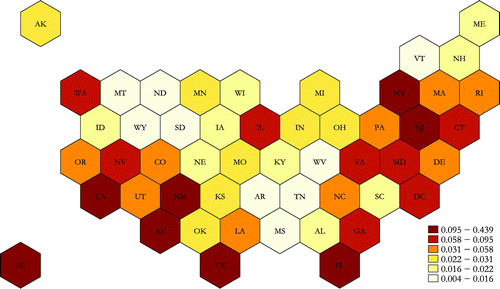
Notes. This heatmap summarizes the percentage of minority advisors by state (with Guam and Puerto Rice excluded) from January 2007 to July 2017. The state with the highest percentage of minority advisors is Hawaii at 43.9%, and the state with lowest percentage is North Dakota at 0.4%.
To capture public concern about immigration, we use the Migration Fear Index provided by Baker et al. (2015, 2016), which is plotted in Figure 2.12 Baker et al. define two term sets: one for migration (M), including “border control,” Schengen, “open borders,” migrant, migration, asylum, refugee, immigrant, immigration, assimilation, and “human trafficking”; and the other for fear (F), including anxiety, panic, bomb, fear, crime, terror, worry, concern, and violent. They count the number of U.S. newspaper articles with at least one term for each of the M and F term sets, and then divide this number by the total number of newspaper articles within the same calendar quarter. As our sample is at the advisor-year level, we average all quarterly observations within a year, and we term the average Immigration Concern.13 We assign a decile score (with 10 being the highest) to Immigration Concern and rescale the index to range from zero to one to ease interpretation of the regression results.
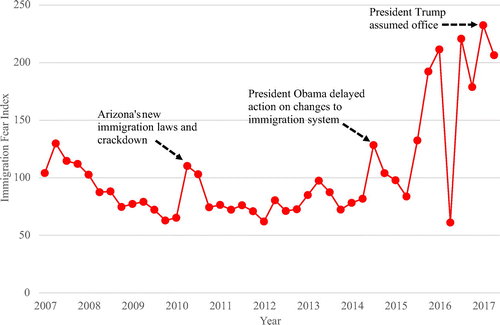
Note. This figure plots untransformed Immigration Concern (i.e., the Migration Fear Index by Baker et al. 2015, 2016).
Table 1 reports the summary statistics of the main variables used in our analyses. For ease of reference, we order them as they appear in subsequent tables. Detailed descriptions of the variable construction are in the appendix.14 The overall customer complaint rate is 0.712%, which is similar to the 0.60% reported in Egan et al. (2019) over an earlier sample period from 2005 to 2015. About 10% of advisor-year observations come from minority advisors. The low percentage of minority advisors suggests that the financial advisory profession consists predominantly of white advisors. To put this number into perspective, 83.5% of sales agents for securities, commodities, and financial services are white, which is in a similar ballpark. However, this number is considerably higher than the statistics in the accounting and financial analyst profession, where 75.8% of accountants and auditors and 73.4% of financial analysts are white.15 Whereas Asian advisors (at 5.2%) are the largest minority group in the financial advisory profession (followed by Hispanic advisors at 4.5%), Asian advisors include an array of relatively heterogeneous ethnic groups (e.g., Chinese, Indian, Japanese, Korean, and Vietnamese). Black advisors make up only 0.4% of the advisors in our sample.
|

Table 1. Summary Statistics
| Variables | Mean | Standard deviation | P25 | P50 | P75 | Number of observations | |
|---|---|---|---|---|---|---|---|
| Table 4 | (1) | (2) | (3) | (4) | (5) | (6) | |
| Customer Complaint % | 0.712 | 8.407 | 0 | 0 | 0 | 7,564,274 | |
| Large $ Complaint % | 0.176 | 4.192 | 0 | 0 | 0 | 7,564,274 | |
| Complaint with Merit % | 0.313 | 5.587 | 0 | 0 | 0 | 7,564,274 | |
| Large $ Settlement % | 0.098 | 3.128 | 0 | 0 | 0 | 7,564,274 | |
| Dismissed Complaint % | 0.367 | 6.050 | 0 | 0 | 0 | 7,564,274 | |
| Minority Advisor | 0.101 | 0.302 | 0 | 0 | 0 | 7,564,274 | |
| Immigration Concern | 0.447 | 0.334 | 0.111 | 0.444 | 0.778 | 7,564,274 | |
| Table 5 | |||||||
| Red County | 0.188 | 0.391 | 0 | 0 | 0 | 7,564,274 | |
| Table 6 | |||||||
| Regulatory % | 0.087 | 2.955 | 0 | 0 | 0 | 7,564,274 | |
| Employment Separation after Allegation % | 0.178 | 4.217 | 0 | 0 | 0 | 7,564,274 | |
| Criminal % | 0.022 | 1.494 | 0 | 0 | 0 | 7,564,274 | |
| Civil % | 0.002 | 0.411 | 0 | 0 | 0 | 7,564,274 | |
| Table 7 | |||||||
| Hispanic Advisor | 0.045 | 0.208 | 0 | 0 | 0 | 7,564,274 | |
| Black Advisor | 0.004 | 0.066 | 0 | 0 | 0 | 7,564,274 | |
| Asian Advisor | 0.052 | 0.221 | 0 | 0 | 0 | 7,564,274 | |
| Table 8 | |||||||
| Investment Adviser Exam | 0.435 | 0.496 | 0 | 0 | 1 | 7,564,274 | |
| Securities Agent State Law Exam | 0.753 | 0.431 | 1 | 1 | 1 | 7,564,274 | |
| General Securities Rep. Exam | 0.692 | 0.462 | 0 | 1 | 1 | 7,564,274 | |
| Invest. Company Product Rep. Exam | 0.380 | 0.485 | 0 | 0 | 1 | 7,564,274 | |
| General Securities Principal Exam | 0.156 | 0.363 | 0 | 0 | 0 | 7,564,274 | |
| Number of Other Qualifications | 0.051 | 0.089 | 0 | 0 | 0 | 7,564,274 | |
| Years of Experience (in decades) | 1.315 | 0.979 | 0.5 | 1.1 | 1.9 | 7,564,274 | |
| Prior Misconduct | 0.070 | 0.254 | 0 | 0 | 0 | 7,564,274 | |
| Table 9 | |||||||
| GSP Growth Rate | 0.012 | 0.022 | 0.002 | 0.014 | 0.026 | 7,552,043 | |
| Table 10 | |||||||
| Column 1 | |||||||
| Customer Complaint % | 0.086 | 2.932 | 0 | 0 | 0 | 373,040 | |
| Strong ICE Enforcement | 0.659 | 0.474 | 0 | 0 | 1 | 373,040 | |
| Trump’s Presidency | 0.500 | 0.500 | 0 | 1 | 1 | 373,040 | |
| Column 2 | |||||||
| Customer Complaint % | 0.043 | 2.075 | 0 | 0 | 0 | 7,321,480 | |
| Strong ICE Enforcement | 0.594 | 0.491 | 0 | 1 | 1 | 7,321,480 | |
| Trump’s Presidency | 0.496 | 0.500 | 0 | 0 | 1 | 7,321,480 | |
| Column 3 | |||||||
| Fraction of Hispanic Advisors % | 4.285 | 16.701 | 0 | 0 | 0 | 1,239,618 | |
| Strong ICE Enforcement | 0.509 | 0.500 | 0 | 1 | 1 | 1,239,618 | |
| Trump’s Presidency | 0.496 | 0.500 | 0 | 0 | 1 | 1,239,618 | |
Notes. This table reports the summary statistics for the variables in this study. Detailed definitions of all variables are in the appendix. The values of all dependent variables (suffixed with the % sign) are expressed in percentage points.
Panel A of Table 2 reports the baseline differentials in customer complaints between minority and white advisors. Minority advisors have a lower likelihood of Customer Complaint, Large $ Complaint, Complaint with Merit, Large $ Settlement, and Dismissed Complaint than white advisors. Among minority advisors, Hispanic advisors, on average, have higher rates of customer complaints than Black and Asian advisors. And white and Hispanic advisors have a very similar rate of customer complaints during the sample period. In panel B of Table 2, we report the univariate tests of differences in means over customer complaints between minority and white advisors. All but two differences are statistically significant at the 1% level.16
|
Table 2. Differences in Customer Complaints Between White and Minority Advisors
| Customer Complaint | Large $ Complaint | Complaint with Merit | Large $ Settlement | Dismissed Complaint | |
|---|---|---|---|---|---|
| Panel A: Baselines | |||||
| Descriptions | (1) | (2) | (3) | (4) | (5) |
| Minority advisors | 0.593 | 0.152 | 0.254 | 0.089 | 0.297 |
| White advisors | 0.728 | 0.181 | 0.321 | 0.098 | 0.375 |
| Hispanic advisors | 0.775 | 0.229 | 0.338 | 0.132 | 0.361 |
| Black advisors | 0.444 | 0.094 | 0.182 | 0.032 | 0.235 |
| Asian advisors | 0.446 | 0.089 | 0.187 | 0.056 | 0.246 |
| Panel B: Difference between subgroups | |||||
| Minority vs. white advisors | −0.135 | −0.030 | −0.067 | −0.010 | −0.078 |
| p-value of difference | (0.000) | (0.000) | (0.000) | (0.010) | (0.000) |
| Hispanic vs. white advisors | 0.047 | 0.048 | 0.017 | 0.034 | −0.014 |
| p-value of difference | (0.001) | (0.000) | (0.078) | (0.000) | (0.174) |
| Black vs. white advisors | −0.284 | −0.087 | −0.138 | −0.066 | −0.140 |
| p-value of difference | (0.000) | (0.000) | (0.000) | (0.000) | (0.000) |
| Asian vs. white advisors | −0.282 | −0.092 | −0.134 | −0.043 | −0.129 |
| p-value of difference | (0.000) | (0.000) | (0.000) | (0.000) | (0.000) |
Notes. Panel A summarizes the descriptive statistics. Panel B summarizes the univariate tests of differences in means between white and minority advisors. Detailed definitions of all variables are in the appendix. The values of dependent variables are expressed in percentage points.
Panel A of Table 3 reports the baseline differentials in advisor characteristics between minority and white advisors. Whereas minority advisors have a lower likelihood of misconduct records, they are generally less likely to obtain FINRA qualifications than white advisors. Panel B reports the univariate tests of differences in means over advisor characteristics. All differences are statistically significant at the 1% level. As these results suggest that there could be significant differences in background between minority and white advisors, we control for these individual differences through Advisor Fixed Effects in the regression model.
|
Table 3. Differences in Background Between White and Minority Advisors
| Investment Adviser Exam | Securities Agent State Law Exam | General Securities Rep. Exam | Investment Co. Product Rep. Exam | General Securities Principal Exam | Number of Other Qualifications | Prior Misconduct | Years of Experience | |
|---|---|---|---|---|---|---|---|---|
| Panel A: Baselines | ||||||||
| Descriptions | (1) | (2) | (3) | (4) | (5) | (6) | (7) | (8) |
| Minority advisors | 0.318 | 0.729 | 0.627 | 0.404 | 0.105 | 0.041 | 0.045 | 0.910 |
| White advisors | 0.443 | 0.752 | 0.690 | 0.381 | 0.161 | 0.051 | 0.073 | 1.363 |
| Hispanic advisors | 0.356 | 0.718 | 0.582 | 0.486 | 0.102 | 0.036 | 0.056 | 0.939 |
| Black advisors | 0.317 | 0.741 | 0.551 | 0.503 | 0.099 | 0.037 | 0.055 | 0.935 |
| Asian advisors | 0.285 | 0.739 | 0.673 | 0.323 | 0.108 | 0.045 | 0.034 | 0.882 |
| Panel B: Difference between subgroups | ||||||||
| Minority vs. white advisors | −0.125 | −0.023 | −0.063 | 0.022 | −0.056 | −0.010 | −0.028 | −0.454 |
| p-value of difference | (0.000) | (0.000) | (0.000) | (0.000) | (0.000) | (0.000) | (0.000) | (0.000) |
| Hispanic vs. white advisors | −0.087 | −0.035 | −0.108 | 0.104 | −0.059 | −0.015 | −0.017 | −0.425 |
| p-value of difference | (0.000) | (0.000) | (0.000) | (0.000) | (0.000) | (0.000) | (0.000) | (0.000) |
| Black vs. white advisors | −0.126 | −0.011 | −0.139 | 0.121 | −0.062 | −0.014 | −0.018 | −0.428 |
| p-value of difference | (0.000) | (0.000) | (0.000) | (0.000) | (0.000) | (0.000) | (0.000) | (0.000) |
| Asian vs. white advisors | −0.158 | −0.014 | −0.017 | −0.058 | −0.053 | −0.006 | −0.039 | −0.482 |
| p-value of difference | (0.000) | (0.000) | (0.000) | (0.000) | (0.000) | (0.000) | (0.000) | (0.000) |
Notes. Panel A summarizes the descriptive statistics. Panel B summarizes the univariate tests of differences in means between white and minority advisors. Detailed definitions of all variables are in the appendix.
Figure 3 contains two graphs depicting trends in customer complaints by advisor type. Panel A is a time-series graph plotting the trend in the level of customer complaints by advisor type. The % Customer Complaints (White Advisors) is the number of customer complaints received by white advisors divided by the number of white advisors. The % Customer Complaints (Minority Advisors) is the number of customer complaints received by minority advisors divided by the number of minority advisors. We repeat the same calculation for the three types of minority advisors. Overall, minority and white advisors appear to receive fewer complaints over time. The patterns, however, do not suggest that white advisors receive fewer complaints over time than minority advisors.
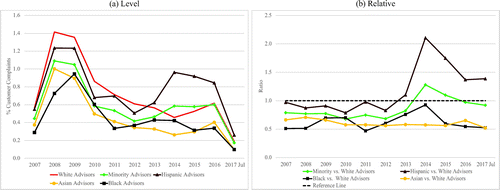
Notes. Panel (a) plots the time-series trend in the level of customer complaints by advisor type. The % Customer Complaints (White Advisors) is the number of customer complaints received by white advisors divided by the number of white advisors. The % Customer Complaints (Minority Advisors) is the number of customer complaints received by minority advisors divided by the number of minority advisors. Panel (b) plots the time-series trend in the relative level of customer complaints by advisor type (with white advisors as the benchmark). The Ratio (Minority Advisors) divides % Customer Complaints (Minority Advisors) by % Customer Complaints (White Advisors). We repeat the same calculation for the three types of minority advisors. A ratio of more than one indicates that a group of advisors receives more customer complaints than white advisors after we adjust for the difference in group size.
Panel B is a time-series graph plotting the trend in the relative level of customer complaints by advisor type (using the rate of customer complaints among white advisors as the base rate). The purpose of this figure is to re-examine the patterns in panel A after adjusting for the differences in the number of advisors (as the denominator) in each type. In panel B, the Ratio (Minority Advisor) divides % Customer Complaints (Minority Advisors) by % Customer Complaints (White Advisors). We repeat the same calculation for the three types of minority advisors. A ratio of more than one indicates that a given group of advisors receives more customer complaints than white advisors after we adjust for the difference in group size. We find that minority advisors receive more customer complaints than white advisors when public concern about immigration is high between 2013 and 2017. The effect is especially salient among Hispanic advisors.
5. Research Methods and Empirical Results
We summarize the steps of our empirical analyses as follows. First, we examine whether minority advisors are more likely to receive complaints in periods of high public concern about immigration than in other periods, relative to their white colleagues in the same office. We also separately examine complaints with merit (i.e., those resulting in an arbitration award or settlement) and dismissed complaints (i.e., those dismissed, denied, withdrawn, or closed with no action). Second, we exploit the location of advisors to infer investors’ attitudes toward immigration across different regions. Third, we perform several additional analyses that examine other forms of financial advisor misconduct, break minority advisors into the three individual groups (i.e., Hispanic, Black, and Asian advisors), or control for the incremental effect of advisor characteristics or economic conditions. Fourth, we perform a diff-in-diff analysis around the 2016 U.S. presidential election in which President Trump defeated Democratic nominee Hillary Clinton.
5.1. Customer Complaints
To examine whether minority advisors are more likely to receive complaints in periods of high public concern about immigration than in other periods when compared with their white colleagues in the same office, we estimate the following linear probability model:
Each unit of observation is at the financial advisor-year level. The dependent variable Customer Complaint is an indicator variable equal to one if there is a customer complaint against advisor i at advisory firm j in county l in year t. Minority Advisor is an indicator variable equal to one if an advisor i is Black, Asian, or Hispanic. Immigration Concern is a decile score of the average Migration Fear Index (with 10 being highest) in year t, rescaled to range from zero to one. Our main coefficient of interest is β. Our conjecture is that minority advisors are more likely to receive complaints in periods of high public concern about immigration than in other periods (i.e., β is positive).
We include two sets of high-dimensional fixed effects in the regression specification. First, we include λ (Firm × County × Year Fixed Effects) in our regression specification so that we compare minority advisors with their white colleagues who work in the same firm j, at the same office location l, and in the same year t. This set of high-dimensional fixed effects absorbs an array of observable and unobservable factors that could affect Customer Complaint: variations in firms’ tolerance for misconduct, different business models (e.g., retail vs. nonretail) or incentive structures that firms may have, heterogeneity in state- or county-level regulatory or enforcement conditions, any aggregate shocks to misconduct reporting, differences in demographics and labor market or economic conditions in a given county at a given point in time, or other heterogeneity in branch characteristics (Dimmock et al. 2018, Egan et al. 2019).17 The main effect of Immigration Concern is also absorbed by this set of fixed effects.
Second, we include α (Advisor Fixed Effects) to focus on the time-series variation (i.e., periods of high vs. low immigration concern) in customer complaints against the same advisor. This set of fixed effects absorbs Minority Advisor and an array of observable and unobservable advisor characteristics that could affect Customer Complaint, such as individual ability, risk preferences, or professional qualifications.18 Because of the two sets of high-dimensional fixed effects (i.e., Firm × County × Year Fixed Effects and Advisor Fixed Effects) and our binary dependent variable, we use a linear probability model for estimation. As the residuals of observations for advisors are likely correlated within a given advisory firm, we cluster all standard errors at the advisory firm level (Egan et al. 2019).19
Our variable of interest is Minority Advisor × Immigration Concern. Our analysis focuses on the change in investor attitudes toward minority advisors over different periods relative to the concurrent change in investor attitudes toward white advisors. This approach removes confounding factors that do not change over time or that do not differentially affect minority versus white advisors. The coefficient estimate of Minority Advisor × Immigration Concern captures this differential change in investor attitudes toward minority advisors and is thus our main focus.
Table 4 summarizes the results. In column 1, we regress Customer Complaint on Minority Advisor × Immigration Concern after controlling for the two sets of high-dimensional fixed effects. The coefficient estimate of Minority Advisor × Immigration Concern is positive and statistically significant at the 1% level. Thus, minority advisors are more likely to receive complaints in periods of high immigration concern than in other periods, compared with their white colleagues who work in the same firm, at the same office location, and at the same point in time. Given that the base rate of Customer Complaint is 0.712% in a given year, moving Immigration Concern from the lowest to the highest decile increases the rate of Customer Complaint against the same minority advisor by about 24% (= 0.171 ÷ 0.712) in a given year, which is economically large.20 In column 2, we repeat the analysis with Large $ Complaint, an indicator variable equal to one if there is a customer complaint requesting damages of at least $100,000 in a given year. The coefficient estimate of Minority Advisor × Immigration Concern remains positive and statistically significant at the 1% level, and the economic magnitude becomes even stronger (50% relative to the base rate).
|
Table 4. Customer Complaints
| Dependent variables | |||||
|---|---|---|---|---|---|
| Customer Complaint | Large $ Complaint | Complaint with Merit | Large $ Settlement | Dismissed Complaint | |
| Independent variables | (1) | (2) | (3) | (4) | (5) |
| Minority Advisor × Immigration Concern | 0.171*** (3.78) | 0.088*** (4.96) | 0.130*** (5.22) | 0.067*** (4.69) | 0.065** (2.21) |
| Advisor Fixed Effects | Yes | Yes | Yes | Yes | Yes |
| Firm × County × Year Fixed Effects | Yes | Yes | Yes | Yes | Yes |
| Number of observations | 7,564,274 | 7,564,274 | 7,564,274 | 7,564,274 | 7,564,274 |
| R2 | 0.265 | 0.260 | 0.249 | 0.244 | 0.226 |
| Economic magnitude | 24% | 50% | 42% | 68% | 18% |
Notes. This table reports the coefficient estimates of ordinary least squares regressions. Each observation is at the advisor-year level. Detailed definitions of all variables are in the appendix. The values of dependent variables are expressed in percentage points. Economic Magnitude divides the estimated coefficient by the mean of the dependent variable. Standard errors are clustered at the advisory firm level, and t-statistics are reported in parentheses.
***, **, and * indicate statistical significance at the 1%, 5%, and 10% level, respectively, based on a two-tailed test. Estimates with at least 10% significance are shaded for ease of reference.
Not all customer complaints have merit. About 40% of customer complaints are denied, dismissed, or subsequently withdrawn (32.6%), or closed with no further action (8.1%). To assess whether the increased level of customer complaints during periods of high immigration concern is triggered by the true discovery and/or the perception of financial advisor misconduct, we divide customer complaints into two types: Complaint with Merit (i.e., an indicator variable equal to one if there is a customer complaint against a financial advisor that results in an award or settlement) and Dismissed Complaint (i.e., an indicator variable equal to one if the customer complaint is either denied, dismissed, or closed with no action by FINRA, or subsequently withdrawn by the customer).21 The possibility that FINRA is more likely to be biased against minority advisors in periods of high immigration concern works in favor of finding a positive coefficient estimate of Minority Advisor × Immigration Concern for Complaint with Merit but works against finding a positive coefficient estimate of Minority Advisor × Immigration Concern for Dismissed Complaint. Thus, a significant result on Dismissed Complaint provides relatively strong evidence of customer-based discrimination that is driven by immigration concern.
We now summarize the results. In column 3, we focus on Complaint with Merit. The coefficient estimate of Minority Advisor × Immigration Concern is significantly positive. Relative to the average of Complaint with Merit at 0.313, this estimate translates into a 42% (= 0.130 ÷ 0.313) increase in the likelihood of Complaint with Merit in periods of high immigration concern. In column 4, the economic magnitude of the effect becomes even stronger when we focus on Large $ Settlement, which is an indicator variable equal to one if there is a settlement of more than $100,000. In column 5, we focus on Dismissed Complaint. The coefficient estimate of Minority Advisor × Immigration Concern is again significantly positive. Relative to the average of Dismissed Complaint at 0.367, this estimate translates into an 18% (= 0.065 ÷ 0.367) increase in the likelihood of dismissed complaints in periods of high immigration concern.22
Together, the results in Table 4 present evidence that public concern about immigration is significantly related to customer dissatisfaction with minority advisors. In periods of high immigration concern, clients may also perceive their minority advisors as less trustworthy, which could result in more detection of genuine misconduct but also an increased number of unfounded allegations.
5.2. Cross-Regional Variation in Investor Attitudes
In this section, we exploit the location of advisors to infer investors’ attitudes toward immigration across different regions. Anecdotal evidence suggests that the votes for Trump and Clinton in the 2016 presidential election appear to be a robust proxy for immigration attitudes (Rosentiel 2006). Hence, we collect the 2016 presidential election votes and categorize counties as red or blue. We define Red County as a county where at least 50% of voters voted for Trump in the 2016 presidential election.23 One caveat is that we do not have access to investors’ residential locations. Therefore, we can only assume that financial advisors and their clients colocate locally, and we infer investors’ locations from advisors’ locations.
We re-estimate our baseline specifications and report these results in Table 5. Overall, we find that our main effects are stronger in red counties than in blue counties. We also directly test the equality of coefficients between the two groups and find that all differences are statistically significant at least at the 5% level. Thus, our results appear to be stronger in counties where residents likely hold stronger anti-immigration views.
|
Table 5. Red vs. Blue Counties
| Red County | ||||||||||
|---|---|---|---|---|---|---|---|---|---|---|
| Yes | No | Yes | No | Yes | No | Yes | No | Yes | No | |
| Dependent variables | ||||||||||
| Customer Complaint | Large $ Complaint | Complaint with Merit | Large $ Settlement | Dismissed Complaint | ||||||
| Independent variables | (1) | (2) | (3) | (4) | (5) | (6) | (7) | (8) | (9) | (10) |
| Minority Advisor × Immigration Concern | 0.312** (2.22) | 0.167*** (3.47) | 0.144** (2.10) | 0.086*** (4.39) | 0.204** (2.47) | 0.128*** (4.75) | 0.092** (2.36) | 0.067*** (4.38) | 0.195* (1.76) | 0.056* (1.90) |
| Advisor Fixed Effects | Yes | Yes | Yes | Yes | Yes | Yes | Yes | Yes | Yes | Yes |
| Firm × County × Year Fixed Effects | Yes | Yes | Yes | Yes | Yes | Yes | Yes | Yes | Yes | Yes |
| Number of observations | 1,408,241 | 6,132,098 | 1,408,241 | 6,132,098 | 1,408,241 | 6,132,098 | 1,408,241 | 6,132,098 | 1,408,241 | 6,132,098 |
| R2 | 0.334 | 0.254 | 0.325 | 0.252 | 0.319 | 0.240 | 0.316 | 0.236 | 0.303 | 0.210 |
| Economic magnitude | 35% | 25% | 73% | 50% | 56% | 43% | 98% | 68% | 40% | 17% |
| p-value of difference | (1) vs. (2) p = 0.000 | (3) vs. (4) p = 0.000 | (5) vs. (6) p = 0.000 | (7) vs. (8) p = 0.001 | (9) vs. (10) p = 0.000 | |||||
Notes. This table reports the coefficient estimates of ordinary least squares regressions. The regression specifications follow those in Table 4. We define Red County as a county where at least 50% of voters voted for Trump in the 2016 presidential election. Detailed definitions of all variables are in the appendix. The values of dependent variables are expressed in percentage points. Economic Magnitude divides the estimated coefficient by the mean of the dependent variable. Standard errors are clustered at the advisory firm level, and t-statistics are reported in parentheses.
***, **, and * indicate statistical significance at the 1%, 5%, and 10% level, respectively, based on a two-tailed test. Estimates with at least 10% significance are shaded for ease of reference.
5.3. Other Misconduct
We examine whether minority advisors are more likely to commit other misconduct and/or to be found guilty by the financial regulators or their employers when the level of immigration concern is high. We construct four indicators. Regulatory is an indicator variable equal to one if there is a regulatory event for an advisor in a given year. Employment Separation after Allegation is an indicator variable equal to one if there is an employment separation for an advisor after a customer allegation in a given year. Criminal is an indicator variable equal to one if there is a criminal record for an advisor in a given year. Civil is an indicator variable equal to one if there is a civil (e.g., tax lien) record for an advisor in a given year. We re-estimate our baseline regressions and replace our dependent variable with each of these variables. The possibility that the financial regulators or the advisory firms are more likely to be biased against minority advisors in periods of high immigration concern works in favor of finding a positive coefficient estimate of Minority Advisor × Immigration Concern for these outcome variables.
The results are in Table 6. In columns 1 and 2, we find that minority advisors are more likely to face regulatory actions or leave their firms after customer allegations in periods of high public concern about immigration than in other periods. These results suggest that minority advisors experience increased scrutiny from financial regulators and advisory firms in the presence of high immigration concern.24 In columns 3 and 4, we find no evidence that minority advisors are more likely to have criminal records or civil lawsuits in periods of high immigration concern than in other periods. Thus, it is unlikely that the increase in customer complaints and turnover of minority advisors during periods of high immigration concern are driven by the discovery of advisors’ criminal or civil offenses.
|
Table 6. Other Misconduct
| Dependent variables | ||||||
|---|---|---|---|---|---|---|
| Regulatory | Employment Separation after Allegation | Criminal | Civil | |||
| Independent variables | (1) | (2) | (3) | (4) | ||
| Minority Advisor × Immigration Concern | 0.034*** | 0.111** | −0.005 | −0.001 | ||
| (3.12) | (2.11) | (−0.75) | (−0.51) | |||
| Advisor Fixed Effects | Yes | Yes | Yes | Yes | ||
| Firm × County × Year Fixed Effects | Yes | Yes | Yes | Yes | ||
| Number of observations | 7,564,274 | 7,564,274 | 7,564,274 | 7,564,274 | ||
| R2 | 0.300 | 0.283 | 0.236 | 0.386 | ||
| Economic magnitude | 39% | 62% | −23% | −50% | ||
Notes. This table reports the coefficient estimates of linear probability model regressions. Each observation is at the advisor-year level. Detailed definitions of all variables are in the appendix. The values of dependent variables are expressed in percentage points. Economic Magnitude divides the estimated coefficient by the mean of the dependent variable. Standard errors are clustered at the advisory firm level, and t-statistics are reported in parentheses.
***, **, and * indicate statistical significance at the 1%, 5%, and 10% level, respectively, based on a two-tailed test. Estimates with at least 10% significance are shaded for ease of reference.
5.4. Decomposing Minority Advisors into Three Groups
In this section, we examine whether our earlier results are driven by certain racial/ethnic groups. We construct three variables to indicate each of the three major groups: Hispanic, Black, and Asian advisors. Hispanic Advisor is an indicator variable equal to one if an advisor is Hispanic. Black Advisor is an indicator variable equal to one if an advisor is Black. Asian Advisor is an indicator variable equal to one if an advisor is Asian. We then interact each of these indicators with Immigration Concern and re-estimate our earlier specifications.25
Table 7 summarizes these results. Panel A repeats the analysis of Table 4 after we sort minority advisors into three individual groups (i.e., Hispanic, Black, and Asian advisors). The coefficient estimates of Hispanic Advisor × Immigration Concern and Asian Advisor × Immigration Concern are positive and statistically significant in all columns. Moving Immigration Concern from the lowest to the highest decile increases customer complaints (including dismissed cases) against Hispanic advisors by about 22%–81%. The effect of immigration concern is weaker for Asian advisors (i.e., 16%–59%) and is largely absent for Black advisors.
|
Table 7. Minority Advisor Types
| Panel A: Customer complaints | |||||
|---|---|---|---|---|---|
| Dependent variables | |||||
| Customer Complaint | Large $ Complaint | Complaint with Merit | Large $ Settlement | Dismissed | |
| Independent variables | (1) | (2) | (3) | (4) | (5) |
| Hispanic Advisor × Immigration Concern | 0.233*** | 0.097*** | 0.178*** | 0.079*** | 0.082** |
| (3.26) | (3.39) | (3.90) | (2.98) | (2.14) | |
| Black Advisor × Immigration Concern | 0.082 | 0.134** | 0.084 | 0.052 | −0.033 |
| (0.70) | (2.31) | (0.97) | (1.23) | (−0.40) | |
| Asian Advisor × Immigration Concern | 0.123*** | 0.075*** | 0.092*** | 0.058*** | 0.059* |
| (3.04) | (3.76) | (4.19) | (3.43) | (1.78) | |
| Advisor Fixed Effects | Yes | Yes | Yes | Yes | Yes |
| Firm × County × Year Fixed Effects | Yes | Yes | Yes | Yes | Yes |
| Number of observations | 7,564,274 | 7,564,274 | 7,564,274 | 7,564,274 | 7,564,274 |
| R2 | 0.265 | 0.260 | 0.249 | 0.244 | 0.226 |
| Economic magnitude: | |||||
| Hispanic Advisor × Immigration Concern | 33% | 55% | 57% | 81% | 22% |
| Black Advisor × Immigration Concern | 12% | 76% | 27% | 53% | −9% |
| Asian Advisor × Immigration Concern | 17% | 43% | 29% | 59% | 16% |
| Panel B: Other misconduct | ||||
|---|---|---|---|---|
| Dependent variables | ||||
| Regulatory | Employment Separation after Allegation | Criminal | Civil | |
| Independent variables | (1) | (2) | (3) | (4) |
| Hispanic Advisor × Immigration Concern | 0.052*** | 0.115* | −0.012 | −0.002 |
| (2.82) | (1.84) | (−1.23) | (−0.84) | |
| Black Advisor × Immigration Concern | −0.016 | 0.045 | −0.050 | 0.001 |
| (−0.36) | (0.44) | (−1.47) | (0.57) | |
| Asian Advisor × Immigration Concern | 0.023* | 0.113** | 0.006 | 0.000 |
| (1.77) | (2.28) | (0.79) | (0.01) | |
| Advisor Fixed Effects | Yes | Yes | Yes | Yes |
| Firm × County × Year Fixed Effects | Yes | Yes | Yes | Yes |
| Number of observations | 7,564,274 | 7,564,274 | 7,564,274 | 7,564,274 |
| R2 | 0.300 | 0.283 | 0.236 | 0.386 |
| Economic magnitude: | ||||
| Hispanic Advisor × Immigration Concern | 60% | 65% | −55% | −100% |
| Black Advisor × Immigration Concern | −18% | 25% | −227% | 50% |
| Asian Advisor × Immigration Concern | 26% | 63% | 27% | 0% |
Notes. This table reports the coefficient estimates of linear probability model regressions. Each observation is at the advisor-year level. Detailed definitions of all variables are in the appendix. The values of dependent variables are expressed in percentage points. Economic Magnitude divides the estimated coefficient by the mean of the dependent variable. Standard errors are clustered at the advisory firm level, and t-statistics are reported in parentheses.
***, **, and * indicate statistical significance at the 1%, 5%, and 10% level, respectively, based on a two-tailed test. Estimates with at least 10% significance are shaded for ease of reference.
Panel B repeats the analysis of Table 6 after we sort minority advisors into three individual groups. Similar to the results in panel A and in Table 6, the results in columns 1 and 2 show that the coefficient estimates of Hispanic Advisor × Immigration Concern and Asian Advisor × Immigration Concern are positive and statistically significant. The results in column 1 suggest that Hispanic and Asian advisors experience increased scrutiny from financial regulators and advisory firms in the presence of high immigration concern. The results in column 2 suggest that Hispanic and Asian advisors are more likely to leave their firms after customer allegations in periods of high immigration concern than in other periods. In columns 3 and 4, we again find no evidence that minority advisors are more likely to have criminal records or civil lawsuits in periods of high immigration concern than in other periods.
Overall, the results in both panels are consistent with the observation that public concern about immigration in the United States is more strongly linked to investor attitudes toward Hispanic and Asian groups than toward Black Americans.
5.5. Advisor Characteristics
In this section, we explore whether changes in investor attitudes in periods of high immigration concern are related to advisors’ individual characteristics. To do so, we control for both the main effects of advisor characteristics on customer complaints (through Advisor Fixed Effects) and their incremental effects in periods of high immigration concern (through interaction terms). Specifically, we control for Immigration Concern interacted with each of the following variables (the definitions of which are in the appendix): (a) the Investment Adviser Examination (Series 65/66), (b) the Securities Agent State Law Examination (Series 63), (c) the General Securities Representative Examination (Series 7), (d) the Investment Company Product Representative Examination (Series 6), (e) the General Securities Principal Examination (Series 24), (f) Number of Other Qualifications, (g) Years of Experience, and (h) Prior Misconduct.26
Table 8 summarizes these results. In column 1, the coefficient estimate of Minority Advisor × Immigration Concern remains statistically significant but becomes smaller (compared with the estimate in column 1 of Table 4). In column 2, the coefficient estimate of Hispanic Advisor × Immigration Concern is also statistically significant but smaller (compared with the estimate in column 1 of panel A in Table 7), and the coefficient estimate of Asian Advisor × Immigration Concern loses statistical significance. These results suggest that the relation between public concern about immigration and customer complaints against minority advisors is likely to be partly driven by endogenous differences in background between white and minority advisors.
|
Table 8. Advisor Characteristics
| Dependent variable: Customer Complaint | ||
|---|---|---|
| Independent variables | (1) | (2) |
| Minority Advisor × Immigration Concern | 0.078* | |
| (1.95) | ||
| Hispanic Advisor × Immigration Concern | 0.149** | |
| (2.32) | ||
| Black Advisor × Immigration Concern | −0.023 | |
| (−0.18) | ||
| Asian Advisor × Immigration Concern | 0.024 | |
| (0.61) | ||
| Investment Adviser Exam × Immigration Concern | −0.261*** | −0.261*** |
| (−4.03) | (−4.03) | |
| Securities Agent State Law Exam × Immigration Concern | −0.202*** | −0.202*** |
| (−3.74) | (−3.74) | |
| General Securities Rep. Exam × Immigration Concern | −0.029 | −0.029 |
| (−0.57) | (−0.56) | |
| Investment Co. Product Rep. Exam × Immigration Concern | 0.035 | 0.035 |
| (0.65) | (0.64) | |
| General Securities Principal Exam × Immigration Concern | 0.093** | 0.093** |
| (2.07) | (2.05) | |
| Number of Other Qualifications × Immigration Concern | 0.278* | 0.279* |
| (1.67) | (1.68) | |
| Years of Experience × Immigration Concern | −0.294*** | −0.294*** |
| (−9.06) | (−9.05) | |
| Prior Misconduct × Immigration Concern | −0.359*** | −0.359*** |
| (−2.61) | (−2.61) | |
| Advisor Fixed Effects | Yes | Yes |
| Firm × County × Year Fixed Effects | Yes | Yes |
| Number of observations | 7,564,274 | 7,564,274 |
| R2 | 0.288 | 0.288 |
Notes. This table reports the coefficient estimates of linear probability model regressions. Each observation is at the advisor-year level. Detailed definitions of all variables are in the appendix. The values of dependent variables are expressed in percentage points. Economic Magnitude divides the estimated coefficient by the mean of the dependent variable. Standard errors are clustered at the advisory firm level, and t-statistics are reported in parentheses.
***, **, and * indicate statistical significance at the 1%, 5%, and 10% level, respectively, based on a two-tailed test. Estimates with at least 10% significance are shaded for ease of reference.
5.6. Economic Conditions
One potential concern is that our earlier results are driven by business cycles. Intuitively, immigration concern could correlate with economic conditions, as the level of immigration concern could increase during contractions and decrease during expansions. Anecdotal evidence suggests that attitudes toward immigrants are closely related to economic conditions (Quillian 1995, Semyonov et al. 2006). For example, using the American National Election Studies (ANES) surveys, Citrin et al. (1997) show that beliefs about the state of the national economy and generalized feelings about Hispanics and Asians are two of the major determinants of public opinion on immigration policy.
In this section, we examine whether our main results are driven by time-varying economic conditions. We obtain gross state product (GSP) data from the U.S. Bureau of Economic Analysis. For each advisor, GSP Growth Rate is the real annual growth rate in gross state product of the state where an advisor works in a given year.27 We repeat our previous analysis after including Minority Advisor × GSP Growth Rate as a control. The main effect of GSP Growth Rate is subsumed by Firm × County × Year Fixed Effects.
Table 9 summarizes these results. In column 1, the coefficient estimate of Minority Advisor × Immigration Concern continues to be positive and statistically significant at the 1% level. Although the economic magnitude of Minority Advisor × Immigration Concern drops by a quarter from our baseline regression in Table 4, it remains large. Given that the base rate of Customer Complaint is 0.712% in a given year, moving Immigration Concern from the lowest to the highest decile increases the rate of Customer Complaint by about 18% (= 0.130 ÷ 0.712) in a given year. In column 2, the coefficient estimates of Hispanic Advisor × Immigration Concern and Asian Advisor × Immigration Concern remain positive and statistically significant in all five columns.
|
Table 9. Economic Conditions
| Dependent variable: Customer Complaint | ||
|---|---|---|
| Independent variables | (1) | (2) |
| Minority Advisor × Immigration Concern | 0.130*** | |
| (3.07) | ||
| Hispanic Advisor × Immigration Concern | 0.167*** | |
| (2.63) | ||
| Black Advisor × Immigration Concern | −0.025 | |
| (−0.21) | ||
| Asian Advisor × Immigration Concern | 0.109*** | |
| (2.78) | ||
| Minority Advisor × GSP Growth Rate | 2.400*** | |
| (3.09) | ||
| Hispanic Advisor × GSP Growth Rate | 3.464*** | |
| (3.13) | ||
| Black Advisor × GSP Growth Rate | 6.334* | |
| (1.74) | ||
| Asian Advisor × GSP Growth Rate | 0.862 | |
| (0.90) | ||
| Advisor Fixed Effects | Yes | Yes |
| Firm × County × Year Fixed Effects | Yes | Yes |
| Number of observations | 7,552,043 | 7,552,043 |
| R2 | 0.261 | 0.261 |
Notes. This table reports the coefficient estimates of linear probability model regressions. Each observation is at the advisor-year level. Detailed definitions of all variables are in the appendix. The values of dependent variables are expressed in percentage points. Economic Magnitude divides the estimated coefficient by the mean of the dependent variable. Standard errors are clustered at the advisory firm level, and t-statistics are reported in parentheses.
***, **, and * indicate statistical significance at the 1%, 5%, and 10% level, respectively, based on a two-tailed test. Estimates with at least 10% significance are shaded for ease of reference.
Overall, the results in Table 9 suggest that our main results are unlikely to be driven by economic conditions.
5.7. Trump’s Presidency
In this section, we provide microlevel evidence based on immigration concern in local counties. We perform a diff-in-diff analysis around the 2016 U.S. presidential election in which President Trump defeated Democratic nominee Hillary Clinton. During the election campaign, President Trump consistently centered his campaign platform on immigration and incited fear of Hispanic immigrants. After winning the election, he immediately stated that he intended to “stop illegal immigration, deport all criminal aliens, and save American lives” (January 16, 2017). The Trump administration also stepped up deportation28 (Bever and Paul 2018) and intended to detain migrant children longer with the assistance of U.S. Immigration and Customs Enforcement (ICE) (Caldwell and Gurman 2018). We exploit the change in public concern about immigration after President Trump assumed office. To alleviate concerns about omitted variable bias (e.g., changing economic conditions), we exploit the heterogeneity in ICE enforcement action across U.S. counties before the presidential election. We conjecture that Trump’s presidency triggered higher public concern about immigration in counties with historically strong ICE enforcement than in other counties. Specifically, we estimate the following diff-in-diff estimation:
Each observation is at the advisor-year-month level (i.e., advisor i, at advisory firm j, in county l, in year-month m). The sample period is from July 2016 to June 2017. Customer Complaint is an indicator variable equal to one if there is a customer complaint for an advisor i in month m.29 Strong ICE Enforcement is an indicator variable equal to one for a county l in which ICE makes at least 50 arrests in at least one month between July 2016 and December 2016.30 The ICE arrest data are obtained from the Transactional Records Access Clearinghouse (TRAC) through Freedom of Information Act (FOIA) requests. Trump’s Presidency is an indicator variable equal to one for the first six months in the year 2017 after the Trump administration took office. We include three sets of high-dimensional fixed effects: Branch Fixed Effects (λ), Advisor Fixed Effects (α), and Year-Month Fixed Effects (η). The standalone variables Strong ICE Enforcement and Trump’s Presidency are not included in the regression, as they are subsumed by Branch Fixed Effects and Year-Month Fixed Effects, respectively. Our main diff-in-diff estimate is β1, and we expect a positive and statistically significant β1 for the sample of Hispanic advisors.
We report the results in column 1 of Table 10. We observe a positive and statistically significant diff-in-diff estimate for the sample of Hispanic advisors. The economic magnitude is large. Relative to the mean of Customer Complaint, Trump’s presidency triggers a 98% (= 0.084 ÷ 0.086) greater increase in the likelihood of complaints against Hispanic advisors in counties with historically strong ICE enforcement action than in other counties.31 Column 2 provides a comparison in which we re-estimate the same diff-in-diff estimation based solely on non-Hispanic advisors. Although the diff-in-diff estimate is positive, it is not statistically significant at the conventional level. In other words, there is no significant increase in customer complaints against non-Hispanic advisors in counties with historically strong ICE enforcement action after Trump’s presidency.
|
Table 10. Trump’s Presidency
| Dependent variables | |||
|---|---|---|---|
| Customer Complaint | Fraction of Hispanic Advisors | ||
| Hispanic Advisors | Non-Hispanic Advisors | ||
| Independent variables | (1) | (2) | (3) |
| Strong ICE Enforcement × Trump’s Presidency | 0.084** | 0.003 | 0.028 |
| (2.12) | (0.67) | (1.45) | |
| Advisor Fixed Effects | Yes | Yes | No |
| Branch Fixed Effects | Yes | Yes | Yes |
| Year-Month Fixed Effects | Yes | Yes | Yes |
| Number of observations | 373,040 | 7,321,480 | 1,239,618 |
| R2 | 0.241 | 0.122 | 0.981 |
Notes. This table reports the coefficient estimates of difference-in-differences regressions. Each observation is at the advisor-year-month level. The sample period is from July 2016 to June 2017. Detailed definitions of all variables are in the appendix. The values of dependent variables are expressed in percentage points. Standard errors clustered at the advisory firm level in columns 1 and 2 and at the county level in column 3 are reported in parentheses, and t-statistics are reported in parentheses.
***, **, and * indicate statistical significance at the 1%, 5%, and 10% level, respectively, based on a two-tailed test. Estimates with at least 10% significance are shaded for ease of reference.
In addition, we examine whether Trump’s presidency has any substantive enforcement effect (e.g., deportation) on Hispanic advisors in counties with historically strong ICE enforcement action. Whereas Dee and Murphy (2019) find that local ICE enforcement action reduces the number of Hispanic students by 10% within two years, this is unlikely to be the case for registered financial advisors, who must undergo background checks and fingerprint-based registrations to ensure their legal status. Nonetheless, we examine this possibility by constructing Fraction of Hispanic Advisors, which is the fraction of Hispanic advisors in a branch in a given month. We report the results in column 3. We do not find evidence that the fraction of Hispanic advisors changes after Trump’s presidency for branches located in counties with historically strong or weak ICE enforcement. Together, the results in Table 10 suggest that investor complaints against Hispanic advisors are more likely due to investors’ behavioral responses than to change in ICE enforcement action on Hispanic advisors (e.g., deportation) during Trump’s presidency.
6. Conclusion
This study examines the relation between public concern about immigration and customer complaints against minority advisors in the financial advisory industry. We find that public concern about immigration is a strong determinant of customer complaints against minority advisors. Investors are more likely to complain about the same minority financial advisor in periods of high public concern about immigration than in other periods when compared with their white colleagues in the same office. This result holds for both complaints with merit and dismissed complaints, and it is more pronounced in counties where residents likely hold stronger anti-immigration views. We also find that minority advisors are more likely to face regulatory actions or leave their firms after customer allegations in periods of high immigration concern than in other periods.
We acknowledge that these results are descriptive in nature, and we encourage future research with a sharper design to decipher the underlying mechanisms. Future research can also extend our work by examining the endogenous matching of advisors and clients, identifying minority advisors with white names, and differentiating immigrants from nonimmigrants.
The authors appreciate the helpful comments of the anonymous associate editor, the two anonymous reviewers, Piyush Anand, Derek Chan, Jeffrey Clark, Alper Darendeli, Glen Dowell, Kai Wai Hui, Vrinda Kadiyali, Andrew Karolyi, Kevin Koh, Laurence van Lent, Lu Liu, Lillian Mills, Shaphan Ng, Terrence Ng, Terry Shevlin, Hun Tong Tan, Siew Hong Teoh, Wei Xiong, You Xu, Holly Yang, Yachang Zeng, Huai Zhang, and seminar participants at the Chinese University of Hong Kong–Shenzhen, Cornell University, Nanyang Technological University, the University of California–Irvine, and the University of Hong Kong. The authors also thank Junting Ye and Steven Skiena for sharing the race and ethnicity data. Lu Chen and Xiaoxu Yu provided excellent research assistance.
Appendix. Variable Definitions
|
| Variables | Descriptions |
|---|---|
| Minority Advisor | An indicator variable equal to one if an advisor is Black, Asian, or Hispanic (Source: NamePrism) |
| Immigration Concern | A decile score (with 10 being the highest) rescaled to range from zero to one, where the data are based on the Migration Fear Index by Baker et al. (2015, 2016) (Source: Baker, Bloom, and Davis’s academic web page at http://www.policyuncertainty.com/immigration_fear.html) |
| Customer Complaint | An indicator variable equal to one if there is a customer complaint for an advisor (Source: FINRA) |
| Large $ Complaint | An indicator variable equal to one if there is a customer complaint requesting damages of at least $100,000 in a given year (Source: FINRA) |
| Complaint with Merit | An indicator variable equal to one if there is a customer complaint against a financial advisor that results in an award or settlement (Source: FINRA) |
| Large $ Settlement | An indicator variable equal to one if there is a settlement of more than $100,000 (Source: FINRA) |
| Dismissed Complaint | An indicator variable equal to one if the customer complaint is either denied, dismissed, or closed with no action by FINRA, or subsequently withdrawn by the customer (Source: FINRA) |
| Red County | A county where at least 50% of voters voted for Trump in the 2016 presidential election (Source: MIT Election Laboratory) |
| Regulatory | An indicator variable equal to one if there is a regulatory event for an advisor in a given year (Source: FINRA) |
| Employment Separation after Allegation | An indicator variable equal to one if there is an employment separation for an advisor after an allegation in a given year (Source: FINRA) |
| Criminal | An indicator variable equal to one if there is a criminal record for an advisor in a given year (Source: FINRA) |
| Civil | An indicator variable equal to one if there is a civil (e.g., tax lien) record for an advisor in a given year (Source: FINRA) |
| Hispanic Advisor | An indicator variable equal to one if an advisor is Hispanic (Source: FINRA and NamePrism) |
| Black Advisor | An indicator variable equal to one if an advisor is Black (Source: FINRA and NamePrism) |
| Asian Advisor | An indicator variable equal to one if an advisor is Asian (Source: FINRA and NamePrism) |
| Investment Adviser Exam | An indicator variable equal to one if an advisor passes the Investment Adviser Examination (Series 65/66) (Source: FINRA) |
| Securities Agent State Law Exam | An indicator variable equal to one if an advisor passes the Securities Agent State Law Examination (Series 63) (Source: FINRA) |
| General Securities Representative Exam | An indicator variable equal to one if an advisor passes the General Securities Representative Examination (Series 7) (Source: FINRA) |
| Investment Company Product Representative Exam | An indicator variable equal to one if an advisor passes the Investment Company Product Representative Examination (Series 6) (Source: FINRA) |
| General Securities Principal Exam | An indicator variable equal to one if an advisor passes the General Securities Principal Examination (Series 24) (Source: FINRA) |
| Number of Other Qualifications | The total number of passed examinations and other qualifications possessed by an advisor (Source: FINRA) |
| Years of Experience | An advisor’s number of years of experience in the profession (Source: FINRA) |
| Prior Misconduct | An indicator variable equal to one if there is a prior misconduct record for an advisor in a given year, where the definition of misconduct follows that in Egan et al. (2019) (Source: FINRA) |
| GSP Growth Rate | A state’s real annual growth rate in gross state product (Source: Bureau of Economic Analysis) |
| Strong ICE Enforcement | An indicator variable equal to one for a county in which the U.S. Immigration and Customs Enforcement (ICE) makes at least 50 arrests in at least one month between July 2016 and December 2016 (Source: Transactional Records Access Clearinghouse) |
| Trump’s Presidency | An indicator variable equal to one for the first six months in the year 2017 after the Trump administration took office |
| Fraction of Hispanic Advisors | The fraction of Hispanic advisors in a branch in a given month (Source: FINRA) |
1 According to the U.S. Census Bureau (https://www2.census.gov/about/cic/CIC Core Competencies Handbook - Final.pdf), an individual can report as white, Black, Asian/Pacific Islander, or some other race; ethnicity determines whether a person is of Hispanic origin or not, and Hispanics may report as any race. We rely on NamePrism to classify financial advisors into Hispanics and non-Hispanics, with the latter further decomposed into white, Black, and Asian/Pacific Islander. We refer to Hispanic, Asian, and Black advisors collectively as minority advisors.
2 Immigration concern can be triggered by specific events such as the September 11 attacks in the United States in 2001 and the November 13 attacks in France in 2015. It can also be driven by traditional economic worries about the effects of a large influx of immigrants on labor markets, housing markets, schooling, social services, and government spending (Baker et al. 2015).
3 We also provide evidence that investors’ attitudes toward minority advisors are unlikely to be explained by their degree of economic well-being.
4 This possibility biases against finding a higher likelihood of misconduct committed by minority advisors in such periods.
5 Whereas we find that the fraction of minority advisors increases over time, our untabulated results show no evidence that immigration concern affects the fraction of Asian, Hispanic, or Black advisors in the profession.
6 Pande (2006) documents that 84% of immigration stories in major newspapers from 1995 to 2005 mention specific racial/ethnic groups.
7 Lee (2019) provides a detailed historical account of this issue. Here are a few examples from her book: the 1882 Chinese Exclusion Act made it harder for all Chinese (including American citizens of Chinese descent) to enter and reenter the United States for generations; the mass deportation of Mexicans during the Great Depression involved the removal of legal residents and U.S.-born Mexican American citizens; two-thirds of the Japanese Americans who were forced into internment camps during World War II were U.S. citizens. Recently, the volatile situation between the United States and China during the Trump administration affected not only Chinese immigrants but also native-born Chinese Americans (e.g., Leonard 2019, Waldman 2019, Corley 2020, Silver 2020).
8 BrokerCheck covers all brokers (who provide transaction services) and the vast majority of dually registered investment advisers (who provide transaction services and financial advice). Brokers are regulated by FINRA and are held to a suitability standard, whereas investment advisers are regulated by the Securities and Exchange Commission and are held to a fiduciary standard (i.e., a legal obligation to act in the client’s best interest).
10 NamePrism is a more advanced version of a name-ethnicity classifier than its predecessor in Ambekar et al. (2009). Ye et al. (2017, p. 1897) show that their Bayesian-based race and ethnicity classifier is “the most fine-grained and effective one accessible to the public.”
11 NamePrism also classifies persons as (1) American Indian/Alaskan Native or (2) two or more races, but we exclude these categories from the analyses due to their extremely small sample size. Ye et al. (2017) show that their algorithm correctly identifies over 90% of the white population included in their sample as white, over 75% of the Hispanic/Asian population as Hispanic/Asian, and nearly 60% of the Black population as Black. It is more difficult to accurately identify a Black American based on the first and last names because the Black population is small (relative to the white population), and some Black Americans adopted white names (e.g., Washington) during the era of American slavery.
12 The data are publicly available at http://www.policyuncertainty.com/immigration_fear.html.
13 We follow prior literature and construct the advisor panel at the annual frequency for our empirical analyses (e.g., Egan et al. 2019, 2022).
14 The values of all dependent variables are expressed in percentage points.
15 See Census Bureau, American Community Survey, and Data USA (https://datausa.io/profile/soc/securities-commodities-financial-services-sales-agents, https://datausa.io/profile/soc/accountants-auditors, and https://datausa.io/profile/soc/financial-analysts).
16 The relatively fewer complaints against Asian and Black advisors might result from selection if the financial advisory profession has a higher entry bar for Asian and Black Americans. A previously mentioned caveat is that our sample contains very few Black advisors.
17 Results are similar when we use alternative fixed effect structures, that is, Year Fixed Effects, Firm × Year Fixed Effects, or County × Year Fixed Effects (untabulated).
18 To further ensure that changes in advisors’ composition do not drive our results, we repeat our analysis in a sample of advisors who were actively registered throughout the whole sample period. Our inferences remain unchanged in this untabulated test.
19 Our inferences are unchanged when we alternatively cluster standard errors at the state or year level (untabulated).
20 The within-fixed-effect standard deviation of Immigration Concern for minority advisors is 0.274, which translates into an increase in the rate of Customer Complaint of about 6.6% (=0.274 × 0.171÷0.712) in a given year.
21 The date of this variable is the date when the customer complaint is filed, not the date when the complaint is resolved.
22 We note that 26.2% of our observations come from the so-called no variation units (deHaan 2021), that is, firm-county-year clusters that do not have any minority financial advisor. Our results remain robust after we exclude these observations (untabulated).
23 Results are similar when we define Red County as a county in which more voters voted for Trump than for Clinton in the 2016 presidential election.
24 Egan et al. (2022) document that Black and Hispanic advisors are more likely to experience job separations following misconduct than white advisors. Our study complements theirs by focusing on within-advisor variation (in periods of high vs. low immigration concern). Egan et al. (2022) determine the race/ethnicity of each advisor using the classifier developed in Ambekar et al. (2009).
25 Our inferences are also largely unchanged when we replace the dummy variable indicating individual race/ethnicity with the probability of being Hispanic, Asian, or Black (untabulated).
26 The main effects of the first six variables are subsumed by Advisor Fixed Effects, and the main effects of the last two variables are included but not reported for brevity.
27 The correlation between GSP Growth Rate and Immigration Concern in our sample is rather low (0.0016). These results echo the conclusion in the political science literature that “there is little accumulated evidence that citizens primarily form attitudes about immigration based on its effects on their personal economic situation” (Hainmueller and Hopkins 2014, p. 227).
28 “Deportations under Trump are on the Rise but Still Lower than Obama’s, ICE Report Shows” (Bever and Paul 2018).
29 As reported in Table 1, the mean of Customer Complaint is only 0.086% in this section because the sample is constructed at the monthly level (as opposed to the annual level in the main sample).
30 When we rank counties by the number of arrests per month, the county at the 75th percentile has 50 arrests.
31 We perform a standard diff-in-diff event study in which pre-event terms and their interactions with Strong ICE Enforcement are added to the model. We find little evidence of differential time trends between these two types of counties prior to Trump’s presidency.
References
- (2009) Name-ethnicity classification from open sources. Proc. 15th ACM SIGKDD Internat. Conf. Knowledge Discovery Data Mining (ACM, New York), 49–58.Google Scholar
- (2015) A rising share of the U.S. Black population is foreign born. Pew Research Center (April 9), https://www.pewresearch.org/social-trends/2015/04/09/a-rising-share-of-the-u-s-black-population-is-foreign-born/.Google Scholar
- (2015) Immigration fears and policy uncertainty. VoxEU (December 15), https://voxeu.org/article/immigration-fears-and-policy-uncertainty.Google Scholar
- (2016) Measuring economic policy uncertainty. Quart. J. Econom. 131(4):1593–1636.Crossref, Google Scholar
- (1971) The Economics of Discrimination (University of Chicago Press, Chicago).Crossref, Google Scholar
- (2018) Deportations under Trump are on the rise but still lower than Obama’s, ICE report shows. Washington Post (December 14), https://www.washingtonpost.com/nation/2018/12/14/deportations-under-trump-are-rise-still-lower-than-obamas-ice-report-shows/.Google Scholar
- (2008) What triggers public opposition to immigration? Anxiety, group cues, and immigration threat. Amer. J. Political Sci. 52(4):959–978.Crossref, Google Scholar
- (2020) Key findings about U.S. immigrants. Pew Research Center (August 20), https://www.pewresearch.org/fact-tank/2020/08/20/key-findings-about-u-s-immigrants/.Google Scholar
- (2018) Trump administration wants to detain migrant children longer. Wall Street Journal (September 7), https://www.wsj.com/articles/trump-administration-wants-to-detain-migrant-children-longer-1536252660.Google Scholar
- (1997) Public opinion toward immigration reform: The role of economic motivations. J. Politics 59(3):858–881.Crossref, Google Scholar
- (2001) Politics of Globalization in the United States (Georgetown University Press, Washington, DC).Google Scholar
- (2020) Auditors are known by the companies they keep. J. Accounting Econom. 70(1):1–25.Crossref, Google Scholar
- (2020) Boston doctor becomes victim of COVID-19 racism. Here is how we should respond. Forbes (April 14), https://www.forbes.com/sites/jacquelyncorley/2020/04/14/boston-doctor-becomes-victim-of-covid-19-racism-here-is-how-we-should-respond/#6ea897033fa6.Google Scholar
- (2020) Reducing discrimination with reviews in the sharing economy: Evidence from field experiments on Airbnb. Management Sci. 66(3):1071–1094.Link, Google Scholar
- (2019) Vanished classmates: The effects of local immigration enforcement on school enrollment. Amer. Ed. Res. J. 57(2):694–727.Google Scholar
- (2021) Using and interpreting fixed effects models. Preprint submitted October 16, https://dx.doi.org/10.2139/ssrn.3699777.Google Scholar
- (2018) Is fraud contagious? Co-worker influence on misconduct by financial advisors. J. Finance 73(3):1417–1450.Crossref, Google Scholar
- (2019) What’s in a (school) name? Racial discrimination in higher education bond markets. J. Financial Econom. 134(3):570–590.Crossref, Google Scholar
- (2019) The market for financial adviser misconduct. J. Political Econom. 127(1):233–295.Crossref, Google Scholar
- (2022) When Harry fired Sally: The double standard in punishing misconduct. J. Political Econom. Forthcoming.Crossref, Google Scholar
- (2018) Why minority financial planners are nearly nonexistent—and how to fix it. Forbes (June 12), https://www.forbes.com/sites/nextavenue/2018/06/12/minority-financial-planners-nearly-nonexistent/?sh=6f5ef156d9cb.Google Scholar
- (2009) Does the welfare state affect individual attitudes toward immigrants? Evidence across countries. Rev. Econom. Statist. 91(2):295–314.Crossref, Google Scholar
- (2015) Money doctors. J. Finance 70(1):91–114.Crossref, Google Scholar
- (2014) Public attitudes toward immigration. Annual Rev. Political Sci. 17:225–249.Crossref, Google Scholar
- (2013) Decoding prejudice toward Hispanics: Group cues and public reactions to threatening immigrant behavior. Political Behav. 36(1):143–163.Crossref, Google Scholar
- (2010) An examination of whether and how racial and gender biases influence customer satisfaction. Acad. Management J. 53(2):238–264.Crossref, Google Scholar
- (1998) Customer discrimination and employment outcomes for minority workers. Quart. J. Econom. 113(3):835–867.Crossref, Google Scholar
- (2003)
Belief systems after Converse . MacKuen M, Rabinowitz G, eds. Electoral Democracy (University of Michigan Press, Ann Arbor, MI), 13–47.Google Scholar - (2010) Us Against Them: Ethnocentric Foundations of American Opinion (University of Chicago Press, Chicago).Google Scholar
- (2000) Making Americans (Harvard University Press, Cambridge, MA).Google Scholar
- (2021) Can ethics be taught? Evidence from securities exams and investment adviser misconduct. J. Financial Econom. 138(1):159–175.Google Scholar
- (2019) Financial gatekeepers and investor protection: Evidence from criminal background checks. J. Accounting Res. 57(2):491–543.Crossref, Google Scholar
- (2020) How does the economy shape the financial advisory profession? Management Sci. 67(4):2466–2482.Link, Google Scholar
- (2019) America for Americans: A History of Xenophobia in the United States (Basic Books, New York).Google Scholar
- (2019) Trump’s war on China catches Silicon Valley’s Chinese community in the crossfire. OneZero (August 14), https://onezero.medium.com/i-feel-angry-trump-s-war-on-china-catches-silicon-valley-s-chinese-community-in-the-crossfire-257fff6fd2c.Google Scholar
- (1996) Issue frames and group-centrism in American public opinion. J. Politics 58(4):1055–1078.Crossref, Google Scholar
- (2021) Racial bias in the sharing economy and the role of trust and self-congruence. J. Experiment. Psych. 27(3):508–528.Google Scholar
- (2006) The effect of September 11, 2001 on media discourse and public opinion toward immigration. Senior honors thesis, University of Michigan.Google Scholar
- (1995) Prejudice as a response to perceived group threat: Population composition and anti-immigrant and racial prejudice in Europe. Amer. Sociol. Rev. 60(4):586–611.Crossref, Google Scholar
- (2015) The social costs of Uber. Univ. Chicago Law Rev. 82(1):85–102.Google Scholar
- (2006) Attitudes toward immigration in red and blue. Pew Research Center (May 9), https://www.nature.com/articles/d41586-020-02359-5.Google Scholar
- (2001) Globalization and the Perceptions of American Workers (Institute for International Economics, Washington, DC).Google Scholar
- (2006) The rise of anti-foreigner sentiment in European societies, 1988–2000. Amer. Sociol. Rev. 71(3):426–449.Crossref, Google Scholar
- (2020) US political crackdown spurs fears of Chinese brain-drain. Nature (September 7), https://www.nature.com/articles/d41586-020-02359-5.Google Scholar
- (2019) The U.S. is purging Chinese cancer researchers from top institutions. Bloomberg Businessweek (June 13), https://www.bloomberg.com/news/features/2019-06-13/the-u-s-is-purging-chinese-americans-from-top-cancer-research.Google Scholar
- (2017) Nationality classification using name embeddings. Proc. 2017 ACM Conf. Inform. Knowledge (ACM, New York), 1897–1906.Google Scholar

