


Collaborative Work Management Technologies and Managerial Intensity in U.S. Corporations: An Examination
Abstract
Do digital technologies reinforce managerial hierarchies or, instead, make them less relevant? We propose that the answer to this question depends on the nature of the technology: specifically, its relative impact on managers’ capacity to supervise and on subordinates’ need for supervision. Applying this framework to collaborative work management (CWM) technologies that facilitate real-time collaboration, communication, and task coordination, we predict that the adoption of such technologies should reduce managerial intensity and increase decentralization in organizations. To test this prediction, we use a difference-in-differences design on a novel data set built from over 26 million job listings (Lightcast) and over 20 million social profiles (Revelio) matched to 3,017 U.S. public firms in Compustat, which we track over the period from 2010 to 2019. We find that over the observation window, CWM technology adopters show a 3% reduction in managerial intensity and a 5%–7% increase in nonmanagerial skills linked to decentralization in their job postings in the years following adoption. The pattern of results is robust to a battery of validations, alternative measures, and specifications, and it strongly supports the idea that these technologies enable collaboration and make organizations less hierarchical along the dimensions that we studied.
This paper was accepted by Sameer Srivastava, organizations.
Funding: P. Gulati acknowledges financial support from the UCL School of Management, the Ian Potter ‘93 PhD Award at INSEAD, and the Will Mitchell Dissertation Research Grant. P. Puranam acknowledges financial support from the Desmarais Fund at INSEAD for the Organizations & Algorithms Project.
Supplemental Material: The online appendix and data files are available at https://doi.org/10.1287/mnsc.2023.04127.
1. Introduction
Managerial hierarchies of authority (March and Simon 1958, Chandler 1962) are widely prevalent. As organizations become larger and involve more complex interactions, they inevitably feature more managers arranged into vertical layers (Puranam 2018, Lee 2022, Lawrence and Poliquin 2023). However, rapid developments in digital technologies that affect how work is performed in organizations may require us to revisit this generalization. On the one hand, the use of digital technologies is associated with lowered worker autonomy (Bloom et al. 2014) and an expansion in the number of managerial layers (Guadalupe and Wulf 2010). This gives credence to concerns about the resurgence of “digital Taylorism,” wherein technologies increase the degree of centralization and control by managers (The Economist 2015, Kellogg et al. 2020, Noponen et al. 2024, Schweitzer and De Cremer 2024). On the other, observers of less hierarchical forms of organizing, such as “flat firms,” open-source communities, and decentralized autonomous organizations (DAOs) (Laloux 2014, Lee and Edmondson 2017, Malone 2018, Hsieh and Vergne 2023), note that digital technologies play a crucial role in enabling these systems to function in a decentralized manner without the need for an extensive managerial hierarchy.
When do digital technologies reinforce and extend managerial hierarchies, and when do they make them less relevant? When do they increase centralization of authority, and when do they lead to decentralization? In this paper, we develop a conceptual framework to answer these questions and conduct a test of one of its key implications. First, we identify two distinct theoretical mechanisms through which digital technologies that support work can affect the managerial hierarchy in an organization. They can alter (1) the capacity of managers to supervise their subordinates and (2) the subordinates’ need for managerial supervision. Under the assumption that organizations adapt toward an equilibrium that balances managers’ supervisory capacity and subordinates’ supervision needs (Galbraith 1974, Tushman and Nadler 1978, Lee et al. 2023), the impact of any digital technology on the managerial hierarchy can be understood by identifying its effects through these two mechanisms. Specifically, the net change in the extent of (de-)centralization observed in an organization depends on the sign and relative magnitude of these effects.
Second, to demonstrate the predictive power of our framework, we apply it to the case of collaborative work management (CWM) technologies. Given the possibly countervailing effects of digital technologies on managerial hierarchies, to test our framework, it is essential to select technologies that operate primarily through one of the two mechanisms (i.e., by altering managers’ supervisory capacity or subordinates’ need for managerial supervision). We select CWM technologies precisely because they are designed to operate mainly through one pathway: reducing subordinates’ need for managerial supervision. These digital technologies enable real-time collaboration and communication among team members, and they incorporate resource and time management tools, analytics dashboards, knowledge management, and reporting. Initially introduced for software development (Shaikh and Vaast 2023), such tools began to diffuse for more general use beyond coding in the first decade of the twenty-first century (e.g., JIRA, Smartsheet, and Clarizen).1
Because CWM technologies are specifically intended to improve collaboration within teams, they should thus lower the demand for managerial supervision in organizations (e.g., Hamel 2011, Laloux 2014, Lee and Edmondson 2017, Malone 2018, Martela 2023) rather than increasing managers’ supervisory capacity. Therefore, we predict that, ceteris paribus, CWM technologies should affect managerial hierarchies in organizations by lowering managerial intensity (i.e., the share of managers among total employees—a measure of aggregate managerial supervisory capacity within an organization) as well as increasing decentralization (i.e., the movement of decision-making rights away from the central authority in the firm toward subordinates) (see Schneider 2019 and Reineke et al. 2025).
To test these predictions, we rely on data from 3,017 Compustat firms that we track between 2010 and 2019. Our analysis reveals three main findings. Using a stacked difference-in-differences (DID) design, we observe that in the years following the adoption of CWM tools, firms reduce their managerial intensity (calculated from employee-level job histories and aggregate employment in the firm) by 3.2%. Further, using measures constructed from job postings text—which we validate through multiple analyses to ascertain that they reflect internal organizational characteristics—we also observe that following CWM tool adoption, firms increase the usage of keywords in job postings emphasizing that new nonmanagerial recruits should be capable of working in decentralized settings (5%–7%). This evidence that CWM tool adoption is followed by a reduction in managerial intensity and an increase in decentralization supports the argument that these technologies affect the hierarchy by decreasing the supervisory load imposed on managers rather than enhancing managerial supervisory capacity. Consistent with this interpretation, we also find that compared with nonadopters, firms adopting CWM tools hire fewer managers per nonmanager and reduce the number of skills listed as requirements for new managers.
With this paper, we contribute to the organization design literature by providing a theoretical framework and empirical evidence to address a central question. How do digital technologies that alter the nature of work affect managerial hierarchies? Our analysis provides insights into when we might expect greater centralization and when we might observe the opposite. One strand of the literature has stressed the resurgence of “digital Taylorism,” in which technologies increase the degree of centralization and control by managers (The Economist 2015, Kellogg et al. 2020, Noponen et al. 2024, Schweitzer and De Cremer 2024). However, our paper points to another critical possibility: some technologies may also lead to decentralization and reliance on fewer managers. We further contribute a novel methodological approach to measuring aspects of hierarchy and decentralization using job postings and employees’ social profiles, enabling analysis over a larger sample of U.S. firms than prior archival (e.g., Guadalupe and Wulf 2010, Bloom et al. 2014) or case studies of nonhierarchical organizations (e.g., Hamel 2011, Laloux 2014, Felin 2015, Askin et al. 2016).
2. Theoretical Background
2.1. Managerial Hierarchies of Authority
Organizations are systems comprising multiple actors that must resolve issues of cooperation and coordination arising from complex task interdependencies to achieve their goals (Simon 1947, March and Simon 1958, Puranam 2018, Raveendran et al. 2020). However, incomplete information and misaligned incentives make it difficult to resolve these issues (Galbraith 1974, Tushman and Nadler 1978, Gulati et al. 2005, Baker et al. 2022). As a result, remedial steps taken by the actors themselves or third parties are necessary to achieve effective collaboration or equivalently, “integration of effort,” in organizations (Lawrence and Lorsch 1967).
Formal hierarchical structures of authority are a standard means of enabling incentive alignment and managing information flows within organizations (March and Simon 1958, Chandler 1962). Central to these structures are managers who possess asymmetric influence over other organizational members (Fayol 1949, Mintzberg 1979, Bunderson et al. 2016, Koçak et al. 2023). This influence stems from the concentration of decision rights in their hands and their centrality in the information network (Galbraith 1974). Limits on individual managers’ spans of control give rise to a multilayered authority structure. Lowest-level managers are responsible for resolving issues arising from direct supervision of individual contributors, whereas higher-level managers are responsible for resolving issues among managers reporting to them as well as issues that escalate upward to them because they are the first common supervisor of those in conflict (Mintzberg 1979, Levinthal and Workiewicz 2018, Lee et al. 2023). This multilayered authority structure is commonly referred to as a managerial authority hierarchy or simply, a managerial hierarchy.2
Despite the central role that managerial hierarchies play in organizations, there has been considerable enthusiasm recently for less hierarchical organizing (Laloux 2014, Burton et al. 2017, Lee and Edmondson 2017). Proponents point to companies such as Valve (gaming software), FAVI (industrial materials), and Morningstar (food products) (Hamel 2011, Felin 2015, Askin et al. 2016), and they highlight that digital technology may enable such forms of nonhierarchical organizing (Shirky 2008, Hamel 2011, Starbird and Palen 2011, Laloux 2014, Malone 2018, Martela 2023). Prominent examples, such as open-source communities (MacCormack et al. 2006), Valve (Laloux 2014), and Buurtzorg (Nandram 2016), employ technologies for digital communication, information archiving, and mutual observability of work, which allow workers to manage themselves with a limited need for authority-based managerial intervention. The possibility of large-scale digital consensus also fuels the enthusiasm for decentralized autonomous organizations (Hsieh and Vergne 2023) and widespread online deliberation (Malone 2018). Others, however, remain skeptical about technological alternatives to managerial hierarchy (Foss and Klein 2022, Reitzig 2022) or are even concerned about reverting to “digital Taylorism” (i.e., an increase in centralization and hierarchical control of employees accompanied by extreme modularization of work and enhanced monitoring by managers) (The Economist 2015, Kellogg et al. 2020).
An impediment to improving our understanding of the relationship between digital technology adoption and managerial hierarchy is that “less hierarchical organizing” can be an ambiguous term. It can indicate fewer managers per employee in the organization (e.g., Pondy 1969, McKinley 1987, Baron et al. 1999, Lee et al. 2023) or fewer layers of managers, sometimes assumed to co-occur with an increased span of control (e.g., Rajan and Wulf 2006, Guadalupe and Wulf 2010, Zhou 2013, Lee 2022, Kim et al. 2023). It can also indicate greater decentralization (i.e., the extent to which decision-making rights are moved away from a central authority and distributed across the firm) (Schneider 2019, Reineke et al. 2025), implying increased autonomy for subordinates because of reduced control by managers (e.g., Puranam 2018, Belenzon et al. 2019, Chen and Suen 2019).
However, these attributes (i.e., managerial intensity, number of layers, span of control, and decentralization) can vary independently of one another. For instance, a reduction in managerial intensity (defined as the number of managers relative to employees) does not necessarily imply increased decentralization if managerial oversight improves. As illustrated in Figure 1, the number of vertical layers within an organization can change even when managerial intensity remains unchanged. Calculating the average span of control requires first identifying the number of hierarchical layers, and it too can shift independently of managerial intensity. Table 1 presents the various attributes of managerial hierarchy and highlights key differences between them.
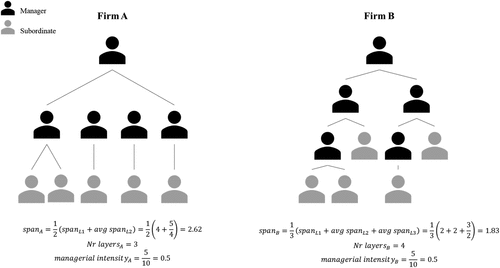
Notes. Two firms with the same number of managers and employees (and thus, comparable levels of aggregate supervisory capacity available in the system) may differ in their managerial span of control and number of vertical layers as shown. Firms A and B have the same numbers of managers (5) and employees (10, including managers and nonmanagers). If we focus on the average span of control, we would conclude that firm A has a higher supervisory capacity than firm B. If we focus on the number of layers, on the other hand, it would look like firm B has a higher supervisory capacity than firm A. However, the two firms rely on the same amount of supervisory capacity as identified by the fraction of managers in the system. This is why we decided to directly measure managerial intensity as it gives a better indication of the total managerial supervisory capacity in the system compared with the alternative measures of average span of control and number of layers.
|

Table 1. Summary of Various Attributes of a Managerial Hierarchy
| Attributes of a managerial hierarchy | Notes | Prior literature | |
|---|---|---|---|
| Managerial intensitya: Ratio of employees in managerial positions to the total number of employees in a firm | The managerial intensity at a point in time reflects the number of managers required for a given size of the organization to achieve a balance between aggregate supervisory capacity and supervisory load. | Pondy (1969), McKinley (1987), Baron et al. (1999) | |
| Number of vertical layers: Count of hierarchical layers to vertically organize managers and subordinates in a firm | Vertical layers measure the distance between the topmost manager (i.e., CEO) and the lowest-level subordinate. It captures the apex manager’s ability to influence (supervise) the lowest-level subordinate. It is not equivalent to managerial intensity as the number of layers can vary holding the number of managers constant and vice versa for the same number of employees (see Figure 1). | Rajan and Wulf (2006), Guadalupe and Wulf (2010), Zhou (2013), Lee (2022) | |
| Span of controlb: Average count of next-level subordinates for managers in a firm | Span of control captures the number of direct subordinates who an individual manager supervises. In a multilayered system, average span of control is typically calculated for each level first and then averaged for the firm across levels. Computed in this way, it may not be correlated with managerial intensity as it depends on whether the number of vertical layers can be correctly estimated for a system (see Figure 1). It can also be poorly correlated with managerial intensity when average span varies across levels. | Rajan and Wulf (2006), Guadalupe and Wulf (2010), Bloom et al. (2014) | |
| Decentralization: The movement of decision-making rights away from a central authority toward subordinates | Delegation: Extent of subordinates’ independent decision making on their own tasks without managerial intervention | Delegation captures decentralization as it focuses on transfer of decision rights away from managers. | Collins et al. (1999), Nickerson and Zenger (2004), Davenport and Leitch (2005), Gambardella et al. (2020) |
| Lateralizationc: Extent of subordinates’ reliance on peer-to-peer interactions for collaboration and mutual adjustment without managerial intervention | Lateralization captures decentralization as it focuses on subordinates’ ability to collaborate instead of relying on managers to coordinate them. | Lee et al. (2023), Reineke et al. (2025); see social skills in Deming and Kahn (2018) for the exact measure of lateralization used in this paper | |
aOne way to measure this is by calculating the ratio of managers to nonmanagers as done in some previous studies (Pondy 1969, McKinley 1987, Baron et al. 1999). However, this approach implies that managers are not expected to contribute to the supervisory load, which we do not assume in this paper. Another possible operationalization of managerial intensity is the count of managers. However, this may lead to incorrect inference if the number of managers increases over time but at a slower rate than that of nonmanagers, implying that the ratio is decreasing even though the count of managers rises.
bIf we were to recalculate managerial intensity as the ratio of managers to nonmanagers, then managerial intensity and average span of control would be the inverse of each other in a two-layered system.
cSee Lee et al. (2023) for a detailed formal analysis of the relationship between subordinates’ ability to self-manage collaboration/conflicts and the required managerial intensity. Also, refer to Williamson (1967) and Csaszar (2021) for other formal discussions on managerial hierarchy and the relationship between span of control and vertical layers.
In this paper, we propose that focusing on managerial intensity (i.e., the number of managers per employee in the organization) and decentralization gives us the clearest insight into the impact of digital technologies on the managerial hierarchy. This is because managerial intensity most directly captures the balance between the aggregate supervisory capacity that managers in the hierarchy provide and the supervision load placed on them by the members of an organization. Other measures, such as the average span of control or the number of layers in the hierarchy, do not have this property as we explain in Table 1. Further, the change in the degree of decentralization following digital technology adoption helps verify the mechanism—increased supervisory capacity or decreased load—through which the technology impacts managerial hierarchy. We further elaborate on these aspects in Section 2.3.
2.2. Technology Adoption and Managerial Hierarchy
A second impediment to understanding the relationship between digital technology adoption and managerial hierarchy is that the former has been measured in rather coarse categories.3
For instance, a significant stream of research examines the adoption of digital technologies and the associated changes in knowledge hierarchies (e.g., Radner 1992, 1993; Garicano 2000; Seshadri et al. 2015), where superiors have greater expertise to solve problems that their subordinates cannot tackle. The focus is on how digital technologies affect the costs of knowledge acquisition and transmission for organizational members. Guadalupe and Wulf (2010) report that firms that invest more in communication technology experience increased managerial levels in their hierarchy. Following the arguments of Garicano (2000), the authors propose that vertical growth in the managerial hierarchy occurs because of decreased knowledge transmission costs, increasing the frequency of communication between managers and subordinates. They do not, however, find any impact of investments in communication technology on the number of direct reports at the chief executive officer (CEO) level in their sample.4
Bloom et al. (2014) find that companies that use communication technologies (e.g., intranets as part of the broad firm’s information technology architecture and security structure) tend to grant their workers less autonomy. They interpret this as consistent with the argument of Garicano (2000) that technology reduces communication costs, thus increasing the connections that workers make to their managers for decision making. However, the authors also find that workers’ autonomy increases and that plant managers enjoy wider spans (i.e., more direct reports) in companies that use information technologies (e.g., enterprise resource planning and computer-aided design/manufacturing systems; part of supply chain management technologies). They argue that unlike communication technologies, information technologies ease subordinates’ ability to acquire knowledge, thus increasing their autonomy and decreasing their reliance on managers. Joseph et al. (2023) develop a similar argument and find that adopting technologies for health information management leads to decentralization in healthcare service delivery. However, Guadalupe and Wulf (2010), Bloom et al. (2014), and Joseph et al. (2023) focus on aggregate technological categories, making it difficult to determine whether digital technologies impact managerial hierarchies by predominantly altering the aggregate supervisory capacity provided by managers or the supervisory load placed on them.
In this paper, we build upon prior work and develop a conceptual framework that allows us to identify the mechanisms through which digital technology adoption impacts the managerial hierarchy. We then show the predictive power of the framework by developing testable propositions for the specific case of CWM technology adoption.
2.3. Digital Technologies, Managerial Intensity, and Decentralization
To enhance our understanding of how digital technologies impact managerial hierarchy, we propose a theoretical framework outlining two mechanisms that relate to two distinct properties of the managerial hierarchy: its aggregate supervisory capacity (i.e., the managers’ ability to supervise subordinates) and supervisory load (i.e., the subordinates’ need for supervision by managers). Consistent with the classic principle of fit in the organization design literature, we assume that firms strive to match the aggregate supervisory capacity with the supervisory load placed on managers (Galbraith 1974, Tushman and Nadler 1978, Lee et al. 2023). Managerial intensity reflects the number of managers that an organization of a given size requires to balance aggregate supervisory capacity to the supervisory load placed on them by the members of the organization.5 Whether this exact equilibrium is attained, it offers a valuable perspective for considering comparative statics in firms’ technology adoption.
Consider two types of digital technologies that an organization might adopt. A “type I” technology primarily increases the supervisory capacity of each manager, enabling them to monitor their subordinates better. A recent survey (Noponen et al. 2024) of over 170 articles on “algorithmic management” reported the usage of monitoring, supervision, and control tools,6 which are examples of this type of technology. Adopting type I technology increases the aggregate supervisory capacity in the system by enhancing each manager’s individual capacity. To regain balance between supervisory capacity and load and assuming no change in the aggregate supervisory load, an organization adopting type I technology would offset this increase in the aggregate supervisory capacity by reducing the number of managers.
A second type of digital technology, “type II,” can primarily decrease the supervisory load that organizational members place on managers by allowing them to either avoid issues altogether when working with each other or resolve them in a peer-to-peer manner that would otherwise have needed escalation to managers. Assuming no change in each manager’s supervisory capacity, the number of managers will reduce following the introduction of a type II technology as well so that the aggregate supervisory capacity matches the diminished supervisory load.
Type II digital technologies that enhance collaboration and lower reliance on managers are consistent with accounts of less hierarchical organizing in corporate settings (e.g., Hamel 2011, Laloux 2014) and contexts, such as open-source software communities and DAOs (Hamel 2011, Hsieh et al. 2018, Malone 2018, Choudhury et al. 2020). For instance, in companies like Valve and Buurtzorg, famous for their decentralized, low-managerial-intensity designs (Laloux 2014, Nandram 2016), technologies are argued to play a prominent role in enabling integration of effort without extensive managerial oversight. In open-source software development, “version control” and “continuous integration” technologies aid in re-engineering workflows and reducing dependencies to minimize conflicts, allowing for large-scale collaboration among organizational members without hierarchical dispute resolution (Srikanth and Puranam 2014, Choudhury et al. 2020). Some authors argue that this is also how blockchain technologies can help create DAOs in contexts that currently feature complex analogic interactions among people (Hsieh et al. 2018).
Importantly, although the total number of managers and therefore, managerial intensity, will reduce in the case of both type I and type II technologies, only technologies of type II will reliably result in decentralization (i.e., the movement of decision-making rights away from the central authority in the firm toward subordinates) (Schneider 2019, Reineke et al. 2025). In the case of type I technologies, the aggregate supervisory capacity in the organization can remain unchanged as the number of managers reduces to offset increases in the individual managers’ supervisory capacity so that decentralization need not occur. Type II technologies, however, must result in decentralization because the aggregate supervisory capacity reduces to match the reduced supervisory load, limiting the need for managers’ involvement in decision making and resulting in collaboration. Bloom et al. (2014) finding that communication technologies in manufacturing plants reduce workers’ autonomy is consistent with the technologies that they study being of type I. In contrast, the information technology solutions in Bloom et al. (2014) are more likely to have been of type II, although the authors do not directly discuss this possibility.
Our framework thus implies that a reduction in managerial intensity on its own does not clarify whether the technology enhances supervisory capacity or reduces supervisory load. However, it is possible to verify the mechanism by examining the degree of decentralization resulting from the technology adoption. If the technology increases subordinates’ ability to manage themselves, thus reducing the supervisory load that they impose on managers, we should observe that the technology adoption is followed by both a reduction in managerial intensity and an increase in decentralization.
2.4. The Case of CWM Technologies
To demonstrate the predictive power of our conceptual framework, we apply it to the case of collaborative work management technologies designed to primarily lower the supervisory load imposed on managers rather than increase managers’ supervisory capacity.
Industry observers highlight the role of CWM technologies in creating task-driven “team hubs” within traditional organizational designs (Drakos et al. 2023). The main promise of these technologies is to empower organizational members, adding control of and visibility into one’s own work and that of peers, especially between the gaps of existing specialized applications (Drakos et al. 2023). These features of CWM technologies are geared toward allowing team members to collaborate directly with one another, reducing the need for managers to intervene. Adopting these technologies could thus allow organizations to reduce their investment in aggregate supervisory capacity by reducing their managerial intensity in order to match the reduced supervisory load created by the technology introduction.7 Further, increased decentralization would accompany CWM technology adoption because managers would exert less supervisory effort in controlling and monitoring their subordinates (who instead are expected to manage themselves collaboratively) once the technology is introduced.
CWM technologies offer a contrast to technologies that primarily increase the capacity of individual managers to monitor and supervise their subordinates (e.g., Kellogg et al. 2020). Rather, CWM technologies can enable subordinates to manage themselves with a reduced need for managerial supervision (e.g., Langfred 2007). Instead of managers overseeing the division of labor within a team and coordinating the resulting work distribution (e.g., Mintzberg 1973, Edwards 1979), CWM technologies can allow subordinates to do this by themselves, thus simultaneously reducing the managerial capacity needed in the aggregate and increasing overall decentralization.
In sum, a testable implication of our theoretical framework is that CWM technologies reduce the supervisory load on managers by improving the subordinates’ capacity to manage their work themselves. Adopting CWM tools should, therefore, lead to a reduction in managerial intensity and an increase in decentralization in organizations as subordinates require less supervision and control from managers following the technology adoption. This is the proposition that we test empirically in this paper.
3. Data and Methods
3.1. Context: Digital CWM Tools
In this paper, we test empirically the relationship between the adoption of CWM tools and two attributes of managerial hierarchy—managerial intensity and the extent of decentralization. The CWM tools that we examine offer features spanning project management, work automation, real-time collaboration and communication with team members, resource and time management, analytics, knowledge management, and reporting, leveraging a well-defined hierarchy of permissions (e.g., comment versus suggest edit versus edit) and integration with other business-relevant applications. A useful analogy is to think of CWM tools as “Google Docs + dashboards.” CWM tools enable users to plan tasks, collaborate with peers performing parallel work through version control, and continuously and mutually observe work activities. With an estimated market of 3.5 billion U.S. dollars (USD) yearly revenue by the end of 2022 (comparable with the market size of other information and communication technologies commonly studied in prior literature e.g., Bloom et al. 2014, such as computer-aided manufacturing solutions with a market size of 2.2 billion USD, computer-aided design solutions with a market size of 10.4 billion USD, and intranet software with a market size of 15.5 billion USD8), CWM tool usage is on the rise in organizations. Online Appendix A1 provides additional details on these tools, including their market share and key features.
We use the Drakos et al. (2023) report (published by Gartner) to identify current CWM tools. We examine the adoption of three CWM tools of the 14 tracked in Drakos et al. (2023): Atlassian JIRA, Smartsheet, and Clarizen. These three tools that we can observe in our sample are widely used compared with the others and cover 39.8%–42.6% of the global market share (computed as the fraction of total revenue manufacturers make from CWM tools). These tools have existed since the early 2000s but gained increasing popularity and adoption over our sample period.
Features of CWM tools are geared toward allowing team members to collaborate in a peer-to-peer mode, with diminished need for managerial authority. The vendors of CWM tools strongly emphasize the technology’s pivotal role in promoting peer-to-peer collaboration and autonomy. We also conducted an independent survey of Prolific full-time employees who regularly interact with coworkers and use digital technologies frequently to verify whether respondents associate CWM tools’ features with enhanced managerial supervisory capacity, reduced supervisory load that subordinates impose on managers, or both. Consistent with our expectation, we find that CWM tools are perceived to primarily enhance subordinates’ capacity for self-management (thus reducing the supervisory load imposed on managers) rather than managerial supervisory capacity. Finally, we also interviewed employees working for companies known to be CWM tool adopters, confirming that users perceive this technology as primarily affecting subordinates’ ability to self-manage. Online Appendix A2 reports complete details about CWM tools and their effect in reducing the need for managerial supervision.9
3.2. Data Sources
To test our proposition, we leverage a sample of 3,017 firms and 20,594 firm-year observations for 2010–2019 that we build by combining employee-level job histories from Revelio Labs, job posting data from Lightcast, and firm-year level data from Compustat.
Revelio Labs (Revelio) provides workforce intelligence data for over 380 million employees collected from social media profiles and resumés since the early 2000s, and these data have seen increasing use in academic research in recent years (e.g., Fadhel et al. 2021, Leung et al. 2021, Li et al. 2022). From Revelio, we collect time-varying employee-level information—their employer’s name, job title, and seniority level in the organization.
Lightcast (previously Burning Glass Technologies) tracks online job postings by organizations over time. For each vacancy, Lightcast collects the job posting’s full text, the posting date, the hiring employer’s name, the expected salary, and the vacancy’s location. Lightcast also leverages the raw job postings to generate variables (such as the occupation corresponding to the advertised position) as defined by the Occupational Information Network (O*NET), the skills required for the job, and the minimum level of education and prior experience needed among others. Researchers have used Lightcast data to study questions in strategy, economics, and accounting. (e.g., Hershbein and Kahn 2018, Gao et al. 2023, Goldfarb et al. 2023). We use the Lightcast employer names to map jobs to firms, the O*NET occupation mapping to differentiate managerial and nonmanagerial jobs, and the job postings’ text and the associated skill taxonomy to measure decentralization and CWM tool adoption.10
Compustat is the source of historical fundamental financial and price data for active and inactive publicly listed organizations available for an average of approximately 11,000 U.S.-based firms per year for the 2010–2019 period that we focus on. Compustat is the data source to estimate firm size, business segment count, and financial performance in our analysis.
3.3. Sample Construction
To construct a suitable sample, we start with the complete Compustat set of publicly listed U.S. firms, which we match to the other data sources. Compustat, Lightcast, and Revelio do not share a common company identifier. Therefore, we first manually match employer names in Compustat with those in Revelio and Lightcast separately.11 We then merge the two matched databases using the Compustat firm’s unique identifier (i.e., gvkey). After matching, we are left with 3,017 firms and 20,594 firm-year observations for 2010–2019,12 corresponding to 26.9 million Lightcast job postings and 203.8 million Revelio employee-year observations. Online Appendix B1 details how the sample reduced through the matching steps. Our approach resulted in a sample of firms that are, on average, larger (i.e., have more employees, more business segments, and higher revenues) than other public firms in Compustat. This is to be expected as larger Compustat firms are more likely to publicly post jobs and maintain a strong social media presence, increasing their visibility in Lightcast and Revelio. Online Appendix B1 also reports key firm size differences between the sampled and other Compustat public firms.
3.4. Dependent Variables
3.4.1. Managerial Intensity.
We measure Managerial intensity as the ratio of the total number of managers employed by the focal firm (from Revelio) to the total number of employees each year (from Compustat). According to the taxonomy developed by Revelio, we count employees mapped to the two highest seniority levels (levels 3 and 4) among four as managers.13 These cover the highest-level managers within the firm (i.e., C-level, functional, and divisional managers) and the layer of middle managers below them, excluding the first layer of supervisors and the lowest level of individual contributors. We only include the highest two layers as managers to be consistent with the O*NET managerial occupation coding, where first-line supervisors are not counted as a managerial occupation (i.e., job group 11). This approach is also consistent with prior research using job titles to code organizational hierarchical levels (Rajan and Wulf 2006, Colombo and Delmastro 2008, Lee 2022).
We believe that our operationalization, which relies on the Revelio seniority taxonomy applied to employees’ individual positions in the sampled firms, is not prone to high rates of omission error. This is because individuals who supervise others are unlikely to be very junior since seniority confers the necessary legitimacy for enforcing authority (Weber 1968, Freeland 2009). However, errors of commission are more likely, for instance, because in some industries, seniority may be based purely on a knowledge hierarchy and does not necessarily entail supervision (e.g., research scientists). To address this issue and further validate our measure of Managerial intensity, we perform additional analyses that we report in Online Appendix B2 and that we briefly summarize in the following paragraphs.
First, we note that the most frequent job titles mapped to layers 3 and 4 in the Revelio seniority taxonomy (i.e., the senior-most levels in the data that we tag as managers to compute Managerial intensity) include keywords such as “vice president,” “director,” and “manager,” demonstrating that higher seniority levels are more likely to capture employees who manage subordinates. Second, we show that higher seniority levels in Revelio encompass larger percentages of job titles associated with managerial keywords from extant research identifying employees who manage subordinates (refer to Lee and Csaszar 2020 and Lee 2022) than lower seniority levels. Third, for job titles in the highest seniority layers without the managerial keywords, we provide examples of a few LinkedIn profiles where the users describe the relevance of managing subordinates for such positions. Consistent with prior studies (e.g., Caliendo et al. 2015), we also show that seniority correlates with higher salaries.
3.4.2. Decentralization.
Decentralization is defined as the movement of decision-making rights away from the central authority. We operationalize it as the employees’ ability to manage themselves rather than rely on managers to do so for them (see Schneider 2019 and Reineke et al. 2025). We conceptualize decentralization through its two direct consequences, i.e., Delegation and Lateralization (e.g., Lee et al. 2023, Reineke et al. 2025). A centralized organization relies on managerial authority to control subordinates’ actions and resolve disputes among them. Conversely, in a decentralized organization, subordinates must acquire skills for making their own decisions (i.e., Delegation) and collaborating with their peers (i.e., Lateralization). Accordingly, we proxy decentralization through the expectations that employers express in job postings about the skills necessary for workers to operate in a regime of delegated and lateralized work (e.g., Lee et al. 2023, Reineke et al. 2025).
We measure Delegation using a dictionary that we apply to Lightcast job descriptions. We begin by constructing a seed dictionary based on prior definitions of delegation (e.g., Collins et al. 1999, Nickerson and Zenger 2004, Davenport and Leitch 2005, Gambardella et al. 2020) along with the closely related constructs of decentralization (the broader construct encompassing delegation and lateralization) and autonomy (as delegation implies more autonomy if tasks can be performed independently).14 Online Appendix B3.1 provides the definitions that we leverage. Subsequently, we use a word2vec embedding model on a random set of 50,000 nonmanagerial job postings from the sampled firms to identify synonyms of the initial seed words (i.e., words in the embedding space with cosine similarity to a given seed word above a predefined threshold) as per Li et al. (2021). Finally, we calculate the average count of the identified keywords from the expanded dictionary across all nonmanagerial job postings by each firm each year, where nonmanagerial postings are those that belong to any O*NET job group other than “managerial occupations” (corresponding to the O*NET job group 11). Online Appendix B3.1 details the final list of delegation keywords obtained by algorithmic expansion.
Next, to operationalize Lateralization, we take an approach that closely follows that adopted in prior research (Deming and Kahn 2018) to measure social skills grounded in the definition provided in the O*NET database. To identify social skills in job postings, we leverage the Lightcast skill taxonomy (Burning Glass Technologies 2019, Goldfarb et al. 2023), which comprises about 17,000 standardized keywords identified across the entire job posting sample over time. Each job posting is associated with a subset of these standardized keywords summarizing the required skills. We identify skills from the Lightcast taxonomy that match the keywords used in prior literature (Deming and Kahn 2018) to measure social skills (i.e., communication, collaboration, teamwork, negotiation, and presentation). Deming and Kahn (2018) selected these keywords as they relate to the main components of social skills highlighted in the O*NET database (i.e., (1) coordination: adjusting actions in relation to others’ actions; (2) negotiation: bringing others together and trying to reconcile differences; (3) persuasion: persuading others to change their minds or behavior; and (4) social perceptiveness: being aware of others’ reactions and understanding why they react as they do). Subsequently, we calculate the average number of such skills for nonmanagerial jobs posted by each firm each year.15 Online Appendix B3.2 reports more details about the construction of the Lateralization measure.
We perform several tests to validate the proposed Delegation and Lateralization measures. Results show that our job posting-based measures of decentralization rely on keywords that are consistent with the theoretical definitions of the two constructs developed in prior research, behave according to theoretical priors on crossfirm heterogeneity in delegation and lateralization, show high correlation with measurements obtained from the O*NET surveys, and are not sensitive to employee mobility dynamics results. Online Appendices B3.1–B3.3 provide complete details about these tests.
Table 1 summarizes the definitions and operationalizations of managerial intensity, delegation, and lateralization constructs.
3.5. Independent Variables
To measure CWM tool adoption, we follow the Goldfarb et al. (2023) method that leverages the skills associated with job postings to identify firms’ adoption of software tools. Drakos et al. (2023) include 14 CWM tools, of which we can track three from the Lightcast skill taxonomy (i.e., “Atlassian JIRA,” “Clarizen,” and “SmartSheet”). This is because the Lightcast taxonomy only includes the most frequently mentioned skills in a given expertise area during the observation window.
We code the dichotomous variable CWM tool adopter as one (“1”) for firms that advertise job postings listing any of these three tools as required skills at any point during our sample period, corresponding to 1,251 firms. For the remaining firms, CWM tool adopter is coded as zero (“0”). Because adoptions do not occur simultaneously, we use the dichotomous variable Post adoption to capture when a firm has adopted any CWM tools that we track. For adopters, we code Post adoption as one (“1”) for all firm-year observations after the first job posting listing any of the three CWM tools above as skills, including the adoption year. Online Appendix B4 reports sample job descriptions listing these CWM tools as skills.
A potential concern is that our operationalization strategy might be prone to omission errors given that (1) firms may not mention the use of CWM tools in job postings and (2) firms could adopt one of the 11 other CWM tools not included in the Lightcast skill taxonomy. To address the first concern, we validate our measure of CWM tool adoption using data from BuiltWith, a platform that aggregates information on technologies used on websites (Burford et al. 2022, Impink 2022, Stroube and Dushnitsky 2023). We find that job postings capture 93% of the CWM tool adopters identified through BuiltWith, suggesting that job postings are a reliable source for measuring CWM tool adoption. To address the second concern, we conduct a direct search for the 14 CWM tools within the job posting text and identify only 119 additional adopters (9.5% of the 1,251 identified using the skill taxonomy). This suggests that the Lightcast skill taxonomy effectively reflects the most prominent tools in the observation window. Online Appendix B4 provides complete details about these tests.
3.6. Control Variables
We control for a set of firm-level time-varying variables to account for observable firm characteristics that may impact Managerial intensity and CWM tool adoption. We control for Firm size (i.e., the logarithm of the total number of employees from Compustat) and Firm segment count (i.e., the count of four-digit North American Industry Classification System, or NAICS, business segments from Compustat that exceed 10% of firm sales) (Choi et al. 2021) to control for structural differentiation within the firm. These two variables help account for the effect that firm size, a proxy for organizational complexity, has on the choice of hierarchical structure (Lee 2022, Lawrence and Poliquin 2023). We also control for Firm return on assets (i.e., Earnings before interest and taxes, or EBIT, divided by total assets as reported in Compustat) to account for firm profitability. Lastly, we control for Firm age (the logarithm of the number of years). We use coarsened exact matching (CEM) on the same control variables to identify matched firms for each CWM tool adopter in our sample. Although not a substitute for random assignment, CEM improves the quality of the counterfactual for CWM tool adoption by accounting for observable firm-level characteristics without assuming a specific functional form for their effects.16
3.7. Estimation Strategy
To estimate the effect of firms’ CWM tool adoption on Managerial intensity and Decentralization, as our main specification, we leverage a stacked difference-in-differences (DID) model17 as adoption occurs gradually across firms. We start with the full sample of 3,017 firms, comprising 1,251 CWM tool adopters and 1,766 nonadopters, and we undertake the following steps as in Gormley and Matsa (2011) and Cengiz et al. (2019). (1) We create a symmetric four-year window (t = −4 to t = 4) around the CWM tool adoption event for each adopter in the sample, (2) we drop adopters from the sample that adopt CWM tools before 2011 and after 2018 to observe at least one year preadoption and postadoption for each adopter, and (3) we “stack” each adopting firm (i.e., a treated unit) with “clean controls” (i.e., firms in the same two-digit NAICS industry as the treated that do not adopt CWM tools in 2010–2019). This approach generates a stacked sample of 2,314 firms, comprising 820 adopters and 1,494 nonadopters, where each nonadopter may appear across different stacks. As the control firms could be significantly different from the treated ones along observables, we additionally use CEM to narrow the list of control firms to those that are similar to the adopting one in the pretreatment period (i.e., t = −4 to t = 0) along the organizational controls described in Section 3.6 (Firm size, Firm segment count, Firm return on assets, and Firm age). Finally, to account for control firms that occur repeatedly in the sample, we weigh each control observation by its inverse frequency within the stack adjusted by the ratio of control firms to treated firms in the sample so that each firm is counted only once in the analysis (Iacus et al. 2012). The final matched sample comprises 622 treated and 941 control firms.
We use an ordinary least squares (OLS) specification model as follows:
4. Results
We start by documenting descriptive trends of CWM tool adoption, reduction in managerial intensity, and increased decentralization for the sampled firms in 2010–2019. We then test the central proposition of this paper and assess the impact of CWM tool adoption on firms’ reduced reliance on managerial intensity and increased decentralization with the stacked DID design.
4.1. Trends: Managerial Intensity, Decentralization, and CWM Tool Adoption in 2010–2019
Figures 2 and 3 show changes in Managerial intensity, indicators of Decentralization, and CWM tool adoption, controlling for firm fixed effects for the total sample of 3,017 firms over 2010–2019. First, we observe that the rate of change in the number of managers and nonmanagers in the sampled firms is different. On average, each subsequent year is associated with a 4.610% increase (p < 0.001) in the number of nonmanagers, but the rise in the number of managers is only 2.836% (p < 0.001) as seen in Figure 2(a). This results in a reduction in Managerial intensity over time. On average, each subsequent year is associated with a 0.306-percentage-point decrease in Managerial intensity (p < 0.001) as seen in Figure 2(b). It is also associated with an increase in the measures of decentralization (both Delegation and Lateralization) within firms. We find that, on average, each subsequent year is related to the advertisement of 0.019 more lateralization skill words per posting (p < 0.001) in nonmanagerial jobs posted by firms, corresponding to 4.117% of the average value in the data, as seen in Figure 2(c). Similarly, each subsequent year is associated with the use of 0.083 more delegation keywords per posting (p < 0.001) in nonmanagerial jobs, corresponding to 3.928% of the average value in the data, as seen in Figure 2(d). In sum, we observe both a reduction in the percentage of managers and an increase in the expectation of nonmanagerial roles to be self-managing (i.e., corresponding to the extent of decentralization in organizations) over time in the sample.
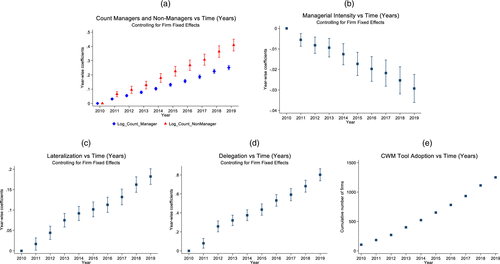
Notes. Panels (a)–(d) plot coefficients and 95% confidence intervals for yearly dummy variables from firm fixed effects specification OLS models, with standard errors clustered at the firm level. (a) Change in (log) Count managers and (log) Count nonmanagers over time. (b) Change in Managerial intensity over time. (c) Change in Lateralization over time. (d) Change in Delegation over time. (e) CWM tool adoption over time.
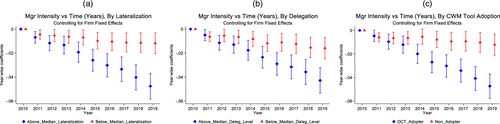
Notes. The figures plot coefficients and 95% confidence intervals for yearly dummy variables from firm fixed effects specification OLS models, with standard errors clustered at the firm level. We use a segmented regression to plot the change in Managerial intensity for the two groups of firms associated with the two conditions (blue lines with diamond-shaped markers vs. red lines with triangle-shaped markers) separately. (a) Change in Managerial intensity over time plotted by the average level of Lateralization in the firm. (b) Change in Managerial intensity over time plotted by the average level of Delegation in the firm. (c) Change in Managerial intensity over time plotted separately for CWM tool adopters and nonadopters.
Second, we find that these trends are accompanied by an increase in firms’ CWM tool adoption. We observe that although only 106 sampled firms (3.523% of the total sample) mention CWM tools in their job postings in 2010, this number increases to 1,251 firms (41.465% of the total sample) in 2019 at a rate of approximately 127 more firms per year as shown in Figure 2(e). This trend suggests that the sampled firms’ decreased managerial intensity and increased decentralization co-occur with their increased CWM tool adoption, which is also confirmed by interview quotes from employees working at firms that adopted CWM tools as reported in Online Appendix A2.
Third, increased Decentralization and CWM tool adoption correlate with a higher decrease in Managerial intensity over time. As reported in Figure 3(a), in the subsample of firms with above-median Lateralization (blue lines with diamond-shaped markers), Managerial intensity decreases by 0.504 percentage points per year (p < 0.001). On the other hand, the subsample below-median Lateralization (red lines with triangle-shaped markers in Figure 3(a)) experiences a per-year reduction of 0.119 percentage points (p = 0.023), significantly lower than that for the above-median subsample (χ2 = 6.550, p = 0.010). Similarly, as reported in Figure 3(b), the subsample with above-median Delegation (blue lines with diamond-shaped markers) shows a decrease in Managerial intensity of 0.458 percentage points per year (p < 0.001). Conversely, the subsample below-median Delegation (red lines with triangle-shaped markers in Figure 3(b)) experiences an increase of 0.156 percentage points per year (p = 0.002), again significantly lower than for the above-median subsample (χ2 = 4.095, p = 0.043).
In Figure 3(c), we observe a similar trend in CWM tool adoption. On average, the subsample of firms that adopt CWM tools over 2010–2019 (blue lines with diamond-shaped markers in Figure 3(c)) experiences a decrease in their Managerial intensity each subsequent year by 0.523 percentage points (p < 0.001). The reduction per year for firms that do not adopt CWM tools (red lines with triangle-shaped markers in Figure 3(c)) is, on the other hand, 0.098 percentage points (p = 0.073), significantly lower than that for the CWM tool adopters (χ2 = 7.589, p = 0.006).
Although correlational, these results indicate that CWM tool adoption is associated with increasing levels of decentralization and decreasing levels of managerial intensity within firms and over time. Online Appendix C1 includes the regression tables underlying Figures 2 and 3.
4.2. Effect of CWM Tool Adoption on Managerial Hierarchy
Next, we use a matched sample approach to analyze the effect of CWM tool adoption on managerial hierarchy. Table 2 reports descriptive statistics and correlations among the variables of interest in the matched sample, which includes 622 treated firms and 941 control firms. The decentralization variables (i.e., Delegation and Lateralization) are highly correlated (0.487), although the keywords used to measure them have no overlap and the two measures capture independent constructs (see Online Appendices B3.1 and B3.2). This suggests that for nonmanagerial jobs, it is difficult to decompose decision rights transfer (i.e., delegation) from peer-to-peer collaboration (i.e., lateralization) as autonomous decision making may be linked to the ability to resolve issues peer to peer (because work is often interdependent).
|
Table 2. Summary Statistics and Correlation Matrix (Matched Sample t = −4 to t = 4)
| Variables | Mean | Std. dev. | Min | Max | (1) | (2) | (3) | (4) | (5) | (6) | (7) |
|---|---|---|---|---|---|---|---|---|---|---|---|
| (1) Managerial Intensity | 0.252 | 0.195 | 0.002 | 0.886 | 1.000 | ||||||
| (2) Lateralization | 0.416 | 0.317 | 0.000 | 1.467 | 0.198 | 1.000 | |||||
| (3) Delegation | 2.084 | 1.205 | 0.000 | 6.191 | 0.116 | 0.487 | 1.000 | ||||
| (4) Firm Size (log Employees) | 7.901 | 1.328 | 4.727 | 11.083 | −0.348 | −0.077 | −0.017 | 1.000 | |||
| (5) Firm Return on Assets | 0.066 | 0.076 | −0.244 | 0.288 | −0.164 | −0.089 | −0.032 | 0.284 | 1.000 | ||
| (6) Firm Age (log Years) | 3.289 | 0.595 | 1.609 | 4.220 | −0.196 | −0.114 | −0.054 | 0.338 | 0.138 | 1.000 | |
| (7) Firm Segment Count | 1.238 | 0.464 | 1.000 | 3.000 | −0.134 | −0.010 | −0.009 | 0.207 | 0.048 | 0.207 | 1.000 |
Notes. All of the summary statistics and correlations are estimated over 64,279 firm-year observations. Std. dev., standard deviation.
Table 3 reports results for the comparison between treated firms and control firms on the matching variables (i.e., Firm size, Firm segment count, Firm age, and Firm return on assets) in the pretreatment period (i.e., t = –4 to t = 0) in both the stacked sample and the matched sample. From panel I of Table 3, treated firms appear to be significantly larger, more diversified, and more profitable than controls. CEM matching helps minimize those differences as evidenced by the t-test results reported in panel II of Table 3. Because we match on coarsened average pretreatment values and the difference in firm size is still statistically significant after matching, we also include matching variables as controls in the main specification.
|
Table 3. Pretreatment (t = −4 to t = 0) Average Summary Statistics, CWM Tool Adopters vs. Nonadopters for Stacked and Matched Samples
| Panel I: Stacked sample | Panel II: Matched sample | |||||||
|---|---|---|---|---|---|---|---|---|
| Nonadopter | CWM tool adopter | Difference | p-value | Nonadopter | CWM tool adopter | Difference | p-value | |
| Firm Size (log Employees) | 7.1566 | 8.3754 | −1.2188 | 0.0000 | 8.0317 | 8.2233 | −0.1916 | 0.0300 |
| Firm Return on Assets | 0.0159 | 0.0699 | −0.0541 | 0.0000 | 0.0666 | 0.0669 | −0.0004 | 0.9350 |
| Firm Age (log Years) | 2.8958 | 2.8926 | 0.0032 | 0.9146 | 2.9381 | 2.9284 | 0.0097 | 0.8247 |
| Firm Segment Count | 1.2861 | 1.3263 | −0.0402 | 0.0561 | 1.2612 | 1.2641 | −0.0028 | 0.9240 |
| Observations | 1,494 | 820 | 941 | 622 | ||||
We examine how adopting CWM tools impacts a focal firm’s reliance on managerial intensity in the following years. Figure 4 and Table 4 report the main regression results on the matched sample. We find that Managerial intensity in CWM tool adopters decreases in the years following the adoption. Model (1) in Table 4 shows that treated firms exhibit, on average, a 0.814-percentage-point lower (p = 0.001) Managerial intensity in postadoption years compared with preadoption years, which corresponds to a 3.230% decrease from the average of this variable in our data (values are reported in Table 2), controlling for changes in the nonadopters. The reduction in Managerial intensity is consistently observed in all of the years postadoption as shown by time-series estimates in Figure 4(a), which plots the coefficients of the interaction term CWM tool adopter × Treated timeline in a regression model otherwise similar to those reported in Table 4, model (1). This finding suggests that CWM tool adoption is associated with tangible structural changes within firms, reducing the number of managers that they rely on as a percentage of the total employee population. In other words, CWM tools appear to effectively substitute for managers in organizations.18
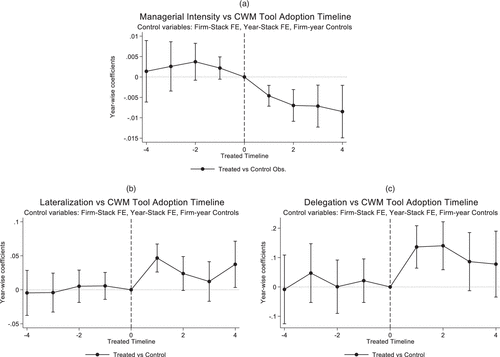
Notes. We use stacked DID specification models. We use CEM to identify control firms for each treated firm using Firm return on assets, Firm segment count, Firm size, and Firm age for matching (#4 cut points). Each control firm observation is weighted by inverse frequency in the stack adjusted by the ratio of total control and treated firms in the sample to match the observation count in the original sample. The panels plot the coefficients for the terms CWM tool adopter × Treated timeline from models that include firm-stack fixed effect, time-stack fixed effect, and firm-level time-varying controls as well as 95% confidence intervals. Standard errors are clustered at the firm level. (a) Change in Managerial intensity in CWM tool adopters (treated) vs. nonadopters (control firms) from four years before adoption to four years after. (b) Change in Lateralization for CWM tool adopters (treated) vs. nonadopters (control firms) from four years before adoption to four years after. (c) Change in Delegation for CWM tool adopters (treated) vs. nonadopters (control firms) from four years before adoption to four years after.
|
Table 4. Main Regression Results: CWM Tool Adoption and Managerial Intensity
| (1) | (2) | (3) | (4) | (5) | (6) | (7) | |
|---|---|---|---|---|---|---|---|
| Managerial Intensity | Managerial Intensity | Managerial Intensity | Managerial Intensity | Managerial Intensity | Managerial Intensity | Managerial Intensity | |
| CWM Tool Adopter # Post adoption | −0.008** | −0.009*** | −0.002+ | −0.017** | −0.012* | −0.066* | −0.0002+ |
| (0.003) | (0.002) | (0.001) | (0.006) | (0.005) | (0.027) | (0.000) | |
| Description | Main analysis | Alternative explanations: Agile, cloud, competition, task complexity, culture, skill count, and job count as additional control variables | Alternative measure: Revelio total employees used for calculations | Alternative measure: Managers include second lowest level from Revelio taxonomy | Alternative measure: Recent Revelio classification taxonomy | Alternative measure: Nonmanagers, instead of total employees, used | Alternative measure: Managers only include senior managers listed in Boardex |
| Additional controls | No | Yes | No | No | No | No | No |
| Firm-year controls | Yes | Yes | Yes | Yes | Yes | Yes | Yes |
| CEM | Yes | Yes | Yes | Yes | Yes | Yes | Yes |
| Firm-stack FE | Yes | Yes | Yes | Yes | Yes | Yes | Yes |
| Time-stack FE | Yes | Yes | Yes | Yes | Yes | Yes | Yes |
| Observations | 64,279 | 64,279 | 64,279 | 64,279 | 64,279 | 64,279 | 64,279 |
| No. of firms | 1,563 | 1,563 | 1,563 | 1,563 | 1,563 | 1,563 | 1,563 |
| Adjusted R2 | 0.979 | 0.979 | 0.982 | 0.976 | 0.974 | 0.876 | 0.905 |
Notes. We use a stacked DID specification for each regression in the table above. We use CEM to identify control firms for each treated firm using Firm return on assets, Firm segment count, Firm size, and Firm age for matching (#4 cut points). Each control firm observation is weighted by inverse frequency in the stack adjusted by the ratio of total control and treated firms in the sample to match the observation count in the original sample. The regression results report the effect of CWM tool adoption on the level of Managerial intensity (number of managers divided by the total number of employees). The "Description" row describes the model specification/measures used as the dependent variable for each model. Standard errors clustered at the firm level are in parentheses. FE, fixed effect.
+p < 0.1;*p < 0.05; **p < 0.01; ***p < 0.001.
To assess the mechanisms underlying the changes in managerial intensity, we examine whether CWM tool adopters also experience changes in decentralization (both Lateralization and Delegation). Figure 4 and Table 5 report these regression results. First, we observe that CWM tool adoption is associated with higher reliance on Lateralization. From model (1) in Table 5, we see that CWM tool adopters exhibit, on average, 0.030 more lateral social skill words per posting (p = 0.007) postadoption as compared with the preadoption period, which corresponds to a 7.195% increase from the average value of this variable in our data, adjusting for any changes in the control firms. Figure 4(b) shows a sharp rise in Lateralization from the year immediately before adoption (i.e., t = 0) to the year of adoption (i.e., t = 1), which lends further support to our main argument that using CWM tools increases firms’ requirement for nonmanagers’ skills to resolve conflicts and collaborate laterally.
|
Table 5. Main Regression Results: CWM Tool Adoption and Decentralization
| (1) | (2) | (3) | (4) | (5) | (6) | (7) | (8) | (9) | (10) | |
|---|---|---|---|---|---|---|---|---|---|---|
| Lateralization | Delegation | Lateralization | Delegation | Lateralization | Delegation | Lateralization | Delegation | Lateralization | Delegation | |
| CWM Tool Adopter # Post adoption | 0.030** | 0.108** | 0.017+ | 0.086** | 0.117** | 0.020* | 0.031** | 0.121** | 0.027* | 0.098** |
| (0.011) | (0.037) | (0.010) | (0.030) | (0.044) | (0.010) | (0.011) | (0.039) | (0.011) | (0.036 | |
| Description | Main analysis | Alternative explanations: Agile, cloud, competition, task complexity, culture, skill count, and job count as additional control variables | Alternative measure: Calculated using word2vec model (Lateralization) and using only the initial seed list (Delegation) | Alternative measure: Calculated excluding IT jobs | Alternative measure: Calculated excluding jobs indicating CWM tools | |||||
| Additional controls | No | No | Yes | Yes | No | No | No | No | No | No |
| Firm-year controls | Yes | Yes | Yes | Yes | Yes | Yes | Yes | Yes | Yes | Yes |
| CEM | Yes | Yes | Yes | Yes | Yes | Yes | Yes | Yes | Yes | Yes |
| Firm-stack FE | Yes | Yes | Yes | Yes | Yes | Yes | Yes | Yes | Yes | Yes |
| Time-stack FE | Yes | Yes | Yes | Yes | Yes | Yes | Yes | Yes | Yes | Yes |
| Observations | 64,279 | 64,279 | 64,279 | 64,279 | 64,279 | 64,279 | 64,279 | 64,279 | 64,279 | 64,279 |
| No. of firms | 1,563 | 1,563 | 1,563 | 1,563 | 1,563 | 1,563 | 1,563 | 1,563 | 1,563 | 1,563 |
| Adjusted R2 | 0.641 | 0.689 | 0.720 | 0.802 | 0.713 | 0.638 | 0.631 | 0.668 | 0.641 | 0.689 |
Notes. We use a stacked DID specification for each regression in the table above. We use CEM to identify control firms for each treated firm using Firm return on assets, Firm segment count, Firm size, and Firm age for matching (#4 cut points). Each control firm observation is weighted by inverse frequency in the stack adjusted by the ratio of total control and treated firms in the sample to match the observation count in the original sample. The regression results report the effect of CWM tool adoption on the level of decentralization as measured by Lateralization and Delegation. The "Description" row describes the model specification/measures used as the dependent variable for each model. Standard errors clustered at the firm level are in parentheses. FE, fixed effect.
+p < 0.1; *p < 0.05; **p < 0.01; ***p < 0.001.
Similarly, we also find that Delegation in CWM tool adopters increases in the years following adoption. Model (2) in Table 5 shows that adopters use, on average, 0.108 more delegation keywords per posting (p = 0.003) postadoption as compared with in the preadoption period, which corresponds to a 5.197% increase from the average value of this variable in our data, adjusting for any changes in the control firms during the same period. The rise in Delegation primarily occurs during the year of CWM tool adoption and remains approximately constant as shown in Figure 4(c). Online Appendix C2 includes the regression table underlying Figure 4. This result suggests that using CWM tools also increases the likelihood of nonmanagers making decisions without their managers’ active supervision.19
Overall, the joint increase in the decentralization measures for CWM tool adopters strengthens our confidence in the mechanism behind the relationship between CWM tool adoption and managerial intensity. Adopting digital technologies, like CWM tools, is associated with changes in the skills of nonmanagerial roles, suggesting that these technologies increase the expectation for nonmanagers to be more self-sufficient in their tasks (Delegation) and those involving peer collaboration (Lateralization). These changes co-occur with decreased Managerial intensity, suggesting that the expected subordinates’ skill enhancement is associated with a decrease in the load on (and thus, the number of) managers.
Finally, we conduct analyses to test the robustness of our results to pretreatment trends. Table C2.1 in Online Appendix C2 (which reports the regression table underlying Figure 4) shows that the pretreatment (i.e., t = −4 to t = 0) dummy variables are not statistically different from zero, supporting the parallel trends assumption. Additionally, our results are robust to the pretrends and honestdid tests recommended by Roth (2022) and Rambachan and Roth (2023). We also use a cross validation approach to predict alternative posttreatment counterfactuals for managerial hierarchy variables and find that actual average values are statistically different from the predicted ones. These results (detailed in Online Appendix C3) strengthen our confidence in the finding that CWM tool adoption has a statistically significant relationship with the managerial hierarchy variables that pretreatment trends cannot predict.
5. Robustness Tests
5.1. Alternative Specifications
As CWM tool adoption is an endogenous firm choice, we also replicate the analysis using preadoption Peer CWM tool adoption as an instrument that may lead firms to adopt CWM tools (e.g., refer to Acemoglu et al. 2019, 2022 for similar applications). We find that peer-driven CWM tool adoption is associated with a 6.152-percentage-point lower (p = 0.029) Managerial intensity in postadoption years, adjusting for changes in the control firms. Although this approach does not substitute for randomization, it provides some support for a causal interpretation of the CWM tool adoption effect on managerial intensity. Online Appendix D1 offers complete details about this analysis.
Next, we check the robustness of our results to alternative DID specifications. We employ the doubly robust estimator by Callaway and Sant’Anna (2021), which uses weighted averaging to calculate the average treatment effect across treatment cohorts (Roth et al. 2023). We also perform a stacked DID regression on the total stacked sample, where each treatment firm is matched to all control firms in the same two-digit NAICS industry code.20 Additionally, we perform a stacked DID regression on the CEM-matched sample with different sets of control variables. Overall, the direction of results is robust across models at conventional levels of statistical significance as detailed in Online Appendices D2 and D3.
5.2. Alternative Measurement
We test the validity of our results by using five alternative operationalizations for Managerial intensity. First, we use the firm’s total employee count from Revelio instead of Compustat as in the main analysis. Second, we include the second-lowest layer of employees as managers instead of the first two layers only as done in the main analysis.21 Third, we classify employees as managers and nonmanagers using a more recent release of the Revelio seniority taxonomy, which attempts to allocate job titles to a seven-layered classification (instead of the original four). Fourth, to replicate the alternative operationalization in Baron et al. (1999), we compute Managerial intensity by excluding managers from the total employee count. Lastly, we use the top manager count from Boardex to calculate Senior management intensity, testing the robustness of our measure to alternative data sources. Our results are robust to relying on these alternative measurements (Table 4, models (3)–(7)).
We also perform robustness tests for decentralization. First, we test the sensitivity of our results to the choice of dictionary keywords. Models (5) and (6) in Table 5 report results using an algorithmically expanded list of keywords for Lateralization and the initial seed list for Delegation. Second, we operationalize decentralization from alternative data sources (i.e., Glassdoor.com and O*NET) to address the possibility that job posting-based measures may not reflect firms’ actual decentralization levels. Online Appendices D4.1–D4.3 report full details. Our results are robust to these alternative operationalizations. We also note that the job posting data that we leverage enable the construction of time-varying measures of decentralization, which is not possible with any of the alternative data sources that we use for validation and robustness.
For the job postings-based measures of Lateralization and Delegation, our results may be driven by changes in the job posting composition year on year at the firm level rather than changes in the nature of the same jobs over time. Indeed, we observe that IT jobs (O*NET code 15—computer and mathematical occupations) significantly increase, predominantly in the first year after CWM tool adoption. Online Appendix D4.4 reports job posting composition changes by O*NET job group. Such a change might increase delegation and lateralization if the average decentralization is higher for IT jobs than for others. We, therefore, perform the DID analysis excluding such IT job posts to address this concern and find that the original results still hold (Table 5, models (7) and (8)). We also exclude all job postings that mention CWM tools (“Jira,” “Clarizen,” and “Smartsheet”) when measuring average Lateralization and Delegation. Again, we find similar results to those in the main analysis (Table 5, models (9) and (10)).
As a last step, we assess the robustness of the results to alternative operationalizations of CWM tool adoption. First, to address the concern of possible omission errors, we measure CWM tool adoption using job text instead of the Lightcast skill taxonomy, and our results remain qualitatively unchanged. Online Appendix D5.1 reports details of these analyses. Second, to assess robustness to commission errors (as we consider a firm to be a CWM tool adopter if it posts even one job with CWM tools listed as a skill), we use alternative thresholds to indicate CWM tool adoption: (1) a minimum of two jobs (i.e., the 25th percentile number of job postings indicating CWM tool adoption in our firm-year sample) and (2) a minimum of four jobs (i.e., the median number of job postings indicating CWM tool adoption in our firm-year sample). Results are robust to these alternative thresholds as shown in Online Appendix D5.2.
5.3. Alternative Explanations
A concern with our results may be that alternative technologies/technology management practices (e.g., agile development and cloud computing) reduce reliance on managerial hierarchy. It is possible that CWM tools do not directly impact hierarchy and may have been adopted as part of agile management best practices. Additionally, as the CWM tools that we track are all cloud based, it could also be the case that adopting cloud computing instead of the specific tools that we measure reduces managerial hierarchy. To assess this concern, we control for the firm’s adoption of agile methodology and cloud computing22 when testing the impact of CWM tool adoption on managerial hierarchy and report the robustness of our results (Table 4, model (2) and Table 5, models (3) and (4)).23 In Online Appendices D6 and D7, we also examine the direct effect of Agile adoption and Cloud adoption on managerial hierarchy.24
We also conduct two placebo tests to rule out the concern that adopting alternative technologies drives our results. First, we examine the adoption of an alternative technology not expected to affect intrafirm collaboration. For this, we selected Tableau, a visualization software with no direct collaboration benefits, and we find that Tableau adoption does not affect the managerial hierarchy attributes that we study. Second, we randomly assign CWM tool adoption to firms in our sample and see that Placebo CWM tool adoption does not affect managerial hierarchy. These findings reinforce our conviction about the impact of CWM tools on managerial hierarchy. Given that we maintain the same distribution of adoption years for this placebo test as in the original sample, this analysis also weakens concerns that the observed effects are driven by the specific period that we study. Online Appendices D8 and D9 report the full results of these analyses. Finally, as shown in Online Appendix D10, we also rule out that other collaborative tools potentially similar to CWM tools25 (i.e., the WSC and CC tools described in Section 3.1 and Online Appendix A3) drive our results.26
Finally, we examine the possible impact of other firm- or industry-level changes on our results. Prior research studies the effect of Industry competitive intensity (Guadalupe and Wulf 2010), firm-level Task complexity (Zhou 2013), and firm-level Cultural strength (Marchetti and Puranam 2022) on managerial hierarchy. We construct measures for each of these variables using data from Compustat and Glassdoor, and we include them as additional controls to our main specification. Online Appendix D11 describes the operationalization of these measures and their relationship with Managerial intensity. Moreover, to account for changes in job posting intensity over time, which may affect the decentralization measures, we also control for Average skill count and log Count jobs. Results remain robust to all of these additional controls (Table 4, model (2) and Table 5, models (3) and (4)).
6. Supplementary Analyses
We examine three questions to better understand how CWM adoption relates to changes in managerial hierarchy. (1) How do CWM tools affect the components of managerial intensity (i.e., the count of managerial versus nonmanagerial staff)? (2) How do CWM tools affect managerial skill sets over time? (3) Are there interindustry differences in the effects of CWM tool adoption?
6.1. How Do CWM Tools Affect the Components of Managerial Intensity?
Different organizational dynamics may drive the negative relationship that we observe between managerial intensity and CWM tool adoption. To tease those out, we separately check how the two workforce components of Managerial intensity (i.e., the number of managers and the number of nonmanagers) evolve. A decrease in Managerial intensity could occur in different ways. (1) The number of managers stays constant, whereas the number of nonmanagers increases. (2) The number of managers declines, whereas the number of nonmanagers increases. (3) Both the number of managers and the number of nonmanagers increase, but the latter is at a higher rate. (4) Both the number of managers and the number of nonmanagers decline, but the former is at a higher rate. For CWM tool adopters, we find that the number of nonmanagers grows significantly more than the number of managers. However, the two groups exhibit comparable growth rates for those firms that do not adopt CWM tools. Figure 5 and Online Appendix E1 report full details for this analysis. We observe a similar pattern in stacked DID regressions with these two variables as outcomes (Table 6, models (1) and (2)). This result suggests that CWM tool adopters in our sample scale their nonmanagerial staff without increasing the number of managers at the same rate. In Online Appendix E2, we also show that CWM tool adoption explicitly increases managers’ outflows, which can coexist with firm growth. Together, these results support the argument that CWM tools substitute for managers in organizations.
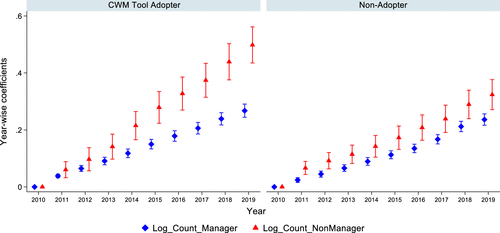
Notes. To plot the coefficients of yearly dichotomous variables, we use firm fixed effects specification OLS models, with standard errors clustered at the firm level. We use a segmented regression to plot the coefficients of the terms (log) Count managers (in blue with diamond-shaped markers) and (log) Count nonmanagers (in red with triangle-shaped markers) for the two groups of firms associated with the two conditions (CWM tool adopters vs. nonadopters) separately. The figures include 95% confidence intervals.
|
Table 6. Supplementary Analyses
| (1) | (2) | (3) | (4) | (5) | (6) | (7) | (8) | (9) | (10) | |
|---|---|---|---|---|---|---|---|---|---|---|
| Log Count [Managers] | Log Count [Nonmanagers] | Avg Skill Count [Manager] | Avg Skill Count [Nonmanagers] | Managerial Intensity [Manufacturing] | Managerial Intensity [Services] | Lateralization [Manufacturing] | Lateralization [Services] | Delegation [Manufacturing] | Delegation [Services] | |
| CWM Tool Adopter # Post adoption | 0.039*** | 0.182*** | −0.414* | 0.173 | −0.005+ | −0.013* | 0.029* | 0.04+ | 0.018 | 0.249*** |
| (0.008) | (0.019) | (0.207) | (0.129) | (0.003) | (0.006) | (0.012) | (0.024) | (0.044) | (0.075) | |
| Firm-year controls | Yesa | Yesa | Yes | Yes | Yes | Yes | Yes | Yes | Yes | Yes |
| CEM | Yes | Yes | Yes | Yes | Yes | Yes | Yes | Yes | Yes | Yes |
| Firm-stack FE | Yes | Yes | Yes | Yes | Yes | Yes | Yes | Yes | Yes | Yes |
| Time-stack FE | Yes | Yes | Yes | Yes | Yes | Yes | Yes | Yes | Yes | Yes |
| Observations | 64,194 | 64,279 | 64,279 | 64,279 | 47,465 | 14,079 | 47,465 | 14,079 | 47,465 | 14,079 |
| No. of firms | 1,556 | 1,563 | 1,563 | 1,563 | 763 | 562 | 763 | 562 | 763 | 562 |
| Adjusted R2 | 0.997 | 0.977 | 0.581 | 0.708 | 0.979 | 0.972 | 0.590 | 0.632 | 0.629 | 0.687 |
Notes. We use a stacked DID specification for each regression in the table above. We use CEM to identify control firms for each treated firm using Firm return on assets, Firm segment count, Firm size, and Firm age for matching (#4 cut points). Each control firm observation is weighted by inverse frequency in the stack adjusted by the ratio of total control and treated firms in the sample to match the observation count in the original sample. All models include firm-stack fixed effect (FE), time-stack FE, and the absolute values of the matching variables as controls. Standard errors clustered at the firm level are in parentheses.
aFirm Size (log Employees) has been excluded in this regression.
+p < 0.1; *p < 0.05; **p < 0.01; ***p < 0.001.
6.2. How Do CWM Tools Affect Managerial Skill Sets over Time?
Although in the main analysis we assess the change in employees’ skills in nonmanagerial roles, we also examine skill changes in managerial roles, leveraging the job skills categorization by Deming and Kahn (2018).27 For each skill category, we calculate the change in (1) the absolute number of skills (Figure 6(a)) and (2) the percentage of skills (Figure 6(b)) tagged to managerial job postings post CWM tool adoption for treated firms, adjusting for any changes in the control firms.
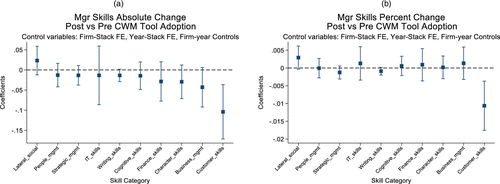
Notes. We use stacked DID specification models. We use CEM to identify control firms for each treated firm using Firm return on assets, Firm segment count, Firm size, and Firm age for matching (#4 cut points). Each control firm observation is weighted by inverse frequency in the stack adjusted by the ratio of total control and treated firms in the sample to match the observation count in the original sample. The figures plot the coefficients for the terms CWM tool adopter × Post adoption from models that include firm-stack fixed effect (FE), time-stack fixed effect, and firm-level time-varying controls as well as 95% confidence intervals. Standard errors are clustered at the firm level. (a) Change in managerial skill count by skill category in CWM tool adopters (treated) from preadoption to postadoption adjusting for nonadopters (control). (b) Change in managerial skill percentage by skill category in CWM tool adopters (treated) from preadoption to postadoption adjusting for nonadopters (control firms).
First, the number of skills tagged to managerial job postings decreases after CWM tool adoption (β = −0.414, p = 0.045) (Table 6, model (3)). On the other hand, for nonmanagers, the absolute skill count remains unchanged as observed in Table 6, model (4) (β = 0.173, p = 0.181). Second, the proportion of lateral social skills for managerial job postings increases after CWM tool adoption (β = 0.003, p = 0.079) (Figure 6(b)). Overall, the results indicate that (1) following CWM tool adoption, firms tend to seek to hire managers with fewer skills—a pattern specific to managerial roles and consistent with reduced reliance on managers—and that (2) demand for lateral social skills postadoption also increases for managerial positions. The second result is consistent with recent research showing that managerial roles have evolved toward higher lateral social skills and lower supervision (Zhang 2023). Online Appendix E3 provides further details and presents the regression tables for the panels in Figure 6. Together with results from Section 6.1, these findings suggest that CWM tools partially substitute for managers. These tools substitute for the supervisory role of managers and thus, are associated with reduced growth in managerial head count (as seen in Section 6.1). However, they are also associated with a simultaneous shift in managerial skills toward higher lateral collaboration (as seen here).
6.3. Are There Interindustry Differences in the Effects of CWM Tool Adoption?
We also check for crossindustry heterogeneity of our results, which was unobservable in the main firm fixed effect models. A large fraction of the sample covers two industries: Manufacturing (two-digit NAICS codes 31–33; comprising 763 firms or 48.8% of our sample) and Services (two-digit NAICS codes 51–56; comprising 562 firms or 35.9% of our sample). We perform the stacked DID analysis separately for the two industries and compare the CWM tool adopter × Post adoption term coefficients in the regression model. CWM tool adoption has a statistically significant effect on managerial hierarchy within both industry groups (Table 6, models (5)–(10)). However, the average effect on Managerial intensity and Delegation is stronger for Services firms than for Manufacturing firms (the crossindustry difference is positive but not statistically significant for Lateralization as reported in Online Appendix E4).
7. Discussion and Conclusion
7.1. Discussion
Although managerial hierarchies provide a widely accepted solution to the problem of integration of effort in organizations (March and Simon 1958, Chandler 1962, Foss and Klein 2022), digital technologies have the potential to alter this institution in powerful ways, either reinforcing its hierarchical and centralized aspects (e.g., Kellogg et al. 2020) or diminishing its relevance and necessity (e.g., Hamel 2011, Laloux 2014, Malone 2018). However, the specific technologies that have these distinct effects remain unclear, and empirical evidence to distinguish them is limited.
In this paper, we take steps toward clarifying the theoretical mechanisms through which adopting digital technologies alters two aspects of a firm’s managerial hierarchy: managerial intensity and decentralization. If the technology aids managers in supervising their subordinates, it enhances their capacity to monitor and control, thereby increasing the aggregate supervisory capacity in the organization beyond what is necessary. Holding the demand for managerial supervision constant, this implies that the technology can lead to lower managerial intensity but without increasing worker autonomy and decentralization. Alternatively, if the technology enhances the subordinates’ ability to manage themselves and collaborate effectively, it can decrease managerial supervisory load, resulting in both lower managerial intensity and greater decentralization. To demonstrate the predictive power of the framework that we propose, we examine the adoption of collaborative work management tools (i.e., a class of digital technologies that aid subordinates in self-managing), thus reducing their reliance on managers rather than increasing managers’ supervisory capacity. We show that CWM tool adoption is followed by a reduction in managerial intensity (3.2%) and an increase in decentralization characterized by both increased delegation (5.2%) and lateralization (7.2%).
With this paper, we make several contributions to academic research and the world of practice. First, we contribute to the organization design literature by answering a question that has fascinated many: whether technology can substitute for managers. Our results indicate that the answer is “yes” for CWM technologies and that this effect is accompanied by increased decentralization. Second, we provide theoretical clarity on the mechanisms through which digital technologies that influence how we work may affect organizational structures by either increasing individual managers’ supervisory capacity or reducing the supervisory load that their subordinates place on them. The effects (as we have argued) are not symmetric for decentralization. Third, we advance prior empirical organizational design research by relying on a larger and deeper sample than what was used before because prominent papers have relied on single-firm data (e.g., Lee and Puranam 2017), single-industry data (e.g., Raveendran 2020, Eklund 2022), specific sectors (e.g., Rajan and Wulf 2006, Guadalupe and Wulf 2010, Zhou 2013), or cross-sectional data (e.g., Bloom et al. 2014, Lee 2022) for analyses. Finally, our research offers a refined managerial framework for evaluating the implications of technology adoption on managerial hierarchies. Specifically, we demonstrate the importance of distinguishing between the effects of technology adoption on managerial supervisory capacity and subordinates’ supervisory load.
7.2. Limitations
There are several limitations to our empirical approach; therefore, our findings should be interpreted with caution. Although we have attempted to isolate the effect of CWM tool adoption on managerial hierarchy using several statistical approaches (i.e., CEM, DID, and instrumental variable), we cannot be confident that our estimates are causal as we cannot randomize CWM tool adoption. Technology adoption is an endogenous firm choice that may depend on unobserved factors directly affecting the managerial hierarchy.
The construct operationalizations that we use have constraints, which arise inevitably from attempts to measure subtle organizational attributes in large samples. Although we undertook several steps to check the validity and reliability of our measures, we acknowledge the possibility of imperfections. First, Managerial intensity is derived from a taxonomy built by Revelio that allocates employees to layers of seniority. Our ability to observe managerial roles in organizations depends on the likelihood that their employees have social media profiles and update them quickly when changing jobs. However, this problem should be less severe for within-firm year-on-year comparisons, which we perform in this paper by using firm fixed effects in all our regression models, as long as the propensity of managers to maintain and update social media profiles remains consistent over time for the firms in our sample.
Additionally, although firms may differ in the number of vertical layers, it is the partition into managerial and nonmanagerial layers that matters for our analysis. Online Appendix B2 discusses omission and commission errors, and it also reports additional analyses to address these concerns. Although the classification of employees into managers and nonmanagers may vary between firms, we also believe that the inference that we make by analyzing within-firm changes by including firm-fixed effects in our models is reasonable and represents systematic changes in the organizational structure based on CWM tool adoption. We also demonstrate that Revelio’s hierarchical layers strongly conform to the expected salary distribution (e.g., Caliendo et al. 2015), thereby increasing our confidence in the taxonomy.
Second, the validity of our decentralization measures relies on the assumption that job postings represent the actual role design within firms. However, this may be violated if the job roles that firms advertise do not accurately reflect the actual organizational structure and if the firm does not hire employees to fill those roles. Mitigating these concerns, we found that interfirm variation exists in the decentralization measures (Online Appendices B3.1 and B3.2), indicating that job postings are not purely promotional (i.e., intended to attract the best candidates to their organization versus competitors) but rather reflect firm-specific characteristics in role design. We also found that the average values for these text-based measures moderate changes in managerial intensity over time (Section 4.1), showing that they have a strong correlation with other organizational measures. In Online Appendices B3.1 and B3.2, we further validate our decentralization measures and show that they correlate with alternative measures from other databases that also reflect firm-level decentralization.
Third, our measure for CWM tool adoption assumes that mentioning a specific technology in job postings is a credible signal of its adoption within the organization’s technology stack (Goldfarb et al. 2023). We validate the measure by manually reviewing a subset of job postings (refer to Online Appendix B4 for examples) and showing that it strongly correlates with technology adoption as measured using data from BuiltWith, an aggregator that tracks the use of technologies on websites (refer to Online Appendix B4). Similarly, our results are robust to operationalizing CWM tool adoption by tracking all 14 CWM tools in the Gartner report by Drakos et al. (2023) (instead of the three main CWM tools that we focus on) from the job posting text (refer to Online Appendix D5.1). Furthermore, we believe that given the similarities in features across different tools (as per Table A1.1 in Online Appendix A1), it is unlikely that the relationship between CWM tool adoption and managerial intensity would reverse for tools other than the ones that we track.
Crossfirm heterogeneity is another important factor to consider when interpreting our results. Firms may vary in their propensity to advertise jobs online for reasons spanning from a preference for internal development of human resources to slowdowns in hiring because of financial constraints. These factors may also be cyclical and affected by trends specific to some geographies and industrial sectors. Similarly, firms may vary in their employees’ propensity to have social media profiles. Again, this heterogeneity may also be influenced by time-, industry-, and location-specific factors. Finally, firms smaller in size may be more limited in their ability to reduce managerial intensity following CWM tool adoption than larger ones. To address this, we control for these factors in the regression specifications that we use, and therefore, our within-firm estimates show how the average firm evolves over time. We further conduct heterogeneity analyses of estimates and find interindustry differences, which we report in Section 6.3. Finally, our sampling approach may limit the generalizability of our results. A firm is sampled only if featured across Compustat, Lightcast, and Revelio. Thus, the firms in our sample are larger than the other public firms tracked in Compustat.
7.3. Future Research
Building upon the results of this paper, future research could explore several possible avenues. First, as we suggest in the main theoretical argument, after adopting certain digital technologies, a reduction in managerial intensity can occur accompanied by greater centralization if the technology enhances the managers’ ability to supervise subordinates. Future research could empirically test this claim by focusing on technologies enhancing managers’ monitoring, supervision, and control.
The framework that we have developed in this paper can also be useful for assessing the impact of other emerging technologies. For instance, if artificial intelligence (AI) tools enhance managerial supervisory capacity, they may reduce managerial intensity while increasing the concentration of power among fewer managers, with no improvement in worker autonomy. On the other hand, if AI acts as a form of collaborative technology, primarily reducing the supervisory load, its effect should be similar to that observed in this study. It is also possible that AI increases the supervisory load on managers or diminishes managerial capacities given the complexities that it surfaces. This is likely true at least in the early stages of adoption of complex new technologies, highlighting the importance of deep longitudinal data. In these cases, we might expect to see an increase in managerial intensity. Our analysis offers a comprehensive approach to systematically investigating these possibilities.
Third, we demonstrate that CWM technology adoption is associated with an increase in decentralization; however, our job postings-based measures do not enable us to ascertain whether increased decentralization is accompanied by higher worker autonomy, empowerment, and satisfaction. Although we expect that to be the case on average, future research could empirically test this proposition. Fourth, future studies could further explore the links between organizational design and human capital using our measures. It is generally recognized that the structure and sorting of employees (based on skills and culture) interact to produce organizational performance and behavior (e.g., Schein 1985, Bresnahan et al. 2002, Harrison and Carroll 2006). However, large-sample analysis on this matter is rare. Lastly, our reliance on the supervisory capacity-load match assumes that firms adopt technological and structural decisions with the goal of optimizing future performance—a premise that future research could test by examining the performance effects directly.
7.4. Conclusion
Although many examples of less hierarchical organizations, such as Valve, FAVI, Morningstar, and Buurtzorg (Hamel 2011, Laloux 2014, Felin 2015, Askin et al. 2016), have been used to support the claim that technology can enable less hierarchical organizing, others have argued that the effects of digital technology can be to increase the extent of hierarchy and centralization in organizations. A clear theoretical understanding of the mechanisms through which digital technologies affect the managerial hierarchy (as well as systematic large-scale evidence) has been scarce. Our research offers a general framework to think about the implications of any digital technology on attributes of the hierarchy, such as managerial intensity and centralization, and it also demonstrates that collaborative work management tools play a role in reducing managerial intensity and increasing decentralization in organizations.
The authors thank the department editor, the associate editor, and five anonymous reviewers for their constructive guidance during the review process. The authors are also indebted to Luchi He, Ekin Ilseven, Hyunjin Kim, Catherine Magelssen, Victoria Sevcenko, Metin Sengul, Freek Vermeulen, Maciej Workiewicz, and Nety Wu as well as seminar participants at INSEAD; London Business School; University of California, Irvine; Michigan Ross; Stanford Graduate School of Business; the 2023 Strategic Management Society Annual Conference; the 2023 People and Organizations Conference; the 2023 National University of Singapore First Cut Seminar; the 2023 Organizational Design Community Research in Progress Webinar; the 2023 India Strategy Conference; the 2024 Columbia Management Analytics and Data Conference; and the 2024 Strategy Science Conference for their valuable comments and suggestions. The authors also thank Marie Girschewski and Shengwu Sun for their research assistance. Part of this work was carried out while P. Gulati was affiliated with INSEAD and A. Marchetti was affiliated with London Business School, whose support and resources are gratefully acknowledged. Equal contributions were made by P. Gulati and A. Marchetti, who share first authorship; their names are listed in alphabetical order.
1 These are classified as collaborative work management tools by Gartner (“Market guide for collaborative work management,” published January 4, 2023, identification number G00761298; see https://www.gartner.com/document-reader/document/4022601).
2 Organizations can entail multiple and different hierarchies at the same time: Of knowledge and skill (e.g., Radner 1992, 1993; Garicano 2000; Seshadri et al. 2015), of task/decision interdependence (e.g., Baldwin and Clark 2000, Rivkin and Siggelkow 2007), and of containment and nesting (e.g., Simon 1962, Ravasz and Barabási 2003); these may not coincide with managerial hierarchies.
3 Another stream of literature examines the links between organizations’ production technology and managerial hierarchy. This research examines the complexity and decomposability of organizational activity systems—either by measuring the interrelationships between business segments (Zhou 2013), occupation classes within organizations (Lawrence and Poliquin 2023), or by directly measuring product characteristics (Lee 2022). See also the theoretical arguments from Sanchez and Mahoney (1996), Baldwin and Clark (2000), and Ethiraj and Levinthal (2004).
4 Guadalupe and Wulf (2010) also measure investment in information technology (IT), which is even broader (hardware, software, and communication), and they do not find any significant effect on layers or span. They use Bureau of Economic Analysis data at the two-digit standard industrial classification (SIC) level to measure information technology and communications technology investment.
5 Although prior work excludes managerial count from the number of employees, a multilevel hierarchical arrangement of managers implies that lower-level managers can, in theory, also contribute to the supervisory load (Lee et al. 2023). We, therefore, study the ratio of managers to total number of employees, with robustness checks on measures that exclude managers from the denominator.
6 Examples of such tools include ActivTrak, Hubstaff, Insightful, Teramind, and TimeDoctor (see https://www.gartner.com/reviews/market/employee-productivity-monitoring-software; accessed April 15, 2024).
7 It is important to note that a decrease in managerial intensity may not only come from eliminating managers in a firm. It could also come from higher growth in the number of nonmanagers versus managers as, for example, seen in Penrose (1959).
8 For computer-aided manufacturing, see https://bit.ly/3XxvqQZ (accessed March 11, 2026). For computer-aided design, see https://tinyurl.com/5n8ntd22 (accessed March 11, 2026). For intranet, see https://tinyurl.com/t9ws5xtn (accessed March 11, 2026). Estimates are converted to those at the end of 2022 given the size and compounded annual growth rates in the reports.
9 Other digital technologies exist that enhance firms’ collaboration besides CWM tools, such as workstream collaboration (WSC) technologies (i.e., products that deliver a conversational workspace based on persistent chat divided into channels and that commonly include real-time meeting capabilities, basic file sharing, and possibly basic task coordination; e.g., Cisco Webex, Google Chat, Microsoft Teams, and Slack) and content collaboration (CC) technologies (i.e., products that provide an easy way for employees to use and share content both inside and outside the organizations; e.g., Dropbox, Egnyte, Google Drive, and Microsoft 365). However, as detailed in Online Appendix A3, CC and WSC technologies offer only a subset of the CWM technologies’ features. We thus focus on CWM technologies and exclude WSC and CC technologies because CWM technologies offer the most complete suite of tools for subordinates’ self-management. More details about these technologies are available in “Market guide for workstream collaboration” (published March 30, 2021, identification number G00736832; see https://www.gartner.com/document-reader/document/3999988 (accessed April 10, 2024)) and “Market guide for content collaboration tools” (published August 3, 2021, identification number G00728309; see https://www.gartner.com/document-reader/document/4004294 (accessed April 10, 2024)).
10 Revelio also offers job postings data. Using the Revelio job posting data would have been ideal to avoid matching observations across different data sources (which we discuss in Section 3.3). However, this is not possible in the context of this study because the Revelio job postings data are only available starting from 2019 (the end year of our sampling window).
11 We use the following employer name variables for the manual matching across the data sets: conml from Compustat, canonemployer from Lightcast, and employername from Revelio.
12 Lightcast job posting data are available until 2020, but we limited our sample to 2019 to avoid the confounding effect of the Covid-19 pandemic.
13 In this paper, we use the 2022 version of the Revelio data. Since then, a new version of the data has been released with an updated seniority taxonomy that includes seven layers. As we describe in Section 5.2 and Online Appendix B2, we test the validity of our measure and the robustness of our results when we leverage the newer version of the Revelio seniority taxonomy to operationalize managerial intensity.
14 The Delegation seed keywords identified using prior research include ambiguous, autonomy, judgement, make decision, minimal direction, minimal supervision, problem-solving, resolve problem, take initiative, unstructured, and work independently.
15 This operationalization follows the Zhang (2023) distinction between top-down supervisory and lateral collaboration skills. Compared with skills such as supervision, mentoring, and leadership, the ones that we focus on for lateralization (i.e., communication, collaboration, teamwork, negotiation, and presentation skills) are horizontal skills for lateral collaboration. We note that we measure these for nonmanagerial jobs.
16 Table B5.1 in Online Appendix B5 summarizes all of the variables in the study and their operationalizations in the main analysis and robustness tests.
17 For the main specification, we prefer the stacked DID approach to the doubly robust estimator (Callaway and Sant’Anna 2021) because of its flexible implementation; it can be implemented as a simple two-way fixed effect model with recast data (see http://www.gormley.info/phd-notes.html, chapter 7) and matching and triple-interaction terms. We use the doubly robust estimator as a robustness check.
18 Consistent with this, we also find that CWM tool adoption increases the outflow of individuals in managerial roles (Online Appendix E2).
19 We highlight that although adopting CWM tools leads to a stable decrease in managerial intensity over time (Figure 3(a)), adopting these tools has a less lasting effect on decentralization. This may be driven by the changing nature of the job postings that we leverage to operationalize decentralization. It may be the case that the higher levels of delegation and lateralization that we observe shortly after the CWM tool adoption may become the standard for the focal organization, which thus ceases to mention those as part of job postings overtly. It may also be the case that higher levels of decentralization become the standard in a given industry when a large-enough number of firms adopts CWM tools, thus reducing the likelihood for firms to require it explicitly in their job postings, independent of whether they adopt CWM tools or not.
20 In Online Appendix D3, we also include results for matching CWM tool adopters and nonadopters on the same four-digit NAICS industry code.
21 In a four-layer hierarchy, the second-lowest layer is the first layer of supervisors above individual contributors (Caliendo et al. 2015), who may also have conflict resolution and decision-making duties, which are both considered under the purview of managerial jobs.
22 Measures for agile and cloud adoption are constructed using job postings that require “agile development” and “cloud computing” as skills based on the Lightcast taxonomy.
23 We cannot perfectly distinguish agile/cloud technologies from CWM tools. However, controlling for their adoption when testing the effect of CWM tool adoption on managerial hierarchy accounts for both cases where agile technologies are an omitted variable (i.e., a different set of tools from CWM tools, whose adoption is correlated with CWM tool adoption and a decrease in managerial intensity) or a mediator (i.e., a mechanism through which CWM tools impact managerial hierarchy). We further note that although the effect of CWM tool adoption on Managerial intensity is mostly unchanged when controlling for agile and cloud computing adoption (Table 4, model (1) versus model (2)), adding these controls reduces the effect of CWM tool adoption on Decentralization (Table 5, model (1) versus model (3) and model (2) versus model (4)).
24 Although we do not find any statistically significant change in Managerial intensity and Delegation because of agile adoption, we observe that Lateralization increases year on year. The increase is statistically significant but does not appear to be affected by adopting the agile methodology as the rate of change is comparable before and after the adoption. We consider the increasing Lateralization consistent with the general shift that firms have recently experienced from bureaucratic to more collaborative organizational cultures (Zhang 2023).
25 All results reported in Section 5 about CWM tool adoption are statistically significant with a p-value of 0.1 or lower, whereas results for placebo tests and tests for alternative technology classes are not, as expected. Detailed results are available in the Online Appendix.
26 This further strengths the validity of our operationalization of CWM technology adoption, showing that CWM tools differ from potentially similar collaborative tools, such as CC and WSC tools.
27 We make three changes to the Deming and Kahn (2018) skill categories. (1) We expand the project management category, labeling it business management to include additional related skills. (2) We combine the computer and software categories into one IT skills category. (3) We include an additional Strategic management skill category to cover skills that are related to business/corporate strategy (as these are not covered in any other category). Additional details are available in Online Appendix E3.
References
- (2022) Eclipse of rent-sharing: The effects of managers’ business education on wages and the labor share in the US and Denmark. Preprint, submitted March 21, http://dx.doi.org/10.2139/ssrn.4059303.Google Scholar
- (2019) Democracy does cause growth. J. Political Econom. 127(1):47–100.Crossref, Google Scholar
- (2016) Tony Hsieh at Zappos: Structure, culture and radical change. INSEAD case study, Harvard University, Cambridge, MA.Google Scholar
- (2022) How much should we trust staggered difference-in-differences estimates? J. Financial Econom. 144(2):370–395.Crossref, Google Scholar
- (2000) Design Rules: The Power of Modularity (MIT Press, Cambridge, MA).Crossref, Google Scholar
- (1999) Building the iron cage: Determinants of managerial intensity in the early years of organizations. Amer. Sociol. Rev. 64(4):527–547.Crossref, Google Scholar
- (2019) The architecture of attention: Group structure and subsidiary autonomy. Strategic Management J. 40(10):1610–1643.Crossref, Google Scholar
- (2014) The distinct effects of information technology and communication technology on firm organization. Management Sci. 60(12):2859–2885.Link, Google Scholar
- (2002) Information technology, workplace organization, and the demand for skilled labor: Firm-level evidence. Quart. J. Econom. 117(1):339–376.Crossref, Google Scholar
- (2016) Different views of hierarchy and why they matter: Hierarchy as inequality or as cascading influence. Acad. Management J. 59(4):1265–1289.Crossref, Google Scholar
- (2022) How ecosystem structure affects firm performance in response to a negative shock to interdependencies. Strategic Management J. 43(1):30–57.Crossref, Google Scholar
Burning Glass Technologies (2019) Mapping the genome of jobs: The Burning Glass skills taxonomy. Working paper, Burning Glass Technologies, Boston.Google Scholar- (2017) GitHub: Exploring the space between boss-less and hierarchical forms of organizing. J. Organ. Design 6(1):10.Crossref, Google Scholar
- (2015) The anatomy of French production hierarchies. J. Political Econom. 123(4):809–852.Crossref, Google Scholar
- (2021) Difference-in-differences with multiple time periods. J. Econom. 225(2):200–230.Crossref, Google Scholar
- (2019) The effect of minimum wages on low-wage jobs. Quart. J. Econom. 134(3):1405–1454.Crossref, Google Scholar
- (1962) Strategy and Structure: Chapters in the History of the Industrial Enterprise (MIT Press, Cambridge, MA).Google Scholar
- (2019) The comparative statics of optimal hierarchies. Amer. Econom. J. Microeconomics 11(2):1–25.Crossref, Google Scholar
- (2021) Using machine learning to revisit the diversification–performance relationship. Strategic Management J. 42(9):1632–1661.Crossref, Google Scholar
- (2020) GitLab: Work where you want, when you want. J. Organ. Design 9:23.Crossref, Google Scholar
- (1999) Programmable automation and the locus of decision-making power. J. Management 25(1):29–53.Google Scholar
- (2008) The Economics of Organizational Design: Theoretical Insights and Empirical Evidence (Palgrave Macmillan, New York).Crossref, Google Scholar
- (2021) A note on calculating the average span of control. J. Organ. Design 10:83–84.Google Scholar
- (2005) Circuits of power in practice: Strategic ambiguity as delegation of authority. Organ. Stud. 26(11):1603–1623.Crossref, Google Scholar
- (2018) Skill requirements across firms and labor markets: Evidence from job postings for professionals. J. Labor Econom. 36(S1):S337–S369.Crossref, Google Scholar
- (2023) Market guide for collaborative work management. Accessed September 4, 2024, https://www.gartner.com/document-reader/document/4022601.Google Scholar
- (1979) Contested Terrain: The Transformation of the Workplace in the Twentieth Century (Basic Books, New York).Google Scholar
- (2022) The knowledge‐incentive tradeoff: Understanding the relationship between research and development decentralization and innovation. Strategic Management J. 43(12):2478–2509.Crossref, Google Scholar
- (2004) Modularity and innovation in complex systems. Management Sci. 50(2):159–173.Link, Google Scholar
- (2021) Accounting for employment impact at scale. Harvard Business School Accounting and Management Unit Working Paper No. 22–018, Harvard Business School, Boston. Google Scholar
- (1949) General and Industrial Administration (Pitman, New York).Google Scholar
- (2015) Valve corporation: Strategy tipping points and thresholds. Preprint, submitted January 31, http://dx.doi.org/10.2139/ssrn.2558471.Google Scholar
- (2022) Why Managers Matter: The Perils of the Bossless Company (PublicAffairs, New York).Google Scholar
- (2009) The social and legal bases of managerial authority. Bus. History 57(4):194–217.Google Scholar
- (1974) Organization design: An information processing view. Interfaces 4(3):28–36.Link, Google Scholar
- (2020) Managing autonomy in industrial research and development: A project-level investigation. Organ. Sci. 31(1):165–181.Link, Google Scholar
- (2023) Do internal control weaknesses affect firms’ demand for accounting skills? Evidence from U.S. job postings. Accounting Rev. 98(3):203–228.Crossref, Google Scholar
- (2000) Hierarchies and the organization of knowledge in production. J. Political Econom. 108(5):874–904.Crossref, Google Scholar
- (2023) Could machine learning be a general purpose technology? A comparison of emerging technologies using data from online job postings. Res. Policy 52(1):104653.Crossref, Google Scholar
- (2011) Growing out of trouble? Corporate responses to liability risk. Rev. Financial Stud. 24(8):2781–2821.Crossref, Google Scholar
- (2010) The flattening firm and product market competition: The effect of trade liberalization on corporate hierarchies. Amer. Econom. J. Appl. Econom. 2(4):105–127.Crossref, Google Scholar
- (2005) Adaptation in vertical relationships: Beyond incentive conflict. Strategic Management J. 26(5):415–440.Crossref, Google Scholar
- (2011) First, let’s fire all the managers. Harvard Bus. Rev. 89(12):48–60.Google Scholar
- (2006) Culture and Demography in Organizations (Princeton University Press, Princeton, NJ).Crossref, Google Scholar
- (2018) Do recessions accelerate routine-biased technological change? Evidence from vacancy postings. Amer. Econom. Rev. 108(7):1737–1772.Crossref, Google Scholar
- (2023) The future of the web? The coordination and early‐stage growth of decentralized platforms. Strategic Management J. 44(3):829–857.Crossref, Google Scholar
- (2018) Bitcoin and the rise of decentralized autonomous organizations. J. Organ. Design 7(1):14.Crossref, Google Scholar
- (2012) Causal inference without balance checking: Coarsened exact matching. Political Anal. 20(1):1–24.Crossref, Google Scholar
- (2022) General-purpose technologies and differentiation: evidence from startup cloud adoption. Preprint, submitted September 6, http://dx.doi.org/10.2139/ssrn.4200675.Google Scholar
- (2023) Capacity through comprehension: Information processing, mutual understanding, and organization design in healthcare. Working paper, University of California, Irvine.Google Scholar
- (2020) Algorithms at work: The new contested terrain of control. Acad. Management Ann. 14(1):366–410.Crossref, Google Scholar
- (2023) Corporate proximity and product market reentry: The role of corporate headquarters in business unit response to product failure. Acad. Management J. 66(4):1209–1232.Crossref, Google Scholar
- (2023) The dual challenge of search and coordination for organizational adaptation: How structures of influence matter. Organ Sci. 34(2):851–869.Link, Google Scholar
- (2014) Reinventing Organizations: A Guide to Creating Organizations Inspired by the Next Stage in Human Consciousness (Nelson Parker, Millis, MA).Google Scholar
- (2007) The downside of self-management: A longitudinal study of the effects tf conflict on trust, autonomy, and task interdependence in self-managing teams. Acad. Management J. 50(4):885–900.Crossref, Google Scholar
- (1967) Organization and Environment (Division of Research, Harvard Business School, Boston).Google Scholar
- (2023) The growth of hierarchy in organizations: Managing knowledge scope. Strategic Management J. 44(13):3155–3184.Crossref, Google Scholar
- (2022) The myth of the flat start‐up: Reconsidering the organizational structure of start‐ups. Strategic Management J. 43(1):58–92.Crossref, Google Scholar
- (2020) Cognitive and structural antecedents of innovation: A large-sample study. Strategy Sci. 5(2):71–97.Link, Google Scholar
- (2017) Self-managing organizations: Exploring the limits of less-hierarchical organizing. Res. Organ. Behav. 37:35–58.Crossref, Google Scholar
- (2017) Incentive redesign and collaboration in organizations: Evidence from a natural experiment. Strategic Management J. 38(12):2333–2352.Crossref, Google Scholar
- (2023) Scaling nonhierarchically: A theory of conflict‐free organizational growth with limited hierarchical growth. Strategic Management J. 44(12):3042–3064.Crossref, Google Scholar
- (2021) Heterogeneous gender effects of a firm’s environment social governance efforts on employee turnover. Acad. Management Proc., ePub ahead of print July 26, https://doi.org/10.5465/AMBPP.2021.15713abstract.Google Scholar
- (2018) When two bosses are better than one: Nearly decomposable systems and organizational adaptation. Organ. Sci. 29(2):207–224.Link, Google Scholar
- (2022) Employee turnover and firm performance: Large-sample archival evidence. Management Sci. 68(8):5667–5683.Link, Google Scholar
- (2021) Measuring corporate culture using machine learning. Rev. Financial Stud. 34(7):3265–3315.Crossref, Google Scholar
- (2006) Exploring the structure of complex software designs: An empirical study of open source and proprietary code. Management Sci. 52(7):1015–1030.Link, Google Scholar
- (2018) Superminds: The Surprising Power of People and Computers Thinking Together (Little, Brown Spark, New York).Google Scholar
- (1958) Organizations (John Wiley & Sons, Hoboken, NJ).Google Scholar
- (2022) Organizational cultural strength as the negative cross-entropy of mindshare: A measure based on descriptive text. Humanities Soc. Sci. Comm. 9(1):135.Crossref, Google Scholar
- (2023) Managers matter less than we think: How can organizations function without any middle management? J. Organ. Design 12(1–2):19–25.Crossref, Google Scholar
- (1987) Complexity and administrative intensity: The case of declining organizations. Admin. Sci. Quart. 32(1):87–105.Crossref, Google Scholar
- (1973) Nature of Managerial Work (Prentice-Hall, Hoboken, NJ).Google Scholar
- (1979) The Structure of Organizations: A Synthesis of the Research (Prentice-Hall, Hoboken, NJ).Google Scholar
- (2016) Organizational Innovation by Integrating Simplification: Learning from Buurtzorg Nederland (Springer, Cham, Switzerland).Google Scholar
- (2004) A knowledge-based theory of the firm—The problem-solving perspective. Organ. Sci. 15(6):617–632.Link, Google Scholar
- (2024) Taylorism on steroids or enabling autonomy? A systematic review of algorithmic management. Management Rev. Quart. 74:1695–1721.Google Scholar
- (1959) The Theory of the Growth of the Firm (Oxford University Press, Oxford, UK).Google Scholar
- (1969) Effects of size, complexity, and ownership on administrative intensity. Admin. Sci. Quart. 14(1):47–60.Crossref, Google Scholar
- (2018) The Microstructure of Organizations (Oxford University Press, Oxford, UK).Crossref, Google Scholar
- (1992) Hierarchy: The economics of managing. J. Econom. Literature 30(3):1382–1415.Google Scholar
- (1993) The organization of decentralized information processing. Econometrica 61(5):1109–1146.Crossref, Google Scholar
- (2006) The flattening firm: Evidence from panel data on the changing nature of corporate hierarchies. Rev. Econom. Statist. 88(4):759–773.Crossref, Google Scholar
- (2023) A more credible approach to parallel trends. Rev. Econom. Stud. 90(5):2555–2591.Crossref, Google Scholar
- (2003) Hierarchical organization in complex networks. Phys. Rev. E Statist. Nonlinear Soft Matter Phys. 67(2 Part 2):026112.Crossref, Google Scholar
- (2020) Seeds of change: How current structure shapes the type and timing of reorganizations. Strategic Management J. 41(1):27–54.Crossref, Google Scholar
- (2020) The role of interdependence in the micro-foundations of organization design: Task, goal, and knowledge interdependence. Acad. Management Ann. 14(2):828–868.Crossref, Google Scholar
- (2025) Decentralization in organizations: A revolution or a mirage? Acad. Management Ann. 19(1):298–342.Google Scholar
- (2022) Get Better at Flatter: A Guide to Shaping and Leading Organizations with Less Hierarchy (Palgrave Macmillan, Cham, Switzerland).Crossref, Google Scholar
- (2007) Patterned interactions in complex systems: Implications for exploration. Management Sci. 53(7):1068–1085.Link, Google Scholar
- (2022) Pretest with caution: Event-study estimates after testing for parallel trends. Amer. Econom. Rev. Insights 4(3):305–322.Crossref, Google Scholar
- (2023) What’s trending in difference-in-differences? A synthesis of the recent econometrics literature. J. Econometrics 235(2):2218–2244.Crossref, Google Scholar
- (1996) Modularity, flexibility, and knowledge management in product and organization design. Strategic Management J. 17(S2):63–76.Crossref, Google Scholar
- (1985) Organizational Culture and Leadership (Jossey-Bass Publishers, San Francisco).Google Scholar
- (2019) Decentralization: An incomplete ambition. J. Cultural Econom. 12(4):265–285.Crossref, Google Scholar
- (2024) When being managed by technology: Does algorithmic management affect perceptions of workers’ creative capacities? Acad. Management Discoveries 10(3):375–392.Crossref, Google Scholar
- (2015) Are flatter organizations more innovative? Hierarchical depth and the importance of ideas. Working paper, Indian School of Business, Mohali, India.Google Scholar
- (2023) Algorithmic interactions in open source work. Inform. Systems Res. 34(2):744–765.Link, Google Scholar
- (2008) Here Comes Everybody: The Power of Organizing Without Organizations (Penguin Books, New York).Google Scholar
- (1947) Administrative Behavior (Simon and Schuster, New York).Google Scholar
- (1962) New developments in the theory of the firm. Amer. Econom. Rev. 52(2):1–15.Google Scholar
- (2014) The firm as a coordination system: Evidence from software services offshoring. Organ. Sci. 25(4):1253–1271.Link, Google Scholar
- (2011) “Voluntweeters” self-organizing by digital volunteers in times of crisis. Proc. SIGCHI Conf. Human Factors Comput. Systems (CHI ’11) (Association for Computing Machinery, New York), 1071–1080.Google Scholar
- (2023) Built with BuiltWith: A technical note. Preprint, submitted June 10, http://dx.doi.org/10.2139/ssrn.4475309.Google Scholar
The Economist (2015) Digital Taylorism. (September 10), https://www.economist.com/business/2015/09/10/digital-taylorism.Google Scholar- (1978) Information processing as an integrating concept in organizational design. Acad. Management Rev. 3(3):613–624.Crossref, Google Scholar
- (1968) Economy and Society: An Outline of Interpretive Sociology (University of California Press, Berkeley, CA).Google Scholar
- (1967) Hierarchical control and optimum firm size. J. Political Econom. 75(2):123–138.Google Scholar
- (2023) The changing role of managers. Amer. J. Soc. 129(2):439–484.Google Scholar
- (2013) Designing for complexity: Using divisions and hierarchy to manage complex tasks. Organ. Sci. 24(2):339–355.Link, Google Scholar

