


Competitiveness of Entrepreneurs and Salaried Workers
Abstract
We measure the willingness to compete of entrepreneurs and salaried workers in an experiment. Participants can choose between a piece rate and a tournament scheme in either private or public. We find that in the private condition, entrepreneurs are less competitive than salaried workers, but in the public condition, this ordering is reversed. Survey data suggest that perceived norms of appropriate behavior, along with beliefs about the instrumental value of competitiveness for professional success, can explain why entrepreneurs are more competitive when decisions are publicly observable. We also find that the latter condition improves the quality of experimental decisions.
This paper was accepted by Yan Chen, behavioral economics and decision analysis.
Funding: Financial support from the Deutsche Forschungsgemeinschaft (German Research Foundation) under Germany´s Excellence Strategy [Grant EXC 2126/1–390838866], the University of Cologne through the Hans Kelsen Prize and the Austrian Science Fund through the Special Research Area [Grant SFB F63] is gratefully acknowledged.
Supplemental Material: The online appendix and data are available at https://doi.org/10.1287/mnsc.2023.4838.
1. Introduction
It is almost impossible to think of entrepreneurial activities without competition (Kirzner 2015) because entrepreneurial processes almost always take place within a competitive market environment. However, empirical evidence on how entrepreneurs compare with salaried workers in terms of competitive orientation is rather scant, meaning that it cannot be taken for granted that entrepreneurs are per se more competitive than nonentrepreneurs. In fact, competitiveness may even be a context-dependent trait, aligning with perceived norms of appropriate behavior in an entrepreneurial setting: such norms, combined with social image and reputational concerns that arise when competitiveness is observed by other market participants, suggest that entrepreneurs’ competitive choices may be different when being observed in the public than when making decisions privately.
In this study, we aim to contribute to the literature by providing evidence on entrepreneurs’ competitiveness, the influence of observability on competitive choices, and the link to professional behavior of entrepreneurs in their markets. This multifaceted examination of how competitiveness and entrepreneurship are related under different conditions can offer important insights into entrepreneurial activity, addressing factors that may predict entrepreneurial success, innovation, or pricing strategies (Urbig et al. 2020). It also investigates how competitiveness may depend on perceptions about appropriate behavior in different roles, that is, as either entrepreneur or nonentrepreneur.
We use an established experimental paradigm (Gneezy et al. 2009) to measure competitiveness of entrepreneurs and salaried workers under incentivized and controlled conditions. Importantly, in addition to eliciting competitiveness of both groups of subjects, we let them take their decisions in two different settings: a private setting, in which their choice between a piece rate and a tournament-based payment scheme remains private information, and a public setting in which this decision is made known to all participants in a session. Through this exogenous manipulation, we can identify a causal effect of introducing observability on the competitive choices of entrepreneurs and salaried workers. We complement the analysis of experimental choices with rich survey data that allows us to better understand the choices of entrepreneurs and salaried workers. Finally, we collect data on the entrepreneurs’ activities (concerning innovation and pricing strategies) and their business profits and, thus, can link their experimental choices on competitiveness to their behavior and performance on the market.
Whereas personality traits of entrepreneurs are studied extensively in the literature (Baum and Locke 2004, Zhao and Seibert 2006, Rauch and Frese 2007, Zhao et al. 2010), empirical work on many other traits and preferences has lagged behind because of measurement difficulties in the field. Tools in experimental economics provide methods to quantify a host of behavioral traits and outcomes. Taking advantage of a commonly used experimental method to measure one’s willingness to compete, our study contributes to the growing literature on entrepreneurship in behavioral and experimental economics by examining the relationship between entrepreneurship and competitiveness at an individual level. We use a laboratory-in-the-field experiment conducted with a sample of entrepreneurs and salaried workers in Vietnam, a relatively poor developing country. Given the importance of entrepreneurship for development in poorer parts of the world and the relative scarcity of data on entrepreneurial activity in developing (rather than developed) countries (Lerner and Schoar 2010), we believe studies that present evidence from samples such as ours are of particular value to understanding entrepreneurial behavior.
Our main results can be summarized as follows: in the private condition, entrepreneurs are less likely to choose the competitive payment scheme compared with salaried workers. Hence, our data reject the notion that entrepreneurs are generally more competitive than salaried workers. Yet, when choices are made public, this pattern from the private condition is reversed. When choices are publicly observable by others, entrepreneurs increase and salaried workers decrease their willingness to compete, resulting in a significantly different response to treatment and a six percentage point higher rate of competitive choices of entrepreneurs compared with salaried workers. Interestingly, we find that experimental participants make better choices in the public condition, on average, in the sense of reducing the frequency at which they compete too much or too little with respect to their chances of winning. Finally, we link competitiveness as measured in the experiment to several aspects of entrepreneurial behavior and success (such as their innovation activities, their pricing strategies, or their operating profits) but fail to find any significant associations.
Using data from an additional postexperimental survey, we suggest a potential explanation for why competitiveness depends on whether choices are observable by others. We argue that choices in our experiment can be explained by perceptions regarding the extent to which competitive behavior is considered appropriate and important for professional success for each of the two samples. We find that being competitive is seen as much more appropriate in a business context than in salaried work in relative terms and argue that experimental participants may align their behavior with this norm when their choices are being observed.
Our paper relates to previous work that studies economic decision making and preferences of entrepreneurs. When comparing entrepreneurs’ risk preferences to those of employed individuals, many papers do not find significant differences (e.g., Macko and Tyszka 2009, Burmeister-Lamp et al. 2012). Koudstaal et al. (2016), however, show that entrepreneurs exhibit a lower risk aversion than managers and employed workers but that this can be explained by differences in loss aversion. Holm et al. (2013, 2017) show that entrepreneurs in China are more willing to take strategic risks compared with employed people, whereas there are no differences with respect to nonstrategic risks. Batsaikhan (2017) reports that successful entrepreneurs are more trusting in a strategic context than less successful entrepreneurs. Cooper and Saral (2013) examine entrepreneurs’ and students’ willingness to form a team for collaboration and find that entrepreneurs are less likely to join teams than nonentrepreneur subjects. Batsaikhan and Putterman (2019) show that entrepreneurs are better at sustaining high levels of cooperation in a repeated social dilemma experiment than a sample of student subjects in Mongolia. Similarly, Holm et al. (2020) find that Chinese CEOs make more efficient and prosocial choices in cooperation and coordination games than a control group so that CEOs earn higher payoffs.
The papers most closely related to our main research question are Berge et al. (2015b) and Urbig et al. (2020). Berge et al. (2015b) present a laboratory experiment with small-scale entrepreneurs in Tanzania and show that the willingness of entrepreneurs to compete in a quiz task correlates with aspects of their field behavior, such as investment and employment decisions. Berge et al. (2015b) report suggestive evidence of a positive correlation between competitive behavior and profits (which we also find, on average, even though the pattern fails significance).1 Although their experiment is run in a similar setting as ours, it has a different research focus (on the relation between competitiveness and field behavior) and does not compare competitive behavior of entrepreneurs to nonentrepreneurial professional groups. Moreover, they do not investigate the influence of observability on competitive choices of entrepreneurs. We consider the findings from Berge et al. (2015b) as complementary, however, in particular because they provide strong support for the capacity of experimentally elicited competitive choices to predict behavior in an entrepreneurial context of a developing country.
Urbig et al. (2020) is the only paper of which we are aware that addresses the relationship between entrepreneurship and individual competitiveness. A key finding in their paper is that entrepreneurs (as well as those aspiring to become entrepreneurs in the future) are more likely to select into competition in a laboratory-in-the-field experiment in shopping malls in Germany. Whereas these findings may, at first sight, appear to contradict ours, it appears that the experimental design in Urbig et al. (2020) looks more akin to our public treatment than the private treatment. In fact, whereas they used separating walls, a crucial feature of their design is that each participant was supervised—and, therefore, also directly observed—by one experimenter. This close observability in a 1:1 interaction setting is likely to have triggered the same kind of concerns that underlie the patterns we observe in our public treatment.2 So both papers, Urbig et al. (2020) and ours, share the same insight that, when decisions about competition are closely observable by others, entrepreneurs are more willing to compete than nonentrepreneurs. Our paper adds the novel insight that this relationship is reversed when choices are made in private, thus refuting the notion that entrepreneurs are more competitive per se, and it relates competitive behavior to a host of survey measures.
On a broader perspective, our paper is also related to the large literature on how to measure competitiveness (Gneezy et al. 2003) and gender differences in the willingness to compete (Niederle and Vesterlund 2007). Using real effort tasks in experimental studies, this literature documents that women are usually less willing to compete than men (e.g., Gneezy et al. 2009, Andersen et al. 2013, Datta Gupta et al. 2013, Flory et al. 2015, Saccardo et al. 2018) and this difference emerges already early on in life (Sutter and Glätzle-Rützler 2015). Behavior in experiments on competitiveness is also shown to correlate with important aspects of real-world behavior, such as educational choices (college dropout rates or choice of educational track) and income (Buser et al. 2014, 2021; Almås et al. 2016; Reuben et al. 2020), but except for Berge et al. (2015b), this literature has not yet studied the competitive attitudes of entrepreneurs.3
Finally, our treatment variation between public and private conditions (when making the decision whether to compete) is related to a large literature on the effects of observability in experimental social sciences. Observability is shown to affect behavior across a wide range of circumstances, which include, among others, donations and prosocial behavior in general (Dufwenberg and Muren 2006, Lacetera and Macis 2010, Lambarraa and Riener 2015, Basic and Quercia 2022), cooperative behavior (Andreoni and Petrie 2004, Yoeli et al. 2013), or the willingness to engage in third-party punishment (Banerjee et al. 2015). Regarding competitive behavior, we are aware of one study that relates observability to competition entry choices in a laboratory study. Buser et al. (2017) show that making the competition entry choices public (by asking participants in the laboratory to stand up and announce their choice between a piece rate and a tournament-based payment scheme for their performance in a real-effort task) has only a small and insignificant effect on the willingness to compete among male and female participants. Our paper is different because we study competitive choices of entrepreneurs and compare them to nonentrepreneurs, and moreover, we relate entrepreneurs’ competitive behavior to their business practices and also to complementary survey evidence about the importance of social norms. In our setting, participants may be changing their behavior when choices become public in order to signal that they are of a particular type (competitive or not) that is valued more in their profession. If being competitive is a signifying characteristic among entrepreneurs but not among salaried workers, deciding in public to embrace (respectively, to avoid) competition allows the entrepreneur (the salaried worker) to signal consistency with a desired image.
The paper proceeds as follows. In Section 2, we present the experimental design and implementation. Section 3 shows our results, and Section 4 concludes.
2. Experimental Design and Procedure
2.1. Game, Subject Pool, and Treatments
We used the experimental task developed by Gneezy et al. (2009). Subjects were asked to throw a tennis ball into a bucket placed three meters away from them in a room. Performance was measured by how many (out of 10) balls a subject threw successfully into the bucket. To measure the willingness to compete, subjects had to choose between a piece rate or a tournament payment scheme. Under the piece-rate scheme, subjects were paid 20,000 Vietnamese dong (approximately US$0.85) for each successful throw. Under the tournament scheme, subjects were randomly paired with one other person in a separate room. They were paid 60,000 Vietnamese dong for each successful toss if they outperformed their opponent and zero otherwise. In case of a tie, both subjects were paid the piece rate of 20,000 Vietnamese dong per successful toss.4
Our subject pool consisted of salaried workers and entrepreneurs who ran a business in the My Huong and An Thinh communes of Vietnam.5 Our definition of a salaried worker was a full-time employee in a firm in the commune. Entrepreneurs were individuals who had a business registered in the commune and spent most of their time working on that business. Some entrepreneurs did have part-time jobs, and we included them in the subsample of entrepreneurs if they indicated that they spent more time on their business than on their part-time job. We asked the commune leaders to identify subject types by their job nature (entrepreneurs versus salaried workers) and to invite them to our experimental sessions. We ran separate sessions for entrepreneurs and salaried workers, but participants were informed neither before nor during a session about the occupational composition of the session. This design choice was deliberate because, otherwise (in case we had informed subjects if they were in a session with only entrepreneurs or, respectively, only nonentrepreneurs), their behavior might have been influenced by forming expectations about what other entrepreneurs (nonentrepreneurs) expect from them. Withholding this information avoids such a potential confound when measuring the willingness to compete.
Please note that the term “entrepreneur” is used and defined in different ways in the literature. A couple of remarks regarding our sample of entrepreneurs are therefore due. Out of 164 entrepreneurs, 150 (91.5%) indicated that they had started the business they are currently running, and the large majority among them (122 out of 164 respondents) report in the exit survey having used their own savings to start the business, which means to carry the common entrepreneurial risk for one’s own wealth. This points toward a very different profile than that of “survival entrepreneurs,” who are pushed into self-employment and are often encountered in Southeast Asia.6 It is correct, however, that the boundaries between being an entrepreneur and a salaried worker can change over time. For this reason, the data collection includes the following question for about one half of salaried workers (i.e., in the second wave of data collection): “I intend to set up a company in the future.” As it turns out, only 18% of salaried workers agree or strongly agree with that statement. Moreover, we note that only 3% of salaried workers have been employed for less than one year, whereas 90% have been employed for more than two years, and more than two thirds have even been employed for more than five years. Finally, in Section 2.3, we show that occupational change is infrequent among the sample of entrepreneurs. We interpret all of this as showing that occupational change in the sense of moving between entrepreneurship and salaried jobs is very limited in our sample.
For each subsample, we conducted two treatments in a between-subjects design:
In treatment Private, we let each subject choose between both payment schemes, and this choice remained private information and was not communicated to any other participant.
In treatment Public, subjects first made their choice between payment schemes, but then had to move to two opposite ends of the room, contingent on their choice. In this way, all other participants in the same experimental session were able to observe a subject’s choice. This procedure was made common knowledge before subjects made their decision.
Our motivation for this particular treatment variation was the following: in Private, our aim was to have subjects reveal their preferences with respect to competition in a setting that rules out social observability and, thus, serves as an experimental baseline condition. In Public, however, subjects’ decisions were likely to be affected by the local norms or their social image concerns resulting from their peers’ expectations regarding competitive attitudes, which, in turn, may vary by professional activity (or gender). Our treatment variation allows us to investigate how salaried workers and entrepreneurs respond to norms and expectations, which we elicited in a follow-up survey (see Section 2.3).
2.2. Experimental Procedure
We conducted our experiment in two waves, in April 2019 and April 2022. In each wave, subjects were identified by commune leaders and invited to a local school, where the experiment took place. Issues of selection and attrition did not arise. In particular, more than 95% of invited subjects showed up for the experiment, and 100% of those who showed up ended up participating in the experiment after the rules had been explained. Commune leaders were not able to collect a sample of entrepreneurs and salaried workers that were representative of Vietnam. Rather, they relied on a convenience sample of entrepreneurs and salaried workers that they could convince to participate in our study. This approach led, for example, to a larger share of female participants than one would expect in case of a representative sample of entrepreneurs.
For each of the two treatments, we ran two sessions for entrepreneurs and two sessions for salaried workers in each wave, resulting in a total of 16 sessions. A session included between 22 and 30 subjects. Out of a total of 355 subjects in our experiment, 186 were salaried workers (102 in wave 1 and 84 in wave 2) and 169 were business owners (94 in wave 1 and 75 in wave 2).
In each session, the experimenter first explained the rules of the game in one large classroom and clarified questions from subjects. Then, each subject chose a preferred payment scheme on a decision sheet that included an identification number assigned to each subject in the experiment. In treatment Public only, subjects were asked to move to a specific side of the classroom contingent on their choices. Once all subjects had decided about the payment scheme, they were randomly assigned to four waiting rooms in order to minimize their waiting time before the ball tossing game began. The experimenter informed subjects that their opponents would be in a different waiting room if they chose to compete and would not know against whom they were competing. Each waiting room was assigned to a different ball tossing room in which subjects completed the ball-tossing task and staff members recorded the number of successful attempts.7 In the second wave, we also asked subjects to guess their rank out of 10 other participants, and we incentivized them by awarding an equivalent of $1 for a correct guess. This additional question was motivated as a measure for (over)confidence that is found very often to be related to competitiveness (Niederle and Vesterlund 2007).
After tossing the balls, subjects moved to a different room in which they were asked to complete a risk-elicitation task, allowing us to measure their risk aversion. We used the investment game by Gneezy and Potters (1997).8 Subjects had to decide how many of 100 experimental currency units (at an exchange rate of 1 unit = 1,500 dong) to keep and how many to invest in a risky lottery that returned three times the invested amount with a 50% chance and zero otherwise. Afterward, all subjects were invited to another large classroom, where they filled out an exit survey that contained questions on demographics and employment and the subject’s business (the survey can be found in Online Appendix B.II). In the second wave of the experiment, upon completion of the survey questions, we added an unannounced stage in which subjects were forced to compete (instead of choosing between piece rate and competition) and earned additional cash. Subjects were paid privately and in cash at the end of each session.
2.3. Additional Survey Data
Six months after the first wave (in October 2019), we conducted a follow-up survey over the phone. We commissioned the survey from the Mekong Development Research Institute (MDRI), a Hanoi-based institute providing consulting and research services and specializing in conducting surveys for national and international organizations. The MDRI was able to reach 166 out of the 196 participants (85%) in the first wave of the experiment. The follow-up survey asked the subjects again what their job type was along with nine additional questions about their attitudes toward competition presented in randomized order (see Table 3 for the exact questions). In particular, (i) we asked participants whether they liked to compete in general as well as when they were observed in doing so; (ii) we included three questions on the role of social status and relative performance by eliciting the importance respondents attached to the opinion of others, to maintaining a good social image and reputation, and to being the best at what one does (following Cohn et al. 2014); and (iii) we asked four questions on whether being competitive was appropriate for conducting business and for salaried jobs and whether it was a key for success in business and salaried jobs. The same survey was conducted right after the experiment in the second wave as part of the exit survey and included, in addition, alternative formulations for some of the questions as described in detail in Section 3.3.9
In the first wave of the experiment, there was a small fraction of subjects (26 subjects) who indicated a different job type in the follow-up compared with the initial survey, and we asked them to specify a reason for this discrepancy. Some subjects indicated that they had moved to a different job, whereas others failed to provide an adequate explanation. Given the importance of correctly and unambiguously identifying the type of occupation at the time when the experiment was run, in the data analysis of the following section, we use only those subjects who gave consistent answers on their job type in both surveys, leading to a final sample of 299 subjects (148 salaried workers and 151 business owners). We note, however, that all our results are robust to including the full sample. In Online Appendix A, we show versions of Figure 1 (in Online Figure A2) and Table 2 (in Online Table A2) using the full sample of 355 participants, confirming that all key findings on the relationship between willingness to compete, professional group, and treatment assignment hold irrespective of the choice of sample.
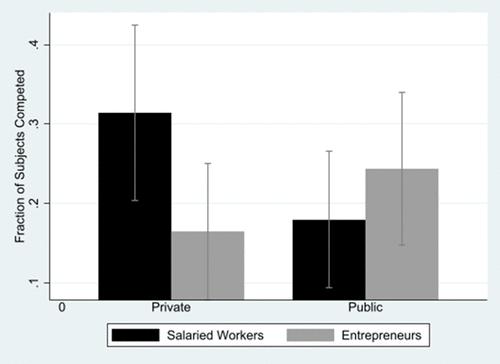
Note. All bars include 95% confidence intervals.
3. Results
3.1. Descriptive Statistics
Table 1 presents summary statistics, disaggregated by professional group (salaried workers and entrepreneurs) and treatment (Private and Public). We have data on the participants’ gender, age, marital status, and level of formal educational attainment and vocational training; on their performance in the ball-tossing task (number of successful tosses); on their investment decision in the risk-elicitation task; on the confidence in their ability in the experimental task; on the self-reported number of contacts in their mobile phones (as a proxy for the size of their social network); and on the monthly business profits of entrepreneurs. To test randomization, we show in the penultimate column of Table 1 statistical tests that compare observable characteristics of the subjects across treatments. The results confirm that randomization into treatments has been successful along every dimension for which we have available data.
|

Table 1. Summary Statistics
| Variables | Private | Public | p-valuesi | |||
|---|---|---|---|---|---|---|
| Salaried | Entrepreneur | Salaried | Entrepreneur | Treatment | Job type | |
| Female (= 1) | 0.67 | 0.62 | 0.64 | 0.6 | 0.70 | 0.41 |
| (0.47) | (0.49) | (0.48) | (0.49) | |||
| Married (= 1) | 0.86 | 0.94 | 0.81 | 0.92 | 0.34 | 0.01 |
| (0.35) | (0.23) | (0.40) | (0.27) | |||
| Performancea | 3.07 | 3.00 | 2.87 | 2.88 | 0.49 | 0.73 |
| (1.52) | (1.71) | (1.47) | (1.65) | |||
| Performance (Forced)b | 3.24 | 3.24 | 3.00 | 3.24 | 0.52 | 0.75 |
| (1.53) | (1.87) | (1.98) | (1.80) | |||
| Investment in Riskc | 49.31 | 52.04 | 47.37 | 62.85 | 0.26 | 0.02 |
| (34.98) | (35.82) | (34.58) | (35.08) | |||
| Confidence in taskd | 4.52 | 4.48 | 4.52 | 4.41 | 0.98 | 0.95 |
| (1.97) | (2.04) | (2.52) | (1.71) | |||
| Age, years | 45.83 | 47.59 | 45.33 | 48.33 | 0.94 | 0.15 |
| (14.17) | (11.17) | (14.19) | (11.53) | |||
| Formal Educatione | 2.40 | 2.17 | 2.64 | 2.40 | 0.11 | 0.32 |
| (1.44) | (1.21) | (1.55) | (1.26) | |||
| Vocational Trainingf | 0.46 | 0.46 | 0.33 | 0.39 | 0.08 | 0.99 |
| (0.80) | (0.86) | (0.80) | (0.85) | |||
| # of Contactsg | 2.80 | 3.13 | 3.06 | 2.86 | 0.68 | 0.76 |
| (1.28) | (1.45) | (1.66) | (1.61) | |||
| Business Profith | n/a | 10,582 | n/a | 7,801 | 0.94 | n/a |
| (15,544) | (10,882) | |||||
| Total N (N in wave 2) | 70 (42) | 73 (38) | 78 (42) | 78 (37) | ||
Note. Mean values reported with standard deviations in parentheses.
aPerformance refers to the number of successful tosses in the ball-tossing task.
bPerformance (Forced) is the number of successful tosses in the forced competition situation in the second wave.
cConfidence indicates the average response of participants to the following question: “Out of 10 competitors today, how many do you believe have an equal or lower score compared to you?”
dInvestment in Risk is the number of invested tokens in the Gneezy and Potters (1997) risk-elicitation task and ranges from 0 to 100 with higher values corresponding to higher risk tolerance.
eFormal Education categories include 0 (no education), 1 (primary school), 2 (lower secondary school), 3 (upper secondary school), 4 (continuing education), 5 (college), 6 (university).
fVocational education categories include 0 (no training), 1 (primary/elementary vocational school), 2 (vocational secondary diploma), 3 (professional school or vocational college diploma).
g# of Contacts is the self-reported number of contacts on the subject’s cellphone, coded as shown in Online Appendix B.II.
hBusiness Profit (in million Vietnamese dong) is the self-reported monthly business profit of entrepreneurs adjusted by their reported share of the business ownership.
ip-values refer to comparisons between treatment (Public versus Private) and between professional group (entrepreneurs versus salaried workers). p-values are based on Mann–Whitney U tests (for Performance, Performance in Forced Competition, Investment in Risk, Age, Formal Education, Vocational Training, # of Contacts, and Business Profit) and χ2 tests (for Female and Married).
In the last column of Table 1, we show the results of comparing entrepreneurs and salaried workers. In this respect, there is no exogenous randomization, so self-selection into different professions makes some differences between the two samples likely. We find no significant differences between entrepreneurs and salaried workers in gender composition, performance in the ball-tossing task, their confidence in the task, their age, formal education, vocational training, and the number of contacts on the cell phone, but we do find that the sample of entrepreneurs are more likely to be married and more willing to take risks on average. We control for all of these factors in the regression analysis presented in the following section.
Table 1 also reports data on performance in the unannounced forced competition stage conducted during the second wave of the experiment. This allows us to examine whether public observability has an effect on performance. As it turns out, this is not the case: both salaried workers and entrepreneurs have very similar performances in the private and public condition in terms of number of successful ball tosses (3.24 versus 3.00, p = 0.52 for salaried workers; 3.24 versus 3.24, p = 0.75 for entrepreneurs; Mann–Whitney U tests).
3.2. Competition Entry Choices
The first question in which we are interested is whether a difference in competitive attitudes exists between entrepreneurs and salaried workers. Figure 1 displays the percentage of subjects who choose to compete in the ball-tossing game by professional group and treatment. In Private, entrepreneurs are much less competitive in their choices of payment scheme than salaried workers (16% versus 31%; p = 0.04, χ2 test). Yet Figure 1 also in-dicates the presence of treatment effects. Competition entry rates among salaried workers drop substantially when the competition decision is made public (31% versus 18%; p = 0.06, χ2 test). Entrepreneurs follow the opposite pattern, increasing their willingness to compete in treatment Public compared with Private. Whereas this increase is insignificant when using nonparametric tests (16% versus 24%; p = 0.23, χ2 test), our regression analysis reveals that the two professional groups react significantly differently to the treatment variation.
Before moving to the regression analysis, we briefly address the issue of gender differences as a side note. In line with most existing studies, we find that, in the aggregate, women are significantly less likely to choose the competitive payment scheme than men. Overall, the gender gap is very large with men being five times as likely as women to choose competition (45% versus 9%; p < 0.01, χ2 test), perhaps partly because of their slightly higher performance in this task (3.2 for men and 2.81 for women; p = 0.07, Mann–Whitney U test). The gender gap is significant among both professional groups (p < 0.01 for each, χ2 tests) although it is slightly larger among salaried workers (51% versus 10%) than among entrepreneurs (37% versus 10%).
Table 2 reports results from ordinary least squares (OLS) regressions with a subject’s competition choice as the dependent variable.10 In column (1), the right-hand side variables are dummy variables for treatment Public and for the professional group of entrepreneurs as well as an interaction term between the two. In column (2), we add, first, a female dummy and our measure of risk attitudes as explanatory variables, motivated by the fact that the literature identifies both as key determinants of competitive behavior. Additionally, we add those exit survey variables that were included in the surveys of both professional groups, namely a participant’s age, marital status, level of formal and vocational education (with higher values corresponding to a higher educational attainment), and the number of contacts on their cellphone as a proxy for the size of their social network.
|
Table 2. OLS Regressions on Competitive Choice
| Variables | (1) | (2) | (3) |
|---|---|---|---|
| No controls | Controls | Confidence | |
| Public | −0.135 | −0.176*** | −0.091* |
| (0.068) | (0.026) | (0.029) | |
| Entrepreneurs | −0.150* | −0.146** | −0.063** |
| (0.050) | (0.037) | (0.013) | |
| Public × Entrepreneurs | 0.214** | 0.236*** | 0.099** |
| (0.043) | (0.033) | (0.025) | |
| Female | −0.360*** | −0.285*** | |
| (0.031) | (0.040) | ||
| Number of points invested | −0.001* | −0.001 | |
| (0.000) | (0.001) | ||
| Marital status | −0.106 | −0.144 | |
| (0.094) | (0.103) | ||
| Education | 0.038* | 0.043 | |
| (0.014) | (0.020) | ||
| Vocational Training | −0.058 | −0.060 | |
| (0.049) | (0.077) | ||
| Age | −0.002 | 0.001 | |
| (0.002) | (0.001) | ||
| # of Contacts | 0.006 | −0.002 | |
| (0.012) | (0.025) | ||
| Area/New data | −0.116** | ||
| (0.024) | |||
| Confidence | −0.007 | ||
| (0.015) | |||
| Constant | 0.314** | 0.752*** | 0.486** |
| (0.062) | (0.125) | (0.090) | |
| N | 299 | 289 | 159 |
| R2 | 0.020 | 0.226 | 0.145 |
| p (Public + Public × Entrepreneurs) | 0.189 | 0.044 | 0.732 |
| p (Entrepreneurs + Public × Entrepreneurs) | 0.154 | 0.058 | 0.252 |
Notes. Dependent variable equals one if a subject chose competition for the ball-tossing task and zero otherwise. Investment in Risk ranges from 0 to 100 with higher values corresponding to higher risk tolerance. Formal Education ranges from zero (no education) to six (university degree), and Vocational Training ranges from zero (no training) to three (professional school or vocational college diploma). # of Contacts ranges from one (0–20 contacts) to six (501 or more contacts). Exact coding for Formal Education, Vocational Training, and # of Contacts shown in Online Appendix B.II. The number of observations is slightly smaller in column (2) because of some responses missing in the exit survey. Robust standard errors clustered at waiting room level in parentheses.
***p < 0.01; **p < 0.05; *p < 0.1.
In line with the impression from Figure 1 and the nonparametric analysis, the coefficient for Entrepreneur is negative and significant in all specifications, reflecting the fact that this professional group competes less than salaried workers in the Private condition. In the Public condition, however, the difference between the two groups changes sign with entrepreneurs competing more than salaried workers. This is due to the highly significant and positive interaction term between Public and Entrepreneur, which captures the difference in treatment responses of the two professional groups. As a consequence, the joint coefficient Entrepreneur + Public × Entrepreneur is now positive and weakly significant in the full specification. This suggests a reversal in the pattern of competitive behavior, with entrepreneurs being less competitive than salaried workers in Private but more competitive in Public. The treatment effects for each of the two professional groups are identified as follows: the variable Public is negative (and significant when the full list of controls is included), showing that salaried workers compete less when their choice is made public. The joint coefficient Public + Public × Entrepreneur captures the effect of the public treatment among entrepreneurs, which is positive and significant in the full specification.
Looking at further control variables in column (2) of Table 2, we note that the female dummy is very sizeable, negative, and highly significant, which matches the dominant finding in the literature.11 The risk coefficient (Investment in risk) is insignificant and does not drive willingness to compete in our sample. Age has a weakly significant effect with the willingness to compete slightly declining among older individuals. We can summarize our main findings on entrepreneurs versus salaried workers in our first result.
Entrepreneurs are less competitive than salaried workers when tournament entry choices remain private but more competitive than salaried workers when they are made public. The treatment responses of the two groups go in opposite directions and differ significantly from each other: entrepreneurs increase and salaried workers decrease their willingness to compete in the Public (as compared with the Private) condition.
Before moving to the analysis of our survey data in Section 3.3, we conclude the analysis of the willingness to compete by addressing two further aspects. First, in the third column in Table 2, we use data from the second wave of the experiment only in order to include the variable Confidence (not elicited in wave one) as an additional control. We find that the coefficient of confidence is very small and insignificant, whereas at the same time, most findings from the regressions using the full sample are qualitatively confirmed in this specification that has a much smaller sample size. So it seems that our main result of a treatment effect on the willingness to compete is not related to the level of overconfidence.12
Second, we note an interesting treatment effect on what could be labeled the quality of experimental choices under a piece rate and a competitive payment scheme. One can examine whether choices are aligned with maximizing expected payoffs and whether participants avoid competing too much or too little. Whereas our experimental design is less extensive compared with previous studies that evaluate this aspect (e.g., Niederle and Vesterlund 2007, Balafoutas and Sutter 2012), we can construct a crude measure of choice quality as follows. We classify a choice as “good” if someone (i) chooses to compete and has a performance higher than three, which is the average performance in the sample among those who chose to compete,13 or (ii) chooses the piece rate and has a performance lower than three. The other two possibilities, of competing with a low performance and not competing with a high performance, amount to over- and under-competing, respectively. The results of this analysis indicate that participants make better decisions in the Public compared with the Private condition: on average, the frequency of good choices increases from 46.2% in Private to 56.7% in Public (p = 0.053, χ2 test).
3.3. Insights from the Follow-up Survey: Understanding the Treatment Effects and Linking Competitiveness to Entrepreneurial Behavior
To better understand why business owners increase and salaried workers decrease their willingness to compete when their choices are observable by peers, we can use the data from the follow-up survey described in Section 2.3. Table 3 reports mean responses to each of the nine questions included in the survey, disaggregated by professional group. The data reveal that, overall, respondents consider competitive behavior more appropriate when running a business (mean rating of 3.99) than in salaried jobs (mean rating of 3.25). The difference in the appropriateness ratings is large and significant in the samples of both entrepreneurs (mean rating of 4.12 in business versus 3.20 in salaried jobs; p < 0.01,Wilcoxon signed-rank test) and salaried workers (mean rating of 3.85 in business versus 3.30 in salaried jobs; p < 0.01, Wilcoxon signed-rank test). Hence, competition is generally considered the right thing to do for entrepreneurs, in any case more so than for salaried workers.
|
Table 3. Mean Responses in the Additional Survey
| Variables | Private | Public | p-valuesa | |||
|---|---|---|---|---|---|---|
| Salaried | Entrepreneur | Salaried | Entrepreneur | Prof. Group | Treatment | |
| Q1: Being competitive is appropriate in the context of doing business. | 3.87 | 4.32‡ | 3.83 | 3.94‡ | 0.08 | 0.00 |
| Q2: Being competitive is appropriate when one has a salaried job. | 3.47 | 3.37 | 3.14 | 3.04 | 0.83 | 0.00 |
| Q3: Being competitive is a key to success in the context of doing business. | 4.15† | 4.29 | 4.01† | 4.05 | 0.43 | 0.00 |
| Q4: Being competitive is a key to success when one has a salaried job | 3.53† | 3.58 | 3.09† | 3.32 | 0.31 | 0.00 |
| Q5: I like to compete when others can see what I am doing. | 3.33 | 3.52 | 2.99* | 3.54* | 0.03 | 0.14 |
| Q6: In general, I like to compete. | 3.43 | 3.33 | 3.09* | 3.51* | 0.34 | 0.40 |
| Q7: What other people think about me is very important to me. | 3.55 | 3.56 | 3.33 | 3.55 | 0.46 | 0.26 |
| Q8: It is important to maintain a good social image and reputation. | 4.41† | 4.30 | 4.19† | 4.35 | 0.44 | 0.14 |
| Q9: It is important for me to be the best at what I do | 3.34 | 3.40 | 3.12 | 3.60* | 0.04* | 0.87 |
| N | 70 | 73 | 78 | 78 | ||
Note. All responses are coded as follows: 1 = strongly disagree or disapprove, 2 = disagree or disapprove, 3 = indifferent/neutral or undecided, 4 = agree or approve, 5 = strongly agree or approve.
ap-values in these columns show results of Mann–Whitney U tests comparing responses between entrepreneurs and salaried workers (pooled across treatments) or treatment versus control groups (pooling across job types).
p < 0.05 when comparing within a row the two cells that have a star (*).
p < 0.05 when comparing within a row the two cells that have this symbol (†).
p < 0.05 when comparing within a row the two cells that have this symbol (‡).
Building on this observation, the kind of behavior we document in our experiment is nicely mirrored in the responses to survey questions Q6 (“In general, I like to compete”) and Q5 (“I like to compete when others can see what I am doing”). Overall, the two professional groups offer similar responses to Q6, mirroring the fact that tournament entry rates in our experiment do not differ by group in the pooled sample (pooling across treatments, competition entry rates are 21% for entrepreneurs and 24% for salaried workers; p = 0.43, χ2 test). Yet, in the public treatment, salaried workers agree less than entrepreneurs to the statement that they like to compete (p < 0.05, Mann–Whitney test). Concerning question Q5, business owners indicate a significantly stronger preference for competition than salaried workers “when others can see what I am doing” (Q5) (3.53 versus 3.15; p = 0.03; Mann–Whitney test). The analysis of the follow-up survey can, thus, help explain the patterns and treatment responses we observe in Figure 1: when the competition decision is made public, salaried workers as well as entrepreneurs change their behavior in the direction of what is considered more appropriate for each professional group in relative terms, reducing or increasing their willingness to compete, respectively. The emerging pattern is that choices move toward the commonly held view that entrepreneurs behave in a more competitive fashion compared with nonentrepreneurs, and this movement is also driven by salaried workers who express a relatively stronger distaste for competition when they are under observation.
In addition to this discussion on the role of individual attitudes toward competition and perceptions about what is appropriate for each group, we find that survey respondents also attach an instrumental value to competitive behavior in business. Overall, being competitive is considered as being a key to success in business (mean rating of 4.12), much more so than in salaried jobs (mean rating of 3.37, p < 0.01). This difference in perceptions exists among both entrepreneurs (4.17 versus 3.44; p < 0.01, Wilcoxon signed-rank test) and salaried workers (4.08 versus 3.30; p < 0.01). The responses to these survey items reinforce our explanation of the observed treatment differences as being driven by participants’ perceptions regarding the role of competitiveness in each sector and the behavior expected from each professional group. Such norms and expectations arguably take up a central position when competition decisions are made public, shaping the behavior of entrepreneurs and salaried workers in our sample.
To check the robustness of the preceding analysis with respect to alternative formulations of the survey questions, in wave 2, we extended the survey in two directions by adding further questions. First, we changed the wording in Q1–Q4 from “being competitive” to “seeking competition” in order to better capture selection into competition with the latter wording. Second, we changed the phrasing of the questions Q1–Q4, from “Please give us your personal opinion” to “Please give us your opinion about the generally expected norm in your area.” This is meant to distinguish between personal opinions and norms in the participants’ responses.14 It turns out that these alternative formulations do not change the relation between survey responses and observed behavior for which reason we do not present separate results for the additional questions.
Finally, for our sample of entrepreneurs, we also asked for their business profits in the exit survey: 129 out of 151 entrepreneurs answered this question, so we can link profits to experimental choices for these participants. We find that those entrepreneurs choosing the competitive payment scheme in the experiment have an average monthly profit of 12.06 million Vietnamese dong, whereas those choosing the piece-rate scheme fare considerably worse with 8.25 million Vietnamese dong on average. Nevertheless, the difference is not significant because of a large variance in profits (p = 0.46, Mann–Whitney U test). In the second wave, we also collected data on innovation and pricing strategies of entrepreneurs (see questions 11–13 in Online Appendix B.III). As in the case of profits, we find no significant relationship between any of these dimensions and competitiveness: comparing competing and noncompeting entrepreneurs, there is no difference in strategies related to the introduction of new products (p = 0.88, χ2 test), innovating business processes (p = 0.75), or pricing strategies (p = 0.68). Hence, in our experiment, we find no evidence to confirm that entrepreneurial competitiveness is related to economic outcomes in the field. On the other hand, our data provide suggestive evidence that competitive salaried workers earn higher incomes than those who chose the piece rate in the experiment (5.42 versus 4.87 million Vietnamese dong, p = 0.09, Mann–Whitney test). We summarize this evidence as follows.
When decisions are public, choices of both entrepreneurs and salaried workers are aligned with their peers’ expectations about what is considered as the relatively more appropriate behavior for each professional group. Looking at the competitiveness of entrepreneurs only, we do not find a significant relationship between their willingness to compete and their business practices.
4. Conclusion
In this paper, we present a laboratory-in-the-field experiment with a sample of entrepreneurs and salaried workers in Vietnam. We elicited their willingness to compete in a real-effort task (Gneezy et al. 2009), varying the observability of individual choices in a between-subjects design. Our main finding is that the relationship between competitiveness and being an entrepreneur or not is not straightforward. Contrary to the conjecture that entrepreneurs might be more competitive per se, we find a more nuanced pattern of behavior. In fact, when choices between a piece rate and a tournament payment scheme remain private, the sample of salaried workers opts for the competitive payment scheme more frequently than the sample of entrepreneurs. However, this pattern reverses completely when participants know that their choices are observed by other peers. The reactions of the two professional groups to introducing observability of their choices are in opposite directions and significantly different from each other.
Identifying an explanation for this reversal of behavior contingent on the observability of choices is no easy task, and our exploratory analysis does not provide a theoretical framework that can reconcile the observed effects. In order to better understand the motivations for participant choices, we complement our experimental data set with evidence from a comprehensive follow-up survey, thus combining two different and mutually enriching methods—experiments and surveys—to gain insights into our main research question. This evidence suggests that the stereotypical image of entrepreneurs as a highly competitive group may be the result of a desire to behave in accordance with perceived norms and peers’ expectations. Likewise, salaried workers reduce their willingness to compete when choices become public because it is perceived as relatively less appropriate to compete as a salaried worker than as an entrepreneur. The difference in behavior between the Private and Public conditions implies a methodological caveat when comparing entrepreneurs and nonentrepreneurs without controlling for whether their choices are observable or not. Previous studies that do not distinguish between observable and unobservable conditions may miss important interaction effects of professional activity and making choices in private or public. Our findings also suggest that the potential effects of business trainings on the competitiveness of entrepreneurs (Berge et al. 2015a) may depend on whether the willingness to compete is measured under private or public conditions. More generally speaking, this implies that any interventions that aim at targeting the willingness to compete (such as business training or affirmative action programs as in Balafoutas and Sutter (2012) or Niederle et al. (2013)) may, therefore, want to control for such potential interaction effects between competitiveness and observability of actions and, thus, pay attention to how perceived norms about appropriate behavior influence the behavior of both entrepreneurs and nonentrepreneurs.
To conclude, we believe that our paper provides novel and important insights into the competitiveness of entrepreneurs and salaried workers and how this depends on the details of the competitive situation (public or private) and on norms and perceptions. It is important to note that our sample originates from a low-income, developing country. This means that it would be worthwhile for future research to examine the generalizability of our results to a larger set of countries. Our sample from Vietnam is not representative of all entrepreneurs and nonsalaried workers in the country, yet it reflects the fact that many enterprises in developing countries are very small, often only run by household members. This means that our results may not apply to leaders of very large companies. In fact, CEOs of large, typically publicly listed companies are found to be different from lower level managers in many dimensions (Kaplan and Sorensen 2021). We, therefore, hope that future work will investigate the scope and generalizability of our findings.
The authors thank Håkan Holm, Andreas Leibbrandt, Gerhard Riener, Diemo Urbig, three referees, an associate editor, and Yan Chen for very helpful comments and suggestions and MDRI for help in conducting the research.
1 Leibbrandt (2012) examines a different behavioral trait, namely, cooperation in a public goods game, and reports that higher levels of cooperation are associated with superior market performance in a sample of professional sellers (Brazilian fishermen).
2 We are thankful to the authors of the Urbig et al. (2020) paper for sharing the details of their experimental procedure with us and for bringing up this possible interpretation.
3 Using a different methodology based on survey data from a cross-country sample of mainly rich countries, Bönte and Piegeler (2013) show that the gender gap in entrepreneurship can largely be accounted for by preferences for risk-taking and competition.
4 The full set of instructions used in the experiment is reported in Online Appendix B.I.
5 The word “commune” refers to the fourth level of official administrative unit in Vietnam (after district, city, and provincial city). My Huong and An Thinh are agricultural communes next to each other in the Luong Tai district, Bac Ninh province. The population of My Huong is 7,356 individuals living in about 2,400 households, whereas the population for An Thinh is approximately 12,000 individuals in about 4,000 households. The economic activity of these communes is based predominantly on agriculture.
6 At the same time, it remains true that our sample consists of small-scale entrepreneurs for the most part: 119 out of 160 entrepreneurs who responded to the relevant question in the exit survey do not employ people beyond their spouses, meaning that the majority are household-run businesses.
7 The design of the rooms is sketched in Online Appendix A (Online Figure A1).
8 Please note that Charness et al. (2020) show that the risk measure elicited with this task does not differ from the measure elicited when using the well-known Holt-and-Laury task.
9 Conducting the follow-up survey at a later point in time for wave 1 ensured that responses to it were not distorted by a subject’s choices, outcomes, or treatment allocation in the main experiment. In wave 2, this was no longer possible because of time and logistical constraints; hence, we merged the follow-up survey into the exit survey. In general, collecting survey evidence after the main experiment entails the risk of survey responses being affected by play in the main game, for instance, if respondents try to avoid cognitive dissonance (Festinger 1957). This can also lead to survey responses varying by treatment, which is the case for some questions in our experiment as the last column in Table 3 reveals. We chose to elicit survey responses after (rather than before) the competition experiment as the lesser of two evils in order to rule out spillovers from the surveys to behavior in the experiment. Such concerns about spillovers from behavior (or treatment variation) to survey responses do not apply to the data from wave 1, however, because, in that wave, none of the survey responses vary significantly across treatments. The patterns we present in the results section are robust if we only use wave 1 for our analysis.
10 We prefer to present ordinary least squares instead of probit estimations because of the problems associated with estimating and testing for the significance of interaction terms in probit models (Ai and Norton 2003) and in light of the importance of the interaction term between treatment and professional groups for our research question. However, for completeness, we also report probit regressions in Online Table A1 in Online Appendix A, confirming that all results remain qualitatively unchanged.
11 We also estimated versions of the Table 2 specifications in which we add the interaction term between Public and Female. These interaction terms are always insignificant. Furthermore, including this interaction term does not lead to any notable changes in any of the Table 2 results.
12 Whereas most existing literature on competitive behavior identifies confidence as an important driver of tournament entry, a recent meta-analysis reveals that its role in explaining differences in behavior among participants (in particular gender differences) may be more limited than previously thought (Markowsky and Beblo 2022). This may in part be due to measurement issues and the reliance on only one measure of confidence in most studies (Gillen et al. 2019).
13 The exact performance is 2.96, on average, and this is the performance that a participant must exceed in order to win if they chose to compete. Notice that we do not include participants with a performance of exactly three in this analysis because the average performance is almost identical to three and, hence, competing or not competing with a performance of three leads to essentially the same expected earnings.
14 Please see Online Appendix B.III for the full version of the survey, including both waves.
References
- (2003) Interaction terms in logit and probit models. Econom. Lett. 80(1):123–129.Crossref, Google Scholar
- (2016) What explains the gender gap in college track dropout? Experimental and administrative evidence. Amer. Econom. Rev. 106(5):296–302.Crossref, Google Scholar
- (2013) Gender, competitiveness, and socialization at a young age: Evidence from a matrilineal and a patriarchal society. Rev. Econom. Statist. 95(4):1438–1443.Crossref, Google Scholar
- (2004) Public goods experiments without confidentiality: A glimpse into fund-raising. J. Public Econom. 88(7–8):1605–1623.Crossref, Google Scholar
- (2012) Affirmative action policies promote women and do not harm efficiency in the laboratory. Science 335(6068):579–582.Crossref, Google Scholar
- (2015) Volunteering to take on power: Experimental evidence from matrilineal and patriarchal societies in India. DICE Discussion Paper No. 204. Heinrich Heine University Duesseldorf, Düsseldorf, Germany.Google Scholar
- (2022) The influence of self and social image concerns on lying. Games Econom. Behav. 133:162–169.Crossref, Google Scholar
- (2017) Trust, trustworthiness, and business success: Laboratory and field findings from entrepreneurs. Econom. Inquiry 55(1):368–382.Crossref, Google Scholar
- (2019) An honest day’s pay: Cooperation among entrepreneurs vs. students, and linkages to real‐world business success. Southern Econom. J. 86(2):478–502.Crossref, Google Scholar
- (2004) The relationship of entrepreneurial traits, skill, and motivation to subsequent venture growth. J. Appl. Psych. 89(4):587–598.Crossref, Google Scholar
- (2015a) Human and financial capital for microenterprise development: Evidence from a field and laboratory experiment. Management Sci. 61(4):707–722.Link, Google Scholar
- (2015b) Competitive in the laboratory, successful in the field? J. Econom. Behav. Organ. 118:303–317.Crossref, Google Scholar
- (2013) Gender gap in latent and nascent entrepreneurship: Driven by competitiveness. Small Bus. Econom. 41(4):961–987.Crossref, Google Scholar
- (2012) Are entrepreneurs influenced by risk attitude, regulatory focus or both? An experiment on entrepreneurs’ time allocation. J. Bus. Venturing 27(4):456–476.Crossref, Google Scholar
- (2014) Gender, competitiveness, and career choices. Quart. J. Econom. 129(3):1409–1447.Crossref, Google Scholar
- (2017) Gender, competitiveness, and study choices in high school: Evidence from Switzerland. Amer. Econom. Rev. 107(5):125–130.Crossref, Google Scholar
- (2021) Gender differences in willingness to compete: The role of public observability. J. Econom. Psych. 83:102366.Crossref, Google Scholar
- (2020) Do measures of risk attitude in the laboratory predict behavior under risk in and outside of the laboratory? J. Risk Uncertainty 60(2):99–123.Crossref, Google Scholar
- (2014) Business culture and dishonesty in the banking industry. Nature 516(7529):86–89.Crossref, Google Scholar
- (2013) Entrepreneurship and team participation: An experimental study. Eur. Econom. Rev. 59:126–140.Crossref, Google Scholar
- (2013) Gender matching and competitiveness: Experimental evidence. Econom. Inquiry 51(1):816–835.Crossref, Google Scholar
- (2006) Generosity, anonymity, gender. J. Econom. Behav. Organ. 61(1):42–49.Crossref, Google Scholar
- (1957) A Theory of Cognitive Dissonance, vol. 2 (Stanford University Press, Stanford, CA).Crossref, Google Scholar
- (2015) Do competitive work places deter female workers? A large-scale natural field experiment on gender differences. Rev. Econom. Stud. 82(1):122–155.Crossref, Google Scholar
- (2019) Experimenting with measurement error: Techniques with applications to the Caltech cohort study. J. Political Econom. 127(4):1826–1863.Crossref, Google Scholar
- (1997) An experiment on risk taking and evaluation periods. Quart. J. Econom. 112(2):631–645.Crossref, Google Scholar
- (2009) Gender differences in competition: Evidence from a matrilineal and a patriarchal society. Econometrica 77(5):1637–1664.Crossref, Google Scholar
- (2003) Performance in competitive environments: Gender differences. Quart. J. Econom. 118(3):1049–1074.Crossref, Google Scholar
- (2020) Strategic decisions: Behavioral differences between CEOs and others. Experiment. Econom. 23(1):154–180.Crossref, Google Scholar
- (2013) Entrepreneurs under uncertainty: An economic experiment in China. Management Sci. 59(7):1671–1687.Link, Google Scholar
- (2017) Risk aversion and Guanxi activities: A behavioral analysis of CEOs in China. Acad. Management J. 60(4):1504–1530.Crossref, Google Scholar
- (2021) Are CEOs different? Characteristics of top managers. J. Finance 76:1773–1811.Crossref, Google Scholar
- (2015) Competition and Entrepreneurship (University of Chicago Press, Chicago).Google Scholar
- (2016) Risk, uncertainty, and entrepreneurship: Evidence from a laboratory-in-the-field experiment. Management Sci. 62(10):2897–2915.Link, Google Scholar
- (2010) Social image concerns and prosocial behavior: Field evidence from a nonlinear incentive scheme. J. Econom. Behav. Organ. 76(2):225–237.Crossref, Google Scholar
- (2015) On the norms of charitable giving in Islam: Two field experiments in Morocco. J. Econom. Behav. Organ. 118:69–84.Crossref, Google Scholar
- (2012) Are social preferences related to market performance? Experiment. Econom. 15(4):589–603.Crossref, Google Scholar
- Lerner J, Schoar A, eds. (2010) International Differences in Entrepreneurship (University of Chicago Press, Chicago).Crossref, Google Scholar
- (2009) Entrepreneurship and risk taking. Appl. Psych. 58(3):469–487.Crossref, Google Scholar
- (2022) When do we observe a gender gap in competition entry? A meta-analysis of the experimental literature. J. Econom. Behav. Organ. 198:139–163.Crossref, Google Scholar
- (2007) Do women shy away from competition? Do men compete too much? Quart. J. Econom. 122(3):1067–1101.Crossref, Google Scholar
- (2013) How costly is diversity? Affirmative action in light of gender differences in competitiveness. Management Sci. 59(1):1–16.Link, Google Scholar
- (2007)
Born to be an entrepreneur? Revisiting the personality approach to entrepreneurship . Baum JR, Frese M, Baron RA, eds. The Psychology of Entrepreneurship, The Organizational Frontiers Series (Lawrence Erlbaum Associates, Mahwah, NJ), 41–65.Google Scholar - (2020) Taste for competition and the gender gap among young business professionals. Working paper, New York University, Abu Dhabi.Google Scholar
- (2018) On the size of the gender difference in competitiveness. Management Sci. 64(4):1541–1554.Link, Google Scholar
- (2015) Gender differences in the willingness to compete emerge early in life and persist. Management Sci. 61(10):2339–2354.Link, Google Scholar
- (2020) Entrepreneurs embrace competition: Evidence from a laboratory-in-the-field study. Small Bus. Econom. 55(1):193–214.Crossref, Google Scholar
- (2013) Powering up with indirect reciprocity in a large-scale field experiment. Proc. Natl. Acad. Sci. USA 110(2):10424–10429.Crossref, Google Scholar
- (2006) The big five personality dimensions and entrepreneurial status: A meta-analytical review. J. Appl. Psych. 91(2):259–271.Crossref, Google Scholar
- (2010) The relationship of personality to entrepreneurial intentions and performance: A meta-analytic review. J. Management 36(2):381–404.Crossref, Google Scholar

