


Does Offshoring Production Reduce Innovation? Firm-Level Evidence from Taiwan
Abstract
Does the offshoring of production degrade or enhance the innovative capabilities of manufacturing firms? We contribute to this debate with causal evidence that offshoring impacts both the level and nature of innovation. Exploiting a policy shock that differentially affected the ability of Taiwanese firms to offshore production of certain goods to China, we find a decline in innovation levels and a shift from product to process innovation in the technologies directly related to product categories that could be offshored more easily after the policy shock. However, we also find evidence that the policy shock led to a reallocation of research effort within the firm, raising innovative effort in product categories not directly impacted by the shock and shifting them toward product innovation.
This paper was accepted by Alfonso Gambardella, business strategy.
Funding: This work was supported by the Mack Institute for Innovation Management, Wharton School, University of Pennsylvania, and the National Science Foundation [Grant 1360170] and the Portuguese National Science Foundation.
Supplemental Material: The online appendix and data files are available at https://doi.org/10.1287/mnsc.2024.04944.
1. Introduction
Over the past several decades, there has been a dramatic shift in the global distribution of manufacturing. Driven by opportunities for cost reductions, many multinational firms have offshored their production to lower wage countries, continuing to undertake skill-intensive activities such as marketing, strategy, and research and development (R&D) in the home country. Experts have disputed the impact of this shift in production on firms’ innovative capacity for decades. On the one hand, canonical economic models suggest that a relocation of manufacturing can raise the global rate of innovation and consumer welfare in both the source and host countries (Helpman 1993, Lai 1998, Branstetter and Saggi 2011). However, important strands of the managerial literature argue that separating the manufacturing and R&D functions within a firm can undermine the firm’s innovative capacity by reducing the potential for learning by doing, thereby creating challenges for knowledge transfer and feedback between R&D and production and altering the incentives for investing in cutting-edge research (Cohen and Zysman 1987, Pisano and Shih 2009, Fuchs 2014, Fort et al. 2020). Despite long-standing interest in resolving this theoretical ambiguity through empirical evidence, the endogeneity of offshoring and innovation—at the firm, industry, and country levels—has made it difficult for researchers to come to definitive conclusions.
We extend previous empirical research in five ways. First, we identify a causal relationship between offshoring and innovation using an instrumental variables (IV) estimation strategy that exploits a well-documented but under-researched policy shock in Taiwan. This policy shock permitted firms in Taiwan’s electronics sector to offshore some products (general electronics products such as laptops, mobile phones, communications products, and consumer electronics) but not others (mainly related to international conventions, national defense and security, and major infrastructure), differentially affecting the cost of offshoring production to China for different product categories and spurring an immediate surge in offshoring to China. Reassuringly, because some products were unaffected by the shock, our identification is shielded from the global demand shock of China’s World Trade Organization (WTO) accession, which would have applied to all electronics products. Second, most of our sample firms have a product portfolio that spans multiple product categories. We exploit a unique data source that enables us to observe the offshoring of particular products and components within firms, allowing us to identify intrafirm adjustments to offshoring and innovation in the aftermath of our policy shock. This allows for a far more granular analysis of the impact of our offshoring shock than would be possible if we were limited to firm-level data (as is typical in this literature). Third, we use keyword generators and text-mining algorithms to connect the patents generated by our sample firms before and after the policy shock to the products and components in their production portfolio. This allows us to identify the impact of the offshoring of particular products, components, and stages of production on patenting in the areas of technology most likely to be connected to the offshored activity. In doing so, we also demonstrate the feasibility of a set of techniques that could be more broadly applied to identify the effect of trade and foreign direct investment (FDI) shocks on the innovative activities of multiproduct firms. Fourth, we can distinguish between product and process innovations, and this allows us to observe the effect of the policy shock on the nature of innovation as well as the level of innovation as measured by patents. Finally, the richness of our data set and the nature of our policy shock allows us to identify a causal impact of the shock on the reallocation of research resources out of categories directly impacted by the shock and into categories that were not directly impacted by it.
Once we examine the impact of the exogenous offshoring shock on different parts of the firms’ patent portfolios, an interesting and complex picture emerges. First, we find that offshoring has an enduring negative effect on the quantity of firm patents related to the newly offshorable products. We characterize this as a negative effect on the level of innovation. These empirical results prove impressively robust to a wide range of robustness tests and alternative specifications.
In addition to the negative effect on the level of innovation, the exogenous offshoring shock also affected the nature of innovation. Product innovation declines sharply in the affected categories but there is no statistically significant impact on process innovation. This measured change in the nature of innovation is consistent with the hypothesis of Fuchs (2014), Fuchs and Kirchain (2010), and Yang et al. (2016), who argue that the differing characteristics of production sites located in different nations can alter the type of innovations most profitable for firms to pursue. When allowed to offshore production to a location with much lower factor costs, Taiwanese firms found that the new offshoring possibilities shifted the trade-off they faced between competing on new product technologies (achieved through product innovation) versus competing on price. The latter option became less costly thanks to the reduced factor costs of the new production site. However, taking full advantage of reduced costs associated with the new production site required adjustments to the production process, inducing a significant shift away from product innovation in the domains that could now be offshored, whereas process innovation in those domains appears to have not significantly changed.
This interpretation is strengthened when we examine postoffshoring shock patenting trends within product categories that were characterized by relatively more process or product innovation at the onset of the offshoring shock. Our negative effect is driven almost entirely by product categories with a high fraction of product innovation before the shock. Our results are consistent with the notion that offshoring production to a cheaper location changes the optimal R&D investment strategy of the firm.
Finally, we test the hypothesis that firms responded to the policy shock by reducing research effort in product categories directly impacted by the shock but then reallocating some of those research resources to products not directly affected by the policy shock. We find that the shock lowered innovation (as measured by patents) in some domains but increased it in others. In other words, there are negative direct effects (on affected products) but positive indirect effects (on unaffected products). Whereas our estimates of the indirect effects may be a lower bound of the true degree of research reallocation within and across firms (because they only capture within-firm reallocation) set off by the policy shock, they provide important empirical support for their existence. These indirect reallocation effects may exist in other contexts in which globalization appears to have had a negative direct effect on innovation. The approach used here may be helpful in finding them.
2. The Relationship Between the Relocation of Manufacturing and Firm Innovation
Ever since Schumpeter (1939), scholars have argued that direct interaction between production and R&D personnel could be crucial when researching and developing some complex products and processes. A geographic separation of these groups could, therefore, undermine innovation capabilities (Kline and Rosenberg 1986, Cohen and Zysman 1987, Teece 1996, Ketokivi and Ali-Yrkkö 2009, Pisano and Shih 2009, Fort et al. 2020). The strength of the connection between manufacturing and R&D is likely to depend on the nature of the R&D being undertaken. The part of the firm’s R&D portfolio most closely tied to the technology embodied in the products and processes that are offshored may decline, whereas other components of the same firm’s R&D portfolio may be relatively unaffected. Our results appear at first glance to be consistent with this storyline; we find empirical support for the existence of a robust negative effect of offshoring on innovation levels in the exogenously offshored product categories.
However, when we look more closely at the changes to the nature of innovation, we discover a more complicated set of outcomes that do not align as neatly with the view that the separation of production and R&D undermines innovation capabilities. The work of Pisano and Shih (2009) suggests that it is in the domain of process innovation that one would expect the link between R&D and manufacturing to be the strongest.1 This implies that a separation of production and R&D should lead to an overall decline in patents associated with the offshored products and a disproportionate decline in the process patents associated with them. Whereas we do find a negative effect of offshoring on patent levels, this decline appears to be heavily concentrated in product patents, not process patents. In fact, we find no statistically significant evidence of a decline in process patents. This seems inconsistent with the Pisano and Shih (2009) logic.
Our results are more consistent with a separate stream of related research that shows how shifting production—especially to a developing country—impacts firm R&D incentives rather than firm R&D capabilities (Fuchs and Kirchain 2010, Fuchs 2014, Yang et al. 2016). As noted in our introduction, when firms are able to offshore production to a location with much lower factor costs, this shifts the trade-off they face between competing on quality and performance (achieved through product innovation) versus competing on price and cost. The latter option becomes less costly thanks to the lower factor costs of the new production site, inducing a shift away from product innovation but not necessarily away from process innovation.
To fix ideas, consider how a single-product Taiwanese firm might allocate resources between product R&D and process R&D before and after the offshoring policy change described in greater detail in the next section.2 This firm could achieve a competitive advantage by offering customers high levels of product quality, which requires substantial investment in product R&D. Alternatively, managers can offer customers an adequate level of quality combined with low prices, which requires investment in cost-reducing process R&D, offshoring to China, or some combination of the two. For ease of argument, we assume for the moment that China is the only possible offshoring destination. When offshoring to China was heavily restricted (as it was prior to the policy shock), lower prices could only be achieved through high levels of investment in cost-reducing process R&D. Those investments could only achieve so much given Taiwan’s higher production costs.
However, after the policy shock increased opportunities to offshore to China, the trade-off between high quality and low prices shifted in the direction of low prices. Simply by shifting production to China, the firm could realize substantial and persistent reductions in production costs, which can then be passed on to consumers in the form of lower prices. In response to these new opportunities, our example firm shifts production to China and reduces its investment in product innovation. However, production processes may need to be adjusted to reflect the Chinese environment. As a consequence, process R&D (and process patents) may remain relatively high even as product R&D is sharply reduced. We emphasize that these shifts are not driven by any loss of R&D capability but instead an opportunity to realize more competitive advantage through a different mix of activity. Given these circumstances, a reduction in the cost of offshoring leads to unambiguously more offshoring; unambiguously less product R&D; and a level of process R&D that may rise, fall, or remain unchanged, depending on the required adjustments to production processes when production is offshored.
We document shifts in the patenting of Taiwanese firms that are broadly consistent with this logic. The firms in our data are more complicated than the simple example referenced above. Most are multiproduct entities; some have offshored manufacturing to locations other than China. Nevertheless, the policy change induced a large increase in offshoring to China by these firms, and this appears to have led to a substantial reduction in innovation associated with the offshored products but a reduction disproportionately concentrated in product R&D, not process R&D.
Drawing upon the concept of an international product cycle originally proposed by Vernon (1966) and the influential theoretical frameworks introduced by Grossman and Helpman (1991a, b) and Helpman (1993), an extensive literature in economics explores how the shifting of production within multinational firms from an industrialized “North” to a lower cost “South” impacts the rate and nature of innovation within northern firms (Lai 1998, Glass and Saggi 2001, Branstetter and Saggi 2011). Under a wide range of modeling approaches and parametric assumptions, the shift of production from North to South raises the rate of innovation in the North by freeing up northern resources. After offshoring, these resources can be reallocated to the development of new products. The disk drive industry case study by McKendrick et al. (2000) asserts that U.S.-based disk drive companies were able to offshore production to Asia and invest the resource savings toward the creation of new, better products that kept them ahead of their (mostly Japanese) competition.
We present evidence that this reallocation took place within Taiwanese firms after the policy shock. Taiwanese firms reduced their product innovation in the products they offshored, but they increased product innovation elsewhere in their product portfolio. We introduce empirical methods that allow us to draw tight causal links between this reallocation and our policy shock. These causal estimates may be an underestimate of the true degree of reallocation induced by the policy shock because they do not include cross-firm or cross-industry reallocation. Nevertheless, the magnitude and statistical robustness of our results provide important new empirical evidence for the existence and salience of the R&D reallocation effects long stressed in the theoretical literature.
3. Taiwan’s Policy Change: From “No Haste, Be Patient” (戒急用忍) to “Active Opening, Effective Management” (積極開放有效管理)
3.1. Taiwan Before the Policy Change: Rapid Growth, Limited FDI in China3
In 1949, Chiang Kai-Shek’s Chinese Nationalist Party (often known in the West as the Kuo Min Tang (KMT)) lost the Chinese Civil War to Mao Zedong’s Chinese Communist Party (CCP) and fled to Taiwan with about two million KMT loyalists. There, the KMT set up the Republic of China (ROC) government and claimed that this ROC government was the sole legitimate government of the whole of China. The CCP declared that Taiwan was nothing more than a rebellious province and that the center of the true China remained in Beijing. This set up political tensions between Taiwan and China that remain to this day and that sharply constrained economic interactions across the Taiwan Strait for decades.
The KMT’s rule over Taiwan was initially politically repressive and authoritarian, but the economic policies it adopted ushered in a long boom that lasted nearly a half century, transforming the island’s economy and dramatically raising living standards (Wade 1990). A gradual liberalization of Taiwan’s political system after the death of Chiang Kai-Shek led to full democracy during the presidency of Lee Teng-Hui in the 1990s. These political shifts coincided with accelerating structural change in the island’s economy. After decades of assiduous imitation of foreign technology, Taiwan’s increasingly sophisticated manufacturers emerged as innovators in their own right. Taiwanese firms’ international patenting took off in the late 1980s and grew rapidly through the 2000s with a strong focus on the patent classes associated with electronics and information technology. By the mid-1990s, Taiwanese firms had emerged as some of the world’s leading manufacturers of semiconductors and computer components.
Whereas Taiwanese President Lee Teng-Hui continued to liberalize Taiwan’s political regime, he also placed limits on economic ties with China, fearing that too much economic engagement could provide the mainland government with powerful economic leverage over Taiwan’s key industries. In 1996, these regulations were codified in the so-called “no haste, be patient” (戒急用忍) policy. These regulations established a US$50 million limit on any single investment project in China; any firm that wished to invest over this limit required special approval. In addition, according to this policy, any Taiwanese firm had to limit investments in the mainland to 20%–30% of its total foreign investment and 20% of its investment in Taiwan. A firm’s total investment in China could not exceed 40% of its net worth. The policy also restricted investments in certain key sectors, including the high-tech sector (for instance, FDI in the semiconductor industry was completely banned). Taiwanese firms were prohibited from investing in major infrastructure projects on the mainland and from setting up high-tech research and development facilities.4
3.2. Policy Change Under Chen Shui-Bian: “Active Opening, Effective Management”5
In the mid-1990s, Lee Teng-Hui ushered in constitutional changes that allowed for the direct election of the president. He won the first of these elections himself in a historic vote widely regarded by international observers as free and fair.6 The constitutional changes also placed term limits on Taiwanese presidents, limits Lee honored by allowing another KMT candidate to run for the office in 2000. In the 2000 election, however, democracy activist and longtime dissident Chen Shui-Bian won the presidency, an unexpected outcome for most observers. Chen’s Democratic Progressive Party had never won a presidential election in Taiwan before; in fact, he “won” the 2000 election with only 39% of the vote. Facing a legislature still controlled by the KMT and a business community skeptical of his candidacy, Chen Shui-Bian sought to build support for his new administration by taking a much more conciliatory approach to economic relations with the mainland than his predecessor. This approach, under the premise of integration theory, was reiterated in a series of speeches over his first term.7 In addition to the desire to build an internal coalition that would support his nascent administration, Chen also wanted to secure Taiwan’s admission into the WTO, which would require the adoption of more liberal policies on trade and investment.
In November 2001, the government formally announced the replacement of the “no haste, be patient” policy with the “active opening and effective management” (積極開放有效管理) policy.8 As part of the policy, the investment ceiling of US$50 million on individual investments was removed, and all projects with a value of less than US$20 million were automatically approved. The most important policy change for our purposes was the removal of 122 high-tech (general) products from the list of prohibited categories, including laptops, mobile phones, digital optical drives, computer hardware and software, communication products, and consumer electronics.9 Still prohibited categories included products such as nuclear reactors, chemical weapons, aircraft engine components, and chlorofluorocarbons. These items were mainly related to international conventions, national defense and security, and major infrastructure.
The new regime continued to subject the mainland investment by Taiwanese firms to a number of regulations and restrictions. Any single investment project over US$20 million still had to go through a special review system. The US$50 million ceiling on individual investments was replaced by an annual ceiling on total corporate investment in the mainland. The ban on investment by Taiwan’s semiconductor industry10 was initially retained but gradually relaxed over the next several years. Remaining restrictions notwithstanding, the rules regulating the offshoring of production to the mainland were substantially reduced as a result of this policy change, stimulating a rapid increase in the amount of offshoring to China.11 We exploit the differential effect of this new set of policies on different products. Products that were moved from the prohibited to allowed categories became much less burdensome to offshore.
On the other side of the Taiwan Strait, China’s formal entry into the WTO in late 2001 constituted a second coincidental policy shock that further increased Taiwanese firms’ interest in investing in the mainland. We acknowledge this coincidence but do not believe it seriously undermines our empirical strategy. Whereas mainland China’s WTO-mandated opening to foreign trade and investment varied across major industry groups, our sample of firms are all based in one sector (electronics). As such, the China WTO shock most likely impacted all our firms and products in a similar way. We maintain that the Taiwanese policy shift induced a change in the ability to offshore that varied across products within firms and that this product-level variation can be used to shed light on the impact of offshoring on innovation.
3.3. Taiwanese Offshoring After Reform
As we have already acknowledged, the pre-2001 restrictions did not completely eliminate FDI in China by Taiwanese firms even in prohibited categories. Some investment took place via offshore financial centers such as Hong Kong or the Cayman Islands. Nevertheless, Taiwanese firms were taking a significant risk in violating explicit government investment bans, and this limited the scope, scale, and nature of FDI on the mainland. Once Chen Shui-Bian’s administration formally relaxed these restrictions, investment by Taiwanese firms surged. Between 2000 and 2004, officially recorded annual flows of outbound FDI from Taiwan to the mainland nearly tripled. By 2011, annual flows were five times greater than in 2000 (Ministry of Economic Affairs 2016).
A large fraction of this FDI was vertical in nature; Taiwanese firms sought to use their Chinese subsidiaries as export platforms from which to serve the global market. Whereas Taiwan’s imports from China grew rapidly after 2001, Taiwan’s exports to the mainland grew even faster, reflecting, in part, the provision of parts and components to their mainland subsidiaries. Official statistics from Taiwan, taken from Tanner (2007) and plotted in Figure 1, provide evidence supporting this characterization of cross-strait trade. We can see an increase in trade between China and Taiwan after 2001, and we can see that Taiwan’s trade surplus with the mainland grew rapidly even as Taiwan’s imports from China also grew. Thus, Taiwan’s China shock was quite different from the trade shocks visited upon the United States and Western Europe, whose manufacturers ran large and rapidly growing trade deficits with China.
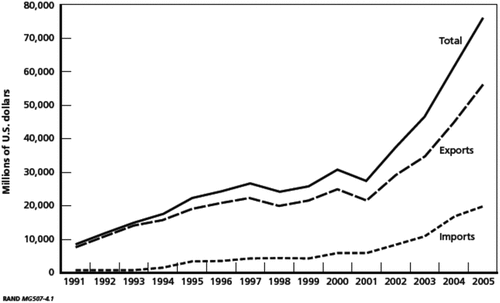
Notes. Each line shows, from top to bottom, total trade, exports, and imports between China and Taiwan in millions of U.S. dollars over time as reported using official statistics from Taiwan. Republished with permission of RAND Corporation, from “Chinese Economic Coercion Against Taiwan: A Tricky Weapon to Use,” by Murray Scot Tanner, 2007, available at https://www.rand.org./pubs/monographs/MG507.html.
Our firm- and product-level offshoring data are described in more detail in the next section, but it details all exports leaving China between 2000 and 2011 by firm. This means that we can observe whether there was an increase in exporting from Taiwanese subsidiaries in mainland China over this time period. Figure 2, constructed from our data set, demonstrates that there is a striking increase in the total value of exports from our sample firms’ subsidiaries in mainland China. It also shows that the increase is concentrated in product categories affected by the policy shock.
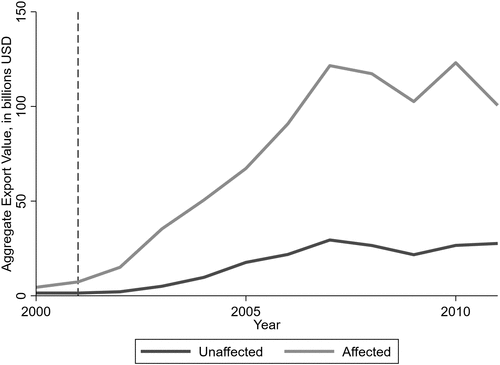
Notes. These lines show the total value of exports from the Taiwanese subsidiaries in China of the Taiwanese multinationals in our sample over time in billions of U.S. dollars. We have divided the exports into two categories: those affected by the 2001 policy change and those unaffected by it. The dashed line indicates the time of the policy change.
3.4. The Advantages of Studying the Taiwanese Electronics Industry
Over the course of the 1980s and 1990s, Taiwan became one of the world’s largest producers of electronics. For example, in 2008, 92.5% of laptops and motherboards sold on the world market were manufactured by Taiwanese companies.12 Taiwan’s electronics companies are also quite innovative; Taiwan has been the number one recipient of United States Patent and Trademark Office (USPTO) patents on a per gross domestic product basis since 1993.13 In short, Taiwanese electronics firms were and still are globally significant producers and inventors.
The sector has three other relevant features worth noting. First, the firm size distribution in Taiwan includes more small and medium-sized enterprises and fewer giant firms than comparable industries based in other countries although Taiwanese giants, such as TSMC and Foxconn/Hon Hai, have emerged. Hence, there are fewer concerns about just one or two firms driving the results than in other contexts. Second, most of these companies were original equipment manufacturer (OEM) and/or original design manufacturer (ODM) contractors with American or Japanese multinationals.14 As a consequence, particularly in the early years after the policy change, as described above, these firms used their Chinese manufacturing sites as an export base to produce for the global market; their move offshore was driven by cost considerations rather than market access considerations. Finally, their R&D activities remained in Taiwan during our time frame for the most part, which helps with measurement for our study.
4. Data
One of the major contributions of this paper is the matching of multiple databases at both the product category and firm level such that we can measure the impact of the offshoring of particular products, by particular firms, on the innovations in technologies directly associated with those products. To do this, we merge four primary data sets as described in Figure 3. Much more detail on the matching process, each data component, and the final data set construction are provided in the following sections, but at a high level, there are two main steps.
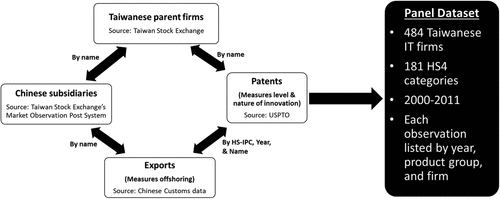
We begin by identifying Taiwanese electronics firms from the Taiwanese stock exchange and their Chinese subsidiaries using a combination of the Taiwan Stock Exchange’s Market Observation Post System and manual checks. This provides us with a baseline set of 792 electronics firms. To measure offshoring, we match the Chinese subsidiary names in Chinese customs data to the Chinese subsidiaries of the Taiwanese electronics firms, and to measure innovation, we identify the patents of the Taiwanese parent companies and their subsidiaries. At the end of this first step, we have a firm-year level data set that measures Taiwanese firm patenting and offshoring. Of the original 792 electronics firms, 484 firms patent and/or offshore.
In the second stage, we utilize a mapping at the firm, year, and product level (measured at the four-digit Harmonized System (HS4) classification) between the customs data (measuring offshoring) and the patent data (measuring innovation) to change the unit of analysis so that the policy shock—which operated at the product level and not at the firm level—can be exploited. Thus, at the end of the second step, we have a firm-year-product category level data set.
The final data set contains 484 firms (that patent and/or offshore) and 181 product categories (HS4) over 11 years and is at the firm-product category-year level. The following sections provide additional detail on the steps described above.
4.1. Identifying Taiwanese Firm Sample
As already noted above, we start by compiling a list of 823 Taiwanese electronics firms from the Taiwanese Stock Exchange under the industrial category of electronics (電子工業).15 These were condensed into 792 firms as several pairs of firms turned out to be affiliated and some firms did not exist in 2000.16
4.2. Patent Data
We use USPTO patents as an indicator of innovative output for our sample firms. We obtained data on all utility patents granted by the USPTO and matched 45,454 patents to 443 of the 792 Taiwanese firms by name during our time period, using a time-intensive, manual screening procedure that ensured no misspelled or alternatively written firm names were missed. The data are constructed from the August 2017 release of the PatentsView Database.17 The patent data contain information on patent number, all assignee names, all assignee codes, grant year, application year, forward citations, and International Patent Classification (IPC) codes.
Although patents are not a perfect measure of innovation, they have an important benefit in our context that no other measure of innovation can capture: their granularity allows us to observe both within- and across-firm changes in innovation in ways that recorded R&D expenditures could not capture. Through the detailed patent classes assigned to patented inventions, we can link the innovation outcomes in particular technological domains to the products offshored by our sample firms. R&D data and other indirect measures of innovation, such as total factor productivity, are usually aggregated to the firm or establishment level. Patents allow us to address the impact of offshoring at a higher degree of resolution (e.g., the product level), allowing for firm-level controls.
Whereas Taiwanese firms also patent at the Taiwan Intellectual Property Office (TIPO), we use USPTO data in order to capture the most valuable inventions. Whereas a long literature exploits patents as measures of technological activity, many papers indicate that the value distribution of patented inventions is highly skewed (Schankerman and Pakes 1986; Harhoff et al. 1999, 2002). Prior research shows that more valuable patents tend to be patented abroad as well as at home (Jaffe and Trajtenberg 2002, Squicciarini et al. 2013).18 It is also the case that triadic patents19 are of the highest quality (Dernis and Khan 2004). Therefore, use of data on Taiwanese firms’ U.S. patents tends to capture more valuable inventions than those granted solely by TIPO. Prior research confirms that more valuable inventions are more highly cited (Hall et al. 2001), and in robustness checks, we weight Taiwanese firms’ U.S. patents by the number of forward citations they receive.
In addition to measuring the level of innovative output with patent counts, we also measure the nature of innovative output by utilizing a methodology pioneered by Ganglmair et al. (2022), who generously share their classification data, to define patents as either process or product patents using the text found in patent claims. Complete details of their methodology can be found in their working paper (Ganglmair et al. 2022) and on their GitHub page,20 but the general idea is that patents are classified based on the language of the claims. Because lawyers write patent claims in a standardized language, and they are written in very different ways for a process or product, the authors can exploit the different grammatical structures and keywords in each patent claim to identify whether it is a process or product claim. Examples of a product versus a process claim are found in Online Appendix A3. There are then three separate ways to define a patent as a process patent based on the associated claims. These are as follows: (i) if at least 50% of the associated claims are process claims, (ii) if the first claim is a process claim, and (iii) if any of the associated claims are process claims. In our baseline specifications, we use the first definition (a patent is a process patent if at least 50% of the associated claims are process claims), but our results are robust to the alternative definitions.
4.3. Chinese Customs Data
In order to link parent companies in Taiwan to their subsidiaries in mainland China, we collected a list of 2,887 mainland Chinese subsidiaries founded between 1996 and 2008 that match to 664 of the 792 Taiwanese parent firms. These were found by checking each parent company website for information on its subsidiaries in mainland China and by checking the Taiwan Stock Exchange’s Market Observation Post System,21 which provides the official annual reports of all publicly listed companies in Taiwan. This match then creates a panel of Taiwanese firms to Chinese subsidiaries over our time frame. Those Chinese subsidiaries were then matched to export data in the mainland China customs data set (中国海关进出口统计数据), which is also used by Manova and Zhang (2012) and many other researchers. We extracted all exports originating from the Chinese subsidiaries of Taiwanese parent firms between 2000 and 2011. We match exports to 1,011 subsidiaries (and 305 parent firms), again using a careful manual screening to ensure no alternatively written subsidiary names were missed. We constructed a concordance across the different versions of the HS codes used in different years of the customs database (1996, 2002, and 2007). These data contain information on subsidiary name and ID, year of export, HS code, value, quantity, price, unit, and destination country.
Through the combination of these data, we capture the increase in offshoring induced by the Chen administration’s relaxation of outbound FDI restrictions. The increase in offshoring occurred at the intensive and extensive margin. Only 26% of our subsidiaries had been founded by the year 2000 inclusive; the majority of the subsidiaries were formed after the policy change. Of the Taiwanese firms that had at least one subsidiary in China prior to 2000, 86% of them began exporting in a new product category after the policy change.
The combined data, which is both granular and rich in detail, comes with significant advantages and disadvantages, and it is important that we be clear about both. After linking these customs data to the mainland subsidiaries of our Taiwanese firms, we can observe the inception and expansion of exports of particular products by the mainland subsidiaries of particular Taiwanese firms. We assume that this expansion of exports from mainland subsidiaries comes at the expense of production of the same product by the same firm in Taiwan. Contemporary press accounts and other sources confirm that, in many cases, export expansion by Chinese subsidiaries really did reflect a shift of export-oriented production from Taiwan to China. However, we necessarily measure this production shifting with caution because we have no way of directly observing the cessation of production of particular products by the Taiwanese parent.22 We also have no way of breaking down the domestic sales of these mainland subsidiaries by product. If Taiwanese firms are exporting to Chinese customers from factories in Taiwan and then replacing these exports with production on the mainland, none of which is exported outside of China, we miss this offshoring entirely.23 These challenges imply that we measure offshoring with a certain degree of noise, potentially leading to a downward bias in our regression estimates. To the extent that Taiwanese firms offshore production to sites other than China, our measure fails to capture that.24 We also fail to capture the offshoring of production by Taiwanese firms to unaffiliated domestic Chinese manufacturers rather than their own affiliates.25 However, because our instrumental variables strategy relies on the measurement of offshoring induced by the Chen administration’s reform of FDI policy and that reform was specific to FDI in China, these omissions do not necessarily undermine our empirical strategy. Finally, and perhaps most significantly, our Chinese export data are not available before 2000. This means that we have very limited data on offshoring prior to the policy shock, and we possess no practical means of controlling for the existence of pretrends in offshoring that might be present in advance of our policy shock.
4.4. Linking Customs Data to Patent Data
The last stage of our data construction is the linkage of the customs data to the patent data. Patents are organized using the IPC system, whereas the customs data uses an industry classification system called HS codes. The difficulty in matching them stems from the fact that the two classification systems are motivated by different objectives. The IPC system is intended to allow patent examiners to identify the novel technical features of the invention, whereas industry systems such as the Harmonized System are intended to disaggregate traded products according to their form and function. Because goods in very different categories can use the same underlying technologies, this makes construction of a concordance from IPC codes to HS codes extremely difficult. As a result, most past efforts in the literature to link patent classes to industry codes or HS codes have either been highly aggregated or have relied on old concordances whose usefulness has been undermined by rapid technological change in key domains (Verspagen et al. 1994, Schmoch et al. 2003).
However, the methodology introduced by using keyword generators and text-mining algorithms, allows us to generate more disaggregated concordances between IPC patent classes and the HS codes in the customs data. This approach is called the algorithmic links with probabilities approach, and we follow the same methodology used in the original paper here but with HS codes. The concordance provides a probabilistic mapping between more than 5,000 six-digit HS codes and around 650 four-digit IPC codes. The broad approach is as follows: First, we generate keywords from the HS classification descriptions that are robust to standard misspelling issues, relevant to the economic category, and should retrieve specific patents. This initial set is also expanded to include relevant synonyms using the World Intellectual Property Organization (WIPO) PATENTSCOPE and is then manually inspected and refined. For a typical HS code, the set of search terms usually includes 4–20 separate search items, containing unigrams, bigrams, trigrams, “NOT” terms, and combinations of these terms.
Next, we data mine patent abstracts and titles in the European Patent Office (EPO) and WIPO PATSTAT database using these keywords and generate a list of patents that matched the search, compiling a frequency of IPC classes that matches to each industry. We reweight these results via a modified Bayes rule that minimizes type I errors and factors in both the raw frequencies and the specificity/uniqueness of each technology class (or how frequently an IPC subclass appears in the PATSTAT database).26 These distributions create linkages from patents to economic data and vice versa, which can then be used for industry-level analyses of the relationships between patent classes and industry codes. An example is shown in Figure 4, and additional examples and explanations can be found in Online Appendix A5. This figure provides a mapping from an IPC4 code found on a patent to multiple HS6 product codes. Patents frequently contain multiple IPC4 codes, each of which gets weighted equally (e.g., 1/N, where N is the number of unique IPC codes in a patent) and which then allows us to take a weighted mean and assign the patent probabilistically across HS6 codes. After linking patents and exported products, we have 669 unique HS six-digit product codes indexing patents and/or exports.
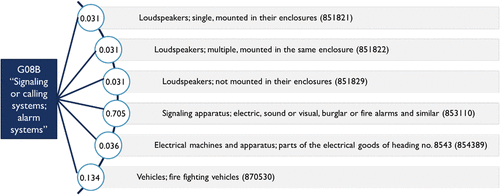
Whereas measurement error and misclassification still exist, these effects are partially mitigated by the probabilistic nature of the concordance and their weights (as opposed to a one-to-one mapping). The imbalance in the number of IPC4 codes (∼650) and HS6 codes (∼5,000) means that each IPC4 code maps onto multiple HS6 codes. Among the 669 unique HS6 product codes, there are 89 IPC4 technology codes associated with them. Firms whose patent portfolios are diverse in technology have their patent weights spread out among potentially dozens or hundreds of HS6 codes. This is offset after aggregating the patent counts to the HS4 level to match the levels of exports and offshoring.27 Importantly, in instances in which some product categories at the HS6 level are affected by the FDI policy change but others are not, we keep them separated such that there are two HS4 groups: one that was affected and one that was not. To address the problem of data sparseness further and to ensure that we have no negative values, we aggregate annual patent and export flows into patent and export cumulative stocks,28 which allows us to estimate our specification via a count (Poisson) model. In order to create patent stocks for each firm that precede the policy shock, we use patent flow data starting in 1995. Export stocks are created using data starting in 2000. In the econometric long-difference specifications introduced in the next section, we subtract stocks of patents or exports cumulated over periods of various length from the stocks that existed just before the policy shock. This first difference approach also has the advantage of removing trends in patenting/exporting over the time period.29
4.5. Final Sample
The final data set contains 484 firms that patent and/or offshore in 181 product categories over 11 years. Each product category is linked to the technological areas (patent classes) that are associated with it, so our product categories can be viewed as product-technology clusters. The data are measured at the firm-product category-year level and include 12,101 observations.30 All regression specifications are run on this sample unless otherwise specified. A product category is designated as affected by the policy shock if it is made up of products for which FDI restrictions were changed in 2001.
Over the course of this matching process, we lose a number of firms; only 484 of the original 792 firms do at least some patenting and/or offshoring to China. This sample attrition is not random as there are systematic differences between firms that patent and/or offshore and those that do neither. However, the remaining firms are the ones that are the most economically significant for Taiwan, particularly with regard to innovation and patenting as the majority of excluded firms tend to be smaller, less R&D-intensive, marginal producers.31 This sample attrition implies that we are measuring the average treatment effect only for multinational firms that do at least some patenting or offshoring to China.32
There are multiple ways in which we can define our sample, depending on how we treat observations in years in which there are no matched patent applications and/or no exports listed for that firm-product. In our base sample, we include a firm-product category in all years if there was either patenting or offshoring in that firm-product group at some point during our time period from 1995 to 2011. We, thus, allow for firm entry into and exit from both or either offshoring and patenting over this time period. Summary statistics for our data are provided in Table 1.
|

Table 1. Summary Statistics
| All years | Prepolicy (1995–2000) | Postpolicy years (2003+) | |
|---|---|---|---|
| Firms | 484 | 484 | 484 |
| Firms with at least one patent | 443 | 160 | 423 |
| Firms with at least one product category that was affected by policy | 88 | — | 88 |
| Product categories | 181 | 181 | 181 |
| Product categories with at least one patent | 176 | 162 | 174 |
| Product categories affected by policy | 19 | — | 19 |
| Firm-product categories | 12,101 | 12,101 | 12,101 |
| Firm-product categories with at least one patent | 8,977 | 2,163 | 7,907 |
| Firm-product categories affected by policy | 2,114 | — | 2,114 |
| Patent stock (mean-year) | 2.850 | 0.567 | 4.352 |
| (SD-year) | (63.13) | (20.57) | (79.82) |
| Max-min | 9,358.816–0 | 2,366.487–0 | 9,358.816–0 |
| Process patent stock (mean-year) | 0.912 | 0.321 | 1.271 |
| (SD-year) | (37.33) | (16.55) | (45.65) |
| Max-min | 5,314.628–0 | 1,956.209–0 | 5,314.628–0 |
| Product patent stock (mean-year) | 1.584 | 0.217 | 2.501 |
| (SD-year) | (31.50) | (5.03) | (40.96) |
| Max-min | 3,902.713–0 | 419.849–0 | 3,902.713–0 |
| Offshoring stock (M, mean-year) | 31.60 | 0.49 | 41.60 |
| (SD-year) | (101) | (1.07) | (116) |
| Max-min | 164,000–0 | 570–0 | 164,000–0 |
5. Empirical Methodology and Results
5.1. Baseline Regression Results: Measuring the Effect of Offshoring on Levels of Patenting
The core question that this section seeks to answer is as follows: when Taiwanese firms moved the manufacturing of certain products to China, what happened to the quantity of patenting in the technology areas associated with those product categories?
To answer this question, we start with a naïve Poisson pseudo maximum likelihood (PPML) long-differences model that exploits the correlation between offshoring and patenting within firms and products, and over time:
Table 2 reports the results, and they show a small, positive, but not statistically significant correlation between offshoring growth and patenting growth within a firm and product, a result that persists across long differences of varying length.36 However, these results are subject to a number of identification concerns, including the presence of time-varying unobservable demand shocks that raise both offshoring and innovation. Imagine a successful Taiwanese firm that confronts rapidly growing demand for some subset of its products in advanced country markets. In order to expand production of these products, it may establish subsidiaries in China that can produce these products on a larger scale (and at lower cost). At the same time, the firm seeks to increase its research effort in the technologies underlying these successful products, and the results of that effort show up as increased patenting in the classes linked to these products. We are, therefore, concerned about an upward bias in the regression results.
|
Table 2. Effect of Differenced Offshoring on Differenced Patents, PPML
| (1) | (2) | (3) | (4) | (5) | (6) | (7) | (8) | (9) | |
|---|---|---|---|---|---|---|---|---|---|
| 2003-0 | 2004-0 | 2005-0 | 2006-0 | 2007-0 | 2008-0 | 2009-0 | 2010-0 | 2011-0 | |
| Logged change in offshoring | 0.0506 | 0.0332 | 0.0279 | 0.0228 | 0.0214 | 0.0198 | 0.0198 | 0.0198 | 0.0172 |
| (0.0435) | (0.0375) | (0.0315) | (0.0313) | (0.0287) | (0.0287) | (0.0290) | (0.0286) | (0.0293) | |
| Observations | 12,101 | 12,101 | 12,101 | 12,101 | 12,101 | 12,101 | 12,101 | 12,101 | 12,101 |
Notes. The dependent variable is the long difference of the probability-weighted patent stock for a firm-product category between 2000 and a given year. Each column represents a different long difference, ranging from 2003 to 2011. The constant is suppressed but available upon request. The probability weights on the patent counts are generated by the algorithmic links with probabilities approach that generates a concordance between IPC patent classes and HS codes. Offshoring is the long difference of the value, in U.S. dollars, of export stock from China by Taiwanese firms between 2000 and the given year. Firm-clustered standard errors appear in parentheses.
***, **, and * denote statistical significance at the 1%, 5%, and 10% levels, respectively.
To address this concern, we use an IV strategy that exploits the policy shock described in Section 3. As noted in that section, a new party unexpectedly came to power in Taiwan in 2000, and in 2001, it lifted offshoring restrictions on 122 product categories. This presents us with a source of product-level variation; different groups were affected differentially by the policy shock. We divide product categories into two bins: categories containing products that were directly impacted by the policy change and product categories that were unaffected (e.g., all products within these categories either continued to be banned or continued to be approved). Although we acknowledge evidence of limited illegal offshoring of some of these previously banned products prior to 2001, we interpret the policy change as an exogenous shock that eased the ability of firms to offshore those products for which the ban was lifted. We create an indicator variable to divide the product categories into affected and unaffected groups and use this as our instrument. The baseline category is products unaffected by the policy change.37 As before, the dependent variable is the differenced stock of patents at the firm-product level, whereas the endogenous variable that we instrument for is the logged differenced stock of exports. Table 3 shows the baseline IV-Poisson results. Our results suggest that our concerns about a potential upward bias in the PPML regressions because of demand shocks or other time-varying unobservables are well-founded. When we instrument for offshoring using the policy shock instead of finding a null or positive effect as in the PPML regressions, we instead find a negative and statistically significant effect on patenting levels. This decline in patenting because of offshoring is consistent across all specifications, suggesting that the impact of offshoring on the level of patenting is negative. These regression coefficients can be interpreted as elasticities, implying that a 100% increase in offshoring is associated with a decline in patenting in the offshored product categories that varies between 40% and 47%.38 As with the PPML model, we estimate our long-differenced model nine times, one for each postpolicy shock year, to see the dynamic impact of the effect. What becomes clear is that the impact persists at least through 2011, and the effect appears to have occurred quite quickly rather than as a gradual increase over time.
|
Table 3. IV Regressions, Effect of Differenced Offshoring on Patent Counts, IV-Poisson (GMM)
| (1) | (2) | (3) | (4) | (5) | (6) | (7) | (8) | (9) | |
|---|---|---|---|---|---|---|---|---|---|
| 2003-0 | 2004-0 | 2005-0 | 2006-0 | 2007-0 | 2008-0 | 2009-0 | 2010-0 | 2011-0 | |
| Second stage | |||||||||
| Log change in offshoring | −0.431** | −0.400** | −0.404** | −0.418** | −0.414** | −0.447** | −0.437** | −0.439** | −0.466** |
| (0.185) | (0.174) | (0.160) | (0.169) | (0.180) | (0.194) | (0.201) | (0.199) | (0.203) | |
| Observations | 12,101 | 12,101 | 12,101 | 12,101 | 12,101 | 12,101 | 12,101 | 12,101 | 12,101 |
| Mean dependent variable | 0.927 | 1.369 | 1.871 | 2.509 | 3.162 | 3.884 | 4.645 | 5.486 | 6.317 |
| First stage F-statistic (2SLS) | 77.836 | 97.282 | 102.484 | 116.658 | 141.640 | 143.838 | 143.244 | 137.349 | 126.269 |
Notes. The dependent variable is the long difference of the probability-weighted patent stock for a firm-product category between 2000 and a given year. Each column represents a different long difference, ranging from 2003 to 2011. The probability weights on the patent counts are generated by the algorithmic links with probabilities approach that generates a concordance between IPC patent classes and HS codes. Offshoring is the long difference of the value, in U.S. dollars of export stock from China by the same Taiwanese firms in the same product category between 2000 and the same given year. The specifications are IV specifications, for which the instrument is a dummy variable set to one if the product category was affected by the 2001 policy change and zero otherwise. The first stage F-statistic comes from the 2SLS OLS specification with log change in offshoring as the dependent variable. Constant is suppressed and is available upon request. Firm-clustered standard errors appear in parentheses.
***, **, and * denote statistical significance at the 1%, 5%, and 10% levels, respectively.
For this instrument to be valid, our instrument needs to be highly correlated with the potentially endogenous variable. We can measure this directly by looking at the F test of excluded instruments from a two-stage least squares (2SLS) version of our regressions; these tests clearly show that our instrument is strongly correlated with exporting.39 We must also assume that the product categories and firms that were impacted by the policy shock were not systematically more or less technologically dynamic than the ones that were unaffected. This is tantamount to assuming that, whatever technological opportunity shocks might have been affecting our sample firms, there were no systematic differences in the incidence and direction of these shocks between affected and unaffected product categories. Provided this assumption holds, our exogenous policy shift only affects patenting through changes in offshoring and is unrelated to time-varying unobservable factors such as product-specific demand and technology shocks.
A close examination of the details of the policy shift provides grounds for believing that this assumption is reasonable. The text describing the investment restrictions that were retained by the Chen administration emphasizes international conventions prohibiting trade in certain goods, weapons-related technologies, and investment in mainland infrastructure. These would not appear to be systematically related to important positive or negative technological opportunity shocks impacting Taiwanese electronics firms.40 The 122 product categories that were liberalized in 2001 are revealed, upon close inspection, to be a mix of both high-tech and low-tech products, but if anything, the list of formerly prohibited but now permitted categories seems biased in the direction of high-tech products with significant underlying technological opportunity for further innovation, including laptops, mobile phones, digital optical drives, and computer hardware and software.41 The product categories affected by the FDI regime change appear to be more likely rather than less likely to benefit from positive technological opportunity shocks after the policy shift, possibly biasing us in the direction of finding a positive relationship between offshoring and innovation. The fact that our IV regressions consistently indicate a negative relationship is, therefore, reassuring. To deal more systematically with the possibility that some of our product categories are becoming more technologically dynamic than others even before the FDI policy shift, we also run regressions explicitly controlling for global pretrends in the product category level patenting data. Our results are qualitatively robust to the inclusion of this control as shown in Table 3.
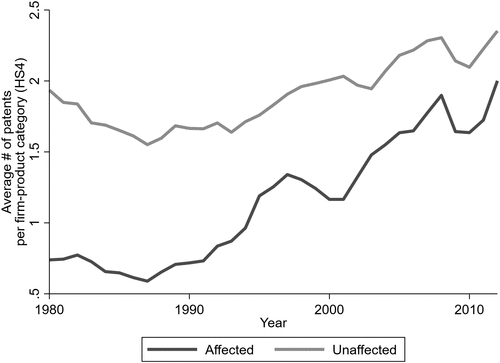
A graph of average USPTO patenting trends in the United States for affected versus unaffected product categories, shown in Figure 5, is also supportive of the view that the 122 product categories that were liberalized were not systematically less technologically dynamic than the ones that were unaffected. This figure addresses the concern that the shifts in patenting could reflect broader trends in the underlying technological opportunities facing different technology clusters by plotting changes over time in patenting by U.S. firms in the patent classes associated with the product categories affected and not affected by the Taiwanese policy change. The gap in patent numbers taken out by U.S. firms narrows significantly across these groups over time. If we were worried about global technology trends confounding our results, we would expect to observe a widening gap in the years 2001–2011. If anything, the broader technology trends reflected in patenting by U.S. firms appear to be biasing us against the results that we find for Taiwanese firms.42
As an additional test to defend against the argument that the 122 affected products were chosen precisely because they were technologically more mature or less dynamic, we adopt a second identification strategy as a robustness check. Specifically, we collect patent data in the affected technology areas and compare technology trends in those domains for Taiwanese firms as opposed to Japanese and Korean firms in a long differences framework similar to the ones used earlier. Importantly, the sample is restricted to only contain the technology classes that relate to the 122 affected products in all three countries. Specifically, we run the following specification:
|
Table 4. Long Differenced PPML Regressions
| (1) | (2) | (3) | (4) | (5) | (6) | (7) | (8) | (9) | |
|---|---|---|---|---|---|---|---|---|---|
| 2003-0 | 2004-0 | 2005-0 | 2006-0 | 2007-0 | 2008-0 | 2009-0 | 2010-0 | 2011-0 | |
| Treat = 1{Taiwanese firms} | −1.090*** | −0.896*** | −0.854*** | −0.767*** | −0.720*** | −0.639** | −0.542* | −0.495* | −0.460 |
| (0.270) | (0.275) | (0.270) | (0.273) | (0.275) | (0.280) | (0.286) | (0.296) | (0.302) | |
| Observations | 9,392 | 9,391 | 9,391 | 9,391 | 9,391 | 9,390 | 9,389 | 9,387 | 9,389 |
Notes. The dependent variable is the long difference of the probability-weighted patent stock for a firm-product category between 2000 and a given year. Each column represents a different long difference, ranging from 2003 to 2011. The specifications are PPML specifications. The treatment group is Taiwanese firm, whereas the control group is Korean and Japanese firms. The sample is restricted to only include affected product categories. The constant is suppressed and is available upon request. Firm-clustered standard errors appear in parentheses.
***, **, and * denote statistical significance at the 1%, 5%, and 10% levels, respectively.
5.2. Robustness Checks
We run a number of additional robustness checks. These robustness checks are shown in Table 5 for the 2007 − 2000 long-differenced results.43 Column (1) displays the same baseline results as column (5) of Table 3 as a comparison. Column (2) shows robustness to standard errors clustered at the product level. Column (3) estimates the impact of changes in offshoring on forward citation-weighted44 patent counts to identify whether the negative effect on patenting is stronger for patents with higher citations; the results suggest that the impact was not driven by a decline in marginal or incremental innovation. Columns (4)–(6) test robustness by, first, limiting our subsample to the set of firms that patent and offshore, then to removing Foxconn from the sample, then to controlling for pretrends in patenting as discussed in the previous section. Columns (1)–(6) all use an IV Poisson specification.
|
Table 5. Robustness Checks
| Model | IV-Poisson (GMM), dependent variable not transformed using the 2007 − 2000 long difference | 2SLS, dependent variable transformed using ln(y + 1) | |||||||
|---|---|---|---|---|---|---|---|---|---|
| (1) | (2) | (3) | (4) | (5) | (6) | (7) | (8) | (9) | |
| Baseline | Standard error clustered at product level | Citation weighted | Offshoring and patenting firm subsample | No foxconn | Pretrend control | Lee et al adjusted t-statistic | Extensive margin of exporting | Firm and year fixed effects | |
| Second stage | |||||||||
| Log change in offshoring | −0.414** | −0.414** | −0.506*** | −0.408** | −0.239** | −0.393** | −0.0227*** | ||
| (0.180) | (0.175) | (0.166) | (0.180) | (0.0970) | (0.187) | (0.00668) | |||
| 1{any offshoring} | −0.314*** | ||||||||
| (0.0918) | |||||||||
| Log of offshoring | −0.0152** | ||||||||
| (0.00667) | |||||||||
| Observations | 12,101 | 12,101 | 12,101 | 8,931 | 11,931 | 11,135 | 12,101 | 12,101 | 145,212 |
| First stage F-statistic (2SLS) | 141.640 | 141.640 | 141.640 | 177.45 | 142.37 | 152.11 | 141.945 | 125.66 | 164.498 |
| Adjusted standard error | 0.00668 | ||||||||
| Adjusted 5% lower bound | −0.0358 | ||||||||
| Adjusted 5% upper bound | −0.0096 | ||||||||
Notes. The dependent variable is the long difference of the patent stock for a firm-product category between 2000 and 2007. Results are robust to other year choices besides 2007. Each column represents a different robustness check. The probability weights on the patent counts are generated by the algorithmic links with probabilities approach that generates a concordance between IPC patent classes and HS codes. To adjust for truncation, the citation weight is the average number of forward cites per year that each patent has received. Offshoring is the long difference of the transformed value, in U.S. dollars, of export stock from China by the same Taiwanese firms in the same product category, between 2000 and the same given year. The specifications are IV Poisson specifications in columns (1)–(6) and 2SLS specifications in columns (7)–(9), in which the instrument is a dummy variable set to one if the product category was affected by the 2001 policy change and zero otherwise. First stage F-statistics are reported for all specifications even in the IV Poisson specifications. In those instances, the F-statistics come from a 2SLS variant and are there simply to show the instrument is not weak. Firm-clustered standard errors appear in parentheses (except in column (2), in which they are clustered at the product level).
***, **, and * denote statistical significance at the 1%, 5%, and 10% levels, respectively.
Column (7) tests robustness to the correction to t-statistics proposed by Lee et al. (2022). Next, we examine the extensive margin of having any exports in a given product category in column (8) and find, again, a robust negative result. Finally, instead of using a long-differences strategy, in column (9), we replace the long differences with a standard panel 2SLS regression that includes firm and year fixed effects. These last robustness checks use a 2SLS approach rather than an IV Poisson approach because of challenges with convergence.
We also examine whether our results are sensitive to how we define the unaffected product categories in our instrumental variable strategy. The baseline specification groups together all product categories that were not directly liberalized by the 2001 policy change, including both those that had never been restricted and those that were always restricted. To probe the importance of this grouping, we reestimate our baseline specification using each control group separately: once comparing affected product categories only to never restricted ones and once comparing only to always restricted ones.
The results, presented in Online Table A7.2, reveal an important asymmetry. We find no significant effect when comparing affected with never restricted categories but a strong negative and statistically significant effect when comparing affected with always restricted categories. This suggests that the decline in patenting we estimate is concentrated in cases in which Taiwanese firms newly gained the ability to offshore production rather than in categories that had long been offshoreable and may have already adjusted their R&D behavior. These findings further support our interpretation that the policy change triggered a shift in innovation strategy rather than merely reflecting differences in product life cycle or existing offshoring trends.
The robustness of these results suggests that the significant increase in offshoring by Taiwanese firms to China in response to President Chen’s 2001 policy significantly slowed the growth in patenting by Taiwanese firms in technologies linked to the affected product categories relative to the growth in patenting that would have happened had manufacturing of those products remained in Taiwan.
5.3. Measuring the Effect of Offshoring on the Nature of Patenting
Our baseline results point to negative aggregate effects of offshoring on patenting. In this section, we examine whether offshoring production changes the nature of innovation through its impact on the incentives facing the offshoring firm. The theoretical prediction of the direction of the effect on the nature of innovation is ambiguous. One argument is that a shift in the firm’s innovation strategy may occur if the geographic separation of manufacturing from R&D diminishes innovative capability through the reduction of tacit knowledge flows. We might logically expect that it is in the domain of process innovation that the link between R&D and manufacturing is the strongest as suggested by Pisano and Shih (2009). A decline in R&D capability associated with offshoring might result in an overall decline in R&D investment (as reflected by fewer patents) and a disproportionate decline in process R&D as reflected by far fewer process patents.
A different view, which we associate with the work of Erica Fuchs, suggests that offshoring does not curtail R&D capabilities so much as it shifts R&D incentives. To review this argument, consider that our Taiwanese firms are offering their prospective customers a set of products, each of which represents a trade-off between price and performance. They could potentially sell more by lowering the cost or enhancing the performance or both. Whereas process innovation could potentially impact performance or cost, economists often think of process innovation as being focused primarily on reducing the cost of an existing good with a relatively fixed level of performance (Klepper 1996). Alternatively, Taiwanese firms could increase sales and profits by enhancing product performance, and this could come primarily through the replacement of old products with new, better products offering a higher level of performance (i.e., product innovation). If offshoring is not an option, firms are constrained to rely on some mix of product and process innovation to increase the appeal of their product portfolio, and both kinds of innovation require costly effort on the part of the firm’s engineers.
Now, imagine that offshoring becomes an option for this product. Suddenly, the firm can achieve the goal of cost reduction by offshoring production rather than relying solely on process innovation. Offshoring production to a lower cost site might offer the firm the opportunity to achieve large-scale cost reductions at a relatively low resource cost. Moreover, once the product is moved to the lower cost site, additional process innovations that take advantage of the lower cost factors available in the new site could yield further cost declines that might have been impossible to engineer if the product remained in the home country. In short, moving a relatively mature product to a lower cost location could, by reducing costs, give it a new lease on life, enabling the firm to postpone the replacement of the product with something new. That, in turn, allows the firm to avoid or at least defer costly investments in risky product innovation.
However, offshoring production may not enhance the appeal of every product. For some products, better performance is the only viable pathway to higher sales, and that can only be achieved by (costly and risky) product innovation. If the product portfolio of the firm in question has both kinds of products, then an exogenous shock that lowers the cost of offshoring for some products could have the following chain of effects. For the newly offshored products, firms find that the large cost declines allow them to offer customers lower prices at a relatively low resource cost. The new factor costs associated with the new site open new possibilities for cost reduction. Pursuing those opportunities through some degree of additional process innovation further lowers the price, making refinement of the processes associated with the current product more attractive than replacing the (now less costly) product with something new. In short, this third view implies a reduction in overall R&D effort (as evidenced by fewer patents) and an especially sharp reduction in product innovation. Here, the relative decline in patenting arises not because of a rise in costs or a decline in capabilities but a shift in incentives. A graph of the average firm-product patenting data in our sample, shown in Figure 6, is consistent with this narrative, in which the slower growth in innovation in affected categories relative to unaffected categories is clearly driven by slower growth in product innovation.
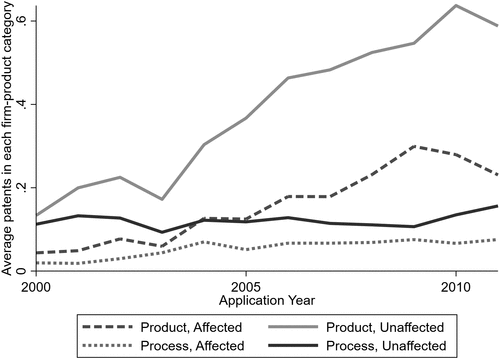
More nuanced regressions can provide more rigorous evidence on this point. Table 6 provides comparable results to Table 3 but with an important change: the dependent variable is the stock of process patents in column (2) and the stock of product patents in column (3), calculated for the 2007 − 2000 time horizon.45 Column (1) provides a reference point. The results support our hypothesis: innovation in the products that were offshored shifted primarily away from product innovation. The negative effect on innovation in the product categories that were offshored came primarily from a reduction in product patents, whereas the coefficients on process patenting in the offshored product categories are smaller and the implied negative effect is not statistically significant. Movement of production to China appears to have no significant impact on the relative attractiveness of investing in process innovation although it seems to have come at the expense of further investment in product innovation.
|
Table 6. The Effect of 2007 − 2000 Differenced Offshoring on the Nature of Patenting, IV Poisson (GMM)
| (1) | (2) | (3) | (4) | (5) | |
|---|---|---|---|---|---|
| Dependent variable | Total patents | Process patents | Product patents | Total patents | Total patents |
| Sample | Full sample | Full sample | Full sample | Process-oriented subsample | Product-oriented subsample |
| Second stage | |||||
| Logged change in offshoring | −0.414** | −0.141 | −0.416*** | −0.289 | −1.299*** |
| (0.180) | (0.0875) | (0.183) | (0.159) | (0.0247) | |
| Observations | 12,101 | 12,101 | 12,101 | 6,161 | 5,639 |
Notes. The dependent variable is the long difference of the patent stock for a firm-product category between 2000 and 2007. Each column represents a different dependent variable or sample. The probability weights on the patent counts are generated by the algorithmic links with probabilities approach that generates a concordance between IPC patent classes and HS codes. Offshoring is the long difference of the transformed value, in U.S. dollars, of export stock from China by the same Taiwanese firms in the same product category between 2000 and the same given year. The specifications are 2SLS specifications, in which the instrument is a dummy variable set to one if the product category was affected by the 2001 policy change and zero otherwise. There were convergence issues with columns (4) and (5) in the IV Poisson (GMM) specification in which we had to place strict boundaries on the conditions (starting values and tolerance) in order to obtain convergence. Firm-clustered standard errors appear in parentheses.
***, **, and * denote statistical significance at the 1%, 5%, and 10% levels, respectively.
We dig deeper into these results by categorizing each of our 181 product categories as either more product-oriented or more process-oriented in terms of patenting in 200046 (prior to the shock) and examine how the nature of innovation associated with these products changes after the offshoring shock. The optimal mix of product and process innovation is likely to vary across these groups because of technological factors and market conditions. But the larger question is whether offshoring changed this mix within groups.
Column (4) runs the same analysis but for the subsample of more process-oriented categories, whereas column (5) shows the results for a subsample of more product-oriented categories. These columns show that the negative patenting results of Section 5.1 are driven largely by a reduction in patenting in categories that were more product innovation–oriented before the policy shock. The coefficients in column (5) (more product-oriented offshored categories) are significantly larger than those of column (1) (all offshored categories). In contrast, the coefficients in column (4) (more process-oriented offshored categories) are not statistically significant and smaller.
The results suggest that, when a Taiwanese firm is newly able to offshore a product to China in response to the policy shock of 2001, the scale of the ensuing reduction in associated patenting was dependent on whether they were engaged in more process or product innovation in that category prior to offshoring. If the firm was doing more product innovation in that group before it moved production to China, the innovation decline was steeper as the firm ceased performing product innovation in that category. If, however, it was doing more process innovation in that group at that time, innovation in that category was mostly unaffected. If offshoring changes incentives but not capabilities, this is exactly what we expect to see in the data.
5.4. Direct and Indirect Effects of Offshoring
So far, our findings have revealed offshoring’s impact on both the nature and levels of innovation in the product categories that were directly impacted by the sudden policy shift. We show that an exogenous, policy-induced increase in offshoring reduces patenting in affected product categories, and it appears to do so mostly by reducing product innovation. Whereas our results capture the direct effect of offshoring in these product categories within firms, there may be an indirect effect that we are not yet properly measuring, which emerges as the result of within-firm reallocation of R&D effort in response to the policy change.47
Our results so far suggest that, when Taiwanese firms offshore products, the lower costs obtained through movement to a lower cost production site can enable them to reduce investments in product innovation. These firms can then reallocate some of the R&D resources saved through offshoring toward development of other products, thereby leading to an increase in patents in other parts of their patent portfolio. To the extent that this reallocation occurs, it is likely to be concentrated in product categories that are not directly impacted by the policy shock but are technologically proximate to the affected categories.48 If the resource reallocation reflects the reassignment of engineers already employed by the firm from offshored product categories to other parts of the firm portfolio, then their contributions would likely be greatest in product categories that are similar to the ones on which they were already working.
These conjectures lead to the hypothesis that product categories that are technologically proximate to product categories directly impacted by the offshoring shock could themselves be indirectly impacted through reallocations of R&D resources within the firm. To test this hypothesis, we run the following specification:

Here, we use the subscript m rather than the previously used j subscript to denote the product-tech cluster, where . Patenting in firm i, product-tech cluster m, in long-differenced period t is regressed on the exogenous increase in offshoring for firm i, product-tech cluster m, period t if any, and the indirect effect, constructed using a measure of technological proximity , which we define as the Euclidean distance of the technological composition49 measured between each product pair and the fitted values from the first stage.
It is important to clarify that we do not treat the direct and indirect effects as two separate endogenous variables. We have a single endogenous regressor (offshoring) that is instrumented using the 2001 policy shock. The indirect effect term is constructed by taking the fitted values of this instrumented offshoring variable and aggregating them across all unaffected product-tech clusters, weighted by their proximity to the focal cluster m. In other words, both the direct and indirect effects flow from the same instrumented variation in offshoring. Because the indirect effect is constructed separately, the standard errors may be underestimated. To address this, we use firm-clustered bootstrapped standard errors throughout this section.
This strategy allows us to separately identify how the same policy-induced shift in offshoring influences innovation outcomes within directly affected clusters and in other unaffected but technologically related areas of the firm’s portfolio. The results are shown in Table 7.
|
Table 7. The Direct and Indirect Effect of Offshoring on the Level of Innovation, IV Poisson (GMM)
| (1) | (2) | (3) | (4) | (5) | (6) | (7) | (8) | (9) | |
|---|---|---|---|---|---|---|---|---|---|
| 2003-0 | 2004-0 | 2005-0 | 2006-0 | 2007-0 | 2008-0 | 2009-0 | 2010-0 | 2011-0 | |
| Predicted offshoring, direct effect | −0.625 | −0.493* | −0.603* | −0.600 | −0.595 | −0.639* | −0.614* | −0.628 | −0.672** |
| (0.825) | (0.260) | (0.366) | (0.508) | (0.429) | (0.370) | (0.340) | (0.566) | (0.320) | |
| Predicted offshoring, indirect effect | 0.0275 | 0.0223*** | 0.0236** | 0.0218 | 0.0207** | 0.0206*** | 0.0202*** | 0.0205** | 0.0207*** |
| (0.0300) | (0.00643) | (0.00971) | (0.0133) | (0.00816) | (0.00705) | (0.00451) | (0.0102) | (0.00405) | |
| Observations | 12,101 | 12,101 | 12,101 | 12,101 | 12,101 | 12,101 | 12,101 | 12,101 | 12,101 |
Notes. The dependent variable is the long difference of the patent stock for a firm-product category between 2000 and 2007. The probability weights on the patent counts are generated by the algorithmic links with probabilities approach that generates a concordance between IPC patent classes and HS codes. To adjust for truncation, the citation weight is the average number of forward cites per year that each patent has received. Offshoring is the long difference of the transformed value, in U.S. dollars, of export stock from China by the same Taiwanese firms in the same product category between 2000 and the same given year. The indirect effect consists of distance-weighted offshoring of related HS goods. Firm-clustered 200× bootstrapped standard errors appear in parentheses. All tables and columns contain 12,084 observations.
***, **, and * denote statistical significance at the 1%, 5%, and 10% levels, respectively.
The results provided in Table 7 show a positive and statistically significant indirect effect from offshoring that is consistent with our hypothesis. The estimated magnitudes of the indirect effects are consistently smaller than the estimated direct effects, but our estimates may reflect a lower bound of the true magnitude because our empirical approach only allows us to capture the reallocations that take place within firms. To the extent that the reallocation of Taiwanese firm engineering talent takes place across firms within the electronics industry (or even across industries), we are unable to capture those movements with our empirical specification even if they are induced by the exogenous offshoring policy shock.50 The Taiwanese electronics sector has historically been characterized by a high degree of interfirm labor mobility (Saxenian 1999), strengthening our view that our estimates of the indirect effect may capture a lower bound.51
Given these caveats, the statistical robustness of our estimates of the indirect effect are striking. Even though they capture only part of the reallocation effects postulated by theoretical economic models of offshoring (e.g., Helpman 1993, Branstetter and Saggi 2011), their significance and salience provide what we believe to be the first causal empirical evidence of the existence of these effects. Whereas our results are obtained in the context of an offshoring shock, we think similar effects could exist in the context of the import shocks recently investigated by other researchers, including Autor et al. (2020). The results of Bloom et al. (2016) point to this possibility, but more research is needed to examine this hypothesis.
When we allow for indirect effects, the estimated direct effect becomes less precisely measured, typically significant only at the 10% level. We believe this reflects both the use of a conservative bootstrap approach to the estimation of standard errors and the consequences of relaxing the stable unit treatment value assumption (SUTVA) implicitly imposed in earlier regression tables. Based on the results in Table 7, we can now reinterpret our earlier results as consistent with the view that R&D effort appears to fall in the domains directly affected by offshoring because firms are redirecting that R&D effort elsewhere; at least, this is a significant component of the estimated decline. Put another way, the evidence presented in our last regression table strengthens our main view that offshoring does not appear to significantly destroy innovative capability so much as redirect innovative effort.
When we examine the direct and indirect effects of the offshoring shock on process and product innovation separately, as in columns (2) and (3) of Table 8, we see a reflection of the results obtained in Table 6. The direct negative effect appears to be concentrated in product patenting rather than process patenting, in which that effect is statistically indistinguishable from zero. The indirect effect appears to be positive and significant in product patenting, suggesting some redirection of research resources out of offshored categories and into product R&D in categories not offshored. One final extension we consider is whether the magnitude of the indirect effect changes when we weight the indirect effect by the relative importance of patenting in that product category for a given firm prior to the policy change. The argument here is that product categories that loom especially large in the firm’s patenting portfolio in the prepolicy period may have more resources to reallocate across the firm’s portfolio. Therefore, we expect the measured indirect impact generated by offshoring shocks to these categories to be larger. This is exactly what we find in Table 8, column (4), in which the indirect effect’s estimated magnitudes, when weighted by the importance of that product category to the firm’s portfolio in 2000 are significantly higher than our baseline results seen in Table 7 (also shown in column (1) of Table 8 for reference). We also find that the estimated negative direct effects also become larger in magnitude and easily exceed standard thresholds for statistical significance. These results strengthen our interpretation of the estimated effects in both tables.
|
Table 8. The Direct and Indirect Effect of Offshoring for the 2007 − 2000 Long Difference, IV Poisson (GMM)
| (1) | (2) | (3) | (4) | |
|---|---|---|---|---|
| Total patents (baseline) | Process patents | Product patents | Total patents, weighted by category importance | |
| Predicted offshoring, direct effect | −0.595 | −0.422 | −0.599* | −2.582*** |
| (0.508) | (0.656) | (0.353) | (0.790) | |
| Predicted offshoring, indirect effect | 0.0207* | 0.0207 | 0.0210*** | 0.0540** |
| (0.0109) | (0.0185) | (0.00562) | (0.0214) | |
| Observations | 12,084 | 12,084 | 12,084 | 12,075 |
Notes. The dependent variable is the long difference of the patent stock for a firm-product category between 2000 and 2007. Results are robust to other year choices besides 2007. Each column represents a different dependent variable. The probability weights on the patent counts are generated by the algorithmic links with probabilities approach that generates a concordance between IPC patent classes and HS codes. To adjust for truncation, the citation weight is the average number of forward cites per year that each patent has received. Offshoring is the long difference of the transformed value, in U.S. dollars, of export stock from China by the same Taiwanese firms in the same product category between 2000 and the same given year. The indirect effect consists of distance-weighted offshoring of related HS goods. Two hundred times bootstrapped firm-clustered standard errors appear in parentheses. In column (4), the “predicted offshoring, indirect effect” variable is weighted by the share of firm patenting prepolicy change, 1995–2000. Formally, the weight is , where i indexes product categories and j indexes firms.
***, **, and * denote statistical significance at the 1%, 5%, and 10% levels, respectively.
6. Discussion and Conclusions
Over the past decades, global manufacturing has shifted significantly with multinational firms offshoring production to lower wage countries yet retaining skill-intensive activities such as marketing, strategy, and R&D domestically. The impact of this shift on firms’ innovation capacity has been widely debated. Some argue that offshoring enhances innovation by reallocating resources more efficiently, whereas others claim it weakens innovation by reducing learning by doing and creating barriers to knowledge transfer between R&D and production. Resolving these theoretical ambiguities empirically is challenging because of the endogenous relationship between offshoring and innovation.
This paper contributes to the debate by analyzing the Taiwanese electronics industry and leveraging a plausibly exogenous policy shock that lifted offshoring restrictions to China for certain product categories. Our findings reveal that offshoring led to a decline in innovation within patent classes tied to affected product categories. However, the nature of this decline does not align with theories predicting weakened R&D capabilities because of offshoring, which primarily impact process innovation. Instead, we observe minimal effects on process innovation with the decline driven largely by reduced product innovation. We interpret this evidence as suggesting that Taiwanese firms are not suffering from a decline in R&D capability as a consequence of offshoring but are instead adopting a new optimal mix of offshoring, product innovation, and process innovation investments as a rational response to the opportunities generated by liberalization of Taiwan’s former offshoring restrictions
We also provide new causal evidence that offshoring prompts a reallocation of resources within the firm, reducing innovative effort in some areas and boosting it in others. Interviews with senior managers of several of the Taiwanese firms52 in our data set support this finding. For example, one firm described offshoring production to cut costs, focusing on product development in Taiwan, using the metaphor “[we] built the chicken in China, but we have to feed it with new products developed in Taiwan.” Another firm described shifting its focus from process innovation to product design postoffshoring. These interview accounts are consistent with aggregate patent data trends for Taiwanese firms over our sample period (illustrated in Figure 6), which show significant growth in overall patenting, predominantly in product innovation and in categories unaffected by the offshoring shock despite large increases in offshoring. Using the empirical methods outlined in this paper, we can attribute part of that increase in patenting to the increase in offshoring.
If offshoring of production undermined innovative capabilities anywhere, we might expect to observe this in the Taiwanese information technology (IT) sector as it existed in the early 2000s. Given their historic role as contact manufacturers of foreign (often American) firms’ designs, Taiwanese firms excelled in incremental process technology improvements rather than radical product technology breakthroughs (Branstetter and Kwon 2018). These are believed to be the kinds of R&D most closely associated with manufacturing. When Taiwanese IT offshoring massively accelerated after the shock, we might have expected dramatic declines in Taiwanese IT innovative capability. Yet this does not seem to have occurred.
We should exercise caution in generalizing from our results to other contexts. Nevertheless, if large increases in offshoring did not undermine innovative capability in Taiwan, then we should have even less reason to fear that outcome in a context such as the United States, where the transition to innovation focused on advances in product design is better established and the leading IT firms, such as Apple and Nvidia, appear to have leveraged a transition away from manufacturing into a new era of global technological leadership.
More research is required to determine the degree to which the lessons derived from this paper really do apply to other industries, countries, and time periods. We believe that the methods introduced in this paper provide a means of undertaking a more granular, nuanced approach to studying offshoring’s effects, and they may constitute a useful foundation upon which future scholarship can build.
The authors thank the editor and anonymous referees for constructive comments and suggestions. The authors also gratefully acknowledge helpful feedback from Emek Basker, Tain-Jy Chen, Erica Fuchs, Brad Jensen, Guangwei Li, Brian Kovak, Richard Freeman, John Van Reenen, Yanbo Wang, and Steve Yeaple, as well as participants at the NBER Innovation Summer Institute. The authors thank Steve Bao and Liujie Wu for excellent research assistance. The authors are grateful to Chih-Hai Yang of National Central University for assistance in obtaining the customs data used in earlier related work. Britta Glennon thanks National Central University of Taiwan for its hospitality and intellectual support. Financial support from the National Science Foundation (1360170), Portuguese National Science Foundation, and the Mack Institute is gratefully acknowledged. All remaining errors are the authors’ own.
1 The work of Fort et al. (2020) can also be seen as providing indirect support for this view in the context of U.S. manufacturing and R&D plants.
2 An illustrative figure corresponding to the text in this and the following paragraphs is provided in Online Appendix A2. The figure uses a shift in the isocost curve facing the firm to illustrate this theoretical discussion.
3 For more detail about Taiwan before the controversial presidency of Chen Shui-Bian, see Chase et al. (2004) and Yang (2010).
4 In reality, this policy was not totally effective in stopping the flow of capital to China; some investment slipped in through intermediaries such as the Cayman Islands and Hong Kong. However, there were some high-profile instances of major companies and individual executives being fined for illegal investment in mainland China before the policy change (e.g.: UMC, SMIC, Robert Tsao, Richard Chang, Tsai Juei-chen, Tsai Kuan-ming), indicating that the regime was not toothless. In short, the policy restrictions constrained—but did not entirely halt—FDI in China.
5 For more detail about Taiwan under Chen Shui Bian’s controversial presidency, see Wang (2002), Tung (2005), Tanner (2007), Yang (2010), and Tung (2003).
6 The mainland government responded to this vote with ominous warnings, missile tests, and military exercises. The U.S. government was so concerned by the threats emanating from the mainland regime of Jiang Zemin that President Bill Clinton ordered a U.S. Navy carrier task force to enter the Taiwan Strait—long regarded by China as territorial waters—as an unmistakable expression of support for Taiwan.
7 See his (English version) inaugural speech http://www.mac.gov.tw/ct.asp?xItem=50894&ctNode=5913&mp=3&xq_xCat=2000 and cross-century remarks (English version) http://www.mac.gov.tw/ct.asp?xItem=50875&ctNode=5913&mp=3&xq_xCat=2001.
8 The Chen government also made other changes to cross-strait economic ties, but we focus on the active opening and effective management policy as the most relevant for our empirical setting. In January 2001, the Three Mini Links (小三通) policy was enacted, legalizing direct trade, postal service, and travel between Quemoy (Kinmen) and Matzu in Taiwan and the adjacent ports of Fuzhou and Xiamen in China for the first time since the Chinese Civil War. Then, President Chen established the Economic Development Advisory Committee (經發會) to discuss ways to stimulate Taiwan’s economy and plan future economic development. Cross-straits economic relations were one of five key areas of discussion.
9 The complete list of products, identified by their HS code, is in Online Appendix A1.
10 For more information about the semiconductor industry’s move to mainland China, see Klaus (2003) and Yang and Hung (2003).
11 The new framework introduced by the Chen administration continued to influence cross-straits trade even after Chen left office in 2008. His successor, KMT candidate Ma Ying-Jeou, also sought to expand Taiwanese trade and investment with the mainland and eventually concluded the so-called Economic Cooperation Framework Agreement with mainland China, but this had relatively little impact on Taiwan’s electronics industry over our sample period.
12 See the Institute for Information Industry (III), 2009 Conference Series on the Development Trend of the World Information and Telecommunication Industry–ICT Day, Taipei, III, MIC, November 25, 2008.
13 See Cato Institute, “Patent Tigers” and Global Innovation.
14 In 2020, 5 of the top 10 OEM electronics manufacturers in the world by revenue were Taiwanese companies (Foxconn, Pegatron, Wistron, New Kinpo, and ASE), and all of the top 10 ODM electronics manufacturers were Taiwanese.
16 Combined firms include Wistron NeWeb Corp and Wistron Corp, Hon Hai and Foxconn, BenQ and Qisda, Lite-on companies, Pegatron and Asus, Hannstar companies, Arima companies, Chunghwa companies, Compal companies, Inventec companies, Nan Ya companies, Quanta companies, and PCHome companies. Firms that did not exist in 2000 include ADATA, Edison-Opto, MStar Semiconductor, Chimei Innolux, and Nuvoton.
17 See www.patentsview.org. Patentsview is supported by the office of the chief economist in the U.S. Patent and Trademark Office and is a collaboration between the USPTO, U.S. Department of Agriculture, the Center for the Science of Science and Innovation Policy, New York University, the University of California at Berkeley, Twin Arch Technologies, and Periscopic.
18 Prior research and press accounts show that, in the aggregate, Taiwanese electronics firms are enthusiastic users of the U.S. patent system and tend to patent their more valuable inventions there with high frequency (Jung and Imm 2002).
19 Patents applied for in the Japanese Patent Office, EPO, and USPTO.
22 We can measure the total value of our Taiwanese firms’ sales, but we cannot break those sales down by product.
23 We have no way of breaking down the domestic sales of our firms’ mainland subsidiaries by product. However, in the context of the Taiwanese–Chinese relationship, our focus on Taiwanese firms’ exports from their Chinese subsidiaries is defensible. As Rosen and Wang (2011) and Branstetter and Lardy (2008) document, Taiwanese firms investing in China have intensively used China as an export base. Descriptive statistics at the industry level in Online Appendix A4 also show a decline in exports from Taiwan that coincide with an increase in exports from China in the affected products, further supporting this view.
24 Industry-level data reveal that China was, by far, the most important host country for Taiwanese electronics firms’ FDI over our sample period.
25 Industry sources assert that most Taiwanese production shifting to China occurred via their own affiliates.
26 The reweighting function is applied to each HS code to minimize type I errors in the IPC-HS linkage. The function is a modified version of Bayes’ theorem. The key idea is that certain keywords compiled from HS6 search terms are more likely to be captured in the patent data because the patent text is not randomly distributed. We want to mitigate this by controlling for the frequency that certain keywords generate a wide range of hits, whereas other key words (specificity) only generate a few. We, therefore, want to reduce the importance of the widely distributed keywords and simultaneously increase the importance of specific keywords.
27 In addition to the main exercise, we also experimented with clustering the HS6 product categories into more aggregate product clusters (approximately 28 categories) using K-means clustering based on technology proximity (via IPC classes) and export activity. The results qualitatively match our current set of findings and are available upon request.
28 Stocks are constructed without a depreciation rate. A robustness test that includes a 10% depreciation rate is provided in Online Appendix A7 and indicates qualitatively similar results.
29 Earlier versions of this paper used annual flows and addressed the data sparseness problem by aggregating patent and export data into 28 product-technology clusters as noted in the previous endnote. Results obtained from that approach to the data are qualitatively similar to those reported here.
30 There are 87,604 possible firm-product category combinations in a given year. However, most firms only have any sort of activity in a small subset of product categories. We drop the firm-product categories in which there is no activity (no exports or patents) for the entire duration of our analysis (1995–2011).
31 One can see this by comparing the average R&D spend in 2000 for the sample of 792 firms ($221,817 million) as compared with the average R&D spend for the reduced sample of 484 firms ($339,932 million). Similarly, the average revenue for the full sample was $21,262 million, whereas it was $28,118 million for the sample of 484 firms.
32 Including firms with no offshoring and no patents may mitigate some selection issues but introduces several confounding factors that lead to firms not offshoring or innovating for which we are unable to control. Note that the count model still allows us to take into account the extensive margin by capturing the variation in entry/exit into offshoring and innovation over time.
33 We utilize stocks because this allows some smoothing across years given the sparseness of our data. Note that the offshoring variable is transformed by ln(x + 1), whereas the patenting variable is kept as is. In all following specifications, unless otherwise specified, the offshoring variable is transformed by ln(x + 1).
34 To better reflect the date that the innovation actually occurs, we use the application date for granted patents rather than the grant date.
35 Note that, later, the Poisson specification suffers from convergence issues and lacks a first stage in our IV because it is estimated via generalized methods of moments (GMM). This prevents the reader from seeing whether our instrument is sufficiently strong. We, therefore, include first stage F-statistics taken from our 2SLS.
36 Note that alternative specifications that include both ordinary least squares (OLS) specifications with different transformations of the dependent variables are available upon request. We run a probit regression on patenting (extensive margin), a ln(x + 1) log-log specification and an inverse hyperbolic sine transformation of the dependent and independent variables. The last two specifications enable a simultaneous estimation of the intensive and extensive margins but can bias estimates (see Campbell and Mau (2021) for a discussion on the potential biases introduced by a ln(x + 1) transformation and Mullahy and Norton (2022) and Chen and Roth (2024) for a discussion on the challenges of an inverse hyperbolic sine transformation on sparse data).
37 As the reader sees, the phrase “unaffected by the policy change” refers to the first order, direct impact of the change in offshoring policy. To the extent that firms respond to the exogenous decline in offshoring costs in part of their portfolio by reallocating assets and effort to other parts of their portfolio, there could be second order, indirect effects in product categories for which offshoring regulations did not change. Indeed, we find evidence of it later in the paper.
38 The IV Poisson specification generates regression coefficients with a semielasticity interpretation. Because offshoring is measured in log differences, the regression coefficient estimated for offshoring approximates an elasticity. The average level of patenting across all firm-product-year cells, which is also provided in a table, is relatively low, reflecting the fact that this patenting is relatively concentrated in certain firms and products with many firm-product-year cells showing no patenting. That being said, a 40% decline is not a small effect.
39 Note that the first stage is not reported for our main model—the IV Poisson specification—because it is estimated via GMM. Therefore, the reported first stage F statistics here are from the 2SLS log-log specification.
40 For decades, Taiwan has heavily relied on weapons provided by the United States for its national defense. In contrast to Israel, Russia, or increasingly mainland China, Taiwanese firms are not considered to be innovators in weapons-related technologies. And, for obvious reasons, innovation in weapons-related technologies is systematically less likely to be patented than innovation in other domains.
41 However, we must exercise a degree of caution regarding our treatment of the semiconductor industry. In contrast to computer hardware, laptops, and digital optical drives, semiconductors were not fully liberalized in 2001. Instead, liberalization in this sector proceeded gradually over the next several years in a manner that appeared to involve a considerable degree of discretion on the part of the Chen administration. Press accounts suggest that this approach was motivated by a desire to keep the most technologically dynamic parts of Taiwan’s semiconductor industry—presumably the parts facing the most significant technological opportunities—in Taiwan. In earlier versions of the paper, we considered the semiconductor industry to be unaffected by the FDI regime change because only a few firms were allowed to invest—and only partially—in China. That classification decision could raise concerns about the validity of our identifying assumptions given the size of the semiconductor industry and its relatively strong performance in terms of patent growth over time. To deal with these concerns, we exclude the semiconductor sector (defined as HS 8541-8542 and 8486) from our analysis.
42 We conduct the same exercise for USPTO patents taken out by Korean and Japanese firms; those figures can be found in Online Appendix A6.
43 We focus on a single year’s difference for brevity and selected a year that fell in the middle of the sample period. The full results for columns are consistent across all years and are available upon request.
44 We use the total count of forward citations divided by (2012–current year) to address potential citation truncation concerns.
45 All of the different time horizons are available upon request; only 2007 − 2000 is shown here in the interest of space.
46 We simply divide the product categories by the share of total patenting in 2000 that was categorized as a process versus product patent. We then classify HS4 product categories as product- or process-oriented by whether or not the share of process patents is larger than 60%.
47 Exploring this possibility requires that we reconsider the SUTVA maintained until now and explicitly test for the possibility that the policy shock had an impact on patenting in the technologies associated with product categories not directly impacted by the shock.
48 Our thinking here is influenced by the “trapped factor model of innovation” presented in Bloom et al. (2013) and the evidence provided by Bloom et al. (2016).
49 In this case, the technological composition is the number of patents held across three-digit Cooperative Patent Classification classes for each product (HS4) group from 2000 to 2011; hence, it is not changing over time. This is inspired by the measure of technology proximity first presented in Jaffe (1986) and since utilized in many other studies.
50 The theoretical economic literature cited earlier in the paper emphasizes reallocation of resources across firms and even across industries.
51 Measurement error in the calculation of technological proximity across product categories could be an additional source of downward bias in our estimates.
52 These interviews took place by the authors in December 2018.
References
- (2020) Foreign competition and domestic innovation: Evidence from US patents. AER Insights 2(3):357–374.Google Scholar
- (2016) Trade induced technical change? The impact of Chinese imports on innovation, IT and productivity. Rev. Econom. Stud. 83(1):87–117.Crossref, Google Scholar
- Bloom N, Romer PM, Terry SJ, Van Reenen J (2013) A trapped-factors model of innovation. Amer. Econom. Rev. 103(3):208–213.Google Scholar
- (2018)
Invention, productivity, and the evolution of East Asia’s innovation systems . Cohen-Setton J, Hebling T, Posen A, Rhee C, eds. Sustaining Economic Growth in East Asia (Peterson Institute for International Economics, Washington, DC).Google Scholar - (2008)
China’s embrace of globalization . China’s Economic Transition: Origins, Mechanisms, and Consequences (Cambridge University Press, Cambridge, UK), 633–682.Google Scholar - (2011) Intellectual property rights, foreign direct investment and industrial development. Econom. J. 121(555):1161–1191.Google Scholar
- Campbell DL, Mau K (2021) On trade induced technical change: The impact of Chinese imports on innovation, IT, and productivity. Rev. Econom. Stud. 88(5):2555–2559.Google Scholar
- (2004) Shanghaied? The economic and political implications of the flow of information technology and investment across the Taiwan Strait (RAND National Defense Research Institute, Santa Monica, CA).Google Scholar
- Chen J, Roth J (2024) Logs with zeros? Some problems and solutions. Quart. J. Econom. 139(2):891–936.Google Scholar
- (1987) Why manufacturing matters: The myth of the post-industrial economy. California Management Rev. 29(3):9–26.Crossref, Google Scholar
- (2004) Triadic patent families methodology. OECD Science, Technology, and Industry Working Papers (02), OECD Publications, Paris, France.Google Scholar
- (2020) Co-location of production and innovation: Evidence from the United States. Working paper, National Bureau of Economic Research, Cambridge, MA.Google Scholar
- (2014) Global manufacturing and the future of technology. Science 345(6196):519–520.Crossref, Google Scholar
- (2010) Design for location? The impact of manufacturing offshore on technology competitiveness in the optoelectronics industry. Management Sci. 56(12):2323–2349.Link, Google Scholar
- (2022) The rise of process claims: Evidence from a century of U.S. patents. ZEW Centre for European Economic Research Discussion Paper No. 22-011, Mannheim, Germany.Google Scholar
- (2001) Innovation and wage effects of international outsourcing. Eur. Econom. Rev. 45(1):67–86.Crossref, Google Scholar
- (1991a) Quality ladders and product cycles. Quart. J. Econom. 106(2):557–586.Crossref, Google Scholar
- (1991b) Quality ladders in the theory of growth. Rev. Econom. Stud. 58(1):43–61.Crossref, Google Scholar
- (2001) The NBER patent citations data file: Lessons, insights and methodological tools. NBER Working Paper No. 8498, National Bureau of Economic Research, Cambridge, MA.Google Scholar
- (2002) Citations, family size, opposition, and the value of patent rights. Res. Policy 32(8):1343–1363.Google Scholar
- 1984) Econometric models for count data with an application to the patents-R&D relationship. Econometrica 52(4):909–938.Google Scholar
- (1999) Citation frequency and the value of patented inventions. Rev. Econom. Statist. 81(3):511–515.Crossref, Google Scholar
- (1993) Innovation, imitation, and intellectual property rights. Econometrica 61(6):1247–1280.Crossref, Google Scholar
- Jaffe AB (1986) Technological opportunity and spillovers of R&D: Evidence from firms’ patents, profits, and market value. Amer. Econom. Rev. 76(5):984–1001.Google Scholar
- (2002) Patents, Citations, and Innovations: A Window on the Knowledge Economy (MIT Press, Cambridge, MA).Crossref, Google Scholar
- Jung S, Imm KY (2002). The patent activities of Korea and Taiwan: A comparative case study of patent statistics. World Patent Inform. 24(4): 303–311.Google Scholar
- (2009) Unbundling R&D and manufacturing: Postindustrial myth or economic reality? Rev. Policy Res. 26(1–2):35–54.Crossref, Google Scholar
- (2003) Red chips: Implications of the semiconductor industry’s relocation to China. Asian Affairs Amer. Rev. 29(4):237–253.Crossref, Google Scholar
- (1996) Entry, exit, growth, and innovation over the product life cycle. Amer. Econom. Rev. 86(3):562–583.Google Scholar
- (1986) An overview of innovation. Eur. J. Innovation Management 38:275–305.Google Scholar
- (1998) International intellectual property rights protection and the rate of product innovation. J. Development Econom. 55(1):133–153.Crossref, Google Scholar
- 2022) Valid t-ratio inference for IV. Amer. Econom. Rev. 112(10):3260–3290. Crossref, Google Scholar
- (2014) Getting patents and economic data to speak to each other: An “algorithmic links with probabilities” approach for joint analyses of patenting and economic activity. Res. Policy 43(3):530–542.Crossref, Google Scholar
- (2012) Export prices across firms and destinations. Quart. J. Econom. 127(1):379–436.Crossref, Google Scholar
- (2000) From Silicon Valley to Singapore: Location and Competitive Advantage in the Hard Disk Drive Industry (Stanford University Press, Redwood City, CA).Google Scholar
- Mullahy J, Norton EC (2022) Why transform Y? A critical assessment of dependent- variable transformations in regression models for skewed and sometimes-zero outcomes. NBER Working Paper No. 30735, National Bureau of Economic Research, Cambridge, MA.Google Scholar
- (2009) Restoring American competitiveness. Harvard Bus. Rev. 87(7–8):114–125.Google Scholar
- (2011) The Implications of China-Taiwan Economic Liberalization (Peterson Institute for International Economics, Washington, DC).Google Scholar
- Saxenian AL (1999) Silicon Valley’s New Immigrant Entrepreneurs (Public Policy Institute of California, San Francisco, CA), 1–105. Google Scholar
- (1986) Estimates of the value of patent rights in European countries during the post-1950 period. Econom. J. 96(384):1052–1076.Google Scholar
- (2003) Linking technology areas to industrial sectors: Final report to the European Commission, DG Research.Google Scholar
- (1939) Business Cycles (Porcupine Press, Philadelphia).Google Scholar
- (2013) Measuring patent quality: Indicators of technological and economic value. OECD Science, Technology and Industry Working Papers (03):70.Google Scholar
- (2007) Chinese Economic Coercion Against Taiwan: A Tricky Weapon to Use (RAND Corporation, Santa Monica, CA).Crossref, Google Scholar
- (1996) Firm organization, industrial structure, and technological innovation. J. Econom. Behav. Organ. 31(2):193–224.Crossref, Google Scholar
- Tung C (2003) China's Economic Leverage and Taiwan's Security Concerns with Respect to Cross-Strait Economic Relations, 1124–1124.Google Scholar
- (2005) Taiwan’s cross-strait economic policy and prospects of cross-strait economic relations. Views Policies Taiwan Forum 2(2):99–117.Google Scholar
- (1966) International investment and international trade in the product cycle. Quart. J. Econom. 80(2):190–207.Crossref, Google Scholar
- (1994) MERIT Concordance Table: IPC - ISIC (Rev. 2). MERIT Research Memorandum (31).Google Scholar
- (1990) Governing the Market: Economic Theory and the Role of Government in East Asian Industrialization (Princeton University Press, Princeton, NJ).Crossref, Google Scholar
- (2002) The Chen Shui-Bian administration’s mainland policy: Toward a modus vivendi or continued stalemate? Amer. Asian Rev. 20(3):91–124.Google Scholar
- (2010) Guarding the nation against the market: The rise and fall of Taiwan’s “No Haste, Be Patient” policy, 1996-2001.Google Scholar
- (2003) Taiwan’s dilemma across the strait: Lifting the ban on semiconductor investment in China. Asian Survey 43(4):681–696.Crossref, Google Scholar
- (2016) Gains from others’ losses: Technology trajectories and the global division of firms. Res. Policy 45(3):724–745.Crossref, Google Scholar

