


Cancer Screening Outreach Guided by Machine Learning: The Benefits of Proactive Care
Abstract
Problem definition: With the advance of data analytics, many disease prediction models have been developed with the intent of detecting diseases earlier and improving patient outcomes through earlier treatment. The operationalization of interventions and care based on these predictive models is critical to attaining these goals. We study the real-world effects of a machine learning-guided colorectal cancer screening outreach program deployed at a health system in Pennsylvania. Methodology/results: Using a regression discontinuity design based on the predicted risk score for having cancer, we find that the program increases the likelihood of colonoscopy uptake in three and six months by 6.0 percentage points (214% increase relative to the control sample within the bandwidth) and 6.9 percentage points (117% increase), respectively. Importantly, we also find significant effects on mortality. We estimate that the program decreases two-year mortality by 6.2 percentage points (43% decrease). Managerial implications: Our finding suggests that a proactive cancer screening outreach program where individuals are selected for intervention based on a machine learning algorithm could significantly improve patient outcomes in addition to achieving higher disease detection rates. Our analysis demonstrates an analytical framework for rigorously evaluating machine learning-aided outreach programs for other cancers and diseases. Establishing unbiased estimates of the impact of machine learning-aided screening outreach is critical for capacity planning of screening resources, such as colonoscopies.
History: This paper has been accepted as part of the 2025 Manufacturing & Service Operations Management Practice-Based Research Competition.
Supplemental Material: The online appendix is available at https://doi.org/10.1287/msom.2024.1353.
1. Introduction
Colorectal cancer (CRC) is the second leading cause of cancer deaths in the United States, causing approximately 52,000 deaths in the year 2023. Patients diagnosed with early-stage CRC have a 90.9% five-year survival rate, whereas those with late-stage CRC have only a 15.6% survival rate (National Cancer Institute 2024). Unfortunately, only 35% of patients are diagnosed with CRC when it is still in an early, localized stage (National Cancer Institute 2024). This could be because of low compliance with screening recommendations. The U.S. Preventive Services Task Force (2021) recommends that all adults with an average risk of CRC start with regular screening at 45, which was lowered from 50 starting in 2021. Nonetheless, 46% of U.S. adults ages 45 years old and older were overdue for CRC screening (colonoscopy) in 2021 (American Cancer Society 2023). This is well below the goal of 80% CRC screening rates set by the American Cancer Society National Colorectal Cancer Roundtable (2024). Although colonoscopies have high sensitivity and specificity for CRC detection and are effective in reducing mortality, participation has been low because of its invasiveness and discomfort (Winawer et al. 1993, Roy et al. 2006, Zauber et al. 2012, Shaukat and Levin 2022).
In 2019, Geisinger—an integrated health system in Pennsylvania—implemented a program to engage high-risk patients who are overdue for CRC screenings by providing personalized outreach to advise and educate these individuals about the benefits of undergoing a colonoscopy and to invite them to schedule a colonoscopy. This program used a predictive machine learning (ML) algorithm to identify patients at higher risk for CRC among those who are noncompliant. Although it is clear that patients who were flagged for intervention by the ML model because of high risk of CRC had significantly higher CRC positive rates (flagged: 6.42%, not flagged: 0.84%, t-test p < 0.001), they also had higher mortality rates (see Figure 1). It remains unclear whether a cancer screening policy guided by ML prediction would be successful when implemented in the field at a large health system and if so, what potential impact this program would have. For example, for it to be successful, patients identified as high risk must agree to undergo screening and treatments. We address this gap by studying the effects of an ML-aided cancer screening outreach program targeting CRC, which has been operationalized at Geisinger since 2019. We aim to understand whether targeted cancer screening outreach, which is guided by ML to select individuals for intervention, can impact patient behaviors and reduce mortality of lethal cancers, such as CRC. Accurately estimating these effects is essential to (1) informing whether such outreach programs guided by ML tools can be helpful for providers screening for CRC and perhaps more importantly, (2) understanding what, if any, resource allocations must be made to accommodate such a new program.
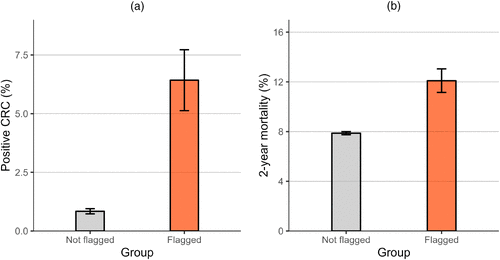
Notes. The figure shows colorectal cancer-positive rates and two-year mortality by group (flagged vs. not flagged). The bars and error bars represent the mean values and the standard errors of the mean, respectively. (a) CRC positive rates. (b) Two-year mortality.
The effects of cancer screening outreach programs where interventions are targeted based on an ML algorithm are challenging for managers to evaluate because the treatment (i.e., being identified and flagged as high-risk patients) is a function of the risk of having cancer predicted by the ML. In other words, the treated units are not randomly selected into treatment. Therefore, individuals in the treated group (or flagged group identified as high risk by the ML model) exhibit riskier characteristics regarding CRC and differ from those in the control group. For example, the treated group, on average, is older than the control group (flagged: 67.3, not flagged: 62.4, t-test p < 0.001). A simple comparison could lead to a misleading conclusion. By comparing the two-year mortality by group (flagged: 12.1%, not flagged: 7.90%, t-test p < 0.001), one may naively conclude that the program does not reduce mortality (or even that it increases mortality). To overcome this challenge, we employ a regression discontinuity (RD) design by exploiting the fact that patients were flagged only if their CRC risk score exceeded a fixed threshold. We estimate the local treatment effect identified from the discontinuity in being flagged at the cutoff risk score.
Since its first introduction by Thistlethwaite and Campbell (1960), RD design has been used extensively in the health economics and medical literature (Calonico et al. 2024). For example, Card et al. (2009) study the effects of Medicare coverage on the conditions of patients admitted via the emergency department by comparing patients across the age 65-years-old threshold for Medicare eligibility. By applying an RD design, they find that a 20% reduction in mortality among admitted patients just over age 65, relative to those just under age 65, indicates a significant impact of Medicare coverage on patient survival. Clark and Royer (2013) analyze the causal effects of education on adult mortality and health by exploiting changes in British compulsory schooling laws as a discontinuity in educational attainment. Although the policy increased the length of education, no significant impacts on health (mortality and self-reported health) or health behaviors (activity level, smoking, and drinking) are found. Other examples in health economics applying RD designs include Almond and Doyle (2011), Bharadwaj et al. (2013), and Adams et al. (2022).
We use a nonparametric RD design with a local polynomial approach (Imbens and Kalyanaraman 2012, Cattaneo et al. 2020) by approximating regression functions only near the cutoff instead of assuming a functional form of the regression of the entire set of observations. A key consideration in this RD design is bandwidth. Instead of relying on the researchers’ discretion, we adopt a data-driven method to choose the bandwidth, which minimizes the mean squared error (MSE) of the local polynomial RD estimator (MSE-optimal bandwidth), developed in Imbens and Kalyanaraman (2012) and Calonico et al. (2014). The advantages of using the MSE-optimal bandwidth are that it can be obtained in closed form and that the RD point estimator is consistent and MSE optimal (Cattaneo et al. 2020).
Applying the RD design, we find that the ML-guided CRC screening outreach program increases the likelihood of colonoscopy uptake by 6.0 percentage points (pp) in three months (214% increase relative to the control group within the bandwidth) and 6.9 pp in six months (117% increase) and that it significantly reduces the time to have a colonoscopy by 124 days (39% decrease), both sharply at the cutoff risk score. This impact on colonoscopy participation is large considering that about 46% of U.S. adults were overdue for colonoscopy in 2021 (American Cancer Society 2023). More importantly, we estimate that the program decreases two-year mortality by 6.2 pp (43% reduction) at the cutoff, despite the fact that there was no discontinuity in the risk of having CRC at the cutoff. We provide potential explanations of the effects on mortality. Our results suggest that ML-guided screening outreach programs for lethal cancers, like CRC, could be impactful in increasing screening participation and decreasing mortality in addition to higher detection rates. We verify our results with numerous robustness checks, including using a local quadratic regression, parametric RD, different bandwidths and kernel functions, placebo cutoffs, different samples, and log-transformed risk scores.
With the explosion of available data, ML has been adopted in many industries, including manufacturing, financial modeling, education, marketing, and healthcare (Jordan and Mitchell 2015). Especially in healthcare, disease prediction models have been developed widely by analyzing electronic medical records to estimate the probability of having a disease. Our work is one of the early studies that evaluate the impact of cancer screening outreach to individuals identified as high risk by an ML algorithm on patients’ screening participation and mortality using field data. Our paper provides a framework to rigorously evaluate similar ML-aided outreach programs for other cancers and chronic diseases, a challenging task because of the nonrandomized treatments. Estimating unbiased policy impact is critical for capacity planning of resource-intensive screenings, such as colonoscopy (the average cost of colonoscopy in the United States was $2,125 (Fisher et al. 2022)), as over- or underestimating the effects on screening participation could lead to significant waste or shortage of screening capacity, respectively. Our estimates suggest that by accurately estimating the treatment effect, hospitals could save $40.4 per individual participating in the ML-guided screening program per year. Our paper guides managers in rigorously evaluating ML-guided policies, a challenging task because of the nonrandomized treatments.
2. Related Literature
2.1. Interventions Using Algorithms in Healthcare
Our research complements research that develops and validates prediction algorithms for CRC by evaluating their real-world impact as part of hospital screening operations. Kinar et al. (2016, 2017) developed a model to identify individuals at increased risk for CRC by analyzing blood counts, age, and sex, and the model was validated in the United Kingdom (Birks et al. 2017), the northwestern United States (Hornbrook et al. 2017), and California (Schneider et al. 2020). For other types of cancer, Gould et al. (2021) developed a prediction model for lung cancer aiming to identify patients with early lung cancer, and Stark et al. (2019) developed ML models to predict five-year breast cancer risk using personal health data. Our work is one of the early evaluations of cancer screening programs guided by ML. We contribute to understanding the role of ML-guided CRC screening on patients by providing causal evidence of real-world policy effects.
Our research also builds on the literature that evaluates the interventions using algorithms in healthcare settings. Bundorf et al. (2024) using a randomized, controlled trial find that personalized information about insurance plans and digital expert advice changed consumers’ insurance plan choices. Adjerid et al. (2023) studied the effects of algorithm-enabled process innovation applied for sepsis care of hospitalized patients and found that the intervention reduces the likelihood of death from sepsis. Kraus et al. (2024) developed a decision model that allocates preventive care for diabetes mellitus type 2 based on ML that predicts the disease risk reduction.
Other papers study patient adherence to treatment programs based on algorithms. Lin et al. (2025) investigate patients’ adherence to an algorithm’s advice on type 1 diabetes self-management using a field experiment. Boutilier et al. (2022) demonstrate that personal outreach messages targeting patients with high risk predicted by ML can increase medication adherence for tuberculosis in Kenya.
Lastly, our research is related to the literature that applies predictions and examines their impact on healthcare operations. Bertsimas and Pauphilet (2024) used prediction-based robust optimization to design hospital-wide inpatient flow. Chan et al. (2025) predicted the macronutrient content of human milk donations and optimally combined them in pools before distributing them. Hu et al. (2025) proposed a prediction-driven staffing framework and evaluated the benefit of surge staffing in the emergency department.
2.2. Optimization of Colorectal Cancer Screening
In the management science literature, studies attempt to optimize CRC screenings to maximize the benefits. Leshno et al. (2003) assess different screening policies using a Markov decision process that simulates the evolution of CRC and find that colonoscopy followed by a 10-year interval of follow-up screening, similar to the current guidelines (U.S. Preventive Services Task Force 2021), achieves the best outcome in terms of reducing mortality. Similarly, Erenay et al. (2014) developed a Markov decision process to optimize colonoscopy screening policies to maximize total quality-adjusted life years. They provide personalized screening policies based on gender and history of CRC and polyp. Gao et al. (2025) studied the optimal cutoff value for fecal immunochemical tests that maximizes follow-up colonoscopy adherence, incorporating the screening adherence behavior as an endogenous factor in their model. They showed that their optimal cutoff for the fecal immunochemical test could enhance screening effectiveness with fewer follow-up colonoscopies. Our paper sheds light on this stream of literature by investigating the effectiveness of ML-guided CRC screenings on CRC detection, screening adherence, and mortality.
2.3. Effects of Colonoscopy Screening
Numerous medical studies have investigated the effectiveness of colonoscopy in the prevention and treatment of CRC. Beginning with the National Polyp Study (Winawer et al. 1993), observational studies have found that colonoscopy is associated with a reduction in CRC incidence rates and mortality (Winawer et al. 1993, Kahi et al. 2009, Brenner et al. 2014). In addition, randomized clinical trials in Europe and the United States evaluated the causal effects of colonoscopy.
Although colonoscopy is widely endorsed in the United States and Canada, European guidelines currently recommend fecal immunochemical testing as the preferred screening test for CRC because colonoscopy is invasive and expensive and because it entails a risk of complications (Bretthauer et al. 2016, European Commission 2022). To evaluate the benefits and harms of colonoscopy, there are ongoing randomized trials in Europe, such as the Colorectal Cancer Screening in Average-risk Population: Immunochemical Fecal Occult Blood Testing Versus Colonoscopy study in Spain (Quintero et al. 2012, Castells and Quintero 2015); the Nordic-European Initiative on Colorectal Cancer (NordICC) study in Poland, Norway, Sweden, and the Netherlands (Bretthauer et al. 2016, 2022); and the Screening of Swedish Colons (SCREESCO) study in Sweden (Forsberg et al. 2022). The interim reports from these investigations unanimously find that colonoscopy is effective in detecting adenomas and CRC, achieving higher detection rates than fecal immunochemical testing (Quintero et al. 2012; Bretthauer et al. 2016, 2022; Forsberg et al. 2022). In a 10-year follow-up report from the NordICC study, Bretthauer et al. (2022) found that colonoscopy participants had 31% lower CRC incidence rates and 50% lower CRC-related death rates than the usual-care group.
In the United States, a similar randomized clinical trial is ongoing. The Colonoscopy versus Fecal Immunochemical Test in Reducing Mortality from Colorectal Cancer study recruited 50,000 participants in 2017 to test whether colonoscopy is superior to fecal immunochemical test. As the largest intervention trial conducted by Veterans Affairs, the study will analyze outcomes, such as mortality, CRC incidence, and colonoscopy complication rates, following each participant for 10 years. The study is expected to be completed in 2027 (Dominitz et al. 2017).
Our study contributes to this stream of literature by analyzing the effects of ML-guided proactive colonoscopy screenings on mortality and providing novel evidence of the effects of colonoscopy on mortality.
2.4. Colonoscopy Patient Outreach and Participation
Despite the evidence showing the effectiveness of colonoscopy screening in detecting CRC (Quintero et al. 2012, Bretthauer et al. 2016, Forsberg et al. 2022), participation in colonoscopy screening remains low. For example, in the NordICC study, only 40% of the eligible colonoscopy group underwent screening (Bretthauer et al. 2016). In the SCREESCO study, 35.1% of people who received an invitation for colonoscopy participated (Forsberg et al. 2022). In the United States, 46% of eligible adults were overdue for colonoscopy in 2021 (American Cancer Society 2023). Therefore, studying ways to increase adherence to colonoscopy screening is essential.
Previous research finds that patient navigation is effective in increasing colonoscopy participation. Rice et al. (2017) study the effects of a statewide intervention (the New Hampshire Colorectal Cancer Screening Program’s patient navigation) on colonoscopy completion. They find that the patient navigation increased colonoscopy uptake 11.2 times compared with nonnavigated patients and achieved zero missed appointments. This effective intervention was resource intensive; trained nurse navigators spent an average of 124.3 minutes delivering the patient navigation protocols to each patient (DeGroff et al. 2019). Similarly, other research finds that patient navigation is effective in increasing colonoscopy participation in different settings (Jandorf et al. 2005, Percac-Lima et al. 2009, Honeycutt et al. 2013). Conversely, Leone et al. (2013) found that the patient navigator program did not significantly increase CRC screening uptake in six months among Medicaid beneficiaries in North Carolina. Besides the patient navigator program, research has also investigated the effect of different patient outreach interventions using invitation letters (Basch et al. 2006, Gupta et al. 2013, Phillips et al. 2015, Singal et al. 2017) and phone calls (Basch et al. 2006, Phillips et al. 2015).
In line with previous research, our paper investigates the effect of a patient outreach program on colonoscopy screening uptake. Our research is distinct from others because the individuals selected to be contacted by the nurse outreach were determined to have high CRC risk by an ML algorithm. Our nurse outreach informed the patients that they were overdue to get their standard colonoscopy screening and that additional analyses had identified them at higher risk than normal (Underberger et al. 2022). It is unclear whether such a program would effectively increase colonoscopy uptake. Moreover, unlike other studies that focus on screening compliance as the outcome, we evaluate the effects of the outreach program on patient outcomes, such as mortality and healthcare utilization, in addition to screening uptake.
3. Study Setting
Geisinger (headquartered in Danville, PA) is a large healthcare system that operates 10 hospital campuses, 133 primary care and specialty clinics, and a health plan with more than half a million members; it has 25,000 employees with 1,700 physicians. Since 2019, Geisinger has been using a predictive ML algorithm to identify and reach out to patients who may be at higher risk for having or developing CRC. The program assessed every patient within Geisinger’s primary care ages 50–75 years old—the age range that the U.S. Preventive Services Task Force (2016) recommends for CRC screening—who were not compliant with CRC screening recommendations and had outpatient complete blood count (CBC) results within the previous seven days. The program rolled out weekly by analyzing new input data of patients who had an outpatient CBC test in the previous seven days. The program’s primary intervention was to engage patients who were noncompliant with CRC screening recommendations and who were identified as high risk according to an ML algorithm by providing direct outreach by a nurse navigator to advise and educate these individuals about the benefits of undergoing a colonoscopy (Underberger et al. 2022).
The predictive ML algorithm used to identify patients for outreach was developed by a health-tech company, Medial EarlySign. It identifies high-risk patients by analyzing features generated by various moments of age, gender, and CBC indices (e.g., hemoglobin, red blood cells, white blood cells, and platelets) from a blood test taken at an outpatient visit within the last seven days. If available, three years of the patient’s past CBC results are also included because historic CBC data improve the prediction accuracy (Kinar et al. 2016, Underberger et al. 2022). Using these features, a shallow ML model based on XGBoost, a gradient-boosting model, calculates a risk score to determine the likelihood of the presence of CRC. The initial model validation showed that the algorithm sensitivity for detecting CRC within 180 days was 32.9% at 97.5% specificity (Underberger et al. 2022). Kinar et al. (2016, 2017) provide details of the development of the model. The model was validated at healthcare organizations in the United States (Hornbrook et al. 2017, Schneider et al. 2020) and the United Kingdom (Birks et al. 2017).
Among the program’s participating patients, 35% were covered under the Geisinger Health Plan, a health maintenance organization (HMO) in which patients must seek care within the Geisinger health system. The remaining patients either are covered under different health plans or are uninsured and may seek care at non-Geisinger facilities, even though their primary care provider (PCP) is within the Geisinger network.
The program flagged only those with the predicted risk score exceeding a fixed threshold for clinical follow-up. Patients were flagged for intervention if their predicted risk score was greater than or equal to 0.150. This cutoff was determined by considering the number of individuals in the target population who were overdue for CRC screening and completed outpatient blood tests each week as well as the capacity of nurse coordinators and the screening department (Underberger et al. 2022). The sensitivity and specificity at this cutoff are 27.7% and 97.5%, respectively. For patients flagged by the algorithm, a nurse coordinator reviewed the medical chart and removed patients who were actively receiving chemotherapy, had died, or were admitted to the hospital. After the medical chart review, the nurse coordinator contacted the patient by phone. During a phone call, the nurse coordinators provided the following information. (i) They were working with the patient’s PCP office, (ii) the patient was due for a colonoscopy, (iii) “additional analysis” had identified the patient as at higher risk than normal for several intestinal conditions (further explained as ulcers, colon polyps, or possibly, colon cancer if the patient asks), and (iv) a colonoscopy is the preferred screening method. If the patient agreed, the nurse coordinator scheduled a colonoscopy; otherwise, the patient was offered an appointment with their PCP to discuss other options. Lastly, if the nurse coordinator was unable to reach the patient after three attempts, a certified letter was sent to the patient notifying them of their increased risk for CRC and providing a callback number if they wished to schedule a colonoscopy or talk to their PCP about a colonoscopy (Underberger et al. 2022).
Geisinger allocated significant capacity and resources to run this program. The amount of resources was kept constant during the entire study period. About 450 risk scores (cases) were analyzed each week using complete blood count records from outpatient visits within the last seven days. On average, 11.3 patients were flagged by the ML algorithm (risk score 0.15) for outreach by the nurse coordinator each week. Geisinger allocated 16 hours weekly for a nurse coordinator to perform phone calls and outreach. The gastroenterology department allocated three to five weekly colonoscopy appointments for flagged patients (Underberger et al. 2022).
4. Data
We obtained deidentified data on all participants of Geisinger’s ML-guided CRC screening outreach program between July 2019 and December 2022 and hospital visit records from July 2019 to December 2023. The program’s ML model was not updated during this study period. For each case (i.e., risk score), we observe the patient’s demographics, including birth date, death date (if applicable—death information is directly linked into the Geisinger Electronic Medical Record weekly from the Social Security Administration Death Master File), sex, race, zip code, and insurance type; information related to predicted risk score, such as the risk score value, the date when the risk score was calculated, and whether the case (patient risk score) was flagged or not; information related to outreach by the nurse coordinator, including the outreach date and outreach result; data on colonoscopy, including the date of colonoscopy and whether the screening was positive for CRC; and information related to visits to hospitals and clinic offices, including specialty (e.g., oncology or internal medicine), visit date, and admission and discharge dates.
From the original sample of 72,369 cases, we excluded flagged cases that had a colonoscopy before outreach occurred or where the patient was not contacted after a chart review for reasons such as the patient was actively receiving chemotherapy, had died, or was admitted to the hospital. Next, we excluded patients age 50 years old because adults who turn 50 are more likely to undergo a colonoscopy as the U.S. Preventive Services Task Force (2016) recommended screening for CRC in all adults ages 50–75 years old during our time period of analysis. Lastly, we excluded a few cases of patients with multiple risk scores by limiting one risk score per patient in a month. In Section 6.5, we consider different sample constructions, including patients age 50 years old or including patients with multiple risk scores but restricting to one risk score per patient, and we show that our results remain consistent. The resulting sample is 62,485 risk scores of 32,782 patients ages 51–75 years old. Among them, 60,964 belong to the control group (risk score below the cutoff), and 1,521 belong to the treated group (risk score greater than or equal to the cutoff). Online Appendix A provides details for the sample selection process. For outcome variables examining two-year periods, such as the two-year mortality and two-year healthcare utilization, we restrict our sample to risk scores calculated before January 2022 so that we observe outcomes for two years following the risk score.
We analyze four sets of outcomes. First, we analyze outcomes related to colonoscopy. We construct indicators for whether a patient had a colonoscopy within three and six months. If the patient had a colonoscopy, we also measure time from the date of risk score calculation to the date of colonoscopy (we define this as the time to colonoscopy) and whether the colonoscopy was positive for CRC. For the time to colonoscopy and colonoscopy results, we measure these outcomes only for those who had a colonoscopy. Second, we analyze mortality by creating indicators for death within one year and two years from the date of risk score. Lastly, we measure healthcare utilization for inpatient and clinic office visits by examining the total length of stay (LOS) and the number of office visits in two years. Tables 1 and 2 provide summary statistics of covariates and outcomes, respectively, for the whole sample and by group (treated and control).
|

Table 1. Summary Statistics and Covariate Balance
| Main sample mean | Falsification test | |||||
|---|---|---|---|---|---|---|
| (Standard deviation) | Discontinuity at the treatment cutoff | |||||
| All | Control | Treated | p-value on t-test or -test | RD estimate | p-value on RD estimate | |
| (1) | (2) | (3) | (4) | (5) | (6) | |
| Age | 62.482 | 62.363 | 67.267 | <0.001 | 0.118 | 0.827 |
| (7.091) | (7.075) | (5.965) | ||||
| Female | 0.546 | 0.546 | 0.517 | 0.023 | −0.026 | 0.577 |
| (0.498) | (0.498) | (0.500) | ||||
| Race | 0.024 | |||||
| White | 0.948 | 0.948 | 0.957 | 0.020 | 0.208 | |
| (0.221) | (0.222) | (0.204) | ||||
| Black | 0.028 | 0.028 | 0.020 | −0.004 | 0.725 | |
| (0.165) | (0.166) | (0.141) | ||||
| Asian | 0.009 | 0.008 | 0.013 | 0.000 | 0.967 | |
| (0.092) | (0.092) | (0.114) | ||||
| Ethnicity | 0.014 | |||||
| Not Hispanic or Latino | 0.955 | 0.954 | 0.970 | −0.014 | 0.354 | |
| (0.208) | (0.209) | (0.171) | ||||
| Insurance | <0.001 | |||||
| Commercial | 0.652 | 0.655 | 0.531 | −0.023 | 0.620 | |
| (0.476) | (0.475) | (0.499) | ||||
| Medicare | 0.289 | 0.286 | 0.415 | −0.007 | 0.868 | |
| (0.453) | (0.452) | (0.493) | ||||
| Medicaid | 0.050 | 0.050 | 0.045 | 0.015 | 0.439 | |
| (0.218) | (0.219) | (0.207) | ||||
| Self-pay | 0.001 | 0.001 | 0.001 | 0.001 | 0.390 | |
| (0.030) | (0.029) | (0.036) | ||||
| Observations | 62,485 | 60,964 | 1,521 | |||
Notes. Columns (1), (2), and (3) show means and standard deviations for all, the control group, and the treated group, respectively. Column (4) reports the p-values on the t-test for continuous variables and test for categorical variables. Columns (5) and (6) report estimated RD coefficients and p-values using the bandwidth of column (2) in Table 3 with a triangular kernel and control variables, except for the corresponding variable. Results are robust to using MSE-optimal bandwidths for the corresponding variable (Calonico et al. 2014).
|
Table 2. Summary Statistics of Outcome Variables
| Sample mean | ||||
|---|---|---|---|---|
| (Standard deviation) | ||||
| All | Control | Treated | p-value on t-test | |
| (1) | (2) | (3) | (4) | |
| Colonoscopy in 3 months | 0.035 | 0.033 | 0.112 | <0.001 |
| (0.183) | (0.178) | (0.315) | ||
| Colonoscopy in 6 months | 0.062 | 0.060 | 0.160 | <0.001 |
| (0.241) | (0.237) | (0.367) | ||
| Time to colonoscopy | 312.40 | 318.03 | 202.32 | <0.001 |
| (313.90) | (315.57) | (255.73) | ||
| Positive CRC | 0.011 | 0.008 | 0.064 | <0.001 |
| (0.105) | (0.091) | (0.246) | ||
| 1-year mortality | 0.046 | 0.045 | 0.078 | <0.001 |
| (0.209) | (0.207) | (0.268) | ||
| Observations | 62,485 | 60,964 | 1,521 | |
| 2-year mortality | 0.080 | 0.079 | 0.121 | <0.001 |
| (0.271) | (0.269) | (0.326) | ||
| Total LOS in 2 years | 0.597 | 0.589 | 0.900 | 0.019 |
| (3.482) | (3.451) | (4.529) | ||
| Number of office visits in 2 years | 10.569 | 10.503 | 13.140 | <0.001 |
| (10.127) | (10.060) | (12.185) | ||
| Observations | 46,994 | 45,812 | 1,182 | |
Note. For two-year-period outcomes, risk scores calculated before January 2022 are included.
5. Empirical Strategy
5.1. Regression Discontinuity Design
The impact of ML-guided cancer screening outreach programs is challenging for researchers to identify because the treatment (i.e., flagging for outreach) is not randomized. In our setting, the treatment assignment is a function of the risk of having cancer predicted by the ML. In other words, the treated units are not randomly selected for treatment. Therefore, we cannot simply compare the treated and control groups to estimate the unbiased treatment effect.
To overcome this challenge, we employ a sharp RD design that identifies the causal effect by exploiting the discontinuity in the probability of being flagged at the cutoff risk score. As previously described, patients were flagged only if the predicted risk score was greater than or equal to the cutoff point, which we denote by c. To analyze the impact of ML-guided cancer risk flagging, we estimate the following equation restricting the risk score to be within a bandwidth [, ]:
5.2. Validity of RD Design
The identifying assumption of the treatment effect in Equation (1) is that the regression functions and are continuous in x at c (Hahn et al. 2001), where and denote the outcomes under control and treatment, respectively. Here, we are adopting the continuity-based framework instead of the local randomization framework (see Sekhon and Titiunik 2017 and Cattaneo and Titiunik 2022 for the distinction between the two frameworks). This implies that other factors of the outcome are continuous with respect to (Lee and Lemieux 2010). We test this assumption by examining whether treated and control units near the cutoff are similar in predetermined characteristics. We run this falsification test the same way as the outcome of interest, replacing in Equation (1) with the observed characteristics. In other words, we test whether the treatment affects predetermined covariates. Figure 2 presents a graphical analysis with linear regression lines. Figure OA.1 in Online Appendix B presents a graphical analysis using quadratic regressions. The characteristics, including age, sex, race, ethnicity, and insurance types, do not show apparent significant discontinuities at the treatment cutoff. Columns (5) and (6) in Table 1 present the test results that fail to reject that there is no discontinuity in each of the covariates at the cutoff.
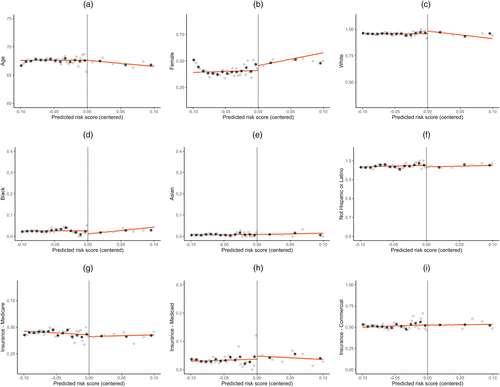
Notes. The figure plots the characteristics of the sample. Each panel depicts data points within 0.10 risk scores around the cutoff. Black points present the average values of the specified variable for risk scores with 20 bins on each side of the cutoff. Gray points present the average values of the specified variable for risk scores with 50 bins on each side of the cutoff. The solid trend lines are the predicted values from local linear regression fits of the specified variable on the score (fitted separately above and below the cutoff) that uses a triangular kernel and a bandwidth of 0.10 on each side. The solid vertical lines represent the cutoff risk score value. (a) Age. (b) Female. (c) Race: White. (d) Race: Black. (e) Race: Asian. (f) Ethnicity: not Hispanic or Latino. (g) Insurance: Medicare. (h) Insurance: Medicaid. (i) Insurance: commercial.
Another identification requirement is no manipulation of the forcing variable (i.e., risk score) around the cutoff point (Lee and Lemieux 2010). This is a plausible assumption in our setting because the risk score is predicted solely by a pretrained ML model; therefore, no individual can manipulate the risk score. As panel (a) of Figure OA.3 in Online Appendix C shows, there is no bump in distribution around the cutoff. Still, we formally test this assumption, and the McCrary (2008) test for breaks in the density of the running variable fails to reject the null hypothesis of no discontinuity in the density at the cutoff (panel (b) of Figure OA.3 in Online Appendix C).
6. Results
In this section, we present the results of the analysis of the effects of the ML-guided CRC screening outreach program on colonoscopy uptake, mortality, and healthcare utilization using the RD design. We formally estimate the treatment effects by estimating Equation (1), and we present RD plots with linear regressions in Figure 3 as they are informative about how the treatment effect is identified around the cutoff point (Lee and Lemieux 2010). For the RD plots using quadratic regressions, we display them in Online Appendix B. In our estimation results, we present them using both linear (odd-numbered columns in Tables 3–6) and quadratic regressions (even-numbered columns in Tables 3–6).
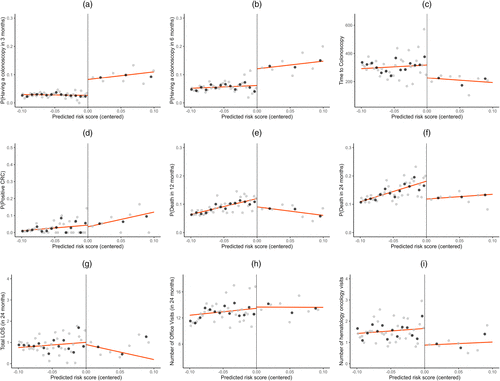
Notes. Each panel depicts data points within 0.10 risk scores around the cutoff. Black points present the average values of the specified variable for risk scores with 20 bins on each side of the cutoff. Gray points present the average values of the specified variable for risk scores with 50 bins on each side of the cutoff. The solid trend lines are the predicted values from local linear regression fits of the specified variable on the score (fitted separately above and below the cutoff) that uses a triangular kernel and a bandwidth of 0.10 on each side. The solid vertical lines represent the cutoff risk score value. (a) Colonoscopy in three months. (b) Colonoscopy in six months. (c) Time to colonoscopy. (d) Positive CRC rates. (e) One-year mortality. (f) Two-year mortality. (g) Inpatient LOS in two years. (h) Office visits in two years. (i) Hematology oncology office visits in two years.
|
Table 3. Effects on Colonoscopy at the Cutoff
| Outcome | P(Colonoscopy in 3 months) | P(Colonoscopy in 6 months) | Time to Colonoscopy | |||
|---|---|---|---|---|---|---|
| Linear | Quadratic | Linear | Quadratic | Linear | Quadratic | |
| (1) | (2) | (3) | (4) | (5) | (6) | |
| Flag | 0.060** | 0.059** | 0.069** | 0.074** | −124.00+ | −189.56+ |
| (0.018) | (0.021) | (0.023) | (0.026) | (67.64) | (114.71) | |
| Controls | Yes | Yes | Yes | Yes | Yes | Yes |
| Bandwidth (interval) | [−0.070, 0.073] | [−0.088, 0.112] | [−0.070, 0.077] | [−0.108, 0.111] | [−0.053, 0.068] | [−0.048, 0.083] |
| Mean below cutoff | 0.028 | 0.029 | 0.059 | 0.052 | 315.12 | 327.45 |
| Observations | 6,268 | 11,953 | 6,371 | 24,539 | 433 | 413 |
| Control | 5,460 | 10,971 | 5,550 | 23,557 | 276 | 235 |
| Treated | 808 | 982 | 821 | 982 | 157 | 178 |
Notes. The table presents the estimates using local linear regression (columns (1), (3), and (5)) or local quadratic regression (columns (2), (4), and (6)) with a triangular weighting kernel. Control variables include age, sex, race, and insurance type (Medicare, Medicaid, military, commercial, or self-pay). Bandwidth shows the interval centered around the cutoff point using MSE-optimal bandwidths (Calonico et al. 2014). The observations row shows effective observations within the bandwidth. Robust standard errors are reported in parentheses. Total observations of 62,485 (columns (1)–(4)) include our main sample. Total observations of 7,366 (columns (5) and (6)) include risk scores that underwent a colonoscopy.
**p < 0.01; +p < 0.1.
|
Table 4. Effects on CRC and Mortality at the Cutoff
| Outcome | Positive CRC | 1-Year mortality | 2-Year mortality | |||
|---|---|---|---|---|---|---|
| Linear | Quadratic | Linear | Quadratic | Linear | Quadratic | |
| (1) | (2) | (3) | (4) | (5) | (6) | |
| Flag | −0.043 | −0.059 | −0.038+ | −0.039 | −0.062* | −0.072* |
| (0.068) | (0.096) | (0.020) | (0.024) | (0.027) | (0.033) | |
| Controls | Yes | Yes | Yes | Yes | Yes | Yes |
| Bandwidth (interval) | [−0.032, 0.043] | [−0.042, 0.083] | [−0.094, 0.073] | [−0.121, 0.098] | [−0.077, 0.096] | [−0.100, 0.145] |
| Mean below cutoff | 0.034 | 0.039 | 0.081 | 0.064 | 0.143 | 0.128 |
| Observations | 244 | 356 | 14,723 | 37,055 | 6,320 | 14,191 |
| Control | 118 | 179 | 13,915 | 36,127 | 5,614 | 13,345 |
| Treated | 126 | 177 | 808 | 928 | 706 | 846 |
Notes. The table presents the estimates using local linear regression (columns (1), (3), and (5)) or local quadratic regression (columns (2), (4), and (6)) with a triangular weighting kernel. Control variables include age, sex, race, and insurance type (Medicare, Medicaid, military, commercial, or self-pay). Bandwidth shows the interval centered around the cutoff point using MSE-optimal bandwidths (Calonico et al. 2014). The observations row shows effective observations within the bandwidth. Robust standard errors are reported in parentheses. Total observations of 7,366 (columns (1) and (2)) include risk scores that underwent a colonoscopy. Total observations of 62,485 (columns (3) and (4)) include our main sample. Total observations of 46,994 (columns (5) and (6)) include risk scores collected until December 2021.
*p < 0.05; +p < 0.1.
|
Table 5. Effects on Healthcare Utilization (Two Years) at the Cutoff
| Outcome | Inpatient LOS | No. of office visits | Hematology oncology office visits | |||
|---|---|---|---|---|---|---|
| Linear | Quadratic | Linear | Quadratic | Linear | Quadratic | |
| (1) | (2) | (3) | (4) | (5) | (6) | |
| Flag | −0.063 | 0.014 | 0.752 | −0.426 | −1.006+ | −1.076+ |
| (0.904) | (1.110) | (1.637) | (2.004) | (0.521) | (0.586) | |
| Controls | Yes | Yes | Yes | Yes | Yes | Yes |
| Bandwidth (interval) | [−0.057, 0.074] | [−0.079, 0.112] | [−0.056, 0.077] | [−0.052, 0.137] | [−0.059, 0.046] | [−0.083, 0.112] |
| Mean below cutoff | 0.892 | 0.863 | 13.153 | 13.116 | 1.481 | 1.574 |
| Observations | 1,091 | 2,152 | 1,047 | 1,038 | 1,103 | 2,469 |
| Control | 896 | 1,908 | 849 | 764 | 952 | 2,226 |
| Treated | 195 | 244 | 198 | 274 | 151 | 243 |
Notes. The table presents the estimates using local linear regression (columns (1), (3), and (5)) or local quadratic regression (columns (2), (4), and (6)) with a triangular weighting kernel. Control variables include age, sex, and race. Bandwidth shows the interval centered around the cutoff point using MSE-optimal bandwidths (Calonico et al. 2014). The observations row shows effective observations within the bandwidth. Robust standard errors are reported in parentheses. Total observations of 15,633 include Geisinger Health Plan holders with risk scores collected until December 2021.
+p < 0.1.
|
Table 6. Effects on Colonoscopy Uptake and Mortality at the Cutoff Using Parametric RD
| Outcome | Colonoscopy in 3 months | Colonoscopy in 6 months | 2-Year mortality | ||||||
|---|---|---|---|---|---|---|---|---|---|
| (1) | (2) | (3) | (4) | (5) | (6) | (7) | (8) | (9) | |
| All | Top 25% risk scores | Top 10% risk scores | All | Top 25% risk scores | Top 10% risk scores | All | Top 25% risk scores | Top 10% risk scores | |
| Flag | 0.064*** | 0.059*** | 0.065*** | 0.074*** | 0.058*** | 0.064*** | −0.118*** | −0.071*** | −0.049* |
| (0.010) | (0.012) | (0.015) | (0.012) | (0.014) | (0.018) | (0.015) | (0.019) | (0.021) | |
| Controls | Yes | Yes | Yes | Yes | Yes | Yes | Yes | Yes | Yes |
| Mean below cutoff | 0.033 | 0.028 | 0.029 | 0.060 | 0.053 | 0.059 | 0.079 | 0.131 | 0.151 |
| Observations | 62,485 | 15,950 | 6,555 | 62,485 | 15,950 | 6,555 | 46,994 | 11,992 | 4,927 |
Notes. The table presents the estimate using a parametric RD. Control variables include age, sex, race, and insurance type (Medicare, Medicaid, military, commercial, or self-pay). Robust standard errors are reported in parentheses. For columns (7)–(9), risk scores collected until December 2021 are included.
*p < 0.05; ***p < 0.001.
6.1. Colonoscopy
We first examine the change in the likelihood of having a colonoscopy screening at the cutoff (Table 3). We analyze two outcomes: whether a patient had a colonoscopy in three months (columns (1) and (2) in Table 3) and six months (columns (3) and (4) in Table 3) from the date that the risk score was calculated. Because our sample consists of patients due for colonoscopy based on the national guidelines, those in the control group (not flagged) could also get a colonoscopy. Column (1) in Table 3 indicates that the program significantly increases the likelihood of getting a colonoscopy in three months by about 6.0 pp (p = 0.001) at the cutoff, a 214% increase relative to the control group within the bandwidth. Results in column (3) in Table 3 also show positive effects at the cutoff (about 6.9 pp; p = 0.002, 117% increase) on the chance of having a colonoscopy in six months. We also analyze the time to colonoscopy, conditional on having a colonoscopy (columns (5) and (6) in Table 3). We find that the program significantly decreases the time to have a colonoscopy by about 124 days (p = 0.067, 39% decrease) at the cutoff. This is a conservative estimate because we do not include patients who did not have colonoscopy during the study period, and the control group has significantly lower colonoscopy uptake compared with the treated group. Overall, the results suggest that the program significantly changed the behavior of the flagged patients to have colonoscopies earlier.
6.2. Screening Results
Next, we analyze the results of colonoscopy screenings. Panel (a) of Figure 1 plots the positive diagnosis rates for CRC by group for the whole sample. For the treated group (flagged cases), the average positive rate is 6.42%, which is significantly larger than the control group’s positive rate of 0.84% (t-test p < 0.001). This is consistent with Underberger et al. (2022), who evaluated the diagnosis rates of flagged patients for the same program at different periods. The positive rate for the control group of 0.84% (95% confidence interval: 0.63%–1.06%) is consistent with 1.0% positive rates from asymptomatic colonoscopy screenings (Lieberman et al. 2000). Although the significantly larger average positive rates of the flagged group demonstrate the predictive power of the ML model, there should not be a discontinuity in the positive rates at the cutoff because the continuous risk score indicates a smoothly changing risk of CRC. In other words, the program should not affect the chance of having CRC. Panel (d) of Figure 3 reflects this aspect, illustrating smoothly increasing positive CRC rates in predicted risk score but no discontinuity at the cutoff. Columns (1) and (2) in Table 4 confirm that the treatment effects at the cutoff are not significantly different from zero (p = 0.529 in column (1) in Table 4 and p = 0.538 in column (2) in Table 4).
6.3. Mortality
We study the effects on mortality by looking at whether the patient died in one year and two years following the date that the risk score was calculated. Columns (3)–(6) in Table 4 present the results. For the follow-up period of one year, we find that the RD estimate using linear regression is negative and marginally significant in column (1) in Table 4 (estimate = −0.038, p = 0.050) but that it becomes not statistically significant when using quadratic regression in column (2) in Table 4 (estimate = −0.039, p = 0.106). The effect on mortality becomes statistically significant at two years. The program significantly reduces two-year mortality at the cutoff by about 6.2 pp (p = 0.022, 43% decrease) estimated using linear regression and by about 7.2 pp (p = 0.031, 56% decrease) estimated by quadratic regression. This finding is the opposite of the simple comparison of mortality between the whole treated group and the whole control group (i.e., not restricting the sample to those who fall within the MSE-optimal bandwidth). On average, the treated group (12.1%) has higher two-year mortality than the control group (7.90%, t-test p < 0.001) as panel (b) of Figure 1 shows. This is because the treated group is older and has a higher risk of CRC as predicted by the ML. On the other hand, the estimated local treatment effect at the cutoff indicates a reversed relationship, in which treated units near the cutoff have significantly lower mortality than the control units near the cutoff. In Section 6.5, we examine the robustness of our results. We discuss potential explanations of the effects on mortality in Section 7.
6.4. Healthcare Utilization
We analyze the effects on healthcare utilization as a last set of outcome variables. We analyze two types of utilization: inpatient and clinic office visits. There is a potential censoring issue for healthcare utilization because we observe utilization only if the patient uses services within Geisinger. Our data do not include utilization of services outside of our partner organization. This potential censoring of utilization does not exist for patients in the Geisinger Health Plan HMO. As such, for the healthcare utilization outcomes, we conduct a subset analysis for just Geisinger Health Plan patients, for whom we observe all utilization in Table 5. First, we analyze two-year LOS for any type of inpatient hospitalization. In columns (1) and (2) in Table 5, the estimates are not statistically significantly different from zero (estimate = −0.063, p = 0.944 in column (1) in Table 5 and estimate = 0.014, p = 0.990 in column (2) in Table 5), suggesting that there is no significant gap in two-year LOS at the cutoff. Next, we analyze the number of all-type clinic office visits except for gastroenterology because colonoscopies fall under this specialty (columns (3) and (4) in Table 5). We do not find that the program significantly impacts the total number of office visits in two years at the cutoff (estimate = 0.752, p = 0.646 in column (3) in Table 5 and estimate = −0.426, p = 0.832 in column (4) in Table 5).
We further analyze inpatient LOS and office visits by type of specialty (e.g., intensive care, radiology, etc.), and we do not find significant discontinuities at the cutoff except for one specialty: hematology oncology office visits. For hematology oncology office visits, we find marginally significant decreases in the number of office visits in two years by 1.006 when using linear regression in column (5) in Table 5 (p = 0.053, 68% decrease) and by 1.076 when using quadratic regression in column (6) in Table 5 (p = 0.066, 68% decrease) at the cutoff. This finding may suggest that the program could have spillover effects on diagnosing other cancers early as the research validating the ML model finds (Kinar et al. 2016), which could potentially contribute to a reduction in overall mortality. However, we cannot fully validate this as we do not have data on the stage of detected cancers other than CRC. For brevity, we present the LOS and office visit results of specialties other than hematology oncology in Table OA.2 in Online Appendix D and Table OA.3 in Online Appendix E, respectively.
6.5. Robustness Checks
6.5.1. Parametric RD.
So far, we report results using a local polynomial approach by estimating regression lines using observations within an MSE-optimal bandwidth around the cutoff. Because the number of observations within the bandwidth to the right of the cutoff is relatively low in our data, the estimated regression line on the right side of the cutoff could be sensitive to noise. To address this concern, we use a parametric RD by imposing an identical second-order regression line in risk scores on both sides. That is, we set in Equation (1) as without the bandwidth around the cutoff. We use a second-order polynomial rather than the first-order polynomial based on Akaike’s criterion (Lee and Lemieux 2010). We present results in Table 6 using all risk scores in the entire range, the top 25% risk scores, and the top 10% risk scores to examine the sensitivity of the results to different risk score ranges.
We find consistent findings with the results from the nonparametric RD. For colonoscopy uptake in three and six months, we find statistically significant positive jumps at the cutoff consistently across different ranges of risk scores. The magnitudes of the coefficients are similar to the estimates from the nonparametric RD in Table 3. For the likelihood of having a colonoscopy in three months, the RD estimates range between 5.9- and 6.5-pp increases at the cutoff depending on the included sample risk scores. Likewise, for the likelihood of having a colonoscopy in six months, the estimates range between 5.8- and 7.4-pp increases at the cutoff depending on the included sample risk scores. Next, for two-year mortality, we find statistically significant negative drops at the cutoff. The magnitude of the RD estimates decreases as we restrict the sample to higher risk scores from −11.8 pp for all risk scores to −4.9 pp for top 10% risk scores. This is because mortality increases as risk scores increase (note that the mean values below the cutoff increase as sample risk scores get higher), which affects the regression lines. Overall, our results remain consistent when using parametric RD with different samples.
6.5.2. Sensitivity Test to Bandwidths.
We conduct a sensitivity test of our results to varying bandwidths. Following Cattaneo et al. (2020), we investigate the sensitivity to bandwidths over small ranges around the MSE-optimal bandwidth. Increased bandwidths will increase bias because of the nonrandom treatment assignment; reduced bandwidths will increase variance because of reduced sample size. The MSE-optional bandwidth optimizes this trade-off; deviating too far from the MSE-optimal bandwidth could lead to unreliable point estimates and conclusions. Figure 4 shows the results for the likelihood of having a colonoscopy in three months (panels (a) and (b) of Figure 4) and two-year mortality (panels (c) and (d) of Figure 4). The RD estimates using different bandwidths (from ±0.005 to ±0.02) with different numbers of observations around the MSE-optimal bandwidth are stable and consistently different from zero.
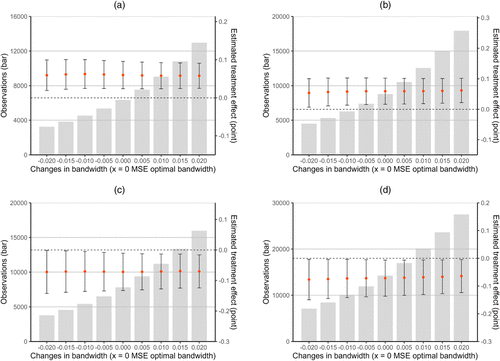
Notes. The figure shows the estimated RD coefficients (points) with 95% confidence intervals (error bars) by changing the bandwidth around the MSE-optimal bandwidth (x = 0). We use local linear regression in panels (a) and (c), quadratic regression in panels (b) and (d), and a triangular kernel with control variables for estimation. Bars plot the number of observations within the bandwidth. The dashed horizontal lines are the zero lines. (a) Colonoscopy in three months: linear. (b) Colonoscopy in three months: quadratic. (c) Two-year mortality: linear. (d) Two-year mortality: quadratic.
6.5.3. Placebo Cutoffs and Outcomes.
Next, as a falsification test, we examine treatment effects at placebo cutoff values to test whether our results reflect fluctuations in outcomes across the predicted CRC risks. If discontinuities in outcomes across different CRC risk scores are common, our estimated treatment effect might be because of the regular fluctuation rather than the effect driven by the program. We assign placebo cutoff points away from the true cutoff and estimate the placebo effect using the control and treatment groups separately. In other words, for placebo cutoffs below the true cutoff, we use only control group observations, and for placebo cutoffs above the true cutoff, we use only treated group observations. This avoids contamination because of real treatment effects (Cattaneo et al. 2020, p. 89). Figure 5 plots the test results. For both outcomes of having a colonoscopy in three months (panels (a) and (b) of Figure 5) and two-year mortality (panels (c) and (d) of Figure 5), coefficients from placebo tests are not significantly different zero, and only the coefficient at the true cutoff (x = 0) is statistically significantly different from zero. The results confirm that our results are not mere reflections of variations in outcomes.
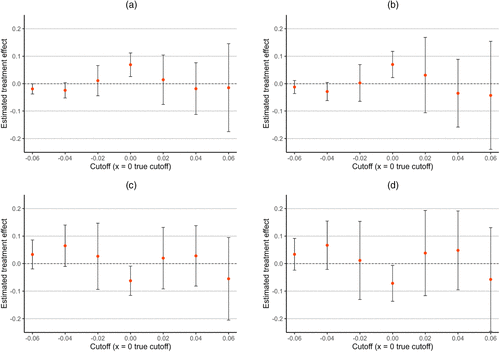
Notes. The figure shows the estimated RD coefficients (points) with 95% confidence intervals (error bars) using placebo cutoff values around the true cutoff at zero. The estimate at x = 0 is the true estimate at the true cutoff. We use local linear regression in panels (a) and (c), quadratic regression in panels (b) and (d), and a triangular kernel with control variables for estimation. The dashed horizontal lines are the zero lines. (a) Colonoscopy in three months: linear. (b) Colonoscopy in three months: quadratic. (c) Two-year mortality: linear. (d) Two-year mortality: quadratic.
Additionally, we analyze two placebo outcomes not related to CRC—orthopedics and psychiatry two-year LOS—as another falsification test. The intervention targeting CRC should not significantly affect these unrelated placebo outcomes. Table OA.4 in Online Appendix F presents RD estimates indicating no significant discontinuities at the cutoff risk score for either orthopedics or psychiatry LOS, which supports that spurious correlations do not drive our results.
6.5.4. Other Kernel Functions.
We test the robustness of our results to estimation using different kernel functions other than the triangular kernel: uniform kernel and Epanechnikov kernel . The uniform kernel gives equal weight to all observations whose scores are within the bandwidth, and the Epanechnikov kernel gives a quadratic decaying weight to observations within the bandwidth. We find that the results are not sensitive to the particular choice of the kernel (Table OA.5 in Online Appendix G). The estimates remain consistent in direction, magnitude, and statistical significance.
6.5.5. Different Samples.
Our main sample excludes risk scores of patients age 50 years old because the national screening guidelines recommend colonoscopy for all adults starting at age 50 years old. We rerun analyses using all available samples (risk scores), including risk scores of patients age 50 years old. Table OA.6 in Online Appendix H presents the results of the analysis of the extended sample. In addition, our main sample allows patients to have multiple risk scores: at most one per month. This could raise a concern about potential bias in RD point estimates because of repeated observations per patient. We rerun the analysis by allowing one risk score (the maximum risk score) per patient to test our results’ robustness. The results are consistent with our main sample when we use different samples. At the cutoff, we find significant increases in the likelihood of having a colonoscopy in three and six months and significant decreases in two-year mortality.
6.5.6. Log-Transformed Risk Scores.
We test the robustness using log-transformed risk scores as the predicted risks are highly skewed and dispersed on the right side of the cutoff (skewness = 6.25). The log transformation reduces the skewness (skewness = 0.08), and the results remain consistent when using the log-transformed risk scores (Table OA.8 in Online Appendix I).
6.5.7. Clustered Standard Errors.
As our main sample allows the same patient to have multiple risk scores (at different times), the errors could be serially correlated within a patient. To address this concern, we employ cluster-robust variance estimators. This method yields not only different estimated standard errors relative to the unclustered case but also, different point estimates because this changes the MSE-optimal bandwidth (Cattaneo et al. 2020, p. 74). Table OA.9 in Online Appendix J presents the results using clustered standard errors, and the findings remain robust, indicating that the results are valid under potential serial correlation. Although clustering accounts for serial correlation in variance estimation, it does not mitigate potential bias in RD point estimates arising from repeated observations per patient. To address this concern, Section 6.5.5 presents an analysis that restricts the sample to one risk score per patient.
6.5.8. Coronavirus Disease 2019 Pandemic.
Lastly, as our data include the coronavirus disease 2019 (COVID-19) pandemic period (the program was paused from April to June 2020 because of the pandemic), during which people had high mortality, one may be concerned that the pandemic drives our results on mortality. If this is true, there should be a discontinuity in the chance of having COVID-19 infection at the cutoff. Although this is very unlikely (as supporting evidence, we do not find significant discontinuity in visits to family medicine offices at the cutoff (Table OA.3 in Online Appendix E)), we address this concern with two approaches. First, we include year dummy variables as control variables in our estimation to control for year effects. Our results remain consistent after controlling the year effects (Table OA.10 in Online Appendix K). Second, we rerun our analysis excluding deaths in the year 2020 (the year with high mortality because of COVID-19) and find consistent results in colonoscopy uptake and mortality (Table OA.11 in Online Appendix K). Overall, this suggests that our results are not driven by the COVID-19 pandemic.
7. Discussion and Conclusions
We study the effects of the ML-guided CRC screening outreach program. Using an RD design, we find that the program increased patients’ participation in colonoscopy by 6.0 pp in three months (214% increase relative to the control group within the bandwidth) and by 6.9 pp in six months (117% increase) and that it significantly reduced the time to have a colonoscopy by about 124 days (39% decrease) both at the cutoff risk score. Considering that about 46% of U.S. adults ages 45 years old and older were overdue for colonoscopy in 2021 (American Cancer Society 2023), this jump in colonoscopy participation is substantial.
Importantly, we find that the program decreased two-year mortality by 6.2 pp (43% reduction) at the cutoff, despite no discontinuity in the risk of having CRC at the cutoff. Given this, if it was possible to roll out this program across the entire United States, the potential number of lives saved would be 263,000. Of course, finding the resources to do this may be prohibitive at such a large scale. For an average-sized PCP practice with 2,500 patients, this could translate to 4.7 lives saved within two years. We do not find significant changes in healthcare utilization at the cutoff, including the all-type inpatient LOS and clinic office visits.
Earlier colonoscopy is a potential driver for our results on reduced mortality. As our analysis indicates, the patients just below the cutoff and the patients just above the cutoff have a similar risk of CRC as the risk score is smooth and continuous around the cutoff (see panel (d) of Figure 3). However, the treated patients around the cutoff are more likely to undergo colonoscopies by 6.0 pp in three months and 6.9 pp in six months, and they are more likely to undergo colonoscopies significantly earlier (124 days) than those right below the cutoff. Other medical research suggests that earlier screenings will enable earlier diagnosis and treatment, which can lead to higher survival rates. Tørring et al. (2013) found that longer diagnostic intervals were associated with increased mortality for CRC among the Danish patients. Similarly, Lee et al. (2019) conducted a retrospective study of 39,000 CRC-diagnosed patients in Taiwan and found that shorter diagnosis-to-treatment intervals (≤30 days) have significantly higher survival rates compared with longer time intervals (31–150 and ≥151 days) across all cancer stages. These findings underscore the importance of early screening followed by prompt treatment for improved survival. In addition, precancerous tumors, like adenomas or polyps, could be removed during a colonoscopy, which is shown to significantly reduce the incidence rates of CRC and mortality (Winawer et al. 1993, Zauber et al. 2012). Because of the limited number of diagnosed cases, we are unable to rigorously evaluate the program’s effect on time to CRC diagnosis as a mechanism for reduced mortality. Nonetheless, we provide an exploratory analysis of time to CRC diagnosis and CRC stages in Online Appendix L.
Potential spillover effects of the CRC program may improve outcomes for other cancers because the ML model has some sensitivity (i.e., ability to detect the disease) to other cancers, including stomach cancer, hematological cancers, and lung cancer, even though the current program is designed only for predicting and flagging the risk of CRC (Kinar et al. 2016). This sensitivity to other cancers is because of their age-dependent incidence as age is a predictor of the model (Kinar et al. 2016). Therefore, the risk scores from the model could reflect the risks of other cancers, not only CRC. In the analysis of the hematology-oncology clinic office visits, we find a decrease in the number of visits in two years (estimate = −1.006, p = 0.053) at the cutoff. Note that if the intervention detected more cancers of other types, this could potentially lead to more office visits. On the other hand, if the cancers would be detected eventually and the intervention resulted in earlier detection, this could result in improved prognosis, fewer office visits, and reduce overall mortality.
7.1. Contributions to the Literature
As discussed in Section 2, the existing literature has shown that ML algorithms can predict the risk of having cancers, such as CRC (Kinar et al. 2016, 2017; Birks et al. 2017; Hornbrook et al. 2017; Schneider et al. 2020). A separate stream of literature provides some evidence that colonoscopy screening is associated with a reduction in CRC incidence and mortality (Winawer et al. 1993, Kahi et al. 2009, Brenner et al. 2014, Bretthauer et al. 2022). Another branch of research finds that proactive nurse outreach and patient navigation programs could increase colonoscopy participation (Jandorf et al. 2005, Percac-Lima et al. 2009, Honeycutt et al. 2013, Rice et al. 2017).
Our work synthesizes and contributes to these streams of literature by rigorously evaluating a nurse outreach program that was designed to leverage these different insights and intervene on patients who were identified as high risk for CRC by an ML algorithm. We show that a nurse outreach program targeting high-risk patients identified by ML leads to increased colonoscopy uptake, high CRC detection rates, and reduced mortality. Prior work has tackled each of the components (prediction, screening, and proactive outreach) separately. In contrast, our paper demonstrates that a program that integrates ML, screening, and patient outreach could be impactful.
7.2. Managerial Implications
7.2.1. Estimating Unbiased Effects of ML-Guided Screening Outreach.
Our paper informs managers of how to evaluate a similar program/policy by demonstrating an approach to estimating an unbiased causal estimate using the RD design. As most disease prediction models generate a risk score for having a disease and identify high-risk patients based on a fixed threshold score, the RD design used in this paper could be helpful in many settings. Estimating the causal effects of ML-guided programs could be challenging for hospital managers or policymakers because the treatment is not randomized, and the treated group has a high risk of having the disease as classified by the ML. Thus, one cannot (and should not) naively compare outcomes between the groups. For example, if we compare the mortality rate or LOS between the treated group and the control group, such as in Table 2, we may wrongly conclude that the program was unsuccessful as the treated group has higher mortality and LOS than the control group on average.
7.2.2. Planning Service Capacity.
Estimating unbiased causal effects on colonoscopy uptake is also crucial for service capacity planning. A simple comparison between the treated group and the control group will overestimate the increase in colonoscopy uptake. For example, by naively comparing the colonoscopy participation in three months, one may estimate the effect of 7.9-pp increase (see Table 2), which overestimates the true causal treatment effect from the RD (6.0 pp) by 1.9 pp. Planning colonoscopy capacity for the ML-guided screening outreach program based on this overestimate will lead to 19 unused colonoscopy screenings annually per 1,000 participants in the outreach program. This translates to unused capacity costs of approximately $40,375 per 1,000 participants per year. (The average cost of colonoscopy in the United States was $2,125 between 2014 and 2019 (Fisher et al. 2022).) Considering the average of 450 patients per week in the program, this implies annual savings of approximately $944,775 for our partner hospital when capacity planning is based on the unbiased effect rather than the overestimate.
In the initial rollout of this program, our partner hospital, Geisinger, allocated a weekly screening capacity of three to five colonoscopy appointments for flagged patients (Underberger et al. 2022). Our estimated treatment effect suggests that there would be 1.3 additional colonoscopies each week because of the program’s implementation. Prior to our study, it was not a priori clear how much additional colonoscopy capacity would be needed to support the program. Because the initial rollout provided ample capacity, this allowed us to evaluate the program’s effects on screening participation without censoring colonoscopy demand because of capacity limitations. Our work suggests that 2 (>1.3) additional weekly colonoscopies would be sufficient to support the additional demand introduced by the flagged patients. Thus, Geisinger could potentially achieve the same throughput and life savings with less screening capacity; alternatively, they could serve more flagged patients with the current capacity by lowering the threshold risk score for the flag.
7.2.3. Improving Colonoscopy Compliance.
Although colonoscopy is effective for CRC detection and reducing mortality, compliance has been low because it is invasive, expensive, and resource intensive (Winawer et al. 1993, Zauber et al. 2012, Shaukat and Levin 2022). Our results demonstrate that an ML-guided screening program could considerably increase colonoscopy uptake by approximately 6%, targeting those overdue for screening and at high risk for CRC. This increase would translate to 3,907,608 more colonoscopies per year nationally. A back-of-the-envelope calculation based on the U.S. Preventive Services Task Force (2021) model estimates that an increase of 6% in colonoscopy screenings among adults age 45 years old would lead to 20.2 more life-years gained per 1,000 individuals. This is derived from the U.S. Preventive Services Task Force (2021) estimate that colonoscopy screening every 10 years starting at age 45 years old until the age of 75 years old will have the benefit of 337 life-years gained per 1,000 individuals compared with no screenings. Improving the colonoscopy uptake among the noncompliant population would have an even more significant benefit because noncompliers of cancer screenings tend to exhibit riskier characteristics; for example, they are less likely to undertake preventive care or flu shots (Einav et al. 2020). Our results suggest that hospital managers could use a similar program to increase patient colonoscopy uptake among riskier groups.
7.2.4. Generalizing ML-Guided Cancer Screening Outreach.
Our findings indicate that ML-guided cancer screening outreach programs could be impactful in real operations by increasing screening participation and decreasing mortality in addition to higher detection rates. Similar ML-guided screening outreach programs could be applied in other hospitals and a broader setting (e.g., state or national level) or for other diseases (e.g., lung cancer screening). Our findings suggest that managers and policymakers should consider the following factors when implementing ML-guided cancer screening protocols.
Setting the threshold. A key decision of utilizing an ML-guided outreach policy is setting the threshold risk score for treatment. Our partner hospital set the threshold by considering the service capacity (the next bullet point). Lowering the threshold increases the number of patients invited for colonoscopy, which requires additional staffing for outreach and screening. To apply ML-guided programs in a broader setting, more research should be conducted analyzing the cost and benefits to patients together with the performance of the ML by different thresholds because the program’s local/global treatment effects will depend on the thresholds.
Service capacity. When designing the screening program, the service capacity must be considered because the program effect could depend on the service elements, including the outreach, screening, and subsequent treatment capacity. Boutilier et al. (2024) expound and underscore the importance of capacity for interventions in service settings.
Mode of communication. Geisinger made a personalized outreach by a phone call, and in case the patient did not answer the call, an official letter was sent as described in Section 3. The mode of communication could be a critical factor for an effective patient outreach program (Phillips et al. 2015). Additionally, the mode of communication has cost implications—for example, staffing costs associated with nurse outreach via phone calls. Our partner hospital allocated 16 hours weekly for a nurse coordinator to perform these outreach phone calls.
Fatality of a disease. CRC is the second-most deadly cancer in the United States, and because of this fatality rate, we find that the ML-guided screening program decreases mortality. The effect on mortality may not be generalizable to other diseases that are less lethal.
Ease of screening. We find that our program increased screening participation by 6 pp, a substantial jump for CRC screening, but relative to other cancers, this magnitude might be small. This is because colonoscopy is an invasive and discomforting test, and that is why CRC screening rates are below those seen for breast or prostate cancer (Roy et al. 2006). For other types of cancers with lower screening barriers, the ML-guided screening policy may have a bigger impact than we find here.
7.3. Limitations
Our paper has a few limitations, primarily related to the limitations of our data. First, because our data do not provide the cause of the patient’s death, we cannot analyze the effects on CRC-related deaths. Instead, our analysis of mortality pertains to all-cause deaths. As such, we expect that some of the reduction is likely because of CRC-related deaths as well as spillover effects on the care of diseases other than CRC; unfortunately, we are not able to tease this out. Information on the cause of death could also enable inference about missed CRC diagnosis. Future research could analyze the effects of a similar program on CRC or cancer-related deaths.
Next, although detecting and removing advanced adenomas during colonoscopy are shown to be effective in reducing CRC incidence rates and mortality (Winawer et al. 1993, Zauber et al. 2012), we cannot prove with certainty that this is a mechanism of reduced mortality in our finding as we do not have data on the detection of advanced adenomas. Future research could collect more detailed colonoscopy procedure data to explain the benefits of detecting advanced adenomas in a similar program.
Third, because our data cover until 2023, we are only able to analyze mortality rates two years after the risk score calculated date. We find that the effects on mortality become more significant over time as we find more negative estimates in two-year mortality than in one-year mortality. The effect of ML-guided cancer screenings may be more significant in the long run. Future research could track the participants for longer to understand the long-term effects of ML-guided cancer screenings.
Fourth, our research could not analyze the heterogeneous effects of the ML-guided cancer screening outreach by the mode of communication because the communication channel (phone call versus written letter) was not randomized, and only about 12% of the flagged patients were communicated with by a letter after no response to three phone calls. It would be important to analyze the effects of ML-guided cancer screening programs through different outreach channels to find the most effective communication channels.
Lastly, our analysis focuses on the intervention at one health system, which began before the U.S. Preventive Services Task Force (2021) lowered the screening age to 45 years old from 50 years old in 2021. Should a patient population in a different health system be significantly different from Geisinger’s patient population (e.g., differences in PCP visit cadence and CBC tests), the impact of an ML-guided screening outreach program could be different than what this paper finds. Future research could generalize our findings by studying similar interventions at other institutions and including adults ages 45 years old and older per the updated screening guidelines.
The authors thank department editor Jérémie Gallien, the associate editor, the reviewers, and the 2025 M&SOM Practice-Based Research Competition Industry Judge Panel (Jillian Berry Jaeker, Nicolas Stier, and Théophane Weber) for their constructive comments and suggestions. The authors acknowledge Jim Urick for excellent technical and deployment support for the colorectal cancer screening program at Geisinger and Rebecca Maff for project management. The authors thank the Care Gaps Nurses team at Geisinger, which handles direct patient outreach. The authors are also grateful to Medial EarlySign, Ming Hu, and Michael Lingzhi Li for valuable discussions.
References
- (2022) The impact of financial assistance programs on health care utilization: Evidence from Kaiser Permanente. Amer. Econom. Rev. Insights 4(3):389–407.Crossref, Google Scholar
- (2023) Value of algorithm-enabled process innovation: The case of sepsis. Manufacturing Service Oper. Management 25(4):1545–1566.Link, Google Scholar
- (2011) After midnight: A regression discontinuity design in length of postpartum hospital stays. Amer. Econom. J. Econom. Policy 3(3):1–34.Crossref, Google Scholar
American Cancer Society (2023) Colorectal cancer facts & figures 2023–2025. Report, American Cancer Society, Atlanta.Google ScholarAmerican Cancer Society National Colorectal Cancer Roundtable (2024) 80% in every community. Accessed April 1, 2025, https://nccrt.org/our-impact/80-in-every-community/.Google Scholar- (2006) Telephone outreach to increase colorectal cancer screening in an urban minority population. Amer. J. Public Health 96(12):2246–2253.Crossref, Google Scholar
- (2024) Hospital-wide inpatient flow optimization. Management Sci. 70(7):4893–4911.Link, Google Scholar
- (2013) Early life health interventions and academic achievement. Amer. Econom. Rev. 103(5):1862–1891.Crossref, Google Scholar
- (2017) Evaluation of a prediction model for colorectal cancer: Retrospective analysis of 2.5 million patient records. Cancer Medicine 6(10):2453–2460.Crossref, Google Scholar
- (2022) Improving tuberculosis treatment adherence support: The case for targeted behavioral interventions. Manufacturing Service Oper. Management 24(6):2925–2943.Link, Google Scholar
- (2024) Operational dosage: Implications of capacity constraints for the design and interpretation of experiments. Preprint, submitted July 31, https://doi.org/10.48550/arXiv.2407.21322.Google Scholar
- (2014) Effect of screening sigmoidoscopy and screening colonoscopy on colorectal cancer incidence and mortality: Systematic review and meta-analysis of randomised controlled trials and observational studies. BMJ 348:g2467.Crossref, Google Scholar
- (2016) Population-based colonoscopy screening for colorectal cancer: A randomized clinical trial. JAMA Internal Medicine 176(7):894–902.Crossref, Google Scholar
- (2022) Effect of colonoscopy screening on risks of colorectal cancer and related death. New England J. Medicine 387(17):1547–1556.Crossref, Google Scholar
- (2024) How do consumers interact with digital expert advice? Experimental evidence from health insurance. Management Sci. 70(11):7617–7643.Link, Google Scholar
- (2014) Robust nonparametric confidence intervals for regression‐discontinuity designs. Econometrica 82(6):2295–2326.Crossref, Google Scholar
- (2024) Regression discontinuity design studies: A guide for health researchers. BMJ 384:e072254.Crossref, Google Scholar
- (2009) Does Medicare save lives? Quart. J. Econom. 124(2):597–636.Crossref, Google Scholar
- (2015) Programmatic screening for colorectal cancer: The COLONPREV study. Digestive Diseases Sci. 60(3):672–680.Crossref, Google Scholar
- (2022) Regression discontinuity designs. Annual Rev. Econom. 14(1):821–851.Crossref, Google Scholar
- (2020) A Practical Introduction to Regression Discontinuity Designs: Foundations (Cambridge University Press, Cambridge, UK).Google Scholar
- (2025) Got (optimal) milk? Pooling donations in human milk banks with machine learning and optimization. Manufacturing Service Oper. Management 27(6):1721–1739.Link, Google Scholar
- (2013) The effect of education on adult mortality and health: Evidence from Britain. Amer. Econom. Rev. 103(6):2087–2120.Crossref, Google Scholar
- (2019) Assessing the implementation of a patient navigation intervention for colonoscopy screening. BMC Health Services Res. 19(1):803.Crossref, Google Scholar
- (2017) Colonoscopy vs. fecal immunochemical test in reducing mortality from colorectal cancer (CONFIRM): Rationale for study design. Amer. J. Gastroenterology 112(11):1736–1746.Crossref, Google Scholar
- (2020) Screening and selection: The case of mammograms. Amer. Econom. Rev. 110(12):3836–3870.Crossref, Google Scholar
- (2014) Optimizing colonoscopy screening for colorectal cancer prevention and surveillance. Manufacturing Service Oper. Management 16(3):381–400.Link, Google Scholar
European Commission (2022) European Health Union: Commission welcomes adoption of new EU cancer screening recommendations. Accessed June 19, 2024, https://ec.europa.eu/commission/presscorner/detail/en/ip_22_7548.Google Scholar- (2022) Healthcare costs of colorectal cancer screening and events following colonoscopy among commercially insured average-risk adults in the United States. Current Medical Res. Opinion 38(3):427–434.Crossref, Google Scholar
- (2022) Once-only colonoscopy or two rounds of faecal immunochemical testing 2 years apart for colorectal cancer screening (SCREESCO): Preliminary report of a randomised controlled trial. Lancet Gastroenterology Hepatology 7(6):513–521.Crossref, Google Scholar
- (2025) Optimizing initial screening for colorectal cancer detection with adherence behavior. Management Sci. 71(9):7516–7536.Link, Google Scholar
- (2019) Why high-order polynomials should not be used in regression discontinuity designs. J. Bus. Econom. Statist. 37(3):447–456.Crossref, Google Scholar
- (2021) Machine learning for early lung cancer identification using routine clinical and laboratory data. Amer. J. Respiratory Critical Care Medicine 204(4):445–453.Crossref, Google Scholar
- (2013) Comparative effectiveness of fecal immunochemical test outreach, colonoscopy outreach, and usual care for boosting colorectal cancer screening among the underserved: A randomized clinical trial. JAMA Internal Medicine 173(18):1725–1732.Google Scholar
- (2001) Identification and estimation of treatment effects with a regression-discontinuity design. Econometrica 69(1):201–209.Crossref, Google Scholar
- (2013) Evaluation of a patient navigation program to promote colorectal cancer screening in rural Georgia, USA. Cancer 119(16):3059–3066.Crossref, Google Scholar
- (2017) Early colorectal cancer detected by machine learning model using gender, age, and complete blood count data. Digestive Diseases Sci. 62(10):2719–2727.Crossref, Google Scholar
- (2025) Prediction-driven surge planning with application in the emergency department. Management Sci. 71(3):2079–2126.Link, Google Scholar
- (2012) Optimal bandwidth choice for the regression discontinuity estimator. Rev. Econom. Stud. 79(3):933–959.Crossref, Google Scholar
- (2005) Use of a patient navigator to increase colorectal cancer screening in an urban neighborhood health clinic. J. Urban Health 82(2):216–224.Crossref, Google Scholar
- (2015) Machine learning: Trends, perspectives, and prospects. Science 349(6245):255–260.Crossref, Google Scholar
- (2009) Effect of screening colonoscopy on colorectal cancer incidence and mortality. Clinical Gastroenterology Hepatology 7(7):770–775.Crossref, Google Scholar
- (2017) Performance analysis of a machine learning flagging system used to identify a group of individuals at a high risk for colorectal cancer. PLoS One 12(2):e0171759.Crossref, Google Scholar
- (2016) Development and validation of a predictive model for detection of colorectal cancer in primary care by analysis of complete blood counts: A binational retrospective study. J. Amer. Medical Informatics Assoc. 23(5):879–890.Crossref, Google Scholar
- (2024) Data-driven allocation of preventive care with application to diabetes mellitus type II. Manufacturing Service Oper. Management 26(1):137–153.Link, Google Scholar
- (2010) Regression discontinuity designs in economics. J. Econom. Literature 48(2):281–355.Crossref, Google Scholar
- (2019) Effect of length of time from diagnosis to treatment on colorectal cancer survival: A population-based study. PLoS One 14(1):e0210465.Crossref, Google Scholar
- (2013) Reach, usage, and effectiveness of a Medicaid patient navigator intervention to increase colorectal cancer screening, Cape Fear, North Carolina, 2011. Preventing Chronic Disease 10:E82.Crossref, Google Scholar
- (2003) Cost-effectiveness of colorectal cancer screening in the average risk population. Health Care Management Sci. 6(3):165–174.Crossref, Google Scholar
- (2000) Use of colonoscopy to screen asymptomatic adults for colorectal cancer. Veterans Affairs Cooperative Study Group 380. New England J. Medicine 343(3):162–168.Crossref, Google Scholar
- (2025) Revisiting the cause of algorithm aversion: Algorithm feedback asymmetry in the field and lab. Preprint, submitted March 15, http://dx.doi.org/10.2139/ssrn.3891832.Google Scholar
- (2008) Manipulation of the running variable in the regression discontinuity design: A density test. J. Econom. 142(2):698–714.Crossref, Google Scholar
National Cancer Institute (2024) Cancer stat facts: Colorectal cancer. Accessed March 26, 2024, https://seer.cancer.gov/statfacts/html/colorect.html.Google Scholar- (2009) A culturally tailored navigator program for colorectal cancer screening in a community health center: A randomized, controlled trial. J. General Internal Medicine 24(2):211–217.Crossref, Google Scholar
- (2015) Improving breast and colon cancer screening rates: A comparison of letters, automated phone calls, or both. J. Amer. Board Family Medicine 28(1):46–54.Crossref, Google Scholar
- (2012) Colonoscopy versus fecal immunochemical testing in colorectal-cancer screening. New England J. Medicine 366(8):697–706.Crossref, Google Scholar
- (2017) Increasing colonoscopy screening in disparate populations: Results from an evaluation of patient navigation in the New Hampshire Colorectal Cancer Screening Program. Cancer 123(17):3356–3366.Crossref, Google Scholar
- (2006) Colon cancer screening: The good, the bad, and the ugly. Arch. Internal Medicine 166(20):2177–2179.Crossref, Google Scholar
- (2020) Validation of an algorithm to identify patients at risk for colorectal cancer based on laboratory test and demographic data in diverse, community-based population. Clinical Gastroenterology Hepatology 18(12):2734–2741.Crossref, Google Scholar
- (2017)
On interpreting the regression discontinuity design as a local experiment . Cattaneo MD, Escanciano JC, eds. Regression Discontinuity Designs: Theory and Applications, Advances in Econometrics, vol. 38 (Emerald Publishing Limited, Bingley, UK), 1–28.Crossref, Google Scholar - (2022) Current and future colorectal cancer screening strategies. Nature Rev. Gastroenterology Hepatology 19(8):521–531.Crossref, Google Scholar
- (2017) Effect of colonoscopy outreach vs fecal immunochemical test outreach on colorectal cancer screening completion: A randomized clinical trial. JAMA 318(9):806–815.Crossref, Google Scholar
- (2019) Predicting breast cancer risk using personal health data and machine learning models. PLoS One 14(12):e0226765.Crossref, Google Scholar
- (1960) Regression-discontinuity analysis: An alternative to the ex post facto experiment. J. Ed. Psych. 51(6):309–317.Crossref, Google Scholar
- (2013) Evidence of increasing mortality with longer diagnostic intervals for five common cancers: A cohort study in primary care. Eur. J. Cancer 49(9):2187–2198.Crossref, Google Scholar
- (2022) Collaboration to improve colorectal cancer screening using machine learning. NEJM Catalyst Innovations Care Delivery 3(4), 10.1056/CAT.21.0170.Google Scholar
U.S. Preventive Services Task Force (2016) Screening for colorectal cancer: US Preventive Services Task Force recommendation statement. JAMA 315(23):2564–2575.Crossref, Google ScholarU.S. Preventive Services Task Force (2021) Screening for colorectal cancer: US Preventive Services Task Force recommendation statement. JAMA 325(19):1965–1977.Crossref, Google Scholar- (1993) Prevention of colorectal cancer by colonoscopic polypectomy. The National Polyp Study Workgroup. New England J. Medicine 329(27):1977–1981.Crossref, Google Scholar
- (2012) Colonoscopic polypectomy and long-term prevention of colorectal-cancer deaths. New England J. Medicine 366(8):687–696.Crossref, Google Scholar

