


Make Room! Make Room! A Note on Sequential Spinoffs and Acquisitions
Abstract
In this study, we identify a novel pattern of deal-making activity—spinoffs followed by acquisitions—that has yet to be analyzed in the corporate strategy literature. We present a set of descriptive results showing that firms undertake spinoffs followed by acquisitions at a rate that is too high to be attributable to random chance. We also find that the acquired businesses are typically more closely related to these companies’ remaining operations than are the spun-off subsidiaries, a pattern that is common across companies with different characteristics. Together, these results suggest that firms may use sequential spinoffs and acquisitions to achieve ongoing synergies and improve the allocation of managerial attention within their organizations. We conclude by discussing how our work contributes to ongoing conversations in corporate strategy about patterns of acquisitions and divestitures, resource redeployment, reconfiguration, and firm scope.
Introduction
There is a large and important literature in the field of strategy about how firms shift their boundaries (Chang 1996, Karim and Mitchell 2000, Matsusaka 2001, Helfat and Eisenhardt 2004). One of the main mechanisms through which firms implement such changes is by undertaking acquisitions, which are thought to expand firm scope, and divestitures, which are believed to reduce it. Extant research in strategy and finance has even highlighted the pattern of corporate deal-making in which divestitures follow acquisitions, usually reflecting scope reduction after some period of scope expansion (Porter 1987, Kaplan and Weisbach 1992, Meyer et al. 1992, Teece et al. 1994, Capron et al. 2001, Hayward and Shimizu 2006, Kaul 2012).
As early as Penrose (1959), scholars have recognized that the resources a firm has at its disposal may constrain the set of initiatives it might take to shift its corporate scope. For example, an absence of managerial slack or a lack of appropriate organizational capabilities can be significant limiting factors on both acquisition and divestiture activity (Cyert and March 1963, Levinthal and March 1981, Nelson and Winter 1982, Greve 2003). Within this broad context, therefore, spinoffs1 are an especially interesting mode of corporate strategy to consider because they do not generate any cash, meaning that they do not directly impact the parent firm’s financial resources. By the same token, however, spinoffs may have an impact on a key nonfinancial resource, the time and attention of top management (Schoar 2002, Levinthal and Wu 2010), by releasing that resource to be allocated to other uses within the parent firm (Feldman 2016a). One potential use for the newly-liberated managerial resources created by spinoffs is further acquisition activity, raising interesting questions about how this pattern of corporate deal-making (as distinct from its inverse of acquisitions followed by divestitures) might alter a firm’s corporate scope. Thus, in this study, we present analyses that point to a fuller appreciation of the interrelationships between initiatives that can shift a firm’s overall scope of activities.
Anecdotal evidence confirms that the practice of undertaking acquisitions after spinoffs manifests itself reasonably frequently in practice. For example, in November 2015, ConAgra announced that it would break itself into two parts by spinning off its commercial frozen potato division into a new company called Lamb Weston, leaving behind its portfolio of consumer brands in a new company called ConAgra Brands. In describing the benefits of this strategic shift, ConAgra CEO Sean Connolly explained, “You will have a management team here that is squarely focused on one thing, which is enhancing the operational focus of the ConAgra Brands business, which has not [previously] been the case.” Connolly further elaborated that he is “willing to buy new brands to spruce up the ConAgra portfolio” (Soderlin 2015). In September 2016, A. P. Moeller-Maersk announced that it would separate its transport and energy divisions via spinoff, with one of the key rationales for the split being to allow each of the units to pursue acquisitions independently of the other: “It’s very clear that Maersk wants to grow,” said Lars Jensen, chief executive of Copenhagen-based SeaIntelligence Consulting. “Instead of the units fighting each other for capital, the split up will allow the separate businesses to focus on acquisitions. I expect Maersk Line [Maersk’s transport business] to be much more predatory over the next couple of years…On the strategic front, Maersk Oil will adjust to focus on fewer geographies, particularly in the North Sea, where it will strengthen its portfolio through acquisitions or mergers” (Paris and Chopping 2016).
We begin our study by analyzing empirical data to investigate whether acquisitions are undertaken after spinoffs at a rate that is unlikely to be attributable to random chance. Consistent with the previous anecdotes and discussion, we find that this is indeed the case. We then dig into the characteristics of the spun-off and acquired businesses, finding that acquired business units are likely to be more related to the parent firms’ remaining operations than are the spun-off businesses. While the trivial justification for these patterns of behavior would be that spinoffs are being used to free up capital resources for future acquisitions, there are two features of the setting that rule out this explanation. First, the Fortune 500 firms we study are generally not cash constrained and have easy access to liquid capital markets, suggesting that these companies should be able to undertake acquisitions without having to divest existing businesses.2 Second, even if these companies did need capital, we are restricting our attention to spinoffs as a mode of divestiture that do not generate cash for parent firms. Thus, we interpret our findings as suggesting that the firms in our sample may be undertaking sequential spinoffs and acquisitions to achieve ongoing synergies and improve the allocation of managerial attention within their organizations.
We conclude by discussing how the strategic behavior we observe in our study connects to key concepts and theoretical frameworks in corporate strategy, especially the reverse pattern of acquisitions followed by divestitures, as well as resource redeployment and reconfiguration.
Why Do Firms Undertake Spinoffs?
Ample literature has emerged analyzing why companies might choose to undertake spinoffs. This research can be divided roughly into four main categories.
The first reason why firms might choose to undertake spinoffs is to reduce over-diversification. Firms often diversify into industries that are unrelated to their core businesses, but these industries can be too distant from managers’ knowledge and experience. As a result, firms undertake spinoffs (and other divestitures) to reverse such endeavors, thereby returning managers’ attention to the core competencies of their firms (Porter 1987; Markides 1992, 1995; Johnson 1996; Bergh 1997; Daley et al. 1997; Desai and Jain 1999).
Second, companies may undertake spinoffs to reduce their complexity in the capital markets. When a firm operates in multiple businesses, especially unrelated ones, it can be difficult for external stakeholders to evaluate the coherence of that company’s operations (Zuckerman 1999, Nanda and Narayanan 1999, Litov et al. 2012). Spinoffs resolve such problems by removing businesses that may be clouding the perceptions of analysts and investors (Zuckerman 2000, Bergh et al. 2008, Feldman 2016b).
Third, firms may undertake spinoffs to remove unwanted businesses. Spinoffs (and other divestitures) can remove obsolete or declining businesses (Porter 1987, Anand and Singh 1997, Hayward and Shimizu 2006, Shimizu 2007), as well as acquisitions that failed or did not meet expectations (Kaplan and Weisbach 1992, Shimizu and Hitt 2005).
Fourth, and finally, firms may undertake spinoffs to improve the alignment of spinoff firm managers’ incentive compensation with stock market performance. A problem that is thought to affect multibusiness firms is that divisional manager compensation may not be well aligned with firm-level performance, resulting in inefficient behavior on the part of those managers. Spinoffs can help resolve this issue by separating individual businesses from one another and allowing each of them to trade publicly, thereby facilitating a more direct alignment between compensation and performance (Seward and Walsh 1996, Feldman 2016c).
To evaluate the relative prevalence of the four above-described rationales for spinoffs, we analyzed the explanations that companies provided for undertaking these deals. One of the key features that makes spinoffs a particularly attractive empirical context is the fact that when a company undertakes one of these deals, it must file a “registration statement” with the U.S. Securities and Exchange Commission, disclosing five years of backward-looking financial data on the operations of the spun-off subsidiary and providing a discussion of the benefits the spinoff is expected to achieve. For this study, we hand-collected the text descriptions of expected gains from registration statements of participating companies. We then read these descriptions and grouped them into common categories, enabling us to determine what proportion of companies cited each expected benefit as a motivation for undertaking a spinoff.
Table 1 presents a list of these motivations. Consistent with the above-described literature, 92% of the companies that undertook these deals state that they did so to improve managerial focus; nearly 82% of them mention the need to clarify capital market perceptions as the rationale for these spinoffs; and close to 75% of these companies also point to the need to improve the alignment of divisional managers’ incentives as a key factor driving them to undertake these deals. Interestingly, however, more than 50% of the firms in our sample also reference a desire to undertake spinoffs to facilitate future merger and acquisition (M&A) activity.3 It is striking that existing research in corporate strategy has yet to study this motivation, given the high percentage of companies that point to it, as well as the otherwise strong alignment between companies’ stated reasons for spinning off businesses and the investigation of these rationales in the literature.
|

Table 1: Companies’ Stated Motivations for Undertaking Spinoffs
| Stated motivation | Reports (%) |
|---|---|
| Focus | 91.78 |
| “Focus on businesses with own strategies” | |
| “Focus managerial and financial resources” | |
| “Increase response speed of individual businesses” | |
| Capital markets | 81.51 |
| “Provide direct access to the capital markets” | |
| “Facilitate capital market evaluations” | |
| “Allow investors to direct their investments appropriately” | |
| Managerial incentives | 72.60 |
| “Align the interests of managers more closely with those of shareholders” | |
| Mergers and acquisitions | 54.79 |
| “Facilitate future M&A activity” | |
| Regulation | 4.11 |
| “Divest to meet regulatory constraints” | |
Accordingly, we undertake this endeavor in our study. We begin with an empirical investigation of the incidence of M&A activity following spinoffs, as well as the characteristics of the acquired and spun-off business units. We then reflect on the implications of our analysis for corporate strategy research.
Sample and Data
We used SDC Platinum’s Mergers and Acquisitions database to compile a list of all of the nontaxable spinoffs that were announced and completed by Fortune 500 firms between January 1, 1995 and December 31, 2009. There were 196 such spinoffs undertaken by 146 Fortune 500 firms during this period of time. For each of these parent firms, we constructed nine-year panels consisting of the five years pre-spinoff (consonant with the disclosure requirements described earlier), the spinoff’s effective year, and the three years post-spinoff. We used SDC to gather data on the acquisitions (the identity and SIC code of the acquired businesses) undertaken by the parent firms in each of their nine years in the sample.
Table 2 presents the average value of divestitures and acquisitions, as well as counts of the number of deals undertaken in each of the years surrounding the spinoffs in our sample. Divestiture counts are highest in the spinoffs’ effective years because spinoffs are a subset of divestitures. The number and value of divestitures undertaken is not significantly different before and after the spinoffs in our sample. Acquisitions appear to be more common in the years before (rather than after) spinoffs, justifying the existing research on the phenomenon of acquisitions followed by divestitures (Kaplan and Weisbach 1992, Hoskisson et al. 1994, Anand and Singh 1997, Capron et al. 2001, Hayward and Shimizu 2006, Maksimovic et al. 2011). However, the number of acquisitions undertaken post-spinoff is quite significant, and the acquisitions undertaken after spinoffs are larger in dollar terms, justifying our attention to the phenomenon of spinoffs before acquisitions in this study.
|
Table 2: Summary Statistics on Divestitures and Acquisitions Undertaken Around Spinoffs
| Year | −5 | −4 | −3 | −2 | −1 | Spinoff year | 1 | 2 | 3 |
|---|---|---|---|---|---|---|---|---|---|
| Average divestiture value ($) | 239.39 | 289.59 | 774.52 | 786.24 | 283.24 | 1,795.43 | 1,462.83 | 728.83 | 526.21 |
| Count of divestitures | 128 | 95 | 123 | 175 | 182 | 258 | 177 | 129 | 104 |
| Average acquisition value ($) | 539.44 | 629.03 | 986.87 | 1,264.72 | 530.04 | 765.17 | 995.09 | 1,052.45 | 1,445.71 |
| Count of acquisitions | 489 | 536 | 523 | 656 | 712 | 438 | 311 | 300 | 306 |
Analysis and Results
Spinoffs Followed by Acquisitions
To study whether companies do, in fact, undertake spinoffs to facilitate future acquisitions, we begin by analyzing the incidence of M&A activity in the wake of corporate spinoffs. Acquisitions could, of course, be undertaken after spinoffs in reaction to external shocks or common industry trends (Mulherin and Boone 2000), or out of sheer random chance, even if the events were completely independent of one another. We therefore define the benchmark case as one in which the timing of spinoffs and acquisitions is truly independent. We then predict that acquisitions will be undertaken after spinoffs at a rate that would be extremely unlikely if the events were independent of each other.
As previously described, we collected data from SDC Platinum on all of the acquisitions made by the parent firms in our sample during a nine-year window surrounding the completion of the spinoffs they undertook. In 74 percent of the spinoff events in our sample, the parent firm also made an acquisition within one year of that deal. That number seems high enough to offer support for the suggestion that firms undertake acquisitions after spinoffs, but the difference merits testing.
To test our prediction that acquisitions occur after spinoffs at a rate that would be extremely unlikely if the events were independent, we simulate the likelihood that spinoffs—in the observed sample size of 146 parent firms with the observed base rate of spinoffs in 5.2% of firm-years—would have an associated acquisition within one year if the events were truly independent with different base rates of acquisitions. The algorithm for the simulation is as follows. For each candidate base rate of acquisition—for example, a firm making an acquisition randomly in 10% of firm years—we generate 100 iterations of 146 times 25 firm-years. In each of those years, the focal firm has the candidate probability of making an acquisition, and the observed 5.2% probability of undertaking a spinoff. For each candidate base rate, we then determine the 98% confidence interval for how likely a firm is to make an acquisition within one year of undertaking a spinoff.4
Figure 1 depicts the results of the simulation, along with the observed base rate of 74% of spinoffs being followed by an acquisition one year later. Return to the example candidate base rate of 10% of firm years. If these firms undertook acquisitions distributed i.i.d. binomial with p = 0.10—undertaking acquisitions randomly in 10% of years—we could be 98% confident that we would only observe spinoffs being followed by acquisitions in 15–25% of years.5
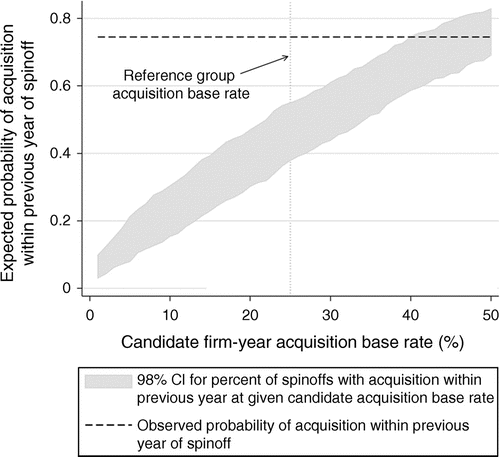
The next step is to compute a true base rate probability of acquisitions that are undertaken by companies that are comparable to the firms in our sample. To do so, we begin by identifying a reference group of firms. For each parent firm in our sample, we define the reference group as the five companies with the closest market share operating in the same primary four-digit SIC code as the parent firm. We then collected from SDC Platinum all of the acquisitions that were undertaken by these reference firms between 1990 and 2014. The average firm in the reference group completes an acquisition in roughly 25% of years. Figure 1 suggests that if acquisitions are truly undertaken independently of spinoffs, and the base rate of acquisitions were 25%, we would observe a spinoff being followed by an acquisition 38–45% of the time.
Our observed proportion of 74% is well outside that range, so at the comparison base rate we can reject the null of independent acquisitions and spinoffs. In fact, the base rate would have to be greater than 40% for us to observe as high a proportion of spinoffs being followed by acquisitions within one year (74%) as we do. This finding reinforces the point that it is extremely unlikely that the firms in our sample are initiating spinoffs and acquisitions independently of one another.
Relatedness of Spun-Off and Acquired Businesses
Given that the behavior of companies seems to reflect the predicted pattern of spinoffs followed by acquisitions, we next seek to understand the characteristics of the acquisitions these firms are undertaking. One characteristic that is especially interesting to us is the relatedness of the acquired business to the remaining, post-spinoff operations of the parent firm, particularly when juxtaposed against the relatedness of the spun-off subsidiary to its former parent’s remaining operations. Investigating the relatedness of spun-off subsidiaries and acquired business units has the potential to shed light on how the composition of the parent firms’ portfolio changes as a result of its spinoff and acquisition activity.
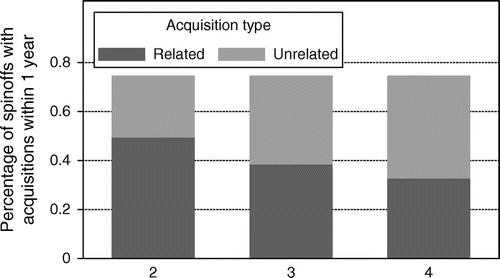
Figure 2 displays the percentages of related and unrelated acquisitions that are undertaken within one year of spinoffs. An acquisition is defined as “related” when the acquired business unit operates in the same SIC code, with a specified number of digits, as the firm that acquired it within one year after the accompanying spinoff that it also undertook. For two of the three definitions of relatedness—the parent firm and the acquired business unit sharing a three- or four-digit SIC code—Figure 2 reveals that more than half of the business units that are acquired after a firm undertakes a spinoff are related to the parent firm’s main operations.
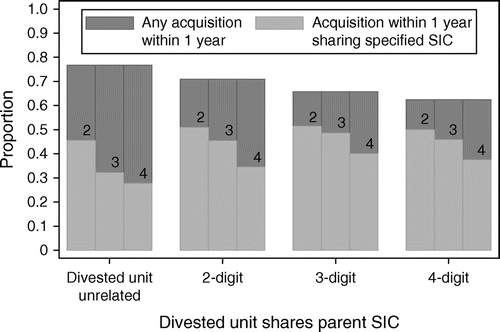
We refine this analysis by considering the relatedness of a firm’s acquisitions as compared to the relatedness of its earlier spinoff. For example, a focal firm specializing in the “Rolling, Drawing, and Extruding of Nonferrous Metals” industry (SIC 3350) that spun off a business operating in the “Steel Pipe and Tubes” industry (SIC 3317) and bought a business operating in the “Drawing and Insulating of Nonferrous Wire” industry (SIC 3357) would have replaced a business sharing two digits of its primary SIC code with one sharing three digits of its main SIC code. This would mean that the focal firm replaced a less related business (SIC 3317) with a more related one (SIC 3357). Alternately, a focal firm specializing in the “Rolling, Drawing, and Extruding of Nonferrous Metals” industry (SIC 3350) that spun off a business operating in the “Drawing and Insulating of Nonferrous Wire” industry (SIC 3357) and bought a business operating in the “Steel Pipe and Tubes” industry (SIC 3317) would have replaced a business sharing three digits of its primary SIC code with one sharing two digits of its main SIC code. This would mean that the focal firm replaced a more related business (SIC 3357) with a less related one (SIC 3317).6
Figure 3 shows that the more related a spun-off subsidiary is to the parent firm’s main operations, the more related the parent firms’ subsequent acquisitions will be, on average. For example, when the spun-off unit is unrelated to the parent firm’s primary business, 60% (0.47/0.78) of subsequent acquisitions are related at least at the two-digit level. When the spun-off unit is related to the parent firm’s primary business at the three-digit level, 71% of subsequent acquisitions (0.55/0.77) are related at the four-digit level. This pattern suggests that on balance, the businesses that remain within parent firms’ portfolios are more related to one another following the sequential spinoffs and acquisitions undertaken by these companies than they had been previously.
To shed additional light on this phenomenon, we next provide some summary statistics on how frequently different types of companies undertake related acquisitions following unrelated spinoffs (“RAFUS”). Each spinoff is a candidate to be a RAFUS and is defined as such if, at any of its two-, three-, or four-digit SIC codes, the spun-off unit was unrelated to its parent firm and that spinoff was followed within two years by an acquisition that was related to the parent firm. Table 3 presents counts of the numbers of spinoffs that are RAFUS, broken down according to four separate characteristics of the divesting parent firms.
|
Table 3: Number of Spinoffs Undertaken by Firms That Are Related Acquisitions Following Unrelated Spinoffs (RAFUS)
| Statistic | Above median | Below median | Total | ||
|---|---|---|---|---|---|
| Related | Unrelated | Related | Unrelated | ||
| Assets | 61 | 43 | 47 | 45 | 196 |
| Diversification (DT) | 60 | 50 | 48 | 38 | 196 |
| No. of segments | 55 | 48 | 53 | 40 | 196 |
| Current ratio | 70 | 48 | 38 | 40 | 196 |
The first of these four characteristics is the size of the parent firm, as measured by its mean assets over the data window. Larger firms seem to take on slightly more RAFUS transactions (61/104 = 0.59) than smaller firms (47/92 = 0.51), though the numbers reveal that this phenomenon is not limited to the largest firms. We then investigate whether RAFUS transactions are more common among more diversified firms. We begin by measuring diversification using Palepu’s (1985) total diversification measure. Again, the numbers suggest that while RAFUS transactions are more common among more diversified firms, even less diversified firms are likely to undertake these transactions. We then measure diversification by the average number of segments in which the parent firm operated during the data window. The results are similar, again showing RAFUS transactions to be more common among more diversified firms, but prevalent across the board. Finally, we investigate whether RAFUS transactions are linked to cash constraints. We divide the sample at the median of the current ratio, with firms above the median being less cash constrained. The numbers in Table 3 seem to suggest that RAFUS transactions are more common among less cash constrained firms, suggesting that they are not necessarily driven by the need to reallocate capital resources.
Together, the results presented in Table 3 reveal that the pattern of deal-making that we have documented in this section (RAFUS) is common across various types of parent companies, further reflecting the prevalence of this phenomenon.
Discussion
We have empirically investigated whether companies that undertake spinoffs follow through on one of their most-frequently stated motivations for undertaking these deals—facilitating future M&A activity. We present preliminary evidence consistent with them doing so, in that acquisitions are undertaken after spinoffs at a rate that is far too high to be attributable to random chance. We also find that the businesses that are acquired within these sequences of transactions tend to be more related to the parent firms’ remaining operations than are the businesses these companies spin off, implying a net increase in the relatedness of the parent firms’ portfolios.
Patterns of Acquisitions and Divestitures
At its most fundamental level, our study identifies a novel pattern of corporate strategic activity that has not been analyzed by extant research: divestitures followed by acquisitions. While the idea that acquisitions and divestitures are undertaken in tandem with one another is well-recognized, divestitures are typically thought to be undertaken after acquisitions, often as a means of increasing the focus of the organization (Meyer et al. 1992). As Teece et al. (1994, p. 3, emphasis added) put it, “the sequence is generally for firms to begin as single product and subsequently become multi-product, rather than the other way around…Indeed, there often appears to be a degree of circularity to the fashion in which new businesses are added and subsequently divested.” Although we do not develop a formal theoretical framework surrounding these issues, we will now reflect on the circumstances in which firms might undertake divestitures before acquisitions, and distinguish these explanations from traditional arguments about why firms might undertake divestitures after acquisitions.
In Table 4, we present a set of arguments as to why companies might undertake the traditional pattern of divestitures after acquisitions (in Panel A), alongside a distinct set of explanations for why companies might undertake the novel pattern of deal-making analyzed in this study, divestitures before acquisitions (in Panel B). While the typologies that are laid out in Panel A have ostensibly been recognized and empirically analyzed in existing research, the literature on the typologies described in Panel B appears to be much sparser. Accordingly, our efforts to describe the data and suggest a sequencing pattern that is distinct from the one that is currently discussed in the literature is an important step forward in better understanding the complexity of how firms sequence activities to manage their corporate portfolios. In particular, while most large companies actively manage their portfolios of businesses over time, isolating the sequencing of different modes of corporate strategy—what is really preceding what—is difficult to do. Thus, it is in this domain that we believe that both the contribution of our work and the opportunities for future research most clearly reside.
|
Table 4: Typologies of Divestitures After Acquisitions vs. Divestitures Before Acquisitions
| Panel A. Divestitures after acquisitions | Panel B. Divestitures before acquisitions definition examples | ||||||
|---|---|---|---|---|---|---|---|
| Typology | Definition | Examples | References | Typology | Definition | Examples | References |
| Unbundling | Acquiring firm buys target consisting of more than one business. Acquiring firm only wants some of those businesses, but target is unwilling to sell them separately. Thus, acquiring firm buys entire target and then divests unwanted businesses. | Monsanto’s acquisition of Searle and subsequent divestiture of NutraSweet | Maksimovic et al. (2011) | Ongoing synergy | Firm undertakes divestitures to focus on a narrower set of businesses, which it expands in by undertaking acquisitions of more closely related businesses than the one it divested. | ConAgra acquisitions after Lamb Weston spinoff; Maersk Oil and Line acquisitions after Maersk spinoff | |
| Failure | Acquiring firm buys target, but the acquisition turns out to be unsuccessful. Thus, acquiring firm later divests target that it had previously acquired. | Morgan Stanley-Dean Witter Discover, Daimler-Benz-Chrysler | Kaplan and Weisbach (1992), Hayward and Shimizu (2006) | Managerial attention | Firm undertakes divestitures to free up CEO and TMT attention, which can then be redeployed to remaining businesses. | HP Inc and HP Enterprise acquisitions after HP spinoff | |
| Changed market conditions | Acquiring firm buys target, and the acquisition is successful for some period of time. However, market conditions change and the logic behind the acquisition begins to break down. Thus, acquiring firm divests target that it had previously acquired. | eBay acquisition and spinoff of PayPal, Xerox acquisition of ACS and spinoff of (renamed) Conduent | Burgelman (2015) | Cash generation | Firm that is liquidity constrained or that has difficulty raising cash in the capital markets undertakes divestitures to generate cash. The firm then uses the cash it has raised to pay for a subsequent acquisition or program of acquisitions. | General Dynamics, Cargill | Lang et al. (1995), Nanda and Narayanan (1999), Dranikoff et al. (2002) |
| Scale efficiencies | Acquiring firm buys target, some of whose assets are redundant. As a result, acquiring firm divests redundant assets, and is able to gain economies of scale by consolidating production. | American Airlines- US Airways, BNSF, ExxonMobil, etc… | Hoskisson et al. (1994), Anand and Singh (1997) | Managerial preferences | Managers have a preference for running larger firms, so they undertake acquisitions after divestitures in order to increase the size of their companies. | ||
| Resource Redeployment | Acquiring firm buys target, whose resources it combines with its own. Acquiring firm subsequently divests some of its own assets, since the acquisition eliminated the need for those assets. | CPC International (corn refining), Alcoa (commodity aluminum) | Capron et al. (2001), Helfat and Eisenhardt (2004) | Investor penalty | Investors penalize acquisitions undertaken by focused firms less than acquisitions undertaken by diversified firms, so managers undertake acquisitions after divesting. | ||
Delving into Panel B of Table 4 in more detail, the “cash generation” typology suggests that one explanation for why companies might undertake divestitures before acquisitions is to generate cash that could then be used to fund these subsequent deals (Lang et al. 1995, Nanda and Narayanan 1999).7 Importantly for our purposes, though, this pattern of behavior is limited to sell-offs (which generate cash), whereas our study focuses on spinoffs (which generate no cash). Thus, while cash generation may be a perfectly rational reason for firms to undertake divestitures before acquisitions, the context in which our study is situated allows us to rule it out as an explanation for our findings.
Turning next to the “managerial preferences” typology, this rests on the familiar agency-theoretic argument that empire-building managers seek to grow the scope of their firms beyond optimal levels (Stulz 1990), in particular because firm size is positively associated with managerial compensation (Jensen and Murphy 1990) as well as nonpecuniary benefits such as power, reputation, and job security (Jensen 1986, Shleifer and Vishny 1989). Thus, the “managerial preferences” typology suggests that managers, having just undertaken a divestiture, may subsequently seek to undertake acquisitions to re-grow the size of the firms that they oversee. Although we cannot explicitly rule out this argument as an explanation for the results we have documented in this study, it is telling that the acquisitions that occur in the years after the spinoffs we analyze are neither larger nor more unrelated than the acquisitions that occurred in the years before those spinoffs. Both characteristics would be expected to manifest themselves if the “managerial preferences” typology were really at play in our results.
In terms of the “investor penalty” typology, this argument builds on our earlier point that one of the key reasons that companies undertake spinoffs is to reduce their complexity in the capital markets (Zuckerman 2000, Bergh et al. 2008, Feldman 2016b). If this were indeed the case, one would imagine that investors would be less likely to penalize companies that undertook spinoffs (especially focus-increasing spinoffs) for subsequently undertaking acquisitions, particularly of businesses that were related to their remaining operations. Testing this argument opens an interesting avenue for future research, namely, analyzing how investors respond to acquisitions that are undertaken before and after refocusing events such as spinoffs and divestitures. Interestingly, if we believe that rational investors would reward firms for making acquisitions after spinoffs, theoretically it must be the case, in equilibrium, that more focused firms perform better than more diversified firms. This raises the possibility that investors may believe in some value from ongoing synergy or the preservation of a scarce asset like managerial attention, both of which are considered next.
The foregoing discussion leaves open the “ongoing synergy” and “managerial attention” typologies, which are the primary areas where we believe the contribution of our study really lies. With respect to “ongoing synergy,” our results seem to be most dispositive of this explanation for the pattern of corporate deal-making we observe, since companies divest unrelated businesses and subsequently acquire related businesses to achieve greater synergies within their portfolios of businesses. This point is an interesting one when juxtaposed against the conventional wisdom that related acquisitions, in and of themselves, have the potential to generate synergies for acquiring firms. By contrast, our results reveal that it is actually the pairing of unrelated spinoffs with related acquisitions that can generate synergies, since it may be necessary to remove the unrelated portion of the business before companies can fully exploit the true benefits of relatedness among their remaining business units.
Further to these points, adjacent to the “ongoing synergy” typology is the “managerial attention” typology, in which firms first undertake divestitures to free up the attention of their CEOs and top management teams.8 In turn, those companies then undertake acquisitions, also typically of businesses that are more related to their remaining operations than were the businesses they divested, since they now have “bandwidth” available to devote to those new operations. Two interesting points emerge from this “managerial attention” typology, additive to the lessons from the “ongoing synergy” typology. The first is that a few studies have already shown that spinoffs, in and of themselves, may liberate the attention of corporate managers, especially in the years immediately following the completion of those deals and particularly when the divesting firms are moderately (rather than highly or not very) diversified (Feldman 2016a).9 The present study adds to this work by showing that, again, acquisitions constitute an important “next step” to spinoffs when it comes to managerial attention, since these acquisitions are where the newly-liberated managerial attention ultimately gets focused. The second point is that it is difficult, if not impossible, to distinguish empirically between the “managerial attention” and “ongoing synergy” typologies, since both imply a similar pattern of activity within the focal firm: unrelated spinoffs followed by related acquisitions. Indeed, managerial attention can even be thought of as a corporate resource that might generate synergies by being reallocated from (unrelated) spun-off subsidiaries to newly-acquired (related) businesses. Accordingly, this implication of the “managerial attention” typology raises a key connection between our study and the burgeoning literature on resource redeployment, the point to which we next turn.
Resource Redeployment, Reconfiguration, and Firm Scope
Resource redeployment, the internal redistribution of nonfinancial resources within a firm, is a topic in corporate strategy that has recently garnered intense interest (Folta et al. 2016). Scholars have sought to understand what factors motivate firms to redeploy resources within their organizations, what types of resources are most easily redeployed across businesses, and what gains firms might enjoy from the redeployment of resources (Helfat and Eisenhardt 2004, Levinthal and Wu 2010, Sakhartov and Folta 2014, Miller and Yang 2016). However, one of the key limitations of this growing body of research is the availability of microlevel data on the particular resources that are being redeployed within companies. While some studies have gathered such data (Miller and Yang 2016, Blit et al. 2016) and others rely on detailed case studies (Hannah et al. 2016, Rindova et al. 2016) to elucidate the process of resource redeployment, Folta et al. (2016, p. 11) call for the development of “stylized facts around resource redeployment” as “a critical starting point” for future research remains outstanding.
This study takes a step toward answering this call by using information on the relatedness of spun-off and acquired business units to speak to the possibility of resource redeployment, particularly with regard to managerial attention as the key resource in question. Our finding that firms seem to replace the less-related business units they are spinning off with the more-related business units they are acquiring implies that companies may proactively use these patterns of transactions to enable managers to devote their attention to growing and overseeing more coherent portfolios of businesses, as in the ConAgra and Maersk examples referenced in the Introduction (Soderlin 2015). In so doing, we provide a useful counterpoint to Capron et al. (2001), who explore resource redeployment by showing that firms bring in new resources through acquisitions and then remove unwanted resources through divestitures. By contrast, we explore resource redeployment by showing that firms remove extraneous resources through spinoffs and then reallocate their remaining resources to acquisitions that supplement their existing businesses. While these processes are clearly not mutually exclusive, our study clarifies the distinction between them, opening the door to research investigating in greater detail how firms can redeploy resources by undertaking spinoffs (and other divestitures) followed by acquisitions.
In addition to these issues, our work also speaks to the literature on resource reconfiguration. Karim and Capron (2016, p. E56) conceptualize reconfiguration as encompassing resource redeployment, since “internal modes of reconfiguration include internal resource sourcing, redeployment and recombination.” However, these authors classify strategic actions like acquisitions and divestitures as external modes of reconfiguration, thereby treating them as distinct from resource redeployment (see also Karim and Mitchell 2000). In contrast to the distinctions that these studies draw between internal (resource redeployment) and external (acquisitions and divestitures) modes of reconfiguration, however, we believe that our study suggests that spinoffs (and perhaps divestitures more generally) can contribute to internal reconfiguration by freeing certain resources (such as managerial attention) from their current uses, and then allowing those resources to be reallocated to the firms’ remaining operations and to accessing new resources via acquisitions. Our ideas in this study therefore add nuance to the concept of resource reconfiguration, paving the way for more in-depth conversations about these fine distinctions.
Finally, our work also connects to a longstanding ambiguity in the field of corporate strategy: although firms are said to be diversifying (refocusing) when they undertake acquisitions (divestitures), it is difficult to determine whether their diversification levels have increased (decreased) as a result of these deals. For example, Hoskisson and Johnson (1992) point out that the fact that firms undertake divestitures does not necessarily imply a reduction in their diversified scopes. Indeed, these authors find that although many firms reduce their diversification levels by undertaking divestitures, some instead increase their diversification levels. Similarly, Teece et al. (1994) show that even as firms diversify, they maintain a constant level of coherence, suggesting that diversification does not necessarily imply an increase in firm scope. Accordingly, our study takes a step toward resolving this ambiguity, since our finding that companies sequentially undertake strategies with opposite implications for firm scope (spinoffs and acquisitions) could explain why other scholars have not observed net increases or decreases in diversification levels when studying these strategies independently of each other.
Conclusion
In this study, we have presented a set of descriptive results showing that firms frequently undertake spinoffs followed by acquisitions, and that the acquired businesses are typically more closely related to those companies’ remaining operations than are the spun-off subsidiaries. These findings contribute to the ongoing conversations in the corporate strategy literature about sequenced patterns of acquisitions and divestitures, resource redeployment, reconfiguration, and firm scope. We hope that our work inspires future research seeking to explore, in greater detail, the mechanisms underpinning the pattern of behavior that is at issue in this study, as well as the outcomes of this strategy.
Both authors contributed equally and are listed in alphabetical order. The authors thank Myles Shaver and two anonymous reviewers, as well as Ashish Arora, Laurence Capron, Connie Helfat, Dan Levinthal, and Arkadiy Sakhartov for their helpful comments on earlier versions of this study. They also thank Levi Abramson, Kelsey Brongo, Michael Buzinover, Robbie Grove, Thomas Ippolito, Jason Rudin, Rebecca Schmierer, Nicole Webster, Serena Zhou, and especially Maria José Corella and Jeff Wen for their assistance in collecting and coding the data. The authors gratefully acknowledge the financial support of the Mack Center for Technological Innovation, the Jacobs Levy Center, the Dean’s Research Fund at the Wharton School, and the PURM program at the University of Pennsylvania. Any errors are their own.
1 Spinoffs are a mode of divestiture in which a “parent firm” distributes shares in one of its businesses pro-rata to its existing shareholders, resulting in the creation of a new, publicly-traded “spinoff firm.”
2 To further confirm this intuition, moreover, we also conduct a robustness check testing whether our results differ among firms that are more cash constrained relative to those that are less cash constrained. As we will describe later in this paper, the patterns of spinoffs followed by acquisitions that we observe in this study do not vary in the extent to which the parent firms are cash constrained.
3 Of course, none of the rationales presented in Table 1 are mutually exclusive of one another, and indeed, the attainment of one of these rationales (e.g., improving managerial focus) can contribute to the achievement of another (e.g., reducing capital market complexity).
4 Because we use 100 iterations, we obtain the 98% confidence interval by excluding the highest and lowest iterations and then taking the maximum and minimum of the remaining 98 iterations.
5 As previously mentioned, we also conduct a robustness test to determine whether these results differ for firms that are relatively more versus relatively less cash constrained. To do this, we divided our sample of divesting firms into quartiles according to their current ratio (a common metric for cash constraint that is defined as the ratio of current assets to current liabilities) and re-ran our analysis on the firms in the lowest and highest quartiles. For firms in the lowest quartile of current ratio (the most cash constrained), the observed base rate of spinoffs was 5.5% of firm-years, while for firms in the highest quartile of current ratio (the least cash constrained), the observed base-rate of spinoffs was 5.8% of firm years. Assuming that either of these two groups of firms undertake acquisitions distributed i.i.d. binomial with p = 0.6667—undertaking acquisitions randomly in 66.67% of years (which is coincidentally the observed rate of acquisition activity in both groups of firms)—the simulation results reveal that we could be 98% confident that we would only observe spinoffs being followed by acquisitions in 30–45% of years. Given that our observed 74% proportion of spinoffs followed by acquisitions is well outside the 30–45% range, we can reject the null of independent spinoffs and acquisitions for firms that are relatively more cash constrained as well as firms that are relatively less cash constrained.
6 Bryce and Winter (2009) and Lien and Klein (2009) have developed alternate measures of industry relatedness. Bryce and Winter (2009)’s measure is based on establishment-level manufacturing data and Lien and Klein (2009) on industries in which firms from their sample operate. Unfortunately, more than half (54%) of the parent firms in our sample are outside of the manufacturing sector, and only 644 acquired units (out of 5,345) operate in industries analyzed by Lien and Klein (2009), making these measures less well-suited to our data than standard SIC codes.
7 For example, General Dynamics undertook a series of large divestitures during the early 1990s, the proceeds of which were used to fund their subsequent acquisitions later in the decade (Dranikoff et al. 2002). More recently, Cargill has engaged in a similar process: “Since mid-2015, Cargill has also sold its U.S. crop-insurance agency, a sauces business, its interest in a steel-processing venture and its U.S. pork business…Cargill has reinvested some of the proceeds into acquisitions, including deals for a salmon-feed company, the industrial chocolate operations of Archer Daniels Midland Co., several U.S. meat-processing plants and a software company focused on animal-feed formulation” (McFarlane and Bunge 2016).
8 Theoretically, companies could simply hire new senior managers into their organizations as a means of increasing their capacity of managerial attention, and this might or might not be “cheaper” than the cost of undertaking a spinoff as a means of liberating managerial attention. However, the offsetting disadvantage of hiring new managers as a means of increasing managerial attention capacity is that the new managers would not necessarily have the same accumulated body of experience running a focal firm, which could ultimately make this approach less valuable than the alternative of undertaking a spinoff.
9 Feldman (2016b) also shows that spinoffs can focus the attention of the divisional managers that run spun-off subsidiaries by tying their compensation directly to the operations that they specifically oversee.
References
- (1997) Asset redeployment, acquisitions and corporate strategy in declining industries. Strategic Management J. 18(S1):99–118.Crossref, Google Scholar
- (1997) Predicting divestiture of unrelated acquisitions: An integrative model of ex ante conditions. Strategic Management J. 18(9):715–731.Crossref, Google Scholar
- (2008) Restructuring through spin-off or sell–off: Transforming information asymmetries into financial gain. Strategic Management J. 29(2):133–148.Crossref, Google Scholar
- (2016) What goes on beneath the surface of reconfiguration? The impact of redeployment via activity addition and subtraction on firm scope and turnover. Folta TB, Helfat CE, Karim S, eds. Advances in Strategic Management,
Resource Redeployment and Corporate Strategy , Vol. 35 (Emerald Group Publishing, Bingley, UK), 185–216.Crossref, Google Scholar - (2006) What have we acquired and what should we acquire in divestiture research? A review and research agenda. J. Management 32(6):751–785.Crossref, Google Scholar
- (2009) A general interindustry relatedness index. Management Sci. 55(9):1570–1585.Link, Google Scholar
- (2015) PayPal in 2015: Reshaping the financial services landscape. Stanford Graduate School of Business Teaching Case E-572, Stanford University, Stanford, CA.Google Scholar
- (2001) Asset divestiture following horizontal acquisitions: A dynamic view. Strategic Management J. 22(9):817–844.Crossref, Google Scholar
- (1996) An evolutionary perspective on diversification and corporate restructuring: Entry, exit, and economic performance during 1981–89. Strategic Management J. 17(8):587–611.Crossref, Google Scholar
- (1963) A Behavioral Theory of the Firm (Blackwell Publishers, Malden, MA).Google Scholar
- (1997) Corporate focus and value creation: Evidence from spinoffs. J. Financial Econom. 45(2):257–281.Crossref, Google Scholar
- (1999) Firm performance and focus: Long–run stock market performance following spinoffs. J. Financial Econom. 54(1):75–101.Crossref, Google Scholar
- (2002) Divestiture: Strategy’s missing link. Harvard Bus. Rev. 80(5):75–83.Google Scholar
- (2016a) Corporate spin-offs and capital allocation decisions. Strategy Sci. 1(4):256–271.Link, Google Scholar
- (2016b) Corporate spinoffs and analysts’ coverage decisions: The implications for diversified firms. Strategic Management J. 37(7):1196–1219.Crossref, Google Scholar
- (2016c) Managerial compensation and corporate spinoffs. Strategic Management J. 37(10):2011–2030.Crossref, Google Scholar
- (2016) Resource redeployment and corporate strategy. Folta TB, Helfat CE, Karim S, eds. Advances in Strategic Management,
Resource Redeployment and Corporate Strategy , Vol. 35 (Emerald Group Publishing, Bingley, UK), i.Google Scholar - (2003) Organizational Learning from Performance Feedback: A Behavioral Perspective on Innovation and Change (Cambridge University Press, Cambridge, UK).Crossref, Google Scholar
- (2016) Resource redeployment in business ecosystems. Folta TB, Helfat CE, Karim S, eds. Advances in Strategic Management,
Resource Redeployment and Corporate Strategy , Vol. 35 (Emerald Group Publishing, Bingley, UK), 19–48.Crossref, Google Scholar - (2006) De-commitment to losing strategic action: Evidence from the divestiture of poorly performing acquisitions. Strategic Management J. 27(6):541–557.Crossref, Google Scholar
- (2004) Inter-temporal economies of scope, organizational modularity, and the dynamics of diversification. Strategic Management J. 25(13):1217–1232.Crossref, Google Scholar
- (1992) Corporate restructuring and strategic change: The effect on diversification strategy and R&D intensity. Strategic Management J. 13(8):625–634.Crossref, Google Scholar
- (1994) Corporate divestiture intensity in restructuring firms: Effects of governance, strategy, and performance. Acad. Management J. 37(5):1207–1251.Crossref, Google Scholar
- (1986) Agency costs of free cash flow, corporate finance, and takeovers. Amer. Econom. Rev. 76(2):323–329.Google Scholar
- (1990) Performance pay and top-management incentives. J. Political Econom. 98(2):225–264.Crossref, Google Scholar
- (1996) Antecedents and outcomes of corporate refocusing. J. Management 22(3):439–483.Crossref, Google Scholar
- (1992) The success of acquisitions: Evidence from divestitures. J. Finance 47(1):107–138.Crossref, Google Scholar
- (2016) Reconfiguration: Adding, redeploying, recombining, and divesting resources and business units: Editors’ introduction. Strategic Management J. 37(13):E54–E62.Crossref, Google Scholar
- (2000) Path-dependent and path-breaking change: Reconfiguring business resources following acquisitions in the U.S. medical sector, 1978–1995. Strategic Management J. 21(10–11):1061–1081.Crossref, Google Scholar
- (2012) Technology and corporate scope: Firm and rival innovation as antecedents of corporate transactions. Strategic Management J. 33(4):347–367.Crossref, Google Scholar
- (1995) Asset sales, firm performance, and the agency costs of managerial discretion. J. Financial Econom. 37(1):3–37.Crossref, Google Scholar
- (1981) A model of adaptive organizational search. J. Econom. Behav. Organ. 2(4):307–333.Crossref, Google Scholar
- (2010) Opportunity costs and non-scale free capabilities: Profit maximization, corporate scope, and profit margins. Strategic Management J. 31(7):780–801.Crossref, Google Scholar
- (2009) Using competition to measure relatedness. J. Management 35(4):1078–1107.Crossref, Google Scholar
- (2012) Corporate strategy, analyst coverage, and the uniqueness paradox. Management Sci. 58(10):1797–1815.Link, Google Scholar
- (2011) Post-merger restructuring and the boundaries of the firm. J. Financial Econom. 102(2):317–343.Crossref, Google Scholar
- (1992) The consequences of corporate refocusing: Ex-ante evidence. Acad. Management J. 35(2):398–412.Crossref, Google Scholar
- (1995) Diversification, restructuring, and economic performance. Strategic Management J. 16(2):101–118.Crossref, Google Scholar
- (2001) Corporate diversification, value maximization, and organizational capabilities. J. Bus. 74(3):409–431.Crossref, Google Scholar
- (2016) Cargill mulls sale of metals and energy businesses. Wall Street Journal (July 22), https://www.wsj.com/articles/cargill-mulls-sale-of-metals-and-energy-businesses-1469210052.Google Scholar
- (1992) Organizational prospects, influence costs, and ownership changes. J. Econom. Management Strategy 1(1):9–35.Crossref, Google Scholar
- (2016) Product turnover: Simultaneous product market entry and exit. Folta TB, Helfat CE, Karim S, eds. Advances in Strategic Management,
Resource Redeployment and Corporate Strategy , Vol. 35 (Emerald Group Publishing, Bingley, UK), 49–87.Crossref, Google Scholar - (2000) Comparing acquisitions and divestitures. J. Corporate Finance 6(2):117–139.Crossref, Google Scholar
- (1999) Disentangling value: Financing needs, firm scope, and divestitures. J. Financial Intermediation 8(3):174–204.Crossref, Google Scholar
- (1982) An Evolutionary Theory of Economic Change (Harvard University Press, Cambridge, MA).Google Scholar
- (1985) Diversification strategy, profit performance and the entropy measure. Strategic Management J. 6(3):239–255.Crossref, Google Scholar
- (2016) Shipping giant Maersk to split into two divisions. The Wall Street Journal (September 22), https://www.wsj.com/articles/maersk-to-split-into-two-units-1474529401.Google Scholar
- (1959) The Theory of the Growth of the Firm (John Wiley, New York).Google Scholar
- (1987) From competitive advantage to corporate strategy. Harvard Bus. Rev. 65(3):43–59.Google Scholar
- (2016) The hare and the fast tortoise: Dynamic resource reconfiguration and the pursuit of new growth opportunities by Yahoo and Google (1995–2007). Folta TB, Helfat CE, Karim S, eds. Advances in Strategic Management,
Resource Redeployment and Corporate Strategy , Vol. 35 (Emerald Group Publishing, Bingley, UK), 253–284.Crossref, Google Scholar - (2014) Resource relatedness, redeployability, and firm value. Strategic Management J. 35(12):1781–1797.Crossref, Google Scholar
- (2002) Effects of corporate diversification on productivity. J. Finance 57(6):2379–2403.Crossref, Google Scholar
- (1996) The governance and control of voluntary corporate spinoffs. Strategic Management J. 17(1):25–39.Crossref, Google Scholar
- (2007) Prospect theory, behavioral theory, and the threat-rigidity thesis: Combinative effects on organizational decisions to divest formerly acquired units. Acad. Management J. 50(6):1495–1514.Crossref, Google Scholar
- (2005) What constrains or facilitates divestitures of formerly acquired firms? The effects of organizational inertia. J. Management 31(1):50–72.Crossref, Google Scholar
- (1989) Management entrenchment: The case of manager-specific investments. J. Financial Econom. 25(1):123–139.Crossref, Google Scholar
- (2015) CEO put his stamp on ConAgra in a hurry. Omaha World-Herald (November 19), http://www.omaha.com/eedition/sunrise/articles/ceo-put-his-stamp-on-conagra-in-a-hurry/article_70007785-8d8f-51bf-b699-81cd1856e784.html.Google Scholar
- (1990) Managerial discretion and optimal financing policies. J. Financial Econom. 26(1):3–27.Crossref, Google Scholar
- (1994) Understanding corporate coherence: Theory and evidence. J. Econom. Behav. Organ. 23(1):1–30.Crossref, Google Scholar
- (1999) The categorical imperative: Securities analysts and the illegitimacy discount. Amer. J. Soc. 104(5):1398–1438.Crossref, Google Scholar
- (2000) Focusing the corporate product: securities analysts and de-diversification. Admin. Sci. Quart. 45(3):591–619.Crossref, Google Scholar
Victor Manuel Bennett is an assistant professor in the strategy area faculty at Duke’s Fuqua School of Business. His research focuses on how firms respond to competition including external actions like price and quality changes, and internal actions like changing staffing, compensation, or the autonomy of staff. His research has been published in top journals. He previously worked at the University of Southern California, Google, and served as senior economist for the White House Council of Economic Advisers. Professor Bennett earned his bachelor’s degree from Stanford University and his doctorate from Berkeley’s Haas School of Business.
Emilie R. Feldman is an associate professor of management at the Wharton School, University of Pennsylvania. She graduated magna cum laude from Harvard College, where she studied economics and French literature, and she received her MBA and DBA in strategy from the Harvard Business School. Professor Feldman’s work focuses on corporate strategy and governance, with particular interests in the internal functioning of diversified firms and the role that divestitures and spinoffs play in corporate reconfiguration. Her research has been published in top academic journals, and has received numerous scholarly awards, including Distinguished Paper and Outstanding Dissertation Awards from the Academy of Management and the Best Conference Paper Award from the Strategic Management Society.

