


Hierarchies, Knowledge, and Power Inside Organizations
Abstract
This paper contributes to an old and still unresolved question in the theory of organizations, namely, what do bosses do? Whether and to what extent managerial functions are productive or not for the well functioning of an organization has to be understood with respect to the tension between knowledge and power. Here, we start addressing such a tension with reference to the very nature of organizations. Next, we discuss its historical unfolding in two archetypical organizational modes of production, Taylorism and Toyotism. Third, these two archetypical configurations are studied by means of a model of organizations populated by three sets of agents, workers, managers, and the principal, endowed by different attributes and functions. The fitness of alternative organizational setups is studied under diverse degrees of complexity of the landscape.
In the days when all the parts of the human body were not as now agreeing together, but each member took its own course and spoke its own speech, the other members, indignant at seeing that everything acquired by their care and labour and ministry went to the belly, whilst it, undisturbed in the middle of them, did nothing but enjoy the pleasures provided for it, entered into a conspiracy; the hands were not to bring food to the mouth, the mouth was not to accept it when offered, the teeth were not to masticate it. Whilst, in their resentment, they were anxious to coerce the belly by starving it, the members themselves wasted away, and the whole body was reduced to the last stage of exhaustion. Then it became evident that the belly rendered no idle service, and the nourishment it received was no greater than that which it bestowed by returning to all parts of the body this blood by which we live and are strong, equally distributed into the veins, after being matured by the digestion of the food. [Menenius Agrippa Lanatus] by using this comparison, and showing how the internal disaffection amongst the parts of the body resembled the animosity of the plebeians against the patricians, he succeeded in winning over his audience.—Titus Livy, Ab Urbe Condita, 2.32
1. Introduction
What is the role of hierarchies inside organizations? How do different organizations manage the distributions of authority, knowledge, and power within them? What is the effect of such distributions upon organizational performances?
These questions, to be properly addressed, require, to begin with, the identification of what organizations are. A good deal of contemporary analysis of organizations in general, and business organizations in particular, starts with the question of why organizations exist. They do so on the ground of an ontology according to which “once upon the time there were fully rational self-seeking individuals interacting via market exchanges.” Granted the latter, “under which condition of exchange rational agents decide to build institutions in general and business organizations in particular?” The primitives of this ontology are, therefore, fully (or at most boundedly) rational decision-making agents and markets wherein transaction costs and contracts are the mechanisms ensuring the setup and maintenance of an organization.
However, it is possible to conceive as primitives collectively based, nonmarket contexts in which organizations emerge and prosper. In this paper, we take this route, building upon an alternative ontology in which “once upon the time there were various forms of institutions, including formal organizations,” namely, families, tribes, groups, churches, parties, trade unions, states, and firms. Given the preexistence of such forms of organizations, individuals, by means of nonmarket interactions, socialize and build their own identity, defining sets of norms, codes, and behaviors, indeed settling more or less upon shared notions of what is good, bad, rational, and irrational. More relevant for our purposes, individuals inside organizations agree upon an accepted division of knowledge and labor attributed by the exercise of power from a given authority and its ensuing hierarchies. Whenever power is contexted, the organization might undertake a transformation.
Although in the individual-based perspective, preferences and incentives are the fundamental determinants of what institutions are and how they perform, in the alternative perspective, institutions are the primitives, and behaviors, and even more so, individual perceptions, tastes, preferences, and incentives are those derived ones (Dosi et al. 2020).
Here, within the notion of institutions, we include sets of norms, rules of conduct, shared routines, beliefs, and ensembles of nonwritten rules that are, however, reproduced in collective knowledge and behaviors. Such institutions sometimes precede formal organizations, but they are modulated inside them. Knowledge and power and their distribution across hierarchies define the functioning and maintenance over time of such organizations.
In that, business organizations are no exception. In this work, building upon a Simonian perspective, we study the ways such primitives are shaped and possibly evolve inside the latter.
First, hierarchies, rather than exchanges or sheer contracts underwritten between equally powered individuals, are the prevalent form of economic organizations even nowadays inside so-called “democratized” and “agile” workplaces. Recall Simon’s parabola of a Martian equipped with a telescope that spots social structures as green areas when they are firms and as red lines when markets. Now, the Martian observing Earth would describe it as “large green areas interconnected by red lines.” It would not likely be talking about a “network of red lines connecting green spots” (Simon 1991b, p. 27).
Second, economic organizations can be highly productive and efficient even though the relation between their goals and the material rewards received by employees is extremely indirect and tenuous (Simon 1991b). This evidence opens up the question of which other mechanisms ensure the well functioning of business firms rather than contracts and individual incentives. As we see, what matters for business organizations are the distributions of knowledge and power and the coupling between the two.
With respect to the role of knowledge, there is indeed a growing stream of literature analyzing and often formalizing firms as problem-solving entities (Levinthal and March 1981, Levinthal 1997, Winter 1998, Marengo and Dosi 2005). What is largely missing, however, is the power dimension, which has been, instead, prominent in most other social sciences from sociology to political science to psychology. Indeed, it is conspicuously absent from economics, and even in nonmainstream perspectives, it tends to be reduced to a phenomenon of “contexted exchange” (Bowles and Gintis 1993). Here, on the contrary, we argue that power is a constitutive dimension of the very functioning of organizations, any organization, including business firms.
Conceiving power as the central locus of organizations bears profound implications for the theory of the firm and also for management prescriptions. One of the most debated regards the role of managerial functions. What do managers do inside organizations? The easy answer is “they set strategic objectives.” However, if the relation between goals of the principal and actions of the agents is tenuous at best, such an answer is devoid of operational content as the other “firms maximize profits.” Rather, in the view presented here, managers, of course, (i) set problem-solving goals (e.g., design and build a better performing and cheaper car) and, even more importantly, (ii) define the division of labor to get them; they (iii) determine, at least tentatively, the associated sequences of organizational routines and (iv) establish the line of command over the whole set of operations.
In Section 2, we discuss the basic notions of knowledge and power inside organizations. Section 3 reconstructs two historical organizational archetypes of the coevolution of power, division of labor and knowledge, namely Taylorism and Toyotism. Section 4 presents a model embedding hierarchies, agents, and heterogeneous functions whose results are discussed in Section 5. Section 6 concludes.1
2. Knowledge, Power, and Organizations
The very essence of capitalism has been the power of organizing labor. Since the first Industrial Revolution, this occurred by means of the rationalization of the production process that entailed a combination of new technological paradigms and organizational innovations. Division of labor within organized units dramatically increased productivity, and it did so by transferring knowledge from independent artisans and farmers into hierarchical forms of production. In that, the ascent of capitalism also entailed a major wave of labor deskilling because of the transfer of human-embodied knowledge into machines and nowadays into software and “intelligent automation,” involving a secular deskilling tendency together with the codification of knowledge that before was tacit (Braverman 1974).
To understand the relationship between humans and machines, technology has to be conceived as an evolutionary process. Think of technology as a recipe with “ingredients,” associated procedures, and “admissible acts” required, for example, to build an artifact. A recipe always embodies a degree of codified knowledge, but it must be also associated with noncodified and tacit knowledge, the nonwritten procedures. Within organized units, such as business firms, such procedures are typically collective, implying some form of coordination among members.
The execution of a recipe entails an ensemble of organizational routines that are the trait d’union between technology and organization, typically nested into hierarchical structures and power relations. Being knowledge embodied in the execution of complex tasks tacitly, a “natural trajectory” has been the progressive mechanization and automation of production processes and, in that, a tendency to make simple, repetitive, and codified routines out of the recipe. Means to standardize a complex production process range from control over rhythms and correct execution of tasks, strict movements along the sequences of production, and discipline of the workforce that have been and are the premises for the codification of knowledge.
Firms “do things”—whether material or immaterial—they try to enhance what they do and quite often also try to innovate and discover new methods and products. Problem-solving is a synthetic notion covering both the existing operations of an organization and its search for novel ones. Ultimately, it includes all those endeavors in terms of sequences of activities and procedures nested into specific organizational arrangements, prescribing “who send which signals to whom” and “who does what and in which sequence.”
The problem-solving function of the firm can be conceived as combinations of physical and cognitive acts within a procedure, leading to the achievement of a specific outcome. Its internal organization determines the distribution of the informational inputs across specific units and, as such, the division of the cognitive labor. The ensuing organizational notion is that firms possess specific problem-solving competencies associated with their own operational procedures and routines, in turn embedded into the patterns of intraorganizational division of labor and assignments of decision entitlements.
An essential, although not unique, feature of organizations is their authoritative structure: indeed, authority relations are inherently different from exchange relations, and power must be considered an autonomous interpretative dimension. In the following we explore the implications of such a perspective for coordination and learning.
The institutional view, of course, does not pretend to predict unique organizational forms: command and exchange coexist in different forms within and outside organizations. However, it claims that the sole consideration of exchange relations prevents any first-order understanding of what goes on within the “organizational black box” and, together, of the boundaries between organizations and of organizational dynamics.
Some definitions here are required. First, power entails the ability of some agent (the ruler, the authority) to determine the set of actions available to other agents (the ruled).
Second, it involves the possibility of the authority to veto the decisions or intentions of the ruled ones.
Third, power relates to the ability of the authority to influence or command the choice within the allowed choice set (i.e., the span of control of the “ruled”), according to the deliberations of the ruler (this definition echoes in some ways the analysis contained in Luhmann (1979)). Here, in these respects, the units of analysis are the dimensionality and boundaries of the choice sets and the mechanisms by which authority is enforced.
As Herbert Simon puts it, “Authority in organizations is not used exclusively, or even mainly, to command specific actions. Most often, the command takes the form of a result to be produced (‘repair this hinge’), or a principle to be applied (‘all purchases must be made through the purchasing department’) or goal constraints (‘manufacture as cheaply as possible consistent with quality’)” (Simon 1991b, p. 31). These aspects of command are part of what in the following we call degrees of autonomy in the action setting performed by the agents (Cirillo et al. 2021).
Fourth, the most subtle exercise of power concerns the influence of the authority upon the preferences of the ruled themselves so that, in Max Weber’s words, the conduct of the ruled is such that it is “as if the rules had made the content of the command the maxim of their conduct for its own sake” (Weber 1978, p. 946). In this respect, ethics and codes of conduct, and even corporative behaviors are as such that the ruled is attached to the organization independently or without explicitly recognizing its authoritative role or, alternatively, perfectly aligning interests with those of the organizations.
Obedience, docility, and identification in the role and in the organization are central elements of such processes of adaptive learning and coordination (classic discussions of these processes are in Moore 1958, Milgram 1974, Lindblom 1982, Simon 2019). Docility offers the inclination to “depend on suggestions, recommendation, persuasion, and information obtained through social channels as a major basis for choice” (Simon, 1993, p. 156). And, emphatically, such inputs are not inputs to an inferential decision process. Both cognitive frames and preferences are endogenous to the very process of social adaptation and social learning.
It is crucial to note that the social endogeneity of identity building is exactly the opposite of any type of decision-theoretic model: one learns socially not only what one can do but, more fundamentally, what one wants, the very interpretation of the natural and social environment one lives in, and ultimately the very self-perception and self-identification.
The fundamental role of conformity/adaptation for the functioning and reproduction of organizations and the whole social fabric is not new at all. Recall the incipit citation: in the fifth century B.C., Roman consul Menenius Agrippa Lanatus talking to the rebellious plebeians explained that society is like a body in which some people are the mouth, the patricians, and some others are lower functions. Conformity yields a healthy body, and rebellion by, say, the stomach makes disorder and disease.
In the evolutionary theory of the firm outlined here, the existence of mechanisms such as career paths and evaluation systems are central in workers’ identification in the organization and ought to be ultimately seen as the successful expression of power given the hierarchical, authority-ridden nature of the firm. Indeed, the most subtle exercise of power concerns the influence of managerial authority on attitudes and behaviors. The alignment of workers’ and managers’ objectives is a crucial element for the development of adaptive learning and coordination (Milgram 1974). Therefore, the implementation of mechanisms to reward or punish appropriate or inappropriate behaviors fosters not only what one can do, but more importantly, what one wants, corresponding to self-perception and identity of agents (Dosi and Marengo 2015).
Finally, our framework departs from the standard neoclassical approach to knowledge, delegation, and decision rights. A basic tenet of the latter is colocation of decision rights and knowledge/information (Hayek 1945, Jensen and Meckling 1992) to maximize organizational efficiency (possibly net of agency costs). In our approach, the principle of colocation is usually superseded by a sort of “divide-and-conquer principle” whereby the principal partitions decision rights more than optimally in order to increase control and power (cf. also Marengo and Pasquali 2012 on this point). The outcome is a fragmentation of tasks and decision rights well beyond the efficient level required by the underlying division of knowledge.
In the next section, we briefly discuss how this tension between knowledge and power rather than in the convergence postulated by neoclassical economists is reflected in some paradigmatic modes of organization of production highlighted by recent history.
3. From Taylorism to Toyotism
Given the general interpretative framework, let us turn to two major historical examples incorporating alternative relationships and dynamics between knowledge and power. Let us start with scientific management and then proceed with the analysis of Toyotism.
3.1. Taylorism
Much has been written about Taylor’s scientific management principles based on the systematic subdivision of organizational tasks and grounded in so-called “time and motion studies” (TMS) (Taylor 2004). However, its implications to managerial practices have been largely understated for the theory of organization.
Starting with the pioneering work of March and Simon (1993), although they acknowledge Taylor’s as one of the classic contributions to organizational theory, they primarily emphasize Taylorism as a method to streamline the production process and reduce possibility of human error, the “use of men as adjuncts of machines in the performance of routine productive tasks…[aimed to]…the goal (of using) the rather inefficient human organism in the productive process in the best way possible” (March and Simon 1993).
However, the contribution of TMS goes well beyond. First, Taylor had the understanding that matters of organization of production are essentially matters of knowledge and competence; second, that the distribution of knowledge is intimately connected with the distribution of power; and third, that the establishment of TMS is a coevolution among incentive governance, routines, and competences. Such a governance architecture displays under conditions of acute conflicting interests.
TMS have been primarily the seeds of an epochal wave of codification of previously tacit knowledge incorporated in human activities into a set of elementary procedures and acts. In turn, such a codification was a prerequisite for a changing control upon knowledge itself, previously embodied in its aggregate form into the specific experience of skilled workers, whose abilities to bargain on the condition of its use had been a major obstacle to productivity growth in the 19th century.
Under the system of contractors/helpers, still at the beginning of the 20th century, a widespread form of production organization, the owner of a firm would entrust production to a set of skilled workers, operating on its premises, who acted as inside contractors, hiring in turn their own helpers. The contractors directly supervised and rewarded the helpers, either with a fixed salary or in proportion to their own gains. Forms of control of the owner upon contractors were quite limited: only the latter knew the methods of production, and times and rates of remuneration had to be negotiated case by case. Directly hiring the skilled workers as waged employees did not improve very much the outcome because worker-specific and tacit knowledge still allowed workers to master the pace of work. Soldering (nowadays one would say shirking) was a normal pattern of behavior: “Under-working, that is deliberately working slowly so as to avoid doing a full day’s work, soldering as it is called in this country, hanging it out as it is called in England, ca canae as it is called in Scotland, is almost universal in industrial establishments and prevails to a large extent in the building trades; and…this constitutes the greatest evil by which the working people of both England and America are now affected” (Taylor 1967, pp. 13–14).
Moreover, “So universal is soldering…that hardly a competent workman can be found in a large establishment, whether he works by the day or on piecework, contract work, or under any of the ordinary systems, who does not devote a considerable part of his time to studying just how slow he can work and still convince his employer that he is going at a good pace” (Taylor 1967, p. 20).
Taylor’s account of governance of incentive and pay schemes is surprisingly near the current parlance of principal/agent theorists although excluding the existence of optimal contract design, irrespective of the chosen reward system. The diagnosis is that “as the cause for soldering—the relations which exist between employers and employees under almost all systems of management which are in common use—it is impossible to make clear to one not familiar with this problem why it is the ignorance of employers as to the proper time in which work of various kind should be done—makes it the interest of the workman to soldier” (Taylor 1967, p. 18).
In turn, this unsolvable owner ignorance concerns the tacit knowledge possessed by 500 to 1,000 workmen, included in 20 or 30 trades—well beyond what the management knows. “This mass of rules of thumb or traditional knowledge may be said to be the principle asset or possession of every tradesman” (Taylor 1967, p. 32).
The governance of the work process is considered with an explicit emphasis on problem-solving knowledge as distinguished from sheer information. Moreover, it is acknowledged the existence of group rather than individual behavior: skilled workers, independently from the fine tuning of incentive mechanisms, shared forms of collective behaviors rendering de facto collusion, in this case, easier.
Rather than attempting to adjust the incentive structure, the Taylorist program involves a major redefinition of the nature of productive knowledge and a novel distribution of it within the organization. Time and motion studies aim precisely at the control of knowledge of working operatives themselves, yielding the development of detailed operational protocols that were to become the elementary production routines of modern corporations.
The new establishment of a specific corporate function, the department of planning that analyzes elementary tasks, allocates them to each individual worker, and defines coordinating procedures, represents a dramatic organizational change in such a radical way that it becomes the “production intelligence of the factory” still present nowadays. Throughout TMS, a major transfer of knowledge occurs from individual workers to management, and a good deal of tacit knowledge is decomposed, codified, and made easily transmissible via operational protocols.
The end result has been that tasks of the Taylorist organization “first are repetitive; second, these tasks do not require complex problem-solving activity by the workers who handle them” (March and Simon 1993, p. 32). However, this end result derives from the overall problem-solving and coordinating activity taken in charge by a specific hierarchical unit, the department of planning. Indeed, the story of scientific management—and, at its core, TMS procedures—is precisely the story of the transformation of individual skills into organizational competences codified into hierarchies of routines.
This transformation has been the premise for the emergence of the modern Chandlerian archetypical corporation, the divisionalized organization. In fact, procedural “inanimate” routines on the worker side and functionalist hierarchies on the managerial side can be seen as different levels of the same major organizational innovation, the Taylorist revolution, that, from the bottom level of production routines, allows the entire reshaping of the organizational structure, entrusting the general knowledge on coordination and strategies upon professional managers. The latter became the ultimate depositories of power and control (Chandler 1992).
Beyond its effects on the production process, the organizational transfer of tasks from skilled workers to semiskilled ones has been accompanied by the formation of new rules of hiring, firing, and labor mobility, which sustained the implementation of the new working procedures often opposed by organized labor. The introduction of scientific management has been accompanied by the open shop campaign in the effort by managers to hire nonunionized workers.
Taylorist routines, as they finally emerged, fully displayed their double nature as sets of problem-solving protocols and as devices of personal and social control. TMS methods defined a new economy of time together with a new economy of control. Taylorism has been, therefore, the organizational capability of making collectively simple what was before individually complex. The process of deskilling, before being a change in the human–machine relation, essentially derives from the reorganizational process of the hierarchical layers inside firms. Technology appears to be an improvement of human power over inanimate energy, but it comes intimately together with transformations in decision-making authority now embedded in the new planning department.
The ensuing production paradigm was nested on the assumption that the productivity of any industrial unit was a positive direct function of the combined productivity of all elementary units, that is, individual tasks performed at each workstation during a given unit of time. In terms of learning regimes, Taylorism led to a trajectory whereby an increasing fragmentation of tasks proved to be conducive to efficient manufacturing of high volume, standardized, low-cost products but less suitable to differentiated high-quality products.
With respect to (poorly implemented) incentive governance, the practice was twofold. On the one hand, it entailed a new pay system, the so-called differential piece rate system, whenever machines did not directly dictate the pace of work. On the other hand, individual performances had to be matched by direct visual control upon work practices by foremen. Patterns of problem-solving and governance and control turned out to be intimately linked within a structure of organizational routines that also constrained the learning regimes, ultimately the trajectory of technological and organizational change.
3.2. Toyotism
Toyotism, or Ohnism from its inventor, represents the general statement of an alternative set of Japanese production practices, theorized by Ohno (1988). The two major attributes of Ohnism might be identified with (i) a new method of production and management of the flow, called just in time, and (ii) organizational routines based on the principle of autoactivation.
Just-in-time coordination methods consist of producing quantities only in the neighborhood of what is actually sold, catering for orders insofar as they appear rather than producing and stocking on the grounds of expectations of future sales as in Fordism. Autoactivation or autonomation (Jodoka) is a complementary organizing criterion for production tasks based on the idea that each worker has the time necessary to complete the assigned tasks and send a flawless product to the next stage of production, so-called takt time.
Autonomation entails the possibility—and, indeed, the duty—to apply local problem-solving, identify anomalies, and, if necessary, stop the entire production flow. It requires a multiplicity of skills for each worker, some discretion and autonomy in decision-making, and patterns of coordination among production tasks smoothly flowing in temporal sequences from inputs to outputs.
The application of these two principles, resulting in a less stiffened hierarchical structure of the firm, higher possibility of individual intervention, and more intensive learning regimes determined the reconfiguration of the archetypical Taylorist firm. Spear and Bowen (1999) offer a sharp and concise characterization of the general features of the system heuristics and routines in Toyota, and its properties and evolution are analyzed in Fujimoto (1999).
The seeding of the evolutionary process that yielded these organizational outcomes can be identified—as in the earlier Taylorist example—in complementary problem-solving and incentive-compatibility dilemmas, embedded in broader, more inertial institutions and cultures. Japan, in its industrializing and reconstruction efforts, especially after WWII, was forced to find ways of achieving productivity gains other than classic Fordist methods based on the exploitation of economies of scale, but also to face scarcity. It was also fueled by the need of weakening a strong, skilled labor aristocracy, yielding tough social conflicts and of making knowledge more distributed across workers, ultimately feeding loyalty toward the organization.
A breakthrough innovation of this organizational mode was the introduction of a production engineering approach (concerning design and layout of production lines, programming principles, etc.) radically different from Taylorism. The differences entailed, first, the movement from task fragmentation to task reaggregation: whereas the Taylorist approach had been aimed at separating the functions of production, maintenance, quality control, and planning and fragmenting the tasks required by each function, the Toyota way, on the contrary, has been to create workstations at which the different tasks deepen the use of strict takt time (kanban) used either to command or to deliver just in time the internal flows of semifinished products but, at the same time, to entrust workers with the power, indeed the duty, to monitor the flows and propose improvements. The “nested modular structure” allows workers to implement changes without affecting other modules (Spear and Bowen 1999).
The second difference entails a new reconfiguration of the relationship between knowledge and power and an ensuing new declination of control. The control dimensions of the Japanese routines are threefold. First, time management is not at all abandoned because times of execution are explicitly attributed, and tasks still remain fragmented. However, the latter become more flexibly distributed also on the basis of higher knowledge spread across workers fostered by, for example, job rotation practices. Second, the phases of quality control, inspection, and checking, rather than being only attributed to a final quality department, are indeed distributed along workstations, therefore preventing cumulation of errors in the very end phase. Third, the Japanese method embeds specific practices of control, mostly management by eyes, which consists in organizing the work floor to physically monitor stages and phases of production activity. Via the andon system, whenever an error occurs, which has to be signaled by operators, a red light appears on a monitor to immediately detect the phase in which the malfunctioning originated: “Autonomation means stopping the production line or the machine whenever an abnormal situation arises. This clarifies what is normal and what is abnormal. In terms of quality, any defective products are forced to surface because the actual progress of work in comparison to daily production plans is always clearly visible. This idea applies to machines and the line as well as to the arrangement of goods and tools, inventory, circulation of kanban, standard work procedures, and so on” (Ohno 1988, p. 137).
The foregoing examples illustrate the different distributions of power and knowledge in the two archetypes and also the ubiquitous tension between the latter dimensions. Also, the origin of the two organizational systems is different. Taylorism came to being with the sheer brutality of the exercise of power. Toyotism has been the result of a “multipath system emergence”—although Toyota’s manufacturing system looks as if it were deliberately designed as a competitive weapon, it was created gradually through a complex historical process that can never be reduced to the managers’ foresight alone (Fujimoto 1999).
4. A Model of Knowledge and Power Within Organizations
It would be foolish to try to formally model all the richness of the foregoing archetypes. In the following, we study the properties of different distributions of power and knowledge under different hierarchical structures and problem-solving complexity.
Dosi and Marengo (2015) study a very simple organization with a principal and several agents who must choose among different courses of actions (or routines) in order to ultimately solve an organizational problem—say producing a certain artifact. The principal (i.e., the boss) can exercise power in the modes discussed, namely, by (i) agenda-setting (i.e., defining the domain of discretional choice of agents), (ii) fiat (i.e., commanding the execution of particular actions), (iii) veto, (iv) conformity induction (i.e., making the agent prefer what the principal wants). In brief, the model shows the very high effectiveness of power as a driver of coordination. However, its exercise beyond certain intensity becomes a hindrance to exploration, learning, and knowledge accumulation.
Here, we develop and refine upon the basic skeleton of Dosi and Marengo (2015) and explore the properties of alternative hierarchical structures framed in terms of degrees of influence and intervention by the higher on the lower layers, entailing precisely different relationships between power and knowledge.
4.1. Routines, Admissible Acts, and Complexity of the Landscape
We consider an organization that has to perform n operations . Each of them can be, for simplicity, performed in only two alternative ways that we label A and B. We call a “routine” a coordinated and sequential way of carrying out the n operations. For instance, is a routine, and is a different one. All in all, there are possible routines, and each of them is characterized by a performance measure (normalized between zero and one).
Drawing from the literature on NK fitness landscape models (Kauffman 1993, Levinthal 1997), we assume that such a mapping between routines and their performance depends on the interdependencies among operations. The fitness contribution of, for example, operation i may depend uniquely on the way this operation is performed or, alternatively, on the way in which ki other operations are performed. In the former case, all routines in which operation i is executed, for instance, in the A mode, have monotonically higher performance with respect to the case in which all routines are executed under the B mode. This means that the level of complexity is linear in the number of routines, and only one possible combination of acts is admissible. On the contrary, in the presence of interdependencies, switching the ith operation from B to A may either increase or decrease the overall performance of the routine, depending on the way the other ki interdependent operations are executed. In this case, there exist many possible combinations of admissible tasks, yielding higher or lower fitness. Therefore, when ki = 0 for all , we have a “simple” performance landscape in which every operation can be optimized irrespective of the others. On the contrary, when for all , we have a maximally complex landscape because modifying one operation has an impact on the performance of all the other ones. Intermediate levels of ki correspond to intermediate levels of complexity of the organizational performance landscape. The complexity of the landscape may clearly map into the product space: very simple products are likely to be linearly complex, and products requiring the combination of many parts and sequence of actions may be considered nonlinearly complex.
4.2. Agents, Hierarchies, and Functions
The model is populated by three types of agents that perform distinct functions and play differentiated roles inside the organization, giving rise to hierarchies, namely:
| 1. | A set of workers (w) that execute specific operations or tasks. According to the setup, they might have a higher or lower degree of autonomy. | ||||
| 2. | A set of managers (m) that supervise a given subset of operations, grouped in units, and are responsible for the complementarity across different routines that might be thought of as the distinctive phases of the production process occurring in each different unit of the firm. According to the setup, managers might exert a higher or lower degree of control upon workers. | ||||
| 3. | A principal (p) that defines units inside the firm and assigns managers to the supervision of each unit. | ||||
Figure 1 provides a graphical representation of a possible hierarchical structure with three units.

Notes. p = principal, m = manager, w = worker, o = operation, . Agents in gray, operations in blue, routines in red.
In more detail, operations are executed by n workers , each one specialized in executing one specific operation so that worker wi performs operation oi for . Workers are supervised by managers who are assigned the supervision of a given subset of operations (the unit). The role of such managers is to coordinate the actions of workers, taking into account the interdependencies among them within the unit. Thus, the role of managers increases in power and also in knowledge hurdle as the complexity of the performance landscape increases.
We assume that there is one principal whose task is to partition the set of operations and to assign the supervision of each of such subsets to a specific manager. In other words, the principal chooses the organizational structures, that is, how operations are grouped into units and which manager has responsibility on each of them. Therefore, we have as many active managers as there are units, but we also assume that there is a pool of idle managers that the principal may employ if, for example, the principal wants to substitute an incumbent one or to refine the partition and create new units. As mentioned, we assume for simplicity that such units always partition the set of operations, that is, each operation is always supervised by one and only one manager. Thus, we rule out for the sake of simplicity ambiguous and overlapping delegations of power.
Next, we model the knowledge of workers, managers, and principal as the precision with which they “get it right”—the outcome of the operations they perform or control. All workers, managers, and principal are characterized by an error factor (the inverse of precision). In some setups this error is kept constant throughout the simulation, and in others, it may decrease through learning by doing as we explain.
4.3. Timeline of Events
Organizational decision-making proceeds in the following way:
| 1. | At time t = 0, the organization has a randomly generated routine, that is, , which is a sequence of tasks. | ||||
| 2. | At each time t, a worker is randomly chosen. With probability pr, the worker keeps routinely the same way of operating, and with probability , the worker considers the alternative way and compares the noisy performance signals for the current and alternative ways. Therefore, pr defines the probability that autonomy is exerted by workers in the execution of tasks. | ||||
| 3. | If the worker evaluates that the alternative has a higher performance, the worker proposes to the manager who controls this operation a change in the current routine. | ||||
| 4. | The manager supervising this worker also observes the noisy performance signals of the old and new routines under the manager’s supervision and, with probability pmv, vetoes the worker’s proposal if the manager evaluates that this change would decrease the performance of the entire subroutine under the manager’s control. Therefore, pmv represents the probability that veto is exercised by the manager. | ||||
| 5. | Finally, if the manager approves (does not veto) the change proposed by the worker, the principal observes the noisy performance of the entire new organizational ensemble of routines, and if the latter is inferior to the performance of the current one, the principal vetoes the change with probability ppv. Therefore, ppv represents yet another form of power exercised by the principal. | ||||
The following example can help better understanding the procedure. Suppose the organization performs six operations, and the current ensemble of routines at the end of iteration t is AAAAAA. There are two managers, one supervising the first three operations and the other the remaining three. At time t + 1, worker w2 is (randomly) selected and chooses to consider a change of routine. Worker w2 compares the (noisy) performance contribution of and given that all other operations of worker w2’s unit follow. Worker w2 might stick to current routine A, or if the estimated performance is greater for B, the worker opts for a routine change. Then, the manager compares the noisy performance signals for the contributions of routine AAA against routine ABA given that the remaining operations that are under the control of the other manager remain constant, equal to AAA. If the performance signal of ABA is understood to be higher, then the manager approves the change proposed by the worker, and conversely, if lower, the manager vetoes the change with probability pmv and forces the worker to keep . Whether the manager approves the change or not, the final decision is now the principal’s, who compares the noisy global performance signals for the ensemble of routines AAAAAA and ABAAAA. If the latter is believed to be higher, also the principal approves the change, and the organizational routine finally becomes ABAAAA. If it is lower, the principal vetoes the change with probability ppv, and in that case, the routine remains AAAAAA. With probability , the principal does not exert veto power, and the routine becomes ABAAAA even if the principal considers it inferior.
Our organizational decision-making procedure has similarities with the model of hierarchical decision-making proposed by Sah and Stiglitz (1986) and generalized by Christensen and Knudsen (2010) and Csaszar (2013). In these models, each agent takes a decision with some error, and the relative performances of different organizational structures (e.g., hierarchies versus polyarchies) are compared in terms of aggregate organizational errors. In our model, we also have organizations made of error-prone agents, but instead of modeling an organization of agents performing the same task (screening projects in order to choose those with positive value), we add two fundamental organizational mechanisms: division of labor and externalities/interdependencies among individual decisions. Previous works using NK models have also analyzed hierarchical decision-making with interdependencies (see, for instance, Rivkin and Siggelkow 2003), but our model introduces some novel elements that allow us to focus on the role of power rather than on organizational adaptation.
Let us also notice that, in our simplified model, principal and managers can only intervene in the decision process with the exercise of veto power. A more sophisticated model could allow for more “strategic” action by them; however, veto can somehow be considered as a minimal strategy that defines what is acceptable and what is not.
This modeling structure entails that (i) learning, intended as changing the organizational routine in place, is a bottom-up process from workers to managers and from the latter to the principal, and (ii) power and control are hierarchical top-down processes from the principal to managers and from the latter to workers.
In fact, the organizational structure can undergo modifications. If the principal disagrees with a manager on the decision concerning an operation for more than a given number of times, then the control of such an operation is assigned to another manager. There are two possible sources of disagreement: either the manager has accepted a change of operation that the principal decides to veto, or the manager has vetoed a change that the principal would have accepted. The supervision of the operation on which manager and principal disagree is given either to the manager who controls the adjacent unit, or the unit is assigned to a newly hired manager taken from the pool of potential managers with a random selection, assumed to enter with “views” in agreement with the principal. The threat for managers of losing full control of the unit or losing the job altogether allows the study of conformity to power vis-à-vis the principal as a stable converging state as we see.
Finally, in some simulations, we introduce a form of learning by doing that reduces errors as repetitions of the same routine cumulate. Each time a worker performs the worker’s operation in the same way, the worker improves by a (small) learning factor the accuracy with which the worker can assess the performance contribution. Analogously, each time all workers controlled by a manager repeat their operations in the same ways, the manager increases the accuracy with which the manager assesses the performance contribution of this subroutine. Finally, each time all workers in the entire organization repeat their operations in the same ways, the principal increases the accuracy with which the principal assesses the performance of the overall ensemble of organizational routines.
Notice that the size of the state space on which bottom-up learning occurs is a function of the span of control. A worker must learn how to evaluate over only two alternatives, A and B. A manager has potentially alternatives; s is the manager’s span of control, that is, the number of workers the manager supervises. The principal may potentially have to evaluate alternative routines. Thus, learning in general is slower for managers than for workers and for the principal than for managers because, climbing the hierarchical ladder, “specialization” and, thus, accuracy decreases. More hierarchy tends to slow down learning even if coordination tends to be easier and vice versa with possible trade-offs.
5. Results
The model easily converges to a stable organizational equilibrium under three conditions. The first is that all agents are immune from errors (ϵi is always equal to zero), precision is full, and knowledge complete. The second is that the performance landscape has a modular structure, meaning that interdependencies are at most confined within separate units (modules), for instance, in the earlier example, operations are reciprocally interdependent, and so are operations , but there is no interdependence among the two blocks, which are, therefore, fully separable. This condition implies full decomposability among units/product components in the sense of Simon (1991a). The third is that the principal knows this modular structure and appoints one infallible manager to supervise exactly the operations contained in one unit (module) or any union of different modules.2
Notice that, even when all these conditions are met, one may still generally observe multiple organizational equilibria characterized by different performance levels. Because managers and the principal can only veto the changes proposed by a worker but cannot implement a change that the worker does not propose on the one hand and, given that workers, although infallible, have a limited scope and cannot control for interdependencies on the other hand, there are performance-improving changes that are never considered because they are part of an ensemble of routines with higher performance but, when introduced piecemeal, decrease the performance contribution of the operation given the state of the other operations.3 Thus, multiple local equilibria generally exist with the exception of the case in which all operations are independent. Additionally, the number of equilibria is higher the larger the interdependencies among operations. In this respect, the model captures an underlying conflict between knowledge and power that increases with the level of complexity of the landscape and mimics the functioning of modern Chandlerian firms, divided in productive units, and producing complex products, made of interdependent operations, produced under conditions of quasi-decomposability among units.
Such multiple equilibria could be avoided by merging the scope of control of workers and managers, thus basically eliminating the latter but, of course, under the necessary conditions of infallibility of both workers and principal. Also, assuming fallible workers supervised by infallible managers decreases the number of equilibria because fallible workers mistakenly want to perform changes that decrease the performance of the operation but increase the performance of the organization. However, these minimalistic setups are empirically quite far-fetched.
Regarding the exercise of veto power resulting from error-prone agents, the effectiveness of its frequency depends, among other things, on the complexity of the performance landscape and on the fallibility of the agents. With respect to the complexity of the landscape, as it increases, veto power is exercised more frequently because cases of conflict of evaluation performance that agents can observe at the level of single operations (workers), groups of operations (managers), and the entire organization (principal) increase. More nuanced is the relation between frequency of veto with the fallibility of managers and principal.
In the following, we first present the emerging organizational structure in terms of span of control, and then we present two alternative simulation setups comparing knowledge and power, changing the distribution of errors across agents and the probability of veto exercised by managers and the principal.
5.1. Organizational Structures Under Limited Knowledge Domains
Let us discuss the general case in which workers, managers, and the principal are error prone; the principal ignores the “true” structure of interdependencies and, therefore, cannot directly implement an optimal organizational structure.
Let us first consider comparatively organizational structures and their evolution. We have simulated organizations with 12 operations that are divided, respectively, into two units of size six, three units of size four, four units of size three, and six units of size two, recalling that, even if the number of units under each setup is unchanged, the number of “elementary routines” in each unit might adaptively change.
Table 1 presents the average span of control of managers after 100 iterations and across 100 different simulations with changing initial conditions. Results show that the span of control of managers is systematically smaller than the size of the units, that is, that the principal tends to implement organizational structures in which the emerging delegation is finer than the notionally optimal one. This is so because the principal tends to mistakenly subtract from a manager’s responsibility the control of some operations when the evaluation of performance differs. In other words, whenever misalignments in performance evaluation arise, the principal “punishes” the manager reducing its control over workers and, therefore, reducing the size of the unit to which the manager is assigned. Thus, the emerging organizational structure is a compromise between efficiency and obedience, the push being for managers to conform to the principal. Note that this drive to conformity leading to the separation of tasks that should be kept together rather than divided (on this, see also Marengo and Pasquali 2012) is a source of inefficiency for the overall organization.
|

Table 1. Size of Units vs. Span of Control
| Number of units | Unit size | Average span of control |
|---|---|---|
| 2 | 6 | 4.36 |
| 3 | 4 | 2.96 |
| 4 | 3 | 1.78 |
| 6 | 2 | 1.23 |
5.2. Conflicts Between Knowledge and Power: Taylorist and Toyotist Organizations
Let us start with a configuration in which the distribution of errors is asymmetric across different types of agents along the organizational layers with workers characterized by the lower level of error (), being closer to the execution of simple operations, and managers and principal by increasing error factors, because of the underlying complexity of the fitness landscape.
Inspecting the relation between knowledge and power, Figure 2 plots the frequency with which managers and principal exert veto power in this setup. In contrast with common intuition, it shows that more fallible supervisors tend to exert veto power with a higher frequency rather than less. However, higher exercise of veto power from the upper hierarchies under decreasing width of knowledge/decision spaces, makes the entire organization less resilient and more error prone. Indeed, in the majority of cases, veto is not efficient as such, being unable to prevent organizational “errors” and, rather, causing them as shown by the monotonically increasing relationship between frequency of veto and errors.
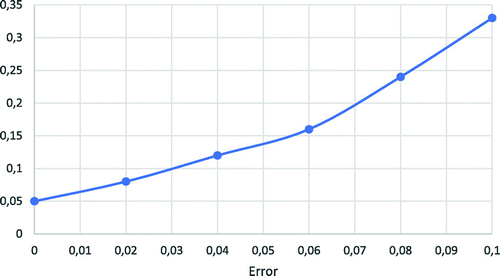
This type of stringent organizational hierarchy is indeed echoing strict “Taylorist” forms of organization that limit the space of autonomy of workers and lack of mechanisms of knowledge flows from bottom to upper hierarchical layers. In fact, recall that veto is exercised by managers whenever an organizational change is proposed by workers, for example, to adopt routine B instead of A, and, in turn, whenever managers propose accepted changes to the principal. Because the direction of local learning flows from bottom to upper hierarchies, higher veto power under higher error-prone agents might yield “dysfunctional learning.”
Take the opposite perspective from power to knowledge: the use of vetoes by fallible supervisors has an impact on the amount of exploration and, therefore, on the long-term performance of the organization. Consider, for instance, a setup in which all members (workers, managers, and principal) have the same error coefficient and let us now vary the probability by which managers and principal veto a change proposed by a worker when it conflicts with their own evaluation.
Figure 3 plots the number of ensembles of organizational routines used by the firm after the initial learning process is over, that is, between iterations 100 and 150. The figure shows a monotonically decreasing relationship between exploration, here intended as potential changes of the admissible routines proposed by workers and veto power. Under regimes of higher veto power, the organization settles on a locally optimal routine, and any proposed change is systematically vetoed. On the contrary, under regimes of low veto power, changes in the organizational routines and, therefore, learning and exploration, have much more room. Together, more exploration is associated with the long-term coexistence of a higher number of ensemble of routines.
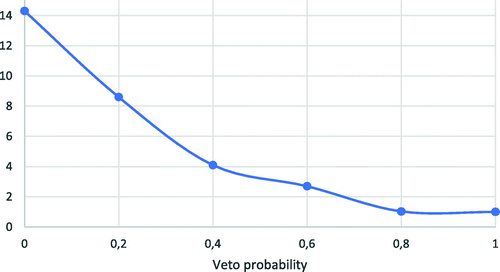
Note. Iterations 101 to 150.
Indeed, low regimes of veto power and a high degree of exploration and learning map into “Toyotist” forms of organization in which workers have a high degree of autonomy in setting the order of operations, and this autonomy is even required by upper hierarchies (see Section 3).
Notice, however, that, when veto power is never or seldom used, that is, managers and principal basically give up their coordination functions, the organization tends to enter a cycle among different routines, a loop of unstable practices, and veto power restricts the admissible sequence of routines, producing stability (see also Marengo 2020 for a more general discussions). This stability, however, might be reached at the cost of low exploration.
Let us finally examine the role of learning, intended as less error-prone workers. Fast learning tends to determine early lock-in into local optima. However, if, as in our model, the learning speed goes together with higher specialization (simply because one has fewer things to learn about), workers tend to learn faster than managers and the latter faster than the principal. Fast learning workers combined with veto-powered managers tend to yield quite quickly a lock-in into inferior ensembles of routines. Therefore, counterintuitively, veto power is even more detrimental when applied to “smart,” less locally error prone, learning workers.
6. Conclusions
This paper contributes to an old and still unresolved question in the management of organizations: namely, what do bosses do?
In principle, managers might exert four functions: (i) establish the hierarchical structure of the organization and the related division of cognitive and physical activities, (ii) coordinate such activities themselves, (iii) govern learning and organizational innovations, (iv) rule over the extraction and appropriation of the net product generated by the organization itself. Of course, in the literature, the importance attributed to such functions differs a great deal. The debate between Marglin (1974) and Landes (1986) is precisely structured along two opposite interpretations of managerial functions: according to the former, managerial functions are relatively unnecessary for reaching efficiency gains and simply reflect power attributes, and according to the latter, managerial functions are productive insofar as they allow reaching a higher level of specialization and coordination inside organizations (see also Vidal 2019).
Most of the recent microeconomic and managerial literature emphasizes and, in our view, overrates the role of managerial functions as the main determinants of firm performances and their observed heterogeneous distributions. The literature is vast, from Bloom and Van Reenen (2007) to contributions in the dynamic capability realm, such as Kay et al. (2018). Conversely, the extractive role of hierarchies tends to be neglected, and even unorthodox scholars tend to espouse the view that top manager pay is a deserved reward for high-productive labor (Milanovic 2019).
In the view presented here, management does have a fundamental coordinating role, and in that, it sides with Landes (1986) and not Marglin (1974). However, its precise role has to be understood with respect to the tension between knowledge and power and their distribution within the organization (Cetrulo et al. 2020). Workers’ role as source of knowledge on how to make things can hardly be suppressed. The Taylorist dream, either in its original form or in contemporary digital-centered form, of a fully top-down planning of routines may only come at the cost of control, inflexibility, and no room for further learning.
However, as the complexity of what has to be produced increases, top-to-bottom coordination among different productive units of a single organization is badly required to realize complex, interdependent processes and artifacts. And such coordination is effectively exercised by different forms of power. The relationship between these two dimensions of organizations is ultimately nested in their hierarchical structures.
In this work we analyze the possibly conflictual relationship between knowledge and power from two complementary perspectives. First, we present its historical unfolding inside two archetypical organizational modes of production, namely, Taylorism and Toyotism, discussing how changing management heuristics have coevolved with corresponding changes in the distribution of knowledge and power within organizations.
Next, we develop a model capturing the two foregoing archetypes and study the properties of the ensuing ensembles of routines. The model is populated by three types of agents: workers, managers, and the principal, endowed with different attributes and functions, namely, for workers, autonomy in setting alternative routines; for management, control over workers; for the principal, the authority over division of labor and assignment of the productive units. We study the fitness of alternative organizational setups facing different degrees of complexity of the landscape in which the organization operates. Alternative setups in terms of distribution of power and knowledge yield remarkably distinct properties.
First, organizational evolution always generates multiple equilibria given the complexity of the landscape, notwithstanding the powerful coordinating impact of authority. Second, the span of control of managers tends to shrink with respect to ex ante principal’s configurations. This is so because, whenever persistent misalignments of performance evaluation between the principal and managers occur, the latter might be punished by reducing the size of the production unit they control. Note that, although conformity rewards managers in terms of span of control, it does not pay off the overall organization in terms of efficiency. Third, consider the relation between knowledge and power. Whenever the upper hierarchical layers are endowed by less precise knowledge, that is, they are more error prone, they tend to exercise more veto power: veto power exercised by managers upon workers, not accepting proposed changes in the organizational routines, and veto power exercised by the principal upon managers. In turn, this makes the overall organization less resilient and more error prone. Indeed, conformity and obedience under higher uncertainty map into higher inefficiency and less learning. Fourth, more authoritarian organizations tend to stifle changes, learning, and exploration, all instrumental to reach efficient configurations, and lock into suboptimal equilibria.
The results of our model have to be confined to an archetypical representation of a stylized set of motives for managerial and worker behaviors. In reality, many alternative configurations beyond Taylorism and Toyotism exist, and as such, they are not necessarily ascribable to the two archetypes. Additionally, the model does not incorporate feedback effects from the status of the organization itself, say a turnaround in which some authoritative power is needed in order to rescue a would-be failed organization as has been the case for IBM and Apple in the 1990s and Chrysler in 2008; neither model contemplates the establishment of new firms.
In terms of future lines of research, our model is still silent about the extractive role of management under different setups, that is, about the implications for the internal distribution of income along hierarchical layers, emerging out of different degrees of bargaining power and conflict. The issue is particularly relevant in an era marked by the explosion of rent-seeking behaviors exercised by top managers, whose skyrocketing remuneration can be hardly explained in terms of productivity growth, but most likely, is grounded in changing power relations within organizations and society as a whole. Additionally, formalizing the unfolding of coevolutionary processes between knowledge and power is a tall objective, that is, the emergence of Toyotism as we currently know it.
The authors thank the guest editors of the special issue, Gino Cattani and Franco Malerba; participants in the seminar at the Stern Business School, New York University (2020); and two anonymous reviewers for their valuable comments.
1 Section 2 draws upon Dosi and Marengo (2015) and Section 3 upon Coriat and Dosi (1998).
2 A corollary is that, if all operations are interdependent, there is only one (degenerate) unit (module) that contains all operations, and therefore, the principal must appoint a single manager to infallibly supervise all operations.
3 Alternatively, the landscape is rugged, and between local maxima, there might be deep valleys (Levinthal 1997).
References
- (2007) Measuring and explaining management practices across firms and countries. Quart. J. Econom. 122(4):1351–1408.Crossref, Google Scholar
- (1993) The revenge of homo economicus: Contested exchange and the revival of political economy. J. Econom. Perspect. 7(1):83–102.Crossref, Google Scholar
- (1974) Labor and Monopoly Capital (Monthly Review, New York).Crossref, Google Scholar
- (2020) Anatomy of the Italian occupational structure: Concentrated power and distributed knowledge. Indust. Corporate Change 29(6):1345–1379.Crossref, Google Scholar
- (1992) Organizational capabilities and the economic history of the industrial enterprise. J. Econom. Perspect. 6(3):79–100.Crossref, Google Scholar
- (2010) Design of decision-making organizations. Management Sci. 56(1):71–89.Link, Google Scholar
- (2021) Technology vs. workers: The case of Italy’s industry 4.0 factories. Structural Change Econom. Dynamics 56:166–183.Crossref, Google Scholar
- (1998) Learning how to govern and learning how to solve problems: On the co-evolution of competences, conflicts and organizational routines. Dosi G, ed. The Dynamic Firm: The Role of Technology, Strategy, Organization and Regions (Edward Elgar, Cheltenham, UK and Northampton), 103–133.Google Scholar
- (2013) An efficient frontier in organization design: Organizational structure as a determinant of exploration and exploitation. Organ. Sci. 24(4):1083–1101.Link, Google Scholar
- (2015) The dynamics of organizational structures and performances under diverging distributions of knowledge and different power structures. J. Institutional Econom. 11(3):535–559.Crossref, Google Scholar
- (2020) Institutions and economic change: Some notes on self-organization, power and learning in human organizations. Eurasian Bus. Rev. 10(1):1–22.Crossref, Google Scholar
- (1999) The Evolution of a Manufacturing System at Toyota (Oxford University Press, Oxford, UK).Crossref, Google Scholar
- (1945) The use of knowledge in society. Amer. Econom. Rev. 35:519–530.Google Scholar
- (1992)
Specific and general knowledge, and organizational structure . Werin L, Wijkander H, eds. Contract Economics (Blackwell, Oxford), 251–274.Google Scholar - (1993) The Origins of Order (Oxford University Press, Oxford, UK).Crossref, Google Scholar
- (2018) The role of emergence in dynamic capabilities: A restatement of the framework and some possibilities for future research. Indust. Corporate Change 27(4):623–638.Crossref, Google Scholar
- (1986) What do bosses really do? J. Econom. Hist. 46(3):585–623.Crossref, Google Scholar
- (1997) Adaptation on rugged landscapes. Management Sci. 43(7):934–950.Link, Google Scholar
- (1981) A model of adaptive organizational search. J. Econom. Behav. Organ. 2(4):307–333.Crossref, Google Scholar
- (1982) Politics and Markets (Basic Books, New York).Google Scholar
- (1979) Trust and Power (Wiley, Hoboken, NJ).Google Scholar
- H (1993) Organization, 2nd ed. (Basil Blackwell, Oxford).Google Scholar
- (2020) Organizational politics and complexity: Coase vs. Arrow, March, and Simon. Indust. Corporate Change 29(1):95–104.Crossref, Google Scholar
- (2005) Division of labor, organizational coordination and market mechanisms in collective problem-solving. J. Econom. Behav. Organ. 58(2):303–326.Crossref, Google Scholar
- (2012) How to get what you want when you do not know what you want. A model of incentives, organizational structure and learning. Organ. Sci. 23(5):1298–1310.Link, Google Scholar
- (1974) What do bosses do? The origins and functions of hierarchy in capitalist production. Rev. Radical Political Econom. 6(2):60–112.Crossref, Google Scholar
- (2019) Capitalism, Alone: The Future of the System That Rules the World (Harvard University Press, Cambridge, MA).Crossref, Google Scholar
- (1974) Obedience to Authority: An Experimental View (Harper & Row, New York).Google Scholar
- (1958) Political Power and Social Theory: Six Studies (Harvard University Press).Google Scholar
- (1988) Toyota Production System: Beyond Large-Scale Production (CRC Press, Boca Raton, FL).Google Scholar
- (2003) Balancing search and stability: Interdependencies among elements of organizational design. Management Sci. 49(3):290–311.Link, Google Scholar
- (1986) The architecture of economic systems: Hierarchies and polyarchies. Amer. Econom. Rev. 76(4):716–727.Google Scholar
- (1991a)
The architecture of complexity . Mobus GE, ed.Facets of Systems Science. International Federation for Systems Research International Series on Systems Science and Engineering, vol. 7 (Springer, Boston), 457–476.Crossref, Google Scholar - (1991b) Organizations and markets. J. Econom. Perspect. 5(2):25–44.Crossref, Google Scholar
- (1993) Altruism and economics. Amer. Econom. Rev. 83(2):156–161.Google Scholar
- (2019) The Sciences of the Artificial (MIT Press, Cambridge, MA).Crossref, Google Scholar
- (1999) Decoding the DNA of the Toyota production system. Harvard Bus. Rev. 77:96–108.Google Scholar
- (1967) The Principles of Scientific Management (Norton Library, Harper and Row, Publishers, Inc., New York).Google Scholar
- (2004) Scientific Management (Routledge, Milton Park, UK).Crossref, Google Scholar
- (2019) Contradictions of the labour process, worker empowerment and capitalist inefficiency. Hist. Materialism 28(2):170–204.Crossref, Google Scholar
- (1978) Economy and Society: An Outline of Interpretive Sociology, vol. 1 (University of California Press, Berkeley, CA).Google Scholar
- (1998) Knowledge and competence as strategic assets. Klein DA, ed. The Strategic Management of Intellectual Capital, (Butterworth-Heinemann, Waltham) 165–187.Google Scholar
Giovanni Dosi is a professor of economics at the Institute of Economics and EMbeDS Department, Sant'Anna School of Advanced Studies, Pisa. He has extensively contributed to the fields of the economics of innovation, theory of the firm, industrial dynamics, and institutional analysis. Since 2003, he has been a “highly cited scientist” as defined by Web of Science.
Luigi Marengo is a professor of economics at the department of business and management, LUISS University, Rome. His research focuses mainly on computational models of organizations, complexity in economics, economics of innovation, decision-making, social choice.
Maria Enrica Virgillito is an assistant professor of economics at the Institute of Economics and EMbeDS Department, Sant’Anna School of Advanced Studies, Pisa. Her research interests range from technological change, industrial dynamics, labor market organization and institutions, macroeconomic dynamics, agent-based modeling, technology, and labor relations to evolutionary economics.

