


The Impact of Age Demographics on Interpreting and Applying Population-Wide Infection Fatality Rates for COVID-19
Abstract
The ongoing coronavirus disease 2019 (COVID-19) pandemic affects the Canadian Armed Forces (CAF) and its members in multiple ways. As the CAF manages its own healthcare system for its members, it must consider the impact of COVID-19 not only on the operational effectiveness of its workforce but also on its healthcare operations. Furthermore, given that the CAF has deployed task forces in support of other government departments, including into long-term care facilities that are experiencing outbreaks, it is important for the CAF to maintain situational awareness of the outbreak in the Canadian population generally. In providing analytical support to the CAF on these questions, we focused on establishing the applicability of estimates of COVID-19 infection fatality rates (IFRs) from the literature to the CAF and to the Canadian public. This paper explores how the age-dependent effects of COVID-19 must be taken into account when comparing estimates based on countries with very different age profiles, such as China and Italy. Furthermore, it explores how varying age structures within a country (e.g., within a subnational jurisdiction, or within a given working population) should affect how analysts apply estimates of IFR to scenarios involving those specific populations.
The ongoing coronavirus disease 2019 (COVID-19) pandemic affects the Canadian Armed Forces (CAF) and its members in multiple ways, generating a need for the best possible advice on the current state of its spread. The Canadian Forces Health Services Group (CF H Svcs Gp) has the responsibility not only to safeguard the health of CAF members to maximize their operational effectiveness but, indeed, also to provide a healthcare system for those members (Department of National Defence 2017); as such, it is important for it to understand and communicate the risk of infection, illness, and death posed by severe acute respiratory syndrome coronavirus 2 (SARS-CoV-2), the virus that causes COVID-19. As well as preserving and protecting the health of its members, the CAF has also been called on to support other government departments, which has included deploying teams into long-term care facilities (LTCFs) experiencing COVID-19 outbreaks (Government of Canada 2020b). There is thus a need for the CAF to maintain awareness of both the impact of the pandemic on its members and its spread among the population and the requisite possibility for taking on additional tasks. The authors of this paper, along with other colleagues, have responded to requests from CF H Svcs Gp to provide analytical support to questions on this topic.
To set this work in context, in April 2020, the literature on all aspects of SARS-CoV-2 was immature, and high-quality studies that would eventually be peer reviewed and published in reputable journals were mixed in with potentially spurious results on preprint servers. At the same time, the CAF had an urgent need to understand the risk to its members, as simply stopping and waiting for more information is not an option for military operations, and any significant delay to training programs could have impacts downstream on readiness. Although even very early in the pandemic reputable sites such as Worldometer (2020) and the Johns Hopkins Center for Systems Science and Engineering dashboard (Dong et al. 2020) existed that charted worldwide cases and deaths, given the significant underascertainment of cases, these numbers could not directly be applied to estimate the risk of death given infection. The infection fatality rate (IFR), the proportion of deaths of those who are infected, is distinct from the more commonly cited case fatality rate (CFR), which generally is taken to reflect the number of deaths per case reported. Estimates of IFR are often substantially lower than CFR, as CFR is generally derived from the subpopulation of more ill patients who have sought medical care and therefore were recorded by the medical system.
This led CF H Svcs Gp leadership to pose the following two questions:
What is the overall estimated IFR for Canadians infected with SARS-CoV-2?
What is the effect of age on estimated IFR for Canadians infected with SARS-CoV-2?
CF H Svcs Gp and Defence Research and Development Canada (DRDC) jointly conducted an initial meta-analysis of journal articles and preprints available in mid-April 2020, which screened more than 200 papers down to 9 that had acceptable IFR estimates. Follow-on work considered the second question more closely (MacLeod 2020b), which this work further extends. Specifically, the fact that nearly all CAF members retire by age 60 required us to use age-stratified estimates of IFR to create a valid IFR estimate for the population of the CAF. The age structure of a given population—and those infected within it—is likely to explain an appreciable amount of variation in IFR. This point was strongly noted in a meta-analysis of COVID-19 IFR evidence published up to July 2020: “Because of very high heterogeneity in the meta-analysis, it is difficult to know if this represents the ‘true’ point estimate…. More research looking at age-stratified IFR is urgently needed to inform policymaking on this front” (Meyerowitz-Katz and Merone 2020, p. 147). This paper seeks to explore this issue further and to make practical recommendations as to how IFR estimates should be understood and applied. In particular, it intends to show that
one should expect that a population-wide IFR estimate for a country with an older population (e.g., Italy) will be higher than one estimated for a country with a younger population (e.g., China), independent of any other factors; and
when applying a countrywide IFR estimate to a subpopulation (e.g., a province or a particular workforce such as the CAF), one should account for the age demographics of that subpopulation to avoid under- or overestimating IFR and, therefore, the expected number of fatalities.
CF H Svcs Gp used the tailored IFR estimates generated here to update estimates of the potential level of burden on the CAF presented by COVID-19 in various scenarios. Given that they were much lower than those based on empirical CFRs and even the average estimated IFRs from the emerging literature, CAF leadership was able to move forward accepting reasonable amounts of risk as a result of COVID-19 in balance with the risks of not resuming given activities. CF H Svcs Gp and DRDC were then able to move on to analysis of other potential impacts of COVID-19 on operations and training, such as absenteeism induced by quarantine and the resources needed to conduct contact tracing.
Methodology
This analysis relies on four main sources of input:
three studies (Rinaldi and Paradisi 2020, Salje et al. 2020a, Verity et al. 2020) identified in the previously mentioned review (Schofield et al. 2020) that include age-stratified estimates of IFR (an updated literature search was not performed)—Table 1 summarizes the age-stratified IFR estimates from these three studies;
demography and population projections for Organisation for Economic Co-operation and Development (OECD) nations for 2018 (OECD 2020);
July 1, 2019, Canadian population projections from Statistics Canada (2020b); and
April 30, 2020, CAF population age demographics sourced from an internal database.
Most of the studies reviewed by Schofield et al. (2020) were preprints at the time (e.g., Rinaldi and Paradisi 2020 and Salje et al. 2020a), and those that had completed peer review were of necessity based on very limited early data (e.g., Verity et al. 2020). Although Salje et al. (2020a) was later accepted by Science, its IFR estimate was also updated by an erratum (Salje et al. 2020b) before the issue in which it appears was even published—which is to say that the literature was a moving target at the time of this work. Our intent is neither to hold these studies up as unimpeachable estimates of COVID-19 IFR nor to unduly critique what was the best available evidence at the time. Rather, it is to present a case study of how the best available data were combined to inform decision-making in a crisis while communicating its limitations. The contribution of this paper is in demonstrating that when the results of these very different studies using different methods were mapped onto a common age distribution, the results were actually in better agreement, and that when mapped onto the CAF, they were at least an order of magnitude lower. These findings highlight the importance of analysts translating IFR estimates to their client’s population of interest, as well as interpreting new studies estimating IFR in the context of the population for which they were developed. The following subsection will briefly describe the approach and limitations of each of the three studies used.
|

Table 1. Summary of Age-Stratified IFR Estimates for COVID-19 from Rinaldi and Paradisi (2020), Verity et al. (2020), and Salje et al. (2020a)
| Age band | IFR (%) | |||
|---|---|---|---|---|
| Rinaldi and Paradisi | Verity et al. | Salje et al. | Salje et al. (revised) | |
| 0–9 | 0.041 (0.004, 0.148) | 0.002 (0.000, 0.025) | 0.001 (0.000, 0.002) | 0.001 (<0.001, 0.002) |
| 10–19 | 0.007 (0.001, 0.050) | |||
| 20–29 | 0.015 (0.001, 0.080) | 0.031 (0.014, 0.092) | 0.007 (0.003, 0.010) | 0.005 (0.003, 0.010) |
| 30–39 | 0.084 (0.041, 0.185) | 0.020 (0.010, 0.040) | 0.020 (0.010, 0.030) | |
| 40–49 | 0.041 (0.002, 0.173) | 0.161 (0.076, 0.323) | 0.060 (0.030, 0.090) | 0.050 (0.030, 0.080) |
| 50–59 | 0.104 (0.011, 0.287) | 0.595 (0.344, 1.280) | 0.200 (0.100, 0.360) | 0.200 (0.100, 0.300) |
| 60–69 | 0.929 (0.553, 1.482) | 1.930 (1.110, 3.890) | 0.900 (0.500, 1.400) | 0.700 (0.400, 1.200) |
| 70–79 | 4.537 (3.348, 6.343) | 4.280 (2.450, 8.440) | 2.400 (1.400, 3.700) | 1.900 (1.100, 3.200) |
| 80+ | 8.504 (6.387, 11.570) | 7.800 (3.800, 13.300) | 10.100 (6.000, 15.600) | 8.300 (4.700, 13.500) |
Notes. Estimates are given with their 95% credible intervals. Two of the estimates for Rinaldi and Paradisi, and one for Salje et al., span two rows owing to their grouping of age bins. Age bins for Rinaldi and Paradisi are off by 1 (e.g., they are reported as 41–50, not 40–49). The final two columns are the original estimates from Salje et al. (2020a) and those revised as described by an erratum (Salje et al. 2020b).
Infection Fatality Rate Data and Modeling
Rinaldi and Paradisi (2020) based their study on data from 10 municipalities in Lombardy, Italy, that most severely experienced the initial outbreak, from February 28, 2020, to April 4, 2020. Employing a binomial mortality model, stratified by age and municipality, they estimate an overall IFR of 1.29% (95% credible interval [CrI]: 0.89%–2.01%). Their model has the following key features:
The observed data are the number of deaths per day by age and municipality from February 28 to April 4 for the years 2015–2020, as well as the age-stratified populations of the municipalities.
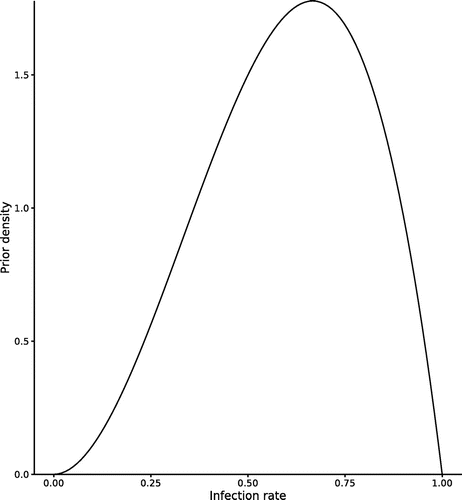
The model parameters are the baseline lethality rates δa and the COVID-19 IFRs by age δCOVID and the COVID-19 infection rate by municipality θi. The prior distributions for the lethality rate parameters are very weak, functioning as containment priors only. The infection rate prior is weakly informative (θi ∼ Beta(3, 2); see Figure 1), which corresponds to the antibody prevalence rate of two-thirds (40 of 60) in Castiglione d’Adda in early April 2020. The 2.5%, 50%, and 97.5% quantiles are 0.194, 0.614, and 0.932, respectively, allowing for substantial deviation from the mean as driven by the data. Rinaldi and Paradisi performed sensitivity analysis to establish that this does not overly bias the results. Because the seroprevalence data were collected during or shortly after the peak of the COVID-19 epidemic in this region, the authors have little concern that there is significant loss of antibody levels as in Ibarrondo et al. (2020).
The COVID-19-related parameters fixed at 0 for years before 2020, enabling the fitting of the baseline lethality rates δa. The very low number of deaths in the lower age brackets (1 death total in the 0–20 age bracket (in 2020) and 1 death total in the 21–40 age bracket (in 2017) out of a total of 341 deaths) places limits on the accuracy of the IFR predictions for these age groups.
Rinaldi and Paradisi (2020) fit these model parameters by Bayesian regression using a Markov chain Monte Carlo (MCMC) Gibbs sampler. One of the limitations of the study is that it is based on counts of excess deaths compared with a baseline, rather than direct data on COVID-19 outcomes in a given sample. Statistics Canada (2020a) summarizes some of the challenges in such an approach: “Death is a statistically rare event, and important variations may be observed from year to year in the annual counts of deaths, in particular in the less populated [jurisdictions]. Moreover, yearly counts of deaths may be affected by changes in the composition of the population, in regard to age more particularly, and changes in mortality rates (e.g. improvement of mortality).” Differences in both general and COVID-19-specific data collection practices between jurisdictions have also complicated studies based on excess death in Canada (Statistics Canada 2020a) and the United States (Weinberger et al. 2020), but those concerns are mitigated in countries with national-level health systems and data collection such as Italy and France.
Verity et al. (2020) based their study on very early data (up to February 28, 2020), sourced primarily from Hubei, China, although incorporating reports from elsewhere in the world, ultimately estimating an overall IFR for China of 0.657% (95% CrI: 0.389%–1.33%). They based CFR age-stratified estimates on mainland China data while basing IFR estimates on polymerase chain reaction (PCR) testing of international residents repatriated from China. Schofield et al. (2020) noted concerns of potential bias as a result of the assumptions of 100% ascertainment in the 50–59 age group and equal attack rates in all age groups. Other demographic bins were reweighted based on these assumptions; additionally, it was based on older, likely underreported Chinese case and fatality data. In comparison with Rinaldi and Paradisi, Verity et al. reported 0 deaths in the 0–9 age bracket, 1 in the 10–19 age bracket, 7 in the 20–29 age bracket, and 18 in the 30–39 age bracket, out of a total of 1,023. It is worth noting that after publication of Verity et al. (2020), the authors, in an exchange of correspondence with Wood et al. (2021) regarding the weight placed on repatriation flight data versus data obtained from the well-studied outbreak (see, e.g., Russell et al. (2020)) on the Diamond Princess cruise liner in early February 2020, acknowledged that “[b]oth datasets are opportunistic, and neither is perfectly representative of the underlying population of interest…. [T]he transmission setting is unusual and therefore not necessarily representative of the broader populations that such estimates would be applied to. Furthermore, the health status of cruise ship passengers is not necessarily the same as the general population of a similar age…. Given these limitations and the fact that the Diamond Princess outbreak data were incomplete at the time of our analysis (late February 2020), we opted to focus on repatriation flight data” (Verity et al. 2021, p. 28). Verity et al. (2021) further stated in their reply that their goal was to establish the order of magnitude of the IFR for early strategic planning and so did not meaningfully dispute the figure obtained in the reanalysis by Wood et al. (2021).
Salje et al. (2020a) based their study on data on the evolution of cases in hospitals in France, which notably excludes deaths in long-term care facilities. As they did not directly measure the underlying infection prevalence in France, testing and outcome data from the Diamond Princess cruise ship passengers (National Institute of Infectious Diseases, Japan 2020) were used to jointly estimate distributions. Their data have 6 deaths in the <20 age bracket (all male) and 21 in the 20–29 age bracket (two-thirds male). They estimate an overall IFR for France (outside of long-term care facilities) of 0.5% (95% CrI: 0.3%–0.9%). Prior to the update to the original document they described in an erratum (Salje et al. 2020b), they had estimated an IFR of 0.7% (95% CrI: 0.4%–1.0%). This adjustment was based on recoveries of three patients they had initially assumed would die. Significantly, they remove patients in long-term care facilities from their population of interest.
Credible Intervals
Given the availability of the code and data (Rinaldi 2020) accompanying the Rinaldi and Paradisi (2020) preprint, the authors were able to generate estimates for the OECD and Canadian populations propagating the uncertainty in the estimated distribution for each underlying age range using the same method Rinaldi and Paradisi used for Italy. The distributions for the lower age ranges in particular may exhibit positive skew, so it important for one to work from the empirical data to generate an accurate interval.
Upon inspection of the code, the authors found that the intervals were combined in a relatively simplistic manner for both the main Italian estimate and the supplementary OECD estimates. For each age band, the 2.5%, 50%, and 97.5% quantiles were estimated from the marginal posterior distributions. These quantiles were then weighted by multiplying them by the share of the population in that age band, and these were summed—that is, a weighted sum was done for both the point estimate and the confidence intervals.
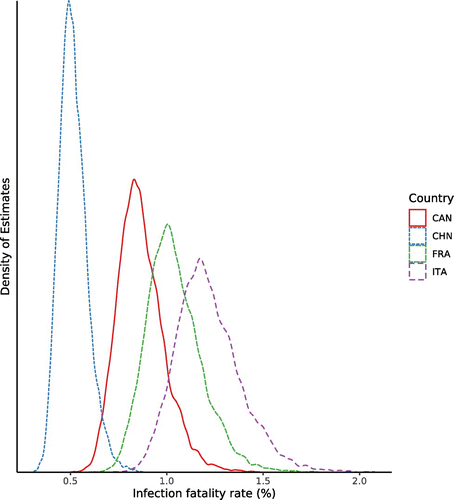
However, the sum of weighted quantiles is not necessarily equal to the quantiles of a weighted sum. For instance, if there is correlation in the differences in IFR for each age band, the resulting intervals could be too wide. This means that to get the most accurate quantiles and, more generally, the distribution of the population IFR, one must work with the joint posterior distribution of the age band IFRs. For each MCMC sample, one can weight and sum the age-stratified IFR estimates for that specific estimate. One can then take the quantiles of the total distribution of the population IFRs thus constructed. The authors inspected the available code for (Rinaldi 2020) and determined that the estimated joint posterior distribution was available as an intermediary product, allowing this procedure to be implemented at the cost of an increase in calculation time. Each of the 100,000 samples in the joint posterior distribution was weighted by the population fractional weights for the population of interest and summed; the resulting totals were then aggregated into a marginal posterior distribution of population-wide IFRs that accounts for between-age band correlations. Figure 2 plots the resulting distributions for four countries of interest.
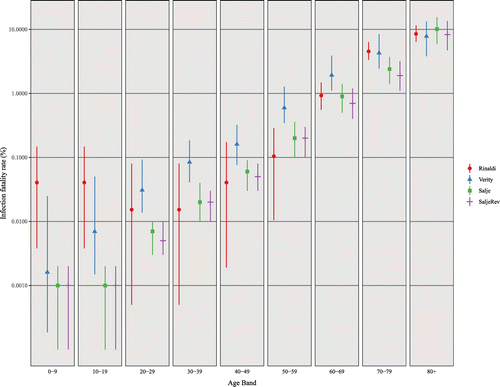
Notes. Age ranges are exact for Verity et al. (2020). Salje et al. (2020) presented a single <20 age bracket, and this value is used for both 0–9 and 10–19; the values from both the original and revised (“SaljeRev”) paper (Salje et al. 2020b) are given. Rinaldi and Paradisi (2020) combined lower age bands into 0–20 and 21–39, so these values are repeated across two bins each; they also report age brackets from, for example, 41–50 rather than 40–49, so the age bins are off by one year. The scale is logarithmic in the y axis.
The authors then calculated the difference between the original estimated quantiles from Rinaldi and Paradisi (2020) and their own quantile estimates using the joint posterior distribution for all of the OECD nations. Table 2 presents the median change in each of the three quantiles; the point estimates barely changed (adding approximately 1 death per 12,000 infected individuals), whereas the 95% credible intervals narrowed slightly more. For perspective, the estimated IFR for Italy generated by the Rinaldi code changed by 0.1% when run by the authors (and the 2.5% and 97.5% quantiles by 0.04% and 0.28%, respectively), simply as a result of differences in random number generators. This at least suggests independence between age-band IFRs. In the Results and Discussion section, the joint posterior approach was applied in Figure 4 and the simpler weighted sum method in Figures 5 and 6 (for reasons of comparability with the other two studies), although the difference is barely detectable.
|
Table 2. Median Difference in the Population-Level IFR Quantile Estimates for OECD Nations Generated by a Sum of Weighted Quantiles Method vs. the Quantiles of a Weighted Sum
| 2.5% quantile | 50% quantile | 97.5% quantile |
|---|---|---|
| 0.074% | 0.008% | −0.119% |
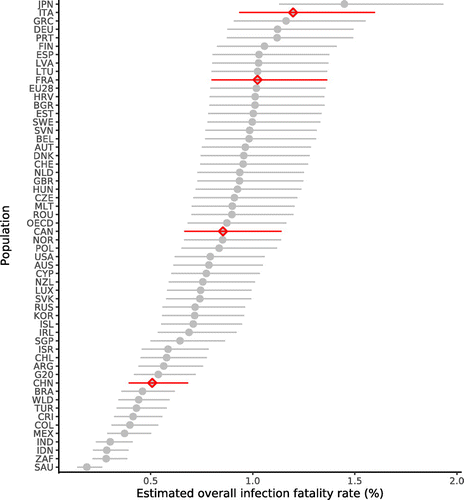
Notes. Produced using edited code from Rinaldi (2020). Country codes as per ISO 3166 (ISO 3166 Maintenance Agency 2021).
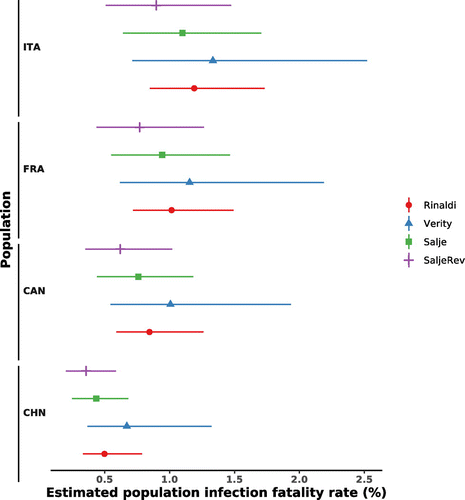
Notes. Produced using edited code from Rinaldi (2020). “SaljeRev” refers to the version of the study revised as described by an erratum (Salje et al. 2020b).
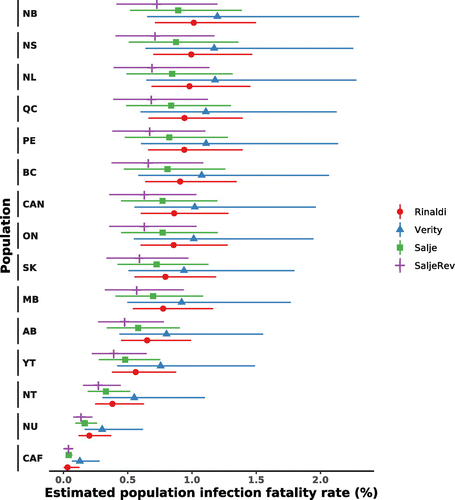
Notes. The population totals used here are current as of July 1, 2019, so the Canada-wide estimates are slightly different from those calculated using the 2018 OECD values in Figures 4 and 5. Produced using edited code from Rinaldi (2020). “SaljeRev” refers to the version of the study revised by an erratum (Salje et al. 2020b). NL, Newfoundland and Labrador; QC, Quebec; PE, Prince Edward Island; BC, British Columbia; CAN, Canada; SK, Saskatchewan; MB, Manitoba; AB, Alberta.
Given the small differences observed between the joint posterior weighted estimates and the original estimates in Rinaldi and Paradisi (2020) using the marginal posterior densities, the authors felt more comfortable applying the simpler method to the other two studies. As a cross-check, they compared the generated estimates with the country-specific estimates in the original studies. In the case of Verity et al. (2020), the simple method generates an estimate for China of 0.670% (95% CrI: 0.368%–1.32%), which, when compared with the original paper’s estimate of 0.657% (95% CrI: 0.389%–1.33%), is fairly accurate (and is in the range of the change induced by random variation to the Rinaldi and Paradisi estimate).
What is more difficult to reconcile is the simplified Salje et al. (2020a) estimate for France, which is 0.769% (95% CrI: 0.436%–1.26%) compared with the revised source paper’s 0.53% (95% CrI: 0.49%–0.58%). That said, Salje et al. (2020a) used more complex demographic scaling and adjustment on their input variables. For instance, they removed individuals in long-term care, psychiatric care, and emergency care (who may be presumed to be older and have a higher risk of fatality) from their population; looking at their posted code and data, this represents approximately 0.75% of the 60–69 population, 1.96% of the 70–79 population, and 15.4% of the 80+ population—overall removing about 1.2% of the most at-risk members of the population from their totals. Interestingly, in their supplementary material, Salje et al. published a table of how their IFR estimates would change with different sensitivity analyses, and their overall estimate given constant attack rate would be 0.7% (95% CrI: 0.4%–1.1%), which is close to the above-mentioned simplified estimate (the same estimate is given for their “Diamond Princess passengers are healthier than the French population” case). Although this suggests less confidence in the per-country intervals and estimates based on the Salje et al. data presented in the following section, it also indicates that reasonable changes in assumptions to account for population structure or behavior may change a population-wide IFR estimate by 0.2% in absolute terms. As referred to earlier, the erratum for the original Salje et al. paper (Salje et al. 2020b) also notes that changing the outcome for three patients changed their overall estimate by 0.12% in absolute terms (or a relative drop of close to 20%), and it also increases their estimate of the proportion infected in the population from 4.4% to 5.3%. Given the small absolute value of IFR, the absolute increase of 0.2% translates to a more than 40% increase in terms of projected fatalities, which is likely to be a meaningful increase to decision makers when applied at a population level.
Results and Discussion
Having established how the estimates will be presented, we now move to a discussion of the implications of interpreting and applying these age-stratified IFR estimates. What is not necessarily obvious is why the Rinaldi and Paradisi (2020) estimate quoted previously (1.29%) is nearly double that of Verity et al. (2020) (0.657%), particularly given the relatively close agreement of their age-stratified estimates in Figure 3 (noting that the lower age bins have very low absolute magnitude). This becomes apparent upon observation of Figure 4, which scales the Rinaldi and Paradisi age-stratified IFRs by relative population share for OECD countries and subgroupings (e.g., the European Union (which at the time of their study consisted of 28 nations; EU28) and Group of 20 (G20)). Italy has the second-highest estimated IFR in the OECD owing to its relatively aged population; indeed, if one applies the Rinaldi and Paradisi values to a population with the age structure of China, one obtains a lower estimate for that country than that of Verity et al. The credible intervals for Italy and China do not even overlap, as depicted in distribution form in Figure 2. Again, this does not account for any other differences between the countries’ populations or healthcare systems but is essentially equivalent to comparing a population of Lombardians drawn in proportion to the age demographics of either Italy as a whole or China as a whole. The absolute magnitude of the estimates should be approached with caution given that other differences between the countries have not been accounted for—the key point is the dramatic effect that simply changing the age proportion of the population has on generating a population-wide IFR estimate. Further, these estimates also assume a constant attack rate—that is, that the population is infected in a constant proportion across age bands. This assumption was debatably true before lockdowns and other interventions took hold—and, indeed, are challenged by results in, for example, Béraud et al. (2015) and Klepac et al. (2020)—but less so afterward. Salje et al. (2020a) also did not take this approach in producing their main estimate.
A second view of the impact is provided in Figure 5, where we mapped the age-stratified estimates for all three studies (Rinaldi and Paradisi 2020, Salje et al. 2020a, Verity et al. 2020), including both the original and revised figures for Salje et al. onto four countries of interest, using the same method (see the discussion in the Credible Intervals section). It is notable that Verity et al. produced the highest point estimates when adjusted for age structure, albeit with the widest uncertainty (this is to be expected, given the limited data available at the time of the analysis). As shown in Table 3, mapping the studies to Canadian demographics brings the point estimates closer together, which changes the discussion about how different the conclusions of each study are when applied to a common population.
|
Table 3. Age-Stratified COVID-19 IFRs from Three Studies (Rinaldi and Paradisi 2020; Salje et al. 2020a, b; Verity et al. 2020), Mapped Onto Canadian Demographic Proportions
| IFR source | IFR for Canada (%) |
|---|---|
| Salje et al. (2020a) | 0.75 (0.44–1.18) |
| Salje et al. (2020b) | 0.62 (0.35–1.02) |
| Verity et al. (2020) | 1.01 (0.54–1.94) |
| Rinaldi and Paradisi (2020) | 0.84 (0.59–1.26) |
Note. Estimates are given with their 95% credible intervals.
Our next step was to examine how age-based differences could affect estimates for Canada. Figure 6 depicts a similar translation of the three sets of age-stratified IFR to Canadian subpopulations. We used the linear combination method described in the section entitled Credible Intervals, having validated it against the more technically correct method preserving the marginal posterior distribution for each age band’s IFR in the case of Rinaldi and Paradisi (2020). Simply put, we generated the percentage population share for each age band by using the demographic information at Statistics Canada (2020b) and then multiplied the 2.5%, 50%, and 97.5% quantiles for each corresponding age-stratified IFR estimate by these fractions and summed.
We again emphasize that the reader should have relatively low confidence in the precise values given the limitations in the data noted previously, as well as potential differences in outcomes for Canadian populations compared with the nations in which the data were collected—for instance, challenges with access to healthcare in the territories (Nunavut (NU), Northwest Territories (NT), and Yukon (YT); see, e.g., Anselmi (2020)) would likely need to be balanced against the relatively low estimate of IFRs depicted here based only on their younger age demographic. One can consider the situation in Nova Scotia (NS), for instance, where of 59 COVID-19-attributed deaths as of late May 2020, 52 had been in a single LTCF (Jerret 2020); calculating or applying a population-wide IFR for that province would need to adjust for that in some way. Based simply on differences in age balance, New Brunswick (NB), for example, might have a more than 15% higher expected population-level IFR than the Canadian average, whereas Alberta (AB) might have one close to 25% lower than the Canadian average. Finally, given the CAF’s standard retirement age of 60, its population is substantially different from every province or territory as a whole, without even accounting for any potentially higher general level of health of military personnel compared with the general population.
It is important to consider the degree to which COVID-19 fatalities in Canada have been concentrated in LTCFs—an estimate in early May 2020 put the figure between 70% and 82% (Hsu et al. 2020)—and how this affects the application of IFR. Trinh (2020) reported that in a single LTCF in Ottawa, Ontario (ON), 47 of 160 residents died, with at least 97 having been infected; assuming perfect testing, this represents an IFR of 48% and at the very least 29% if, in fact, every resident had been infected. These are high even for the 80+ estimates in Figure 3 and thus are perhaps suggestive of a specific problem with care at the center. That said, these fatalities will appear in official counts and affect any estimate based on those. One could take the approach of Salje et al. (2020a) and remove the LTCFs from both the population and the fatality counts, but with such a high percentage of Canadian deaths occurring in these facilities, doing so would drastically understate the total toll that the virus has taken on the country. This points to a need to consider carefully the embedded assumptions in the question a decision maker is asking before deciding how an appropriate IFR estimate should be developed for use in answering it.
For perspective, given a random sample of 97 Ontarians, one would have expected one fatality (or perhaps two, using the high end of the interval based on Verity et al. (2020)) based on the estimates generated for Figure 6. For 97 members of a working-age population such as that of the CAF, one would expect none. This is in stark contrast to the outcome in the LTCF referred to previously. A risk assessment for each of these populations needs to take this into account in a way that a general global, national, provincial, or city-level IFR estimate would not truly reflect.
Another way IFR is being used is to estimate the prevalence of the virus in the community over time, as the number of people tested remains relatively low, and many of those who were tested were only tested once. As fatality numbers are much better known, an estimate of the number of those who have been infected can be obtained by inverting the estimated IFR. Where this will be challenging is when outbreaks disproportionately affect people in certain age bands. For instance, using a population-level estimate for Ontario to estimate the prevalence in Ottawa based on the 47 deaths at the above-mentioned single care home, one might expect that somewhere between approximately 2,400 and 13,000 people must have been infected, using the extremes of the intervals in Figure 6. Using the estimates for the CAF, one would estimate anywhere between 17,000 and 1.7 million people would have had to have been infected. This demonstrates the need to consider the assumptions that go into generating a credible interval for COVID-19 fatalities and prevalence—simply assuming a constant infection rate across age bands will lead to inaccurate predictions where an outbreak is concentrated in populations that are skewed older or younger than the average. Particularly given the high incidence in Canada of outbreaks in institutions with older residents, this possibility cannot be reasonably discounted.
Impact
This study was conducted and delivered at a time when much was still uncertain about COVID-19, including the scale and consistency of its lethality. In April 2020, reliable CFR estimates in various jurisdictions were as high as 10%. Indeed, even as of October 5, 2020, Canada’s official national CFR was 5.6%—that is, approximately 1 in 20 known cases had resulted in death (Public Health Agency of Canada 2020a). Although CF H Svcs Gp leadership understood that the IFR would be lower than the CFR, and the idea that age played a major role was in circulation, this work credibly established that the risk of fatality given infection for a CAF member was, in fact, two orders of magnitude lower than that—informing what would be acceptable risk for CAF members on operations and in headquarters operations. This is not to say that the risk of morbidity and mortality is now disregarded but simply that it is placed in context with other risk factors and operational imperatives.
For perspective on the importance of correctly estimating the magnitude of the risk to its members, one can consider the total case data the CAF first publicly released on October 6, 2020 (Government of Canada 2020a). As of that date, 222 cases had been detected in the CAF, with zero fatalities. At the overall Canadian CFR, the CAF might have expected approximately 12 deaths for that number of cases, or approximately 2 at the estimated overall Canadian IFR presented in this paper (or more than that, assuming the actual number of infections is some multiple of the detected cases). That there have, in fact, been no fatalities is more consistent with the age-adjusted IFR for CAF presented here, suggesting that the CAF have been able to accept the risk of resuming training and continuing operations under appropriate safeguards with an accurate understanding of the level of risk to its members.
Furthermore, given that we have established a credible IFR range that is relatively low, CF H Svcs Gp was able to better focus its requests for analytical support on other potential impacts of COVID-19 on its own resources and on operations. For instance, one of the authors of the current paper interpreted the potential impact of a “reasonable worst-case scenario” for a fall wave of COVID-19 (Public Health Agency of Canada 2020b) combined with influenza season on CAF hospitalizations and peak absences from work as a result of associated quarantine periods (MacLeod 2020a). Other analysts have examined the point-prevalence of COVID-19 by health region in Canada (Horn 2021), challenges of sentinel testing within office and similar settings (Mirshak 2020), and the likelihood that undetected infections will penetrate quarantine and testing practices for a group brought together for tasks or training (Guillouzic et al. 2020). In this way, CF H Svcs Gp can continue to fulfill its role of safeguarding the health of members while maximizing their operational effectiveness. The IFR analysis documented here has formed only one small part of a broader operations research effort to advise the CF H Svcs Gp and CAF throughout the pandemic.
Conclusion
The preceding analysis has shown that studies that had produced what appear on the surface to be quite different estimates of IFR are in greater agreement when mapped onto onto a common age structure. Given that many studies have been based on the early outbreaks in China and Italy, it is notable that the age structures of these countries are significantly different, and the authors would suggest that caution should therefore be used when comparing them side by side.
Conversely, when applying a population-level IFR estimate in order to provide advice on future impacts of the pandemic, the aforementioned results suggest that practitioners must carefully consider whether the population being considered is likely to be reflective of the national or regional population in terms of age structure. Davey Smith et al. (2020, p. 1) raised similar concerns about unwarranted precision in COVID-19 science more generally in an October 2020 editorial, listing the infection fatality rate as one of the areas where “[s]trongly contrasting but apparently equally authoritative statements” have been made. What is credible or likely will change depending on how the population of interest is bounded.
As governments and individuals understand the risks of COVID-19 better, they have, in many cases, taken steps to protect the most vulnerable—which will make it even more unlikely that infections will be randomly distributed among populations. Where outbreaks have occurred in LTCFs they have often spread quickly, which would perhaps best be represented as a multimodal effect on expected fatalities (i.e., for each additional facility with an outbreak, a number of fatalities is likely). This would suggest the possibility of presenting decision-makers with a range of possible scenarios based on whether the virus enters specific vulnerable populations. Even among institutions, the different age demographics in, for example, LTCFs, prisons, and schools should lead to very different estimates of fatalities or, conversely, prevalence. As of this writing, more than 1,300 infections were detected in a single meatpacking plant in Germany, but no fatalities had yet been reported, likely reflecting the lower age of most workers (Associated Press 2020). We would therefore suggest that modelers consider parametrizing their models to account for different potential age structures, given that it is not predictable in which specific segment or segments of the population an outbreak will occur.
Conversely, the better the job that modelers do in representing the effects in specific populations or scenarios, the more difficult the job meta-analysts will have to compare those estimates on a common footing. It is also likely that treatment protocols and healthcare systems have not reached steady state with respect to COVID-19, and so IFR may be varying over time even in a given location. At least in the near term, it may not ultimately be meaningful to talk about an overall or population-level COVID-19 IFR, at least not with much greater precision than that given in existing estimates. This is not a fault of the modelers but rather may simply represent unresolvable uncertainty given the constraints.
The authors acknowledge Gianluca Rinaldi for publicly posting the code for the paper produced by him and his coauthor, which greatly facilitated this analysis. They also acknowledge their coauthors on the initial rapid review that led the authors to consider this problem: Steve Schofield, Josée van den Hoogen, Barbara Strauss, and David Waller. Steve and Barbara merit particular thanks with respect to problem definition and providing guidance to the defence scientists who had not previously worked in this area. The authors also thank Marcin Pilat for his timely assistance on obtaining internal demographic data, and they acknowledge the work of the anonymous peer reviewers and associate editor whose timely and useful comments improved the final product.
References
- (2020) The North knows what it’s like to fight a pandemic. Walrus (May 27), https://thewalrus.ca/the-north-knows-what-its-like-to-fight-a-pandemic/.Google Scholar
Associated Press (2020) The latest: Germany works to tame meatpacking outbreak. AP News (June 22), https://apnews.com/816976a6bf845ae942ea9d5f1c3d9393.Google Scholar- (2015) The French connection: The first large population-based contact survey in France relevant for the spread of infectious diseases. PLoS One 10(7):e0133203.Google Scholar
- (2020) Covid-19’s known unknowns. British Medical J. 371(October 19):Article m3979.Google Scholar
Department of National Defence (2017) Surgeon General’s integrated health strategy—2017. Accessed June 20, 2020, http://www.cmp-cpm.forces.gc.ca/hs/docs/sg-integrated-health-strategy.pdf.Google Scholar- (2020) An interactive web-based dashboard to track COVID-19 in real time. Lancet Infectious Diseases 20(5):533–534.Google Scholar
Government of Canada (2020a) Military response to COVID-19. Accessed October 12, 2020, https://www.canada.ca/en/department-national-defence/campaigns/covid-19-military-response.html.Google ScholarGovernment of Canada (2020b) Operation LASER. Accessed June 20, 2020, https://www.canada.ca/en/department-national-defence/services/operations/military-operations/current-operations/laser.html.Google Scholar- (2020) Likelihood of undetected COVID-19 infection in a group: Effect of quarantining and testing. Technical report, Defence Research and Development Canada, National Defence Headquarters, Ottawa. http://diaenterprisepublic.canadacentral.cloudapp.azure.com/COVID19MissedInfections.html.Google Scholar
- (2021) COVID-19 Toolset: Point-prevalance map and algorithms. Defence Research and Development Canada, National Defence Headquarters, Ottawa. https://decision-support-tools.com/.Google Scholar
- (2020) Understanding the impact of COVID-19 on residents of Canada’s long-term care homes—Ongoing challenges and policy responses. Technical report, LTCcovid, International Long-Term Care Policy Network, Care Policy and Evaluation Centre, London School of Economics and Political Science, London. https://ltccovid.org/wp-content/uploads/2020/06/LTCcovid-country-reports_Canada_June-4-2020.pdf.Google Scholar
- (2020) Rapid decay of anti–SARS-CoV-2 antibodies in persons with mild Covid-19. New England J. Medicine 383(11):1085–1087.Google Scholar
ISO 3166 Maintenance Agency (2021), ISO 3166 Country Codes. Accessed January 31, 2021, https://www.iso.org/iso-3166-country-codes.html.Google Scholar- (2020) N.S. announces steps to reopen economy; 1 new COVID-19 case reported. CTV News (May 27), https://atlantic.ctvnews.ca/n-s-announces-steps-to-reopen-economy-1-new-covid-19-case-reported-1.4956735.Google Scholar
- (2020) Contacts in context: Large-scale setting-specific social mixing matrices from the BBC Pandemic project. Preprint, submitted March 5, https://www.medrxiv.org/content/10.1101/2020.02.16.20023754v2.Google Scholar
- (2020a) Estimates of the burden of the COVID-19 “reasonable worst case scenario” for the Canadian Armed Forces. Scientific Letter DRDC-RDDC-2020-L167, Defence Research and Development Canada, National Defence Headquarters, Ottawa.Google Scholar
- (2020b) The impact of age demographics on interpreting and applying population-wide infection fatality rates for COVID-19. Scientific Letter DRDC-RDDC-2020-L120, Defence Research and Development Canada, National Defence Headquarters, Ottawa.Google Scholar
- (2020) A systematic review and meta-analysis of published research data on COVID-19 infection-fatality rates. Internat. J. Infectious Diseases 101(December):138–148.Google Scholar
- (2020) Challenges of sentinel testing for early detection of coronavirus disease 2019 (COVID-19) infections. Scientific Report DRDC-RDDC-2020-R127, Defence Research and Development Canada, National Defence Headquarters, Ottawa. Available at https://pubs.drdc-rddc.gc.ca/BASIS/pcandid/www/engpub/DDW?W%3DSYSNUM=812483&r=0.Google Scholar
National Institute of Infectious Diseases, Japan (2020) Field briefing: Diamond Princess COVID-19 cases, 20 Feb update. Accessed May 28, 2020, www.niid.go.jp/niid/en/2019-ncov-e/9417-covid-dp-fe-02.html.Google ScholarOrganisation for Economic Co-operation and Development (OECD) (2020) Data warehouse. Accessed May 28, 2020, http://dx.doi.org/https://doi.org/10.1787/data-00900-en.Google ScholarPublic Health Agency of Canada (2020a) Coronavirus disease 2019 (COVID-19): Epidemiology update. Accessed October 5, 2020, https://health-infobase.canada.ca/covid-19/epidemiological-summary-covid-19-cases.html.Google ScholarPublic Health Agency of Canada (2020b) Federal/provincial/territorial public health response plan for ongoing management of COVID-19. Published August 19, 2020, accessed August 31, 2020, https://www.canada.ca/en/public-health/services/diseases/2019-novel-coronavirus-infection/guidance-documents/federal-provincial-territorial-public-health-response-plan-ongoing-management-covid-19.html.Google Scholar- (2020) Estimating the infection fatality rate of COVID-19 using demographics data and deaths records from Italy’s hardest hit area. Accessed May 28, 2020, https://github.com/gianlucaRinaldi/covid_IFR_Lombardy.Google Scholar
- (2020) An empirical estimate of the infection fatality rate of COVID-19 from the first Italian outbreak. Preprint, submitted May 14, https://www.medrxiv.org/content/10.1101/2020.04.18.20070912v2.Google Scholar
- (2020) Estimating the infection and case fatality ratio for coronavirus disease (COVID-19) using age-adjusted data from the outbreak on the Diamond Princess cruise ship, February 2020. Eurosurveillance 25(12):2000256.Google Scholar
- . (2020a) Estimating the burden of SARS-CoV-2 in France. Science 369(6500):208–211.Google Scholar
- . (2020b) Erratum for the report: “Estimating the burden of SARS-CoV-2 in France,” by H. Salje, C. Tran Kiem, N. Lefrancq, N. Courtejoie, P. Bosetti, J. Paireau, A. Andronico, N. Hozé, J. Richet, C.-L. Dubost, Y. Le Strat, J. Lessler, D. Levy-Bruhl, A. Fontanet, L. Opatowski, P.-Y. Boelle, S. Cauchemez. Science 368(6498):eabd4246.Google Scholar
- (2020) Rapid review—Infection fatality rate estimates for COVID-19. Scientific Letter DRDC-RDDC-2020-L112, Defence Research and Development Canada, National Defence Headquarters, Ottawa.Google Scholar
Statistics Canada (2020a) Estimation of excess mortality. Accessed October 20, 2020, https://www.statcan.gc.ca/eng/statistical-programs/document/3233_D5_V1.Google ScholarStatistics Canada (2020b) Table 17-10-0005-01: Population estimates on July 1st, by age and sex. Accessed May 28, 2020, http://dx.doi.org/https://doi.org/10.25318/1710000501-eng.Google Scholar- (2020) Video captures residents wandering into woman’s room at Ottawa long-term care home hit hard by COVID-19. CBC News (June 18), https://www.cbc.ca/news/canada/ottawa/video-infection-control-lapse-wandering-residents-sienna-living-madonna-care-1.5611750.Google Scholar
- . (2020) Estimates of the severity of coronavirus disease 2019: A model-based analysis. Lancet Infectious Diseases 20(6):669–677.Google Scholar
- (2021) COVID-19 and the difficulty of inferring epidemiological parameters from clinical data—Authors’ reply. Lancet Infectious Diseases 21(1):28, http://dx.doi.org/https://doi.org/10.1016/S1473-3099(20)30443-6.Google Scholar
- . (2020) Estimation of excess deaths associated with the COVID-19 pandemic in the United States, March to May 2020. JAMA Internal Medicine 180(10):1336–1344.Google Scholar
- (2021) COVID-19 and the difficulty of inferring epidemiological parameters from clinical data. Lancet Infectious Diseases 21(1):27–28.Google Scholar
Worldometer (2020) COVID-19 coronavirus pandemic. Accessed October 20, 2020, https://www.worldometers.info/coronavirus/.Google Scholar
Verification Letter
Steve Schofield, Senior Advisor, Communicable Disease Control Program, Directorate of Force Health Protection, Canadian Forces Health Services Group Headquarters, Department of National Defence, Ottawa, Ontario, Canada, writes:
“I am writing this verification letter to affirm that the results described in the attached paper ‘The Impact of Age Demographics on Interpreting and Applying Population-Wide Infection Fatality Rates for COVID-19,’ by MacLeod and Hunter have been used by the Canadian Forces Health Services Group to update estimates of the burden (i.e., fatality rate) the Canadian Armed Forces (CAF) may expect to experience at various prevalence rates of COVID-19 infection within its population. The Surgeon General and his deputy have been briefed a number of times on this work, and have requested updates to it and further information on its implications, which the authors have provided. As the CAF is responsible for the health and healthcare system of its members, as well as in supporting other government departments in responding to the pandemic, it is crucial for senior decision-makers to have the best possible understanding of the parameters of this disease in order to plan and allocate resources accordingly.”
Matthew R. MacLeod has been a defence scientist with Defence Research and Development Canada–Centre for Operational Research and Analysis for 14 years, having been embedded with Director General Air Force Development, the Canadian Forces Maritime Warfare Centre, and until recently, the Canadian Joint Operations Command. He is currently embedded with the Canadian Forces Health Services Group.
D. Gregory Hunter has been a defence scientist with Defence Research and Development Canada–Centre for Operational Research and Analysis for 17 years. He has been embedded with Director General (DG) Air Force Development and DG Space and was also previously a member of the Central Operational Research Team and the Information Management Operational Research Team. He is currently embedded with Canadian Joint Operations Command.

