


Mobile Push vs. Pull Targeting and Geo-Conquesting
Abstract
This study examines the impact of different mobile content delivery mechanisms on consumers’ coupon redemption behavior. Firms have two distinct content delivery options when engaging with consumers’ mobile devices: mobile push and mobile pull. Mobile push delivers firm-initiated (ad) content directly to consumers, whereas mobile pull requires consumers to initiate requests for (ad) content. We hypothesize that mobile push delivery increases the likelihood of coupon redemption due to reduced app-specific search costs compared with mobile pull. We further examine how app-specific use experience and store density influence the heterogeneity of consumer responses. To test our hypotheses, we conducted a large-scale randomized field experiment in a geo-conquesting setting, targeting customers located around competitor retail stores with mobile coupons to drive them to stores of the focal retailer. Our results reveal that mobile push increases coupon redemption rates by 6.0%, with substantial heterogeneity based on app-specific use experience and store density. Notably, app-specific usage experience negatively moderates the effect of mobile push delivery on redemptions, likely because both usage experience and push notifications reduce app-specific search costs, thereby acting as substitutes for one another. In areas with higher store density, the positive effect of mobile push delivery on the redemption likelihood is greater, suggesting that push notifications can highlight the focal coupon among alternative store choices, thereby lowering consumer switching costs. These findings have important implications for retailers and brands in creating competitive mobile targeting campaigns that effectively leverage both mobile push and pull delivery mechanisms.
History: Juan Feng, Senior Editor; Khim Yong Goh, Associate Editor.
Funding: Financial support was provided by the Deutsche Forschungsgemeinschaft [Project 414986791].
Supplemental Material: The online appendices and data files are available at https://doi.org/10.1287/isre.2021.0206.
1. Introduction
Retailers and consumer packaged goods (CPG) brands rely heavily on price promotions and coupons to generate sales (Goad et al. 2015).1 With the rapid adoption of smartphones over the past decade, mobile apps are consumers’ preferred medium to interact with coupon promotions (Statista 2018). Smartphones offer several unique capabilities, such as location sensitivity, portability, and ubiquity, that can improve communication effectiveness between retailers, brands, and consumers while reducing the costs of tracking and improving the quality of measurement (Goldfarb and Tucker 2019). Despite the benefits of mobile apps in helping consumers access information and discover promotions in offline retail environments, consumers still face search costs to find the right alternative (Ghose et al. 2013, Lee et al. 2020) and switching costs to switch between offline retailers (Shaffer and Zhang 2000, Anderson and Simester 2013). As a result, the effectiveness of mobile advertising campaigns is likely to be affected by consumers’ search and switching costs, their usage experience, and the competitive retail environment in which they are located.
In the context of mobile targeting, firms can use two distinct content delivery mechanisms when interacting with consumers’ mobile devices: mobile push and mobile pull. Both mechanisms aim to target consumers based on their real-time location (Unni and Harmon 2007, Andrews et al. 2016b). Mobile pull is initiated by users’ active content delivery requests, often through in-app content feeds. In contrast, mobile push refers to mostly automated, firm-initiated notifications that appear on devices’ lock screens (Xu et al. 2009). Although mobile pull is the default mechanism in top iOS shopping and retail apps in the United States, with apps presenting coupons and discounted products to consumers via content feeds, approximately 60% of these apps offer additional push notifications.2 Despite the prevalence of mobile pull among those shopping apps, most literature on mobile targeting has primarily focused on mobile push delivery (Luo et al. 2014, Fong et al. 2015, Ghose et al. 2019a). As a result, understanding the effects of utilizing mobile push in addition to mobile pull delivery remains a crucial yet unexplored question for both firms and researchers.
In this paper, we investigate the impact of these two distinct delivery mechanisms, mobile push and mobile pull, on consumers’ responses to location-based coupons. Our goal is to develop a comprehensive theoretical understanding of the differential impacts of mobile push and pull and to quantify their effects accurately. To achieve this goal, we address the following three research questions. (1) How does the choice of the delivery mechanism (mobile push in addition to mobile pull) affect consumers’ responses to location-based coupons? (2) How do variations in app-specific usage experience and store density moderate the impact of the chosen delivery mechanism on consumer responses? (3) How does the delivery mechanism affect longer-term coupon redemption behavior and consumers’ in-store expenditures?
To address these questions, we develop a theoretical framework grounded in search and switching costs (Bakos 1991). An extensive body of literature shows that consumers incur search costs when acquiring product information, including prices or discounts (Stigler 1961, Nelson 1970). We define search costs as the cost (including effort and time) required to obtain the necessary information for making a decision (Johnson et al. 2003). Existing research strongly suggests that coupon promotions reduce consumers’ search costs (Hauser and Wernerfelt 1990). Similarly, mobile promotion apps are found to substantially reduce search costs (Son et al. 2020). Moreover, search costs are observed to be dependent on the presentation format (Scammon 1977), a finding especially relevant in the context of mobile devices (Ghose et al. 2013). Based on these insights, we predict that the mechanism of mobile content delivery—whether push or pull—affects search costs. Specifically, we expect that firm-initiated push notifications reduce app-specific search costs, given their appearance on a device’s lock screen, thereby providing a more prominent choice option by being seen first (Armstrong et al. 2009). In contrast, mobile pull requires users to actively request the desired content and choose between various options, granting more autonomy and control but potentially increasing the search effort. In summary, we expect mobile push to yield higher coupon redemption rates, primarily due to reduced search costs.
However, we anticipate that the benefits of lower app-specific search costs, which are linked to mobile push, may not hold for all consumers. Drawing on the findings from Blake et al. (2015) and Ackerberg (2001), we posit that app-specific usage experience reduces app-specific search costs. While this positively affects redemptions, it may partially diminish the search cost-reducing effect of mobile push. Consequently, we expect that as usage experience increases, it negatively moderates the positive impact of mobile push notifications on redemptions.
Moreover, in competitive offline retail environments, consumers encounter switching costs, which are associated with the availability of local competition where consumers can choose among multiple store options (Forman et al. 2009). For this study, we define switching costs as the costs consumers incur when they choose to redeem location-based coupons or purchase at the focal store rather than purchasing at the competitor store where the coupon was initially received. Switching costs include the time and effort required to evaluate and shop at alternative stores (Klemperer 1995, Burnham et al. 2003), identify the best deals (Ray et al. 2012), and adapt to new shopping environments—such as navigating unfamiliar store layouts and locating the desired products (Richards and Liaukonytė 2023). Store density, which reflects local competition, has been shown to impact coupon responses (Li et al. 2018). Therefore, we use store density as a proxy for switching costs based on the rationale that a higher number of local store alternatives increases the time and effort required to evaluate the many alternative deals in such areas (Ho et al. 2020). As such, we hypothesize that higher store density (and thus higher switching costs) reduces the redemption likelihood of any single coupon. However, in areas with higher store density, we also expect push notifications to increase the likelihood of coupon redemption by reaching consumers and providing them with a more prominent option among alternative deals, thereby lowering switching costs.
We test our hypotheses using a field experiment in a competitive retail setting. The randomized field experiment was conducted in collaboration with one of Europe’s largest loyalty program providers and an offline grocery retail chain. The experiment spanned a period of three weeks, with four additional weeks to observe consumers’ post-treatment redemption behavior. The experiment targeted 184,324 consumers who visited one of 6,040 retail stores belonging to a main competitor of our retail partner with location-based coupons delivered within 100 meters of the competitors’ stores. The coupons were redeemable at any of the 4,118 available offline stores belonging to our retail partner. Participants were randomly assigned to either the mobile push treatment, where they received a coupon as a push notification, or a pull treatment, where the coupon was only delivered through the loyalty program provider’s app. The experiment combined geo-conquesting and granular mobile targeting activities related to a competitor’s stores with app visits and offline sales data, enabling us to measure the impact of both delivery mechanisms on consumers’ in-store coupon redemptions. Additionally, we analyze the temporal dimension of redemptions and store expenditures beyond the redemption event.
Several main findings emerge from our paper. First, we find significant differences between the two delivery mechanisms, with mobile push increasing the redemption rate by 6%. The significant difference in redemption rates observed within the first three days after coupon availability underscores the efficiency of push notifications in reducing search costs. Second, we find that the effect of mobile push is heterogeneous and varies by app-specific usage experience and store density. We observe that app-specific usage experience negatively moderates the effect of mobile push on the redemption likelihood. This implies that as consumers gain experience with the app, app-specific search costs are reduced, thereby diminishing the role of push notifications. Conversely, our results show that store density positively moderates the effect of mobile push on the redemption likelihood, suggesting that mobile push delivery reduces switching costs by highlighting the focal deal in geographic areas with a higher store density and, thus, multiple alternative stores. Third, with regard to the incremental effect of location-based coupons on expenditures, both delivery mechanisms are equally effective in increasing redemption-related and sustained expenditures compared with a baseline group without the focal coupon.
Our paper makes three contributions to the literature. First, we develop a theoretical framework grounded in economic theories of consumer search and switching costs to disentangle the underlying differences between mobile push and mobile pull. This framework is informed by data from a large randomized experiment, allowing us to examine the relative differences between the two mobile content delivery mechanisms, thereby providing a more comprehensive understanding of consumers’ responses. This complements previous literature on mobile targeting, which has predominantly focused on mobile push (Luo et al. 2014, Fong et al. 2015).
Second, our paper introduces a nuanced approach to understanding consumer behavior in mobile targeting by integrating store density and usage experience as moderators. This dual moderator approach not only accounts for switching costs and measures local competition via store density across 5,462 unique postal codes, but it also incorporates app-specific usage experience to account for app-specific search costs. This comprehensive approach allows for a refined estimation of heterogeneous treatment effects and a deeper exploration of the underlying mechanisms of mobile push and pull, validated by mechanism tests for search and switching costs. As a result, our research advances the empirical literature on competitive targeting (Dubé et al. 2017, Ho et al. 2020) and technology adoption and use (Taylor and Todd 1995, Benbasat and Wang 2005), offering novel insights into the multifaceted nature of mobile coupon redemption behavior.
Third, we examine longer-term redemption behavior and actual in-store store expenditures for both delivery mechanisms, monitoring consumers up to four weeks after receiving the coupon. Accounting for a longer time horizon complements mobile targeting research (Fong et al. 2015, Dubé et al. 2017), as we show that shorter time horizons may overestimate the relative effectiveness of mobile push.
The remainder of this article is organized as follows. Section 2 discusses the background and previous literature. Section 3 outlines the theoretical framework and derives the hypotheses. The field experiment is described in Section 4, and the results are provided in Section 5. The general discussion in Section 6 concludes the paper.
2. Background and Previous Literature
2.1. Background on Mobile Content Delivery Mechanisms
The delivery of mobile content, such as coupons, can be initiated by firms and sent as push notifications (mobile push) or requested by consumers directly via a mobile app (mobile pull). Mobile push notifications are delivered to devices’ lock screens either through a short message service (SMS) or a dedicated coupon app. However, before implementing mobile push, firms must consider the potential reach of this delivery mechanism, given that industry bodies and mobile operating systems require apps to ask users for their consent (MMA 2012). Recent studies estimate the overall opt-in rate in the United States to be 53.3% (BusinessofApps 2019). Furthermore, push notifications can be location-based, requiring additional consent from users. Geofences, which represent the most popular location-based targeting approach, allow marketers to define a virtual geofence around a retail store and interact with devices, such as delivering push notifications, that entered the geofence (Ismail 2019).
Mobile pull is a delivery mechanism that enables consumers to actively search and request coupons (e.g., search, click, and redeem) through a specific app or mobile website, often complemented with location-based content (Unni and Harmon 2007, Andrews et al. 2016b).3 Unlike mobile push, pull-based mobile coupon apps do not require users’ explicit consent to receive notifications.4 This allows for a potentially broader user base and proactive usage behavior but also requires the availability of a specific app or mobile website. Typically, mobile pull utilizes content feeds and is also the default mechanism for presenting coupons and discounts within top iOS shopping and retail apps in the United States (see Online Appendix B). From a behavioral perspective, mobile pull offers consumers more autonomy and control, allowing them to actively request product information. Conversely, firm-initiated push notifications may streamline this process, markedly reducing app-specific search costs. Mobile push notifications have the distinct function of directly appearing on a device’s lock screen, providing consumers with a more prominent choice option (Armstrong et al. 2009).
Moreover, it is crucial to delineate proactive, goal-oriented mobile pull activities from “organic user behavior,” which describes a broader spectrum of online activities. Organic user behavior typically involves navigating through search engines or websites to access a wider array of information, such as informational content or specific web pages (Jerath et al. 2014) and is not necessarily driven by the intent to find mobile promotions or coupons. Conversely, “mobile pull” specifically describes consumers’ efforts toward discovering relevant mobile product content, such as coupons or promotions, that aligns with their immediate interests or needs (Unni and Harmon 2007). While recognizing this distinction, we also leverage the ordered search literature stream (Armstrong et al. 2009, Armstrong and Zhou 2011) to conceptualize behavioral differences between mobile push and pull. This literature suggests that consumers discover options in a sequence, with the prominence of content playing an important role in shaping consumer behavior, relevant to both mobile pull and organic user behavior, as well as to mobile push notifications. Notably, content that appears earlier in a search sequence—particularly when displayed via push notification on a device’s lock screen—usually requires less search effort for consumers, thereby making the content easier to discover.
Furthermore, it is important to note that the concepts of mobile push and pull are different from the traditional notion of push and pull marketing. Traditional push marketing refers to a promotion strategy by brands that focuses on sales intermediaries (such as retailers) compared with consumers directly, with the goal of increasing the retail distribution share using trade promotions. Traditional pull marketing, on the other hand, aims to generate “pull” demand and increase market share by targeting consumers with mass promotions and advertising campaigns (Kotler and Keller 2009). However, the utilization of smartphones and their delivery mechanisms has shifted the focus to a more consumer-centric targeting approach, blurring the lines between retailers and brands, which has yet to be fully understood by firms and researchers.
2.2. Previous Literature on Mobile Push and Pull Delivery Mechanisms
Early research on mobile coupons primarily focused on mobile push via text messaging (SMS) as the delivery mechanism. These early works, such as Dickinger and Kleijnen (2008), primarily used surveys to examine consumer attitudes and intentions toward the adoption and redemption of SMS-based mobile coupons. Unni and Harmon (2007) expanded the focus to investigate consumers’ perceived value and intentions to sign up for push versus pull mobile location-based advertising using a survey-based experiment.
Recent empirical research on mobile ads and coupons has predominantly employed field studies while maintaining a focus on mobile push as the delivery mechanism. These promotions are typically delivered through SMS or dedicated mobile apps. Among SMS-based studies, Luo et al. (2014) tested the effectiveness of mobile coupons in combination with temporal and geographical variations, whereas Fang et al. (2015) used a geofence around a movie theater to examine the immediate and delayed sales impact of mobile coupons. Focusing on geo-conquesting, Fong et al. (2015) studied the effectiveness of targeting consumers via SMS around a competitor’s location versus focal and “neutral” benchmark locations, an approach further expanded by Dubé et al. (2017) to account for competitive responses. Moreover, Ghose et al. (2019a) ventured into trajectory-based mobile targeting, integrating various physical mobility dimensions to recommend mobile coupons to consumers within a mall setting. More recently, Ho et al. (2020) studied the combined role of distance and local competition on consumers’ ad response behavior using geofences through a mobile app. Additional studies focusing on mobile push, excluding explicit geo-targeting components, include Andrews et al. (2016a), Li et al. (2017), and Ghose et al. (2019b). Table 1 provides a detailed summary of previous studies investigating mobile delivery mechanisms, including mobile push and pull.
|

Table 1. Previous Literature
| Reference | Delivery mechanism | Variable(s) of interest | Treatment moderator | Theorizing | Redemption period | Offline component |
|---|---|---|---|---|---|---|
| This study | Push and Pull | In-store redemption, Expenditures | Yes | Search and switching costs | 28 days | 4,118 focal grocery stores 6,060 competitor stores |
| Unni and Harmon (2007) | Push and Pull | Intention to sign up | Yes | Value perception and intent | Immediately | None |
| Dickinger and Kleijnen (2008) | Push | Intention to redeem | Yes | Technology acceptance model | Immediately | None |
| Luo et al. (2014) | Push | In-app redemption | No | Construal-level theory | 1–2 days prior and same day | Four movie theaters |
| Fang et al. (2015) | Push | In-app redemption | No | Impulse and planned buying | 11 days | One movie theater |
| Fong et al. (2015) | Push | In-app redemption | No | Switching costs as contextual reference | 0 (same day) | Two competing movie theaters |
| Andrews et al. (2016a) | Push | In-app redemption | No | Crowdedness effect | 0 (same day) | Subway cars, one city |
| Dubé et al. (2017) | Push | In-app redemption | No | Price discrimination | 0 (same day) | Two movie theaters |
| Li et al. (2017) | Push | In-app redemption | No | Meteorological and mood effects | Two days | 344 cities |
| Ghose et al. (2019a) | Push | Stated redemptiona | Yes | Temporal and contextual effects | 0 (same day) | 252 stores, one mall |
| Ghose et al. (2019b) | Push | In-app redemption | No | Commuting stress and control | 9–37 days | One city |
| Ho et al. (2020) | Push | Click, In-app conversion | No | Customer journey and competition | N/A | Nationwide restaurant chain |
| Danaher et al. (2015) | Pull | In-store redemption | No | Coupon characteristics | N/A | 38 stores, one mall |
| Mills and Zamudio (2018) | Pull | In-store redemption | No | Reference price and brand effects | N/A | One store |
| Molitor et al. (2020) | Pull | Click | No | Ranking effects and transportation costs | 98 daysb | 3,930 venues |
Notes. The references are sorted chronologically by delivery mechanism. N/A, not available.
aBased on a survey.
bThis is the average redemption period.
In comparison, the literature on consumer-initiated pull delivery in the context of mobile coupons and promotions is relatively sparse. Studies by Danaher et al. (2015) and Mills and Zamudio (2018) investigated shoppers’ coupon redemption behavior in different indoor settings, such as a shopping mall and a single grocery store, respectively, using consumer-initiated actions such as product scanning and phone swiping. Molitor et al. (2020) also conducted a randomized field experiment to investigate the effects of distance and ranking on consumers’ in-app coupon choices.
In summary, although prior literature has extensively explored mobile coupons and promotions, our study fills several significant gaps, as outlined in Table 1. First, we are unaware of any prior study that has compared both delivery mechanisms—mobile push and mobile pull—in the context of location-based coupons while simultaneously investigating treatment-specific moderators through a randomized field experiment. Second, in terms of theorizing, none of these studies has explicitly harnessed both search and switching costs to explain the underlying mechanisms. Third, most studies were conducted over shorter time horizons and primarily focused on in-app redemptions rather than actual in-store behavior. Consequently, understanding the effects of using mobile push in addition to mobile pull delivery remains a crucial yet unexplored question in previous research on mobile targeting and promotions.
2.3. Usage Experience, Competitive Targeting, and Local Competition
2.3.1. Usage Experience.
The concept of usage experience plays a pivotal role in prior research on technology adoption and use (Benbasat and Wang 2005) and has been found to influence users’ perceptions and behavior (Fishbein and Ajzen 1975). Past research has identified behavioral differences between experienced and inexperienced technology users (Taylor and Todd 1995). For example, experienced users typically rely less on external support (Alba and Hutchinson 1987), acquire usage skills through repeated usage (Johnson et al. 2003), and expend less cognitive effort when using a particular product or technology (Murray and Häubl 2007). Previous studies in economics have also demonstrated that more experienced consumers tend to be less responsive to ads than those who have not experienced the product before (Ackerberg 2001, Blake et al. 2015). However, in the context of mobile advertising and promotions, the role of usage experience related to the target platform (be it an app or a website) remains less explored, as most studies have focused on consumers’ same-day responses without considering prior experience, as shown in Table 1.
Our study uses the concept of usage experience, focusing specifically on the familiarity acquired through interactions with the focal smartphone app and its content. This includes an understanding of the app’s interface, being aware of relevant features and functionalities, and knowing how to find information within the app (Gefen et al. 2003). Usage experience is assumed to reduce consumers’ search costs. Specifically, given the inherent cost of searching, consumers invest more effort in understanding the app during initial interactions (Hu et al. 2019). However, as experience accumulates, subsequent app usage requires less time and effort due to increased familiarity with the app. More experienced consumers are becoming more efficient at finding and engaging with good deals (Kuruzovich et al. 2008). For example, consider a scenario where the focal mobile app regularly releases new mobile coupons every Friday. Users with a higher level of app-specific usage experience, who are familiar with this pattern, may proactively check the app for new deals around this time, reducing the need or impact of a push notification to alert them to new coupons. This serves as a foundation for examining how varying degrees of usage experience influence consumers’ responses to mobile coupons directly and as a moderator through interaction with the delivery mechanism, thereby expanding upon existing research on technology use and adoption.
2.3.2. Competitive Targeting and Local Competition.
Although much of the empirical research on price promotions has focused on coupon responses without considering the competition (Mills and Zamudio 2018), recent studies have explored the role of geo-conquesting (Fong et al. 2015, Dubé et al. 2017) and competitive coupons (Mills and Zamudio 2018) in the context of mobile promotions. For example, Fong et al. (2015) discovered that geo-conquesting, which involves targeting consumers around a competitor’s location without a competitive response, increased profits for the focal firm. Conversely, Dubé et al. (2017) found that the profitability of geographic targeting decreases and price competition intensifies when accounting for competitive responses to geo-conquesting.
Local competition has also been shown to affect consumers’ responses to promotions. For instance, Li et al. (2018) demonstrated that competition between stores, as indicated by store density, increased consumers’ demand for daily deals yet simultaneously decreased the supply of deals provided by merchants. Ho et al. (2020) observed similar impacts of local competition, measured by the number of nearby restaurants, on consumers’ responses to mobile location-based advertising.
In our study, we thoroughly incorporate competition in two ways. First, we focus on direct competition between stores by using geo-conquesting as a targeting approach in our experimental design. Second, we use store density as an indicator of the extent of local competition based on the presence of nearby retailers. With these considerations, we also account for the switching costs consumers incur when they choose to redeem location-based coupons or purchase at the focal store rather than purchasing at the competitor store where the coupon was initially received. Switching costs are broadly categorized into vendor and user-related switching costs (Ray et al. 2012), building on the work of Burnham et al. (2003). For the context of our study, user-related switching costs—including evaluation, transfer, and learning costs—are particularly relevant. Consumers often develop habitual preferences for specific stores (Bell et al. 1998). This means that switching costs not only arise from the time and effort needed to explore alternative stores (Klemperer 1995, Burnham et al. 2003) but also from identifying the best deals and adjusting to new shopping environments, including navigating unfamiliar store layouts and locating the desired products (Richards and Liaukonytė 2023). By integrating this dimension, we enhance and broaden existing research on competitive coupons, providing a more nuanced understanding of how store density—which reflects local competition and serves as a proxy for switching costs—affects consumers’ responses to mobile coupons, both directly and moderated through interaction with the delivery mechanism.
3. Theoretical Framework and Hypotheses
3.1. Main Effect of Delivery Mechanism
In the context of grocery shopping, consumers are often motivated to search for the lowest prices through the use of coupons and promotions. This is because the prices for these products can differ across stores and times depending on retailers’ promotion strategies (Seiler 2013). However, searching for price promotions requires effort from the consumer. Here, the ubiquity, location awareness, and portability of smartphones underscore their utility in augmenting the effectiveness of firm-consumer interactions. As previously established, firms can deliver mobile content, such as coupons, through two primary mechanisms: firm-initiated and sent as a push notification (mobile push) or requested directly by consumers through a mobile app (mobile pull).
Hauser and Wernerfelt (1990) have demonstrated that promotions decrease consumers’ search costs as they lower the barrier for product or store trials (Hauser and Wernerfelt 1990). Similarly, Son et al. (2020) found that mobile promotion apps further reduce search costs. An important factor in influencing search costs is the prominence of the presented content (Armstrong et al. 2009). For instance, mobile content providers benefit when their offerings hold a top-ranking position on the screen, increasing prominence (Ghose et al. 2013, Molitor et al. 2020). Importantly, push notifications inherently appear on a device’s lock screen, arguably one of the most prominent positions on a mobile device. This prime placement facilitates ease of content discovery by being seen first, leading to a lower search effort (Armstrong and Zhou 2011). Conversely, mobile pull requires users to request the desired content, demanding choices between different options. Although this provides more autonomy and control, it potentially entails a higher search effort. Hence, we hypothesize that using push notifications to deliver mobile coupons reduces consumers’ search costs compared with mobile pull. As a result, we predict that consumers—who incur lower app-specific search costs based on push notifications—are more likely to redeem mobile coupons:
Mobile push delivery increases the likelihood of coupon redemption compared with mobile pull.
3.2. Moderating Effects: Usage Experience and Store Density
3.2.1. App-Specific Usage Experience.
App-specific usage experience is expected to lower consumers’ search costs when trying to find information within an app (Johnson et al. 2003). Existing research illustrated that more experienced users require less cognitive effort when using a specific product or technology (Murray and Häubl 2007). Moreover, repeated product usage generates a particular knowledge base, enhancing users’ understanding of the focal app’s interface, content, and functionalities (Raju et al. 1995). Supported by research that highlights the diminishing search costs achieved through familiarization during initial interactions (Hu et al. 2019) and enhanced search efficiency (Kuruzovich et al. 2008), it is reasonable to expect that experienced users are likely to require less effort to proactively explore new app content, such as ads or promotions. Thus, we predict that as the app-specific experience increases, users’ inherent search costs will decrease, making them more likely to redeem mobile coupons.
App-specific usage experience increases the likelihood of coupon redemption.
We expect the effect of mobile push delivery to be negatively moderated by increased app-specific usage experience. Previous research indicates that more experienced users tend to be less responsive to ads (Ackerberg 2001, Blake et al. 2015). This reduced responsiveness can be attributed to the fact that familiarity, gained through experience, inherently lowers search costs (Hu et al. 2019) and the reliance on external support like ads (Alba and Hutchinson 1987). Similarly, we posit that app-specific usage experience reduces the effort required by consumers to search for information in the app as they become more familiar with the app’s recent content, features, and functionalities. This relates to the previous example of a mobile app that regularly releases new mobile coupons every Friday. In this case, users with increased app-specific experience may check the app for new deals on Fridays, reducing the impact of a push notification about new coupons. Therefore, for experienced users, the positive effect of mobile push notifications becomes less pronounced compared with mobile pull, as their usage experience reduces app-specific search costs, partially substituting the search cost-reducing effect of push notifications. Consequently, we hypothesize that consumers with increasing usage experience are less likely to respond to push notifications.
App-specific usage experience negatively moderates the positive effect of mobile push delivery (compared with mobile pull) on the likelihood of coupon redemption.
3.2.2. Store Density.
Higher store density is expected to increase consumer switching costs. These costs include the time and effort required to evaluate and shop at alternative stores (Burnham et al. 2003), identify the best deals, and adapt to new shopping environments—such as navigating unfamiliar store layouts and locating the desired products (Richards and Liaukonytė 2023). Consumers incur switching costs when they choose to redeem location-based coupons or purchase at a focal store rather than the one where the coupon was initially received, typically around or at a competitor’s store in the context of geo-conquesting. The magnitude of these costs often hinges on the presence of alternative store options in the vicinity (Forman et al. 2009). Store density, which reflects local competition, has been shown to impact coupon responses (Li et al. 2018), making it a suitable proxy for switching costs. Increasing store density translates to more local shopping options, potentially demanding more time and effort to assess alternative stores (Anderson and Simester 2013). In areas with higher store density and thus intensified local competition, consumers face a plethora of offline deal choices (e.g., from Stores A, B, and C). The presence of numerous alternatives can reduce the appeal of any single retailer’s promotion, especially when contrasted to areas featuring limited competition and fewer deal options (e.g., only from Store A). Consequently, we expect higher store density around a competitor’s store—where the coupon was initially received—to increase consumers’ switching costs, diminishing the focal retailer’s prominence. Consistent with Ho et al. (2020), we predict that the likelihood of responding to coupons from a focal store decreases as store density increases.
Store density decreases the likelihood of coupon redemption.
In areas with higher store density, we expect a positive moderation of store density on the effect of mobile push, leading to an increased coupon redemption likelihood. As our previous hypothesis Hypothesis 1 suggests, push notifications reduce consumers’ app-specific search costs by providing a more distinct choice option. Consequently, in areas with higher store density, the prominence of push notifications becomes even more critical, similar to the ad placement in search advertising (Armstrong and Zhou 2011). Push notifications allow firms to “cut through the clutter,” highlighting the focal coupon amidst alternative deals in high-density areas. This is assumed to reduce consumers’ switching costs associated with the effort of switching to the focal store rather than the competitor store where the coupon was received. In summary, in areas with higher store density, push notifications can simplify decision-making for consumers by providing a prominent and easily accessible choice option among alternative deals, thereby increasing the likelihood of coupon redemption at the focal store.
Store density positively moderates the positive effect of mobile push delivery (compared with mobile pull) on the likelihood of coupon redemption.
4. Field Experiment
We conducted a randomized field experiment in collaboration with one of the largest loyalty program providers in Europe to test our hypotheses.5 The experiment, which ran over a three-week period in winter 2018,6 enables us to measure the differences between mobile push and pull using different outcome variables. These outcome variables include the in-store redemption rate and the redemption-specific and sustained (cumulative) in-store expenditures following the experiment.
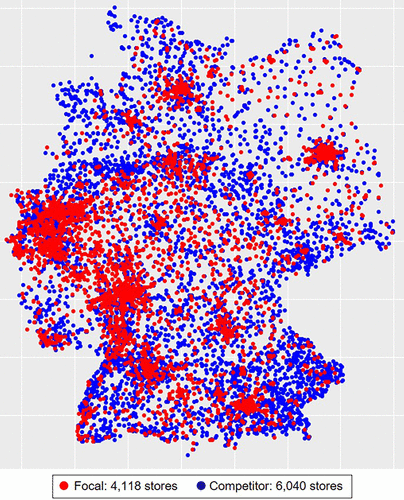
Our experiment leveraged the practice of geo-conquesting, which involves targeting consumers around a competitor’s store (Fong et al. 2015). This approach allows firms to reach competitors’ potential customers while avoiding cannibalizing profits from their own stores. Specifically, we targeted consumers who entered the geofences of 6,040 retail stores belonging to a main competitor of our retailer partner (both retailers can be characterized as supermarkets following a “high-low” pricing strategy).7 Upon receiving the coupon, participants had the option to redeem the coupon at any focal offline grocery store belonging to our retail partner, included 4,118 stores overall, within a four-week period. The locations of the focal and competitor stores are shown in Figure 1.
To provide further context, it is essential to note that neither the focal nor the rival grocery retailer had a widely available e-commerce presence during the study period. Online grocery sales represented only about 1% of the target market’s total sales, indicating very low online penetration at the time.8 Instead, smartphone apps emerged to be the preferred medium for consumers to interact with coupon promotions (Statista 2018), emphasizing the focus of our study on coupon redemptions in offline stores. It is worth noting that there were no other observable marketing activities taking place during the study period.9
4.1. Experimental Design
The experiment applied to all enrolled users of the loyalty program provider’s mobile app who provided consent to receive push notifications and location tracking prior to the experiment.10 Following these criteria, a random sample of 184,324 participants entered the experiment. The experiment used a between-subjects design, in which each participant was randomly preassigned to either the push treatment (mobile push), the pull treatment (mobile pull), or the baseline group that did not receive the focal coupon.11 The randomization ensured that all groups were balanced (i.e., statistically similar on average), allowing us to attribute any differences in the outcome variables to the treatment.
The experiment assigned 74.35% of the participants to the push treatment group, 18.64% to the pull treatment group, and 7.01% to the baseline group.12 Unlike cookie-based approaches used in web experiments, the ability to track participants directly via app-based user login across sessions is a significant advantage. This allows a participant’s assignment to be maintained throughout the entire experiment.
During the experiment, the participants’ devices were localized via GPS when they entered geofences around competitors’ stores, which were set at 100 meters. When participants entered a geofence for the first time, their preassigned treatment was activated. Specifically, upon entering a geofence, the coupon appeared on a device’s lock screen in the push treatment. In contrast, for the pull treatment, the same coupon was added to the coupon feed of the loyalty app randomly within the top six slots. The feeds in both treatment groups also had identical content and design, the only difference being the presence or absence of the focal push notification. Each participant in both treatment groups received the focal coupon only once. To redeem the coupon, participants had to click to activate it and present the barcode, which was scanned and linked to their loyalty account, at checkout. The coupon was valid for four weeks and applicable to all products of the focal store (i.e., store coupon), redeemable at any store in the focal chain. The redemption of the focal coupon allowed participants to obtain loyalty points equivalent to a 5% discount. Figure A1 in the online appendix provides stylized screenshots of the focal mobile app.
4.2. Measurement and Descriptive Results
Table 2 describes our data. Our main outcome variable is the in-store coupon redemption rate. We also measure the in-store expenditures related to the redemption event and beyond it. Our moderating variables are usage experience and store density. Usage experience is determined by the passage of time, indicating how frequently the app was used on the same day but before the coupon was delivered. The variable store density enables us to gauge the degree of local retail competition, measured by the number of grocery stores per square kilometer and postal code. We also control for store distance, which is the distance between the targeting location and the closest focal store.
|
Table 2. Descriptive Results
| Pull | Push | Baselinea | Treatment effects | Variable description | ||
|---|---|---|---|---|---|---|
| Mean | Mean | Mean | Push-pull | Push-baseline | ||
| Outcome variables | ||||||
| Redemption (%) | 32.8 | 34.8 | 2.0*** (0.3) | Dummy (1 if coupon redemption, else 0) | ||
| Redemption-related Expenditures (€)b | 33.1 | 32.7 | 24.4c | −0.4 (0.4) | 8.3***,d (0.4) | Expenditures when coupon redeemed |
| ∑One-week Expenditures (€) | 20.2 | 20.2 | 19.3 | 0.1 (0.2) | 0.9***,e (0.3) | Sum of expenditures up to 7 days post treatment |
| ∑Two-week Expenditures (€) | 42.9 | 42.7 | 41.1 | −0.2 (0.4) | 1.7***,e (0.6) | Sum of expenditures up to 14 days post treatment |
| ∑Three-week Expenditures (€) | 62.2 | 61.8 | 59.3 | −0.4 (0.6) | 2.5***,e (0.8) | Sum of expenditures up to 21 days post treatment |
| ∑Four-week Expenditures (€) | 80.6 | 79.9 | 76.6 | −0.7 (0.7) | 3.3***,e (1.1) | Sum of expenditures up to 28 days post treatment |
| Moderating and control variables | ||||||
| Usage Experience | 0.340 | 0.345 | 0.340 | Number of app usages on the same day but before the coupon was received | ||
| Store Density | 1.787 | 1.813 | 1.811 | Number of grocery stores per km2 per postal code | ||
| Distance Focal Store (km) | 2.072 | 2.096 | 2.082 | Distance from targeting location and closest focal store | ||
| N | 34,358 | 137,051 | 12,915 | |||
aNo coupon received, which is why the push-baseline calculation remains empty.
bThe number of observations (N) is 11,267 in the pull treatment, 47,659 in the push treatment, and 9,939 in the baseline group.
cThe expenditures for the baseline group refer to the first expenditure at the focal store, following the first observed geo-fence visit at the competitor store (which would have triggered a mobile coupon). The differences remain significant for other expenditure specifications; see Figure A2 in the online appendix.
dThe difference between pull and the baseline is 8.7*** (0.4).
eThe post treatment difference between pull and baseline is 0.8*** (0.4) for the one-week expenditures, 1.9*** (0.7) for the two-week expenditures, 2.9*** (0.9) for the three-week expenditures, and 3.9*** (1.2) for the four-week expenditures.
***p < 0.01; **p < 0.05; *p < 0.1: All treatment effect measures are based on t tests.
Additional control variables include user demographics (age, gender), population size and income (per the postal code where the coupon was received), and pretreatment purchase behavior, including the number of purchases, the mean expenditures per purchase, and the loyalty program utilization. The summary statistics of all control variables are shown in Table A1 in the online appendix.
Regarding the outcome variables, Table 2 shows that the redemption rates differ significantly between mobile push and pull (χ2 = 47.75, p < 0.01). Specifically, the redemption rate of the push treatment is 34.8%, whereas the redemption rate of the pull treatment is 32.8%. This two-percentage-point difference between both delivery mechanisms results in a 6.0% lift in redemption for the push treatment.13 The temporal dimension of consumers’ responses is depicted in Figure 2, which displays the daily redemption rates over time. The difference in responses is mainly evident during the initial three days after the coupon was received (Day 0–Day 2), as illustrated in Table A13 and Figure A3 in the online appendix.
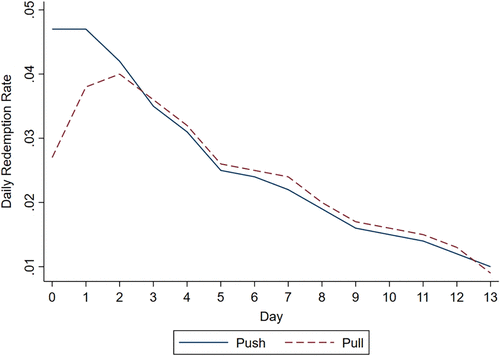
Notes. Day 0 indicates the day when the treatment was received. The differences between both delivery mechanisms are only significant within the first three days (Day 0–Day 2).
Regarding redemption-specific expenditures, we find a significant difference between the treatment groups and baseline (no focal coupon; F = 275.66, p < 0.01). However, we do not find a statistically significant difference between the two treatment groups (p = 0.24). It is worth noting that the difference in expenditures is mainly due to comparing both treatments to the baseline (p < 0.01). Moreover, we observe significant differences between the treatments and baseline in sustained expenditures up to four weeks after receiving the coupon. The increase in the sum total of expenditures ranges from 0.83 € (one week) to 3.95 € ( four weeks), resulting in a lift in expenditures ranging between 4% and 5.2% (refer to Table A2 in Online Appendix A for more details).
Regarding the moderating variables, we find that the average app-specific usage experience across treatment groups is 0.342. This suggests that, on average, participants used the app 0.342 times on the same day but before receiving the coupon. Moreover, we observe a mean store density of 1.808 stores per square kilometer across treatment groups. In addition, the average distance to the nearest focal store, a control variable, is found to be 2.073 km.
4.3. Experimental Validation
In this section, we validate the randomization procedure by showing that the treatment groups were, on average, statistically similar before receiving the experimental treatment. Since the participants were preassigned, we first compare the preassigned ratio of participants to each treatment with the observed posttreatment ratio. Our treatment groups consist of 171,409 participants, with 137,051 assigned to the push treatment and 34,358 assigned to the pull treatment, resulting in an observed push-assigned share of 79.96%. This share is not statistically significant from the preassigned push share of 79.95% (p = 0.88, two-sided binomial test), indicating that the randomization was successful. Additionally, we compare the distributions of state-specific observations between groups using information about the participants’ home locations based on postal codes. Chi-squared tests indicate no significant state-specific differences between the treatments (p = 0.17).
We further compare participants’ characteristics between treatment groups. Specifically, when comparing the demographics (age, gender) between treatment groups, we find no significant difference in age (p = 0.51) based on t tests of equality. We also find no significant difference in the gender ratio between the two treatments (p = 0.80) based on chi-squared tests.
Moreover, we compare pretreatment variables, including app-specific usage experience and store density. For usage experience, we find no significant difference between the delivery mechanisms (p = 0.19). Similarly, there is no significant difference in the store density based on the competitors’ stores where the coupon was received (p = 0.13).
These results suggest that the randomization procedure was balanced as there are no significant ex-ante differences based on participants’ demographics or pretreatment usage behaviors. These results can be found in Table A3 in the online appendix. We also check for a potential violation of the stable unit treatment values assumption (SUTVA), and the results in Table A4 in the online appendix are in support of SUTVA. Therefore, we are confident that the treatments induce all observed ex post differences between participants without the presence of spillovers.
5. Modeling Approach and Findings
In this section, we present our modeling approach and findings. We test our hypothesized main and moderating effects and provide additional analyses to test the robustness of our results. In addition, we estimate the economic effects based on consumers’ in-store expenditures over different post-treatment periods.
5.1. Modeling Approach
We use a logit model to estimate the effect of the delivery mechanism on in-store coupon redemptions. The standard errors are robust and clustered at the store level. Specifically, we estimate the parameters as follows:
We use Equation (1) to estimate the main effect of the push treatment on redemptions and Equation (2) to estimate the treatment-by-covariate moderation effects (usage experience and store density) on redemptions. In both models, i indices the consumer, Wi denotes the treatment, and Mi denotes a vector of focal moderators such as app-specific usage experience and store density. We also include vector Ci to control for store distance, user demographics (age, gender), population size and income (both per postal code), and pretreatment purchase behaviors. We also account for the week, the day of the week, and the time of the day when the coupon was received. This ensures that these covariates or other temporal factors do not drive the treatment-specific mean differences between our outcome variables in Table 2.
Our approach to estimating the logit model is straightforward due to the randomized assignment of participants either to the mobile push or pull treatment. Participants in the push treatment received one push notification, while the pull treatment group did not receive any push notification.14 The difference between the mobile push and pull treatments, denoted by the regression coefficient τ in Equation (1), represents the average treatment effect on the treated (ATT) and is the main effect of interest.15 Additionally, the interaction between treatment and focal moderators, namely usage experience and store density, enables us to estimate treatment effect heterogeneity based on deviations from the main effect of the push treatment, denoted by coefficient γ in Equation (2).
5.2. Effects on Redemption Rates
5.2.1. Main Effects.
We start by estimating the main effects of mobile push on consumers’ coupon redemptions. Table 3 reports the results as marginal effects, which are based on the derivative of an estimated coefficient x (i.e., dy/dx). The marginal effects allow us to interpret the magnitude of each coefficient directly, whereby column (1) corresponds to Equation (1).
|
Table 3. Differences in Redemption Rates
| Dependent variable: Redemption | (1) | (2) | (3) | (4) | ||||
|---|---|---|---|---|---|---|---|---|
| dy/dx | SE | dy/dx | SE | dy/dx | SE | dy/dx | SE | |
| Push | 0.020*** | 0.003 | 0.024*** | 0.003 | 0.014*** | 0.004 | 0.017*** | 0.004 |
| ln (Usage Experience) | 0.086*** | 0.003 | 0.098*** | 0.006 | 0.086*** | 0.003 | 0.098*** | 0.006 |
| Push × ln (Usage Experience) | −0.018** | 0.009 | −0.019** | 0.009 | ||||
| ln (Store Density) | −0.024*** | 0.003 | −0.024*** | 0.003 | −0.032*** | 0.004 | −0.032*** | 0.004 |
| Push × ln (Store Density) | 0.012** | 0.006 | 0.012** | 0.005 | ||||
| ln (Distance Focal Store) | −0.047*** | 0.003 | −0.047*** | 0.003 | −0.047*** | 0.003 | −0.047*** | 0.003 |
| Control variables | Yes | Yes | Yes | Yes | ||||
| Log-likelihood | −95,159.1 | −95,156.9 | −95,156.3 | −95,154 | ||||
| Wald χ2 | 19,435.1 | 19,449.4 | 19,512.5 | 19,530.6 | ||||
| N | 171,225 | 171,225 | 171,225 | 171,225 | ||||
Notes. Pull serves as the reference category. We use robust standard errors clustered by competitor stores (targeting location). We also control for gender, log of population and income (both per postal code), log of pretreatment mean expenditures per purchase, log of pretreatment number of purchases, and log of pretreatment loyalty program utilization. The number of observations (N) differs slightly from the descriptive results due to missing values for two covariates (this applies to all following models).
***p < 0.01; **p < 0.05; *p < 0.1.
The results in column (1) show that the coefficient of mobile push is significant and positive (p < 0.01). Regarding the magnitude of the effect, mobile push increases the redemption rate by 2.0%, which suggests that the mobile push delivery mechanism has a significant positive incremental impact on consumers’ coupon redemption likelihood compared with mobile pull. Based on these findings, we conclude our that data support Hypothesis 1.
We also find that app-specific usage experience is positively associated with consumers’ coupon redemptions (p < 0.01), supporting Hypothesis 2a. This effect suggests that an increase in the log of app-specific usage experience by one unit raises the likelihood of coupon redemptions by 8.6%. Regarding the results for store density, we find a negative and significant effect for coupon redemptions (p < 0.01), supporting Hypothesis 3a. In terms of effect size, increasing the log of store density by one unit decreases the redemption likelihood by 2.4%. As expected, consumers are less likely to redeem the focal coupon in areas with a higher store density. The presence of more local shopping alternatives and higher switching costs contribute to this tendency. In such a high-density environment, consumers likely need more time and effort to evaluate alternative stores around the geo-conquested competitor store, diminishing the relative appeal of the focal retailer’s promotion due to the abundance of alternative offers.
5.2.2. Moderation Effects.
Our model also allows us to estimate the heterogeneity in responses based on the moderation effects of app-specific usage experience and store density, denoted in Equation (2). It is crucial to note that we follow the approach proposed by Ai and Norton (2003) and Norton et al. (2004) to estimate the adjusted marginal effects and standard errors of these moderating variables. Columns (2) through (4) in Table 3 present the coefficients. Starting with usage experience, the results in columns (2) and (4) show that the interaction between app-specific usage experience and mobile push is negative (p < 0.05), with an effect size ranging between 1.8% and 1.9% for each unit increase in the log of usage experience. This implies that the marginal benefit of mobile push is less than half for consumers with increasing app-specific usage experience (before the coupon was received) compared with those with less recent usage experience. Therefore, our findings support Hypothesis 2a, which hypothesized that app-specific usage experience negatively moderates the positive effect of mobile push on the likelihood of coupon redemption.
In addition, columns (3) and (4) show that store density positively moderates the effect of mobile push on the likelihood of coupon redemption (p < 0.05), supporting Hypothesis 3b. Specifically, in areas with higher store densities, the likelihood of coupon redemption increases by 1.2% with each unit increase in the log of store density when exposed to the push treatment.
Furthermore, our results indicate a negative association between coupon redemptions and distance to the focal store (p < 0.01). Increasing the log of store distance by one unit reduces the redemption likelihood by 4.7%.16
5.3. Robustness Tests
We conduct a series of robustness tests to exclude alternative explanations for our focal results in Table 3. First, we vary the time windows to calculate the pretreatment usage experience. Second, we test different subcategories of store density based on different retail formats to determine whether the set of competitors drives our results. Third, we use a median split as an alternative operationalization of usage experience. Fourth, we use an alternate specification of store density and an alternative switching cost proxy. Fifth, we estimate a probit model to demonstrate that the selection of a logit model does not affect our results. Sixth, we include competitor store fixed effects, based on the targeting location where the coupon was received, to account for geographic heterogeneity.
App-specific usage experience measures how many times participants had opened the app on the day they received the coupon treatment (but before it was sent). To test the impact of different time horizons of app-specific usage experience, we extended the app usage incidence to one, two, and three days before the treatment was received. Moreover, we refined the measure of usage experience by splitting the experience variable into same-day (i.e., ln (Usage Experience S) and prior-day(s) (i.e., ln (Usage Experience P)). Table 4 reveals that the main and moderation effects of app-specific usage experience remain qualitatively similar in magnitude and direction, suggesting that the impact of app-specific usage experience is not limited to same-day app use. The number of observations decreases from left to right in Table 4 because the analyses are restricted to those participants who were able to use the app one, two, or three days prior to the treatment.
|
Table 4. Robustness to Different Pretreatment Use Experience Time Horizons
| Dependent variable: Redemption | (1) One day | (2) Two days | (3) Three days | |||
|---|---|---|---|---|---|---|
| dy/dx | SE | dy/dx | SE | dy/dx | SE | |
| Push | 0.025*** | 0.005 | 0.018*** | 0.006 | 0.025*** | 0.007 |
| ln (Usage Experience P) | 0.135*** | 0.007 | 0.150*** | 0.010 | 0.146*** | 0.010 |
| Push × ln (Usage Experience P) | −0.013** | 0.006 | −0.016** | 0.006 | −0.012** | 0.005 |
| ln (Usage Experience S) | 0.116*** | 0.006 | 0.122*** | 0.006 | 0.123*** | 0.005 |
| ln (Store Density) | −0.044*** | 0.012 | −0.030*** | 0.009 | −0.036*** | 0.008 |
| Push × ln (Store Density) | 0.022** | 0.011 | 0.025** | 0.010 | 0.020** | 0.010 |
| ln (Distance Focal Store) | −0.042*** | 0.003 | −0.040*** | 0.004 | −0.047*** | 0.004 |
| Control variables | Yes | Yes | Yes | |||
| Log likelihood | −77,640 | −66,686.2 | −60,111.9 | |||
| Wald χ2 | 16,406.1 | 14,216.7 | 13,642 | |||
| N | 140,782 | 121,665 | 110,285 | |||
Notes. Pull serves as the reference category. ln (Usage Experience P) indicates prior day(s) usage experience, while ln (Usage Experience S) denotes same day usage experience. We use robust standard errors clustered by competitor stores (targeting location). The same set of control variables from Table 3 is included. The number of observations decreases from left to right due to restricting the analyses to those participants who were able to use the app one, two, or three days prior to the treatment.
***p < 0.01; **p < 0.05; *p < 0.1.
In our main analyses presented above, store density is measured by including all grocery store formats. To test the robustness of our results in the context of different grocery store formats, we examine everyday low price retailers and high-low retailers separately. Table 5 shows the results for everyday low price versus high-low retailers, demonstrating that both formats’ main and moderation effects are consistent with the focal results. Thus, based on these findings, we conclude that our results are not affected by the specific selection of grocery store formats.
|
Table 5. Robustness to Store Density Based on Different Retail Formats
| Dependent variable: Redemption | (1) High-low retailers | (2) Everyday low price retailers | ||
|---|---|---|---|---|
| dy/dx | SE | dy/dx | SE | |
| Push | 0.020*** | 0.003 | 0.018*** | 0.004 |
| ln (Usage Experience) | 0.097*** | 0.006 | 0.098*** | 0.006 |
| Push × ln (Usage Experience) | −0.019** | 0.008 | −0.019** | 0.009 |
| ln (Store Density) | −0.046*** | 0.007 | −0.044*** | 0.008 |
| Push × ln (Store Density) | 0.020** | 0.010 | 0.022** | 0.009 |
| ln (Distance Focal Store) | −0.041*** | 0.003 | −0.040*** | 0.003 |
| Control variables | Yes | Yes | ||
| Log likelihood | −95,201.9 | −95,200.5 | ||
| Wald χ2 | 19,325.8 | 19,391.8 | ||
| N | 171,225 | 171,225 | ||
Notes. Pull serves as the reference category. We use robust standard errors clustered by competitor stores (targeting location). The same set of control variables from Table 3 is included.
***p < 0.01; **p < 0.05; *p < 0.1.
The results from the median split operationalization of usage experience are aligned with our focal results (see Table A6 in the online appendix) and remain consistent for different time cut-offs for prior usage experience (including same and previous day(s); see Table A7). Our results are also robust to an alternative specification of store density that omits the nearest focal store when it is located in the same postal code area as the targeted competitor store (see Table A8). Moreover, using an alternative switching cost proxy—focal store distance—does not alter our results (see Table A9).17 The robustness of our results is further supported by a probit model estimation (see Table A10) and a store fixed effects model, which validates the impact of our focal variables at the store level (see Table A11).
5.4. Mechanism Checks
After establishing the robustness of our findings, we investigate the underlying mechanisms based on search and switching costs. First, we rely on supplementary clickstream data to approximate search costs, using in-app browsing time subsequent to coupon exposure as our proxy. This proxy is consistent with our definition of search costs as the cost (including effort and time) required to obtain the necessary information for decision making. Shorter in-app browsing times would suggest a more focused and efficient search, thereby indicating lower search costs (Huang et al. 2009). Second, we track the time from the moment of coupon exposure triggered around a competitor’s store to its redemption at a focal store, treating this redemption time as a proxy for switching costs. According to Narasimhan et al. (1996), a shorter time from exposure to redemption would imply lower switching costs. Based on our definition of switching costs, this redemption time reflects the additional effort consumers invest beyond in-app searches. This effort involves evaluating alternative deals and switching to a focal retail store, rather than the competitor location where the coupon was initially received. The detailed results can be found in Table A12 in the online appendix. Specifically, as shown in column (1) of Table A12, both mobile push and usage experience lead to a decreased in-app browsing time. Meanwhile, increased store density within a given grocery store category prolongs the time-to-redemption, while mobile push shortens it, as depicted in column (2). These supplementary analyses on in-app browsing time and time-to-redemption support our theorizing and finding that the effects of mobile push and pull delivery, usage experience, and store density are related to consumers’ search and switching costs.
5.5. Economic Effects
We further investigate the economic impact of both delivery mechanisms on the retailer’s revenue, extending our analysis beyond just redemption-related expenditures. This is then compared with the baseline group that was not exposed to the focal coupon. The results in Table 2 show that the absolute difference in redemptions between mobile push and pull is two percentage points, which corresponds to a lift of 6%. Based on the mean expenditures of 32.8 € when redeeming the coupon, the delivery of mobile coupons as push notification yields a benefit of 0.66 € to the focal retailer per redemption event (95% confidence interval (CI): 0.46 € (lower), 0.82 € (upper)). Although these effects are already considerable, it is important to note that the mean expenditures of consumers in the baseline group are 24.49 €.18 Comparing consumers exposed to the push treatment to the baseline group, we observe they spend 8.3 € (CI: 7.71 €, 8.9 €) more per redemption event. Similarly, consumers exposed to the pull treatment spent 8.7 € (CI: 7.91 €, 9.52 €) more per redemption event than consumers in the baseline group. This suggests that mobile coupons can lift expenditures by 34% (push) to 35.7% (pull), which is a substantial increase.
As a next step, we estimate the sum total of expenditures for both treatment groups compared with the baseline over various time horizons. We start with the sum of post-treatment expenditures in week 1 and then add the sum total of weekly expenditures up to four weeks after each participant received a treatment. The model specification resembles the approach shown in Equation (1) but is estimated using ordinary least squares, where the dependent variable yit is the (log-transformed) sum of total expenditures (post treatment) of consumer i up to week t:
|
Table 6. Sustained Economic Effects of Coupon Promotions (Posttreatment)
| Dependent variable: ln (∑Expenditures) | (1) One Week | (2) Two Weeks | (3) Three Weeks | (4) Four Weeks | ||||
|---|---|---|---|---|---|---|---|---|
| Coefficient | SE | Coefficient | SE | Coefficient | SE | Coefficient | SE | |
| Push | 0.077*** | 0.015 | 0.098*** | 0.017 | 0.120*** | 0.017 | 0.132*** | 0.018 |
| Pull | 0.076*** | 0.017 | 0.102*** | 0.018 | 0.120*** | 0.019 | 0.130*** | 0.019 |
| ln (Usage Experience) | −0.091*** | 0.012 | −0.116*** | 0.013 | −0.136*** | 0.013 | −0.152*** | 0.013 |
| ln (Store Density) | −0.158*** | 0.012 | −0.211*** | 0.015 | −0.223*** | 0.016 | −0.226*** | 0.016 |
| ln (Distance Focal Store) | −0.284*** | 0.013 | −0.361*** | 0.016 | −0.384*** | 0.017 | −0.402*** | 0.017 |
| Constant | −5.219*** | 0.566 | −6.585*** | 0.674 | −7.035*** | 0.711 | −7.328*** | 0.733 |
| Control variables | Yes | Yes | Yes | Yes | ||||
| F | 864 | 1,251.4 | 1,414.7 | 1,550.1 | ||||
| Adjusted R2 | 0.19 | 0.24 | 0.26 | 0.28 | ||||
| N | 183,948 | 183,948 | 183,948 | 183,948 | ||||
Notes. Baseline acts as the reference category for Push and Pull. We use robust standard errors clustered by competitor stores (targeting location). The same set of control variables from Table 3 is included. The number of observations is larger as the analysis includes the baseline group aside from both treatment groups.
***p < 0.01; **p < 0.05; *p < 0.1.
Columns (1) through (3) show that the sum total of weekly expenditures is significantly higher for consumers who received the focal mobile coupon compared with consumers without the focal coupon. Notably, the expenditure differences remain noticeable even four weeks after the treatments were received (see column (3)), suggesting a sustained effect on consumers’ purchase behavior. In terms of effect sizes relative to the baseline group, the coefficients indicate that both delivery mechanisms increase total expenditures by approximately 7.7% (exp(0.074)) to 7.8% (exp(0.075)) in the first week and approximately 14% (exp(0.132)) four weeks after the treatment was received. These findings suggest that mobile coupons have a persistent positive effect on store sales for up to four weeks after receiving the coupon.
6. General Discussion and Conclusion
The two primary mobile content delivery mechanisms for mobile targeting are mobile push, where firm-initiated content is delivered directly to consumers, and mobile pull, where consumers proactively initiate content requests. Although both delivery mechanisms are widely adopted and used among U.S. retailers, prior research has predominantly focused on mobile push. To our knowledge, no study has thoroughly combined and compared the theoretical underpinnings grounded in search and switching costs while simultaneously quantifying the differential effects of both delivery mechanisms in the context of location-based coupons. This study aims to address this gap by conducting a randomized field experiment in collaboration with one of Europe’s largest loyalty program providers and an offline grocery retail chain. This collaboration allows us to measure the incremental effects of mobile push versus mobile pull precisely while also allowing for a nuanced understanding of potential heterogeneity in treatment effects.
Our study demonstrates that mobile push significantly increases coupon redemptions compared with mobile pull delivery. However, we also observe heterogeneity in responses to mobile push, which is moderated by usage experience and store density. Specifically, the effectiveness of mobile push depends on consumers’ app-specific usage experience and store density. For app-specific usage experience, we find that the effect of mobile push on the likelihood of coupon redemption is lower for consumers with higher app-specific usage experience, signifying a negative moderation effect. Regarding store density, our results illustrate that mobile push increases the likelihood of coupon redemption in areas with higher store densities, indicative of a positive moderation. To validate our theorizing, we include mechanism checks for search and switching costs. Furthermore, regarding the economic impact, we find that both delivery mechanisms are equally effective in increasing both redemption-related and sustained in-store expenditures over four weeks compared with the baseline setup without the focal coupon.
6.1. Discussion of Results
Our analysis evaluates three sets of hypotheses grounded in consumer search and switching costs. Our findings support Hypothesis 1, which examines the impact of the push-based treatment. We demonstrate that mobile push as a delivery mechanism increases the likelihood of coupon redemption. The difference in redemption rates between the two delivery mechanisms is particularly pronounced in the first three days after the coupons became available, as shown in Figure 2. This effect can be attributed to the reduced app-specific search costs associated with push notifications, which prominently appear on device lock screens and streamline the discovery of promoted content for consumers. Although our results are generally consistent with previous research on mobile push delivery that has found a positive response effect of mobile push notifications (Luo et al. 2014, Fong et al. 2015, Ho et al. 2020), they go a step further. These existing studies have predominantly considered the response to mobile push in isolation, which does not fully reflect the empirical reality retailers face, given that mobile pull is the default delivery mechanism for leading iOS shopping apps (see Online Appendix B). We extend this literature by providing empirical evidence on the marginal effect of mobile push (versus mobile pull). Additionally, we provide theoretical evidence regarding the underlying differences in consumers’ responses to both delivery mechanisms related to app-specific search costs, which can be attributed to the functional aspect of delivering push notifications, elevating their prominence by appearing first (Armstrong et al. 2009, Armstrong and Zhou 2011).
Next, we examine consumers’ heterogeneous responses to mobile push based on their app-specific usage experience. Supporting Hypothesis 2a, we find that consumers with more app-specific usage experience are more likely to redeem the coupon. This effect can be explained by consumers’ usage-specific familiarity with the app’s content, features, and functionalities, which in turn leads to lower app-specific search costs and less effort required to discover new content within the app. This result is consistent with prior research on technology adoption and use, which found significant behavioral differences between experienced and inexperienced technology users (Alba and Hutchinson 1987, Taylor and Todd 1995). For example, experienced users were found to be less dependent on external support (Alba and Hutchinson 1987). Regarding the heterogeneous effect of usage experience, our findings support Hypothesis 2b, indicating that the incremental effectiveness of mobile push is lower for consumers with app-specific usage experience. This suggests that the redemption-increasing effect of push notifications, as opposed to mobile pull, diminishes with increasing usage experience. This is likely because both usage experience and push notifications reduce app-specific search costs, acting as substitutes. Consequently, this highlights a boundary condition of push notifications. Our findings align with studies in the context of advertising, which have shown that more experienced consumers are less influenced by mediums such as paid search (Blake et al. 2015) or TV advertising (Ackerberg 2001). We conclude that push notifications are particularly beneficial for less experienced users, who typically exhibit lower awareness of recent app-specific features and content.
Last, we examine consumers’ responses with respect to store density. We find that higher store density decreases consumers’ likelihood of coupon redemption, supporting Hypothesis 3a. The economic rationale is that more store alternatives increase switching costs. These costs arise when consumers opt to redeem coupons at the focal store rather than the geo-conquested competitor store where the coupon was received. Switching costs include the time and effort required to evaluate alternative stores, identify deals, and adjust to new shopping environments—such as navigating unfamiliar store layouts and locating desired products (Burnham et al. 2003, Richards and Liaukonytė 2023). Increased store density also implies that consumers are exposed to various alternative deals from different retailers, subsequently reducing the probability of redeeming a specific deal. This result aligns with the negative supply-side findings from Li et al. (2018) and partially aligns with Ho et al. (2020), who found that an increasing number of competitors nearby decreases the likelihood of clicking on, but not redeeming, (mobile) coupon promotions. Regarding the heterogeneous effect of store density, our findings indicate that in areas with higher store density, mobile push is more effective than mobile pull delivery alone, in support of Hypothesis 3b. Using push notifications in geographic areas with more local competition based on higher store density helps to proactively reach consumers and elevate the visibility of the promoted store. This increased prominence of push notifications seems particularly critical, similar to the ad placement in search advertising, as described by Armstrong and Zhou (2011). We assume the higher effectiveness of push notifications to be achieved by “cutting through the promotional clutter” from other stores. Thus, by elevating the prominence of the focal store and reducing the effort to evaluate the best deals among multiple retailers, push notifications reduce consumers’ switching costs.
6.2. Managerial Implications
Our study holds important managerial implications for retailers and brands with a robust technology stack, including access to an own or a third-party mobile app and the ability to request consumers’ consent for location tracking and push notifications. Although most top iOS retail and shopping apps in the United States rely on mobile pull as the primary delivery content mechanism, only 60% of these apps use push notifications, and a mere 35% of those use location tracking despite having a physical store presence. Our results provide these firms with a benchmark for the expected incremental benefits of using mobile push as an additional delivery mechanism for location-based coupons in a competitive setting. Our study shows that mobile push yields a significant incremental benefit beyond mobile pull in geo-conquesting, which may encourage retailers and brands to explore more direct forms of (competitive) mobile promotions. Therefore, combining both delivery mechanisms seems to be the most effective strategy for firms to optimize coupon redemptions. Such improvements at the margin are significant in the grocery retail sector, which is known for its high levels of competition and focus on operational efficiency (The Reinvestment Fund 2011). Spending on advertising and promotion is particularly high in grocery retail, accounting for 26% of total U.S. advertising spending (Statista 2021).
However, the treatment-specific heterogeneity based on the moderating role of usage experience and store density suggests that retailers must incorporate real-time information about consumers and store locations to optimize location-based coupon campaigns’ performance. This means that mobile apps’ underlying targeting algorithms, which are mostly based on simple deterministic rules, should be refined by incorporating real-time behavioral data. Retailers should thoroughly consider the role of local competition, determined by store density and usage experience, when planning mobile targeting campaigns based on consumers’ recent app usage frequency. Although higher store density, including the presence of both everyday low price and high-low retailers, decreases the overall likelihood of coupon response, sending push notifications to consumers in areas with a higher store density can enhance the relative effectiveness of couponing campaigns. As a result, we advise retailers to be selective when identifying suitable targeting locations for competitive coupons, such as malls or city centers with many other stores nearby. Nevertheless, our results suggest that it is beneficial to additionally utilize push notifications in areas with a higher store density. Conversely, although more experienced app users are more likely to respond to mobile coupons, the effectiveness of push notifications appears to diminish for these more experienced app users. Therefore, retailers should carefully evaluate the trade-off between targeting additional experienced users with push notifications and the marginal benefit based on incremental sales, considering the costs of targeting, particularly when utilizing external ad platforms that operate on a volume or impression-based pricing model. It is important to note that these insights can only be used to their fullest extent if retailers’ in-house systems or external ad platforms allow for the implementation of real-time measures corresponding to usage experience and store density.
In addition, to optimize their coupon campaigns, retailers should also consider the effect of the delivery mechanism on consumers’ redemption times. Our study shows that mobile push notifications result in faster redemptions than mobile pull. Therefore, retailers may benefit from promoting products that need to be sold quickly, such as perishable or seasonal products, through mobile push promotions. Conversely, less time-sensitive products or products where consumers are already motivated to search for deals, such as nonperishable products or personal care products, may be better promoted through mobile pull. By tailoring the delivery mechanism to the product type and associated consumer behavior, retailers can maximize the effectiveness of their couponing campaigns.
6.3. Limitations and Future Research
This study has some limitations that suggest implications for future research. First, our analyses are based on grocery retailing, which is heavily reliant on nondurable products, in a large Western European country. It would be interesting to test whether our findings also hold in other product or service categories and other countries. Second, our results are based on users of a loyalty platform and promotion provider. Future research could explore the differences between both delivery mechanisms in other consumer applications. Third, push notifications were sent only once to participants. Future research could investigate whether an increased frequency may lead to a more significant degree of annoyance or intrusiveness, which would be interesting to explore and determine an optimal number of push notifications, trading off effectiveness versus reactance to push. Additionally, assessing the consistency of the usage experience variable across multiple campaigns would be worthwhile. Fourth, we only test one type of coupon. Future research could investigate how variations in coupon utility, in combination with app-specific usage experience, influence consumers’ redemption behavior. Last, our geofences were fixed at a radius of 100 meters. Examining different geofence radii (i.e., larger perimeters) might provide additional insights into consumers’ coupon discovery process.
6.4. Conclusion
Because of the rapid adoption of smartphones in the last decade, smartphone apps are consumers’ preferred medium to request and receive coupon promotions. Smartphones possess unique technological capabilities, including ubiquity, location sensitivity, and portability, providing consumers with constant access to information and allowing firms to geo-target consumers in real-time. Therefore, app developers, retailers, and brands must understand how the effectiveness of mobile targeting is affected by how the mobile content is delivered to consumers, the consumers’ characteristics, and the competitive retail environment of consumers’ locations. Our study provides insights into these critical questions.
1 CPG manufacturers in the United States allocate more than 50% of their marketing budgets to retailer-specific coupons and in-store advertising (Briesch and Blattberg 2012, Statista 2022).
2 Furthermore, location tracking is offered by 65% of those apps; see Online Appendix B.
3 Prior pull-based approaches also included phone-specific swiping or scanning activities to obtain coupons via SMS.
4 This is particularly relevant when considering recent consumer protection and privacy laws such as GDPR in Europe and CCPA in California, which strongly focus on consumers’ consent (and transparent opt-out mechanism) in the context of targeted advertising.
5 The company opted to remain anonymous.
6 The study was conducted six months after the enforcement of the General Data Protection Regulation (GDPR) in the European Union. The company’s opt-in policy was already GDPR-compliant before its enforcement.
7 The competitor was unaware of this one-time experiment, and no retaliatory actions have been observed.
8 See https://einzelhandel.de/images/publikationen/Online_Monitor_2019_HDE.pdf (p. 17 (top panel)).
9 This information stems from the loyalty provider. Both focal and rival retailers only used standardized weekly ads distributed through local newspapers without geographical differentiation throughout the year.
10 Approximately 65% of all active users granted permission to receive push notifications, while the opt-in rate for location tracking was around 50%.
11 Push notifications are not this app’s default mode of delivery. Instead, users can access coupons through the app’s pull-based coupon feed.
12 The random assignment distributed participants between the push versus pull treatment approximately following an 80/20 ratio (excluding the baseline), as our corporate partner aimed to expose more participants to the push treatment.
13 We can also track clicks on the push notification in the push treatment. Overall, 12.5% of participants who received the push notification also clicked on it. Among those who clicked on the notification, 61% redeemed the coupon. In contrast, 31.1% of participants who did not click on the notification redeemed the coupon.
14 Users in the baseline group were not assigned to the focal coupon. Including them would result in a mis-specified and unidentified model as the dependent variable (coupon redemption) is always zero for this group.
15 The population-level treatment effect on the treated is denoted by τ = y*Push–y*Pull, where y*Push and y*Pull are the average outcomes after being treated by different coupon delivery mechanisms.
16 The complete set of results, including all control variables, can be found in Table A5 in the online appendix.
17 We find that the distance to the nearest focal store does not significantly alter the effectiveness of push notifications. This observation leads us to cautiously conclude that while distance is a measure of local competition, it may not capture the underlying switching costs in the same way that store density does. Moreover, considering that redemptions may not occur immediately, but perhaps on a planned future shopping trip, distance may not be as critical to the immediate decision to redeem a coupon as the presence of many alternatives.
18 The differences between mean expenditures of first, last, or mean expenditures after the coupon would have been delivered for the baseline group do not differ significantly.
References
- (2001) Empirically distinguishing informative and prestige effects of advertising. RAND J. Econom. 32(2):316–333.Crossref, Google Scholar
- (2003) Interaction terms in logit and probit models. Econom. Lett. 80(1):123–129.Crossref, Google Scholar
- (1987) Dimensions of consumer expertise. J. Consumer Res. 13(4):411–454.Crossref, Google Scholar
- (2013) Advertising in a competitive market: The role of product standards, customer learning, and switching costs. J. Marketing Res. 50(4):489–504.Crossref, Google Scholar
- (2016a) Mobile ad effectiveness: Hyper-contextual targeting with crowdedness. Marketing Sci. 35(2):218–233.Link, Google Scholar
- (2016b) Mobile promotions: A framework and research priorities. J. Interactive Marketing 34(May):15–24.Crossref, Google Scholar
- (2011) Paying for prominence. Econom. J. 121(556):F368–F395.Google Scholar
- (2009) Prominence and consumer search. RAND J. Econom. 40(2):209–233.Crossref, Google Scholar
- (1991) A strategic analysis of electronic marketplaces. Management Inform. Systems Quart. 15(3):295–310.Crossref, Google Scholar
- (1998) Determining where to shop: Fixed and variable costs of shopping. J. Marketing Res. 35(3):352–369.Crossref, Google Scholar
- (2005) Trust in and adoption of online recommendation agents. J. Assoc. Inform. Systems 6(3):4.Google Scholar
- (2015) Consumer heterogeneity and paid search effectiveness: A large‐scale field experiment. Econometrica 83(1):155–174.Crossref, Google Scholar
- (2012)
Sales promotions . Özer Ö, Philipps R, eds. The Oxford Handbook of Pricing Management (Oxford University Press, Oxford, UK), 1–912.Google Scholar - (2003) Consumer switching costs: A typology, antecedents, and consequences. J. Acad. Marketing Sci. 31(2):109–126.Crossref, Google Scholar
BusinessofApps (2019) Push notification statistics. Accessed March 25, 2023, https://www.businessofapps.com/marketplace/push-notifications/research/push-notifications-statistics/.Google Scholar- (2015) Where, when, and how long: Factors that influence the redemption of mobile phone coupons. J. Marketing Res. 52(5):710–725.Crossref, Google Scholar
- (2008) Coupons going wireless: Determinants of consumer intentions to redeem mobile coupons. J. Interactive Marketing 22(3):23–39.Crossref, Google Scholar
- (2017) Competitive price targeting with smartphone coupons. Marketing Sci. 36(6):944–975.Link, Google Scholar
- (2015) Contemporaneous and delayed sales impact of location-based mobile promotions. Inform. Systems Res. 26(3):552–564.Link, Google Scholar
- (1975) Belief, Attitude, Intention, and Behavior: An Introduction to Theory and Research (Addison-Welsey, Reading, MA).Google Scholar
- (2015) Geo-conquesting: Competitive locational targeting of mobile promotions. J. Marketing Res. 52(5):726–735.Crossref, Google Scholar
- (2009) Competition between local and electronic markets: How the benefit of buying online depends on where you live. Management Sci. 55(1):47–57.Link, Google Scholar
- (2003) Inexperience and experience with online stores: The importance of tam and trust. IEEE Trans. Engrg. Management 50(3):307–321.Crossref, Google Scholar
- (2013) How is the mobile Internet different? Search costs and local activities. Inform. Systems Res. 24(3):613–631.Link, Google Scholar
- (2019a) Mobile targeting using customer trajectory patterns. Management Sci. 65(11):4951–5448.Link, Google Scholar
- (2019b) Seizing the commuting moment: Contextual targeting based on mobile transportation apps. Inform. Systems Res. 30(1):154–174.Link, Google Scholar
- (2015) How retailers can improve promotion effectiveness: A four-part approach to generating growth. Accessed March 25, 2023, https://www.bcg.com/en-us/publications/2015/retail-pricing-how-retailers-can-improve-promotion-effectiveness.Google Scholar
- (2019) Digital economics. J. Econom. Literature 57(1):3–43.Crossref, Google Scholar
- (1990) An evaluation cost model of consideration sets. J. Consumer Res. 16(4):393–408.Crossref, Google Scholar
- (2020) Distance and local competition in mobile geofencing. Inform. Systems Res. 31(4):1421–1442.Link, Google Scholar
- (2019) Search and learning at a daily deals website. Marketing Sci. 38(4):609–642.Link, Google Scholar
- (2009) Searching for experience on the web: An empirical examination of consumer behavior for search and experience goods. J. Marketing 73(2):55–69.Crossref, Google Scholar
- (2019) The power of geofence marketing. Accessed March 25, 2023, https://www.cmswire.com/digital-marketing/the-power-of-geofence-marketing/.Google Scholar
- (2014) Consumer click behavior at a search engine: The role of keyword popularity. J. Marketing Res. 51(4):480–486.Crossref, Google Scholar
- (2003) Cognitive lock-in and the power law of practice. J. Marketing 67(2):62–75.Crossref, Google Scholar
- (1995) Competition when consumers have switching costs: An overview with applications to industrial organization, macroeconomics, and international trade. Rev. Econom. Stud. 62(4):515–539.Crossref, Google Scholar
- (2009) Marketing Management, 15th ed. (Prentice Hall, Upper Saddle River, NJ).Google Scholar
- (2008) Marketspace or marketplace? Online information search and channel outcomes in auto retailing. Inform. Systems Res. 19(2):182–201.Link, Google Scholar
- (2020) Matching mobile applications for cross-promotion. Inform. Systems Res. 31(3):865–891.Link, Google Scholar
- (2018) Local market characteristics and online-to-offline commerce: An empirical analysis of groupon. Management Sci. 64(4):1860–1878.Link, Google Scholar
- (2017) Sunny, rainy, and cloudy with a chance of mobile promotion effectiveness. Marketing Sci. 36(5):762–779.Link, Google Scholar
- (2014) Mobile targeting. Management Sci. 60(7):1738–1756.Link, Google Scholar
- (2018) Scanning for discounts: Examining the redemption of competing mobile coupons. J. Acad. Marketing Sci. 46(5):964–982.Crossref, Google Scholar
MMA (2012) U.S. Consumer best practices for messaging. Accessed March 19, 2023, https://www.mmaglobal.com/files/bestpractices.pdf.Google Scholar- (2020) Effectiveness of location-based advertising and the impact of interface design. J. Management Inform. Systems 37(2):431–456.Crossref, Google Scholar
- (2007) Explaining cognitive lock-in: The role of skill-based habits of use in consumer choice. J. Consumer Res. 34(1):77–88.Crossref, Google Scholar
- (1996) Promotional elasticities and category characteristics. J. Marketing 60(2):17–30.Crossref, Google Scholar
- (1970) Information and consumer behavior. J. Political Econom. 78(2):311–329.Crossref, Google Scholar
- (2004) Computing interaction effects and standard errors in logit and probit models. Stata J. 4(2):154–167.Crossref, Google Scholar
- (1995) Differential effects of subjective knowledge, objective knowledge, and usage experience on decision making: An exploratory investigation. J. Consumer Psych. 4(2):153–180.Crossref, Google Scholar
- (2012) Research note—Online users’ switching costs: Their nature and formation. Inform. Systems Res. 23(1):197–213.Link, Google Scholar
- (2023) Switching cost and store choice. Amer. J. Agricultural Econom. 105(1):195–218.Crossref, Google Scholar
- (1977) “Information load” and consumers. J. Consumer Res. 4(3):148–155.Crossref, Google Scholar
- (2013) The impact of search costs on consumer behavior: A dynamic approach. Quant. Marketing Econom. 11(2):155–203.Crossref, Google Scholar
- (2000) Pay to switch or pay to stay: Preference‐based price discrimination in markets with switching costs. J. Econom. Management Strategy 9(3):397–424.Crossref, Google Scholar
- (2020) When loyalty goes mobile: Effects of mobile loyalty apps on purchase, redemption, and competition. Inform. Systems Res. 31(3):835–847.Link, Google Scholar
Statista (2018) Preferred way of receiving mobile coupons from retailers according to Internet users in the united states as of September 2018. Accessed March 11, 2023, https://www.statista.com/statistics/995288/internet-users-preferences-receiving-mobile-coupons-retailers-usa/.Google ScholarStatista (2021) The top ad spending verticals in the U.S. Accessed March 21, 2023, https://www.statista.com/chart/19241/top-10-digital-ad-spending-verticals/.Google ScholarStatista (2022) Projected CPG manufacturer spending on shopper marketing in the United States in 2020, by type. Accessed March 21, 2023, https://www.statista.com/statistics/1182137/cpg-manufacturer-shopper-marketing-spend-usa/.Google Scholar- (1961) The economics of information. J. Political Econom. 69(3):213–225.Crossref, Google Scholar
- (1995) Assessing it usage: The role of prior experience. Management Inform. Systems Quart. 19(4):561–570.Crossref, Google Scholar
The Reinvestment Fund (2011) Understanding the grocery industry. Accessed September 22, 2023, https://www.cdfifund.gov/sites/cdfi/files/documents/understanding-grocery-industry_for-fund_102411.pdf.Google Scholar- (2007) Perceived effectiveness of push vs. Pull mobile location based advertising. J. Interactive Advertising 7(2):28–40.Crossref, Google Scholar
- (2009) The role of push-pull technology in privacy calculus: The case of location-based services. J. Management Inform. Systems 26(3):135–174.Crossref, Google Scholar

